


If you’re trying to decide between AGM and standard car batteries, the choice often comes down to cost versus durability. AGM batteries tend to be more expensive upfront but offer longer life, better cold-weather start power, and maintenance-free operation.
Standard batteries are cheaper but need regular upkeep and usually last a little less.
Below, we’ll explore the key differences to help you pick the best option for your needs.
What Exactly Is an AGM Battery?
An AGM battery is a type of lead-acid battery that uses a fiberglass mat to immobilize the electrolyte between its plates. This design makes it sealed, valve-regulated, spill-resistant, and maintenance-free, though it remains a lead-acid system. The internal fiberglass mat prevents acid leakage and reduces water loss through internal oxygen recombination, which extends battery life and improves efficiency. Understanding how to monitor your AGM battery’s state of charge is similar to learning to read the total energy consumption on a basic kWh meter.
Because of its lower internal resistance, an AGM battery can deliver higher current pulses more effectively, making it ideal for engine starting, power backup, and applications requiring quick bursts of energy. Despite these advantages, it is important to handle the battery responsibly at the end of its life, as it still contains lead and sulfuric acid, which pose environmental risks. Proper recycling and disposal are essential to minimize environmental impact, just as with traditional lead-acid batteries. For applications requiring deep, slow discharges, a gel battery offers a slightly different internal chemistry that resists sulfation better in such cycles. When working on any battery, always disconnect the negative cable first to reduce the risk of accidental short circuits and sparks.

Battery Type: 12V 5Ah/20hr sealed lead acid design with AGM structure that supports steady output for long backup needs. Check dimensions: 3.54" x 2.76" x 3.98" (total height: 4.21" with terminals)

ML9-12 SLA is a 12V 9AH Sealed Lead Acid (SLA) rechargeable maintenance free battery - UL Certified

Reliable Backup Power: Consistent 12 V 12 Ah battery for security system, UPS, small EPS (single-lift emergency descent power), mobility devices, medical devices and other standby systems.
How Does a Standard Flooded Battery Work?
A flooded battery works by using liquid electrolyte, a mix of sulfuric acid and water, to generate electrical energy through chemical reactions. During charging, the process produces hydrogen and oxygen gases, which escape through vent caps and cause water loss. Because of this, you need to regularly top up the electrolyte with distilled water to maintain proper levels and prevent dry cells. Over time, stratification of the acid can occur, where the heavier sulfuric acid settles at the bottom, reducing the battery’s capacity if not equalized with the appropriate charging cycles. Maintaining cleanliness by regularly inspecting and cleaning terminals also helps ensure reliable performance. Flooded batteries are capable of delivering high current for starting engines but are sensitive to overcharging, which accelerates gassing and water loss, requiring attentive maintenance to sustain their lifespan and efficiency. For those seeking to avoid frequent upkeep, considering a battery isolator can simplify charging management between batteries. For monitoring conditions, a data logger can track temperature and voltage over time to optimize charging and prevent overcharging damage. Using a charge controller can further regulate the charging process to prevent overcharging and extend battery life.
Which Battery Delivers More Starting Power?
AGM batteries generally deliver more starting power than standard flooded batteries. Their lower internal resistance allows for faster current flow and more stable voltage during engine cranking. This difference is especially noticeable in cold weather, where AGMs retain about 85-90% of their rated cold cranking amps (CCA) at 0°F, whereas flooded batteries experience higher resistance and voltage drops. However, the rated CCA isn’t the full story; specific models sometimes defy expectations, with a flooded battery achieving a higher CCA than an AGM in one test. This shows that rating quality and actual specifications matter more than battery type alone. To maximize an AGM battery’s lifespan, proper charging habits are critical, as overcharging or deep discharging can significantly shorten its service life. Reviews of top battery picks confirm that comparing actual CCA ratings across models is essential for informed purchasing.
AGMs also excel in longevity, providing over 60,000 engine starts compared to under 20,000 for flooded batteries. This durability translates to a longer lifespan under repeated starting conditions. Additionally, their sealed, maintenance-free design reduces hassle and avoids acid spills. For winter and repeated cranking tasks, AGMs consistently offer more reliable and sustained power. Still, a high-quality flooded battery can compete if it has strong specifications, but in terms of raw starting capacity and reliability in extreme conditions, AGMs hold the advantage. Adopting simple habits that add years to the battery’s life includes avoiding deep discharges and using a compatible charger.
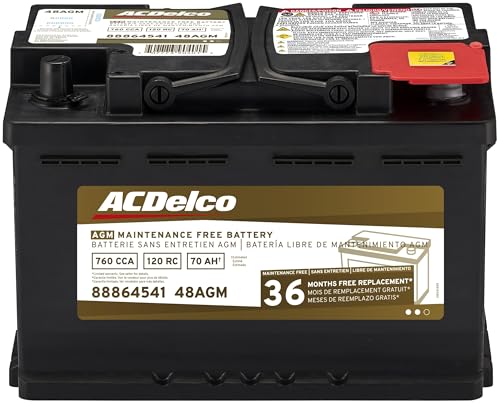
High density negative paste, improves performance and increases battery life
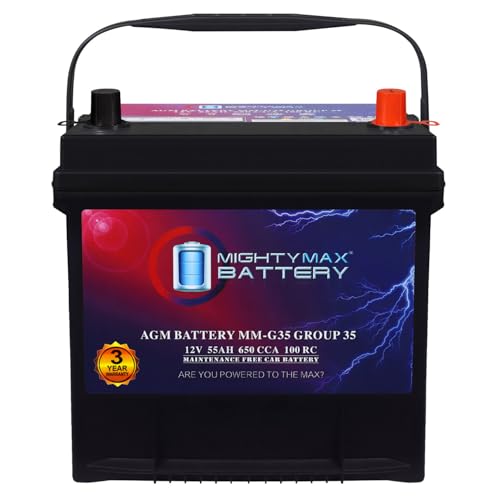
Fast Starting Power: This 12V 55Ah 650 CCA delivers strong, steady starts is ready for any weather in any season.

Fast Starting Power: This 12V 60Ah 680 CCA delivers strong, steady starts is ready for any weather in any season.
Why Do AGM Batteries Handle Deep Discharges Better?
AGM batteries handle deep discharges better because their electrolyte is immobilized in glass mats, preventing acid stratification and ensuring uniform acid distribution. This design maintains usable capacity even at lower states of charge and stabilizes internal chemistry to reduce grid degradation during repeated deep cycling. You benefit from lower internal resistance, which enhances current flow and allows for faster recharging, minimizing the time spent in partially discharged states and limiting sulfation. The sealed valve-regulated lead-acid (VRLA) construction enables efficient oxygen recombination, reducing water loss and maintaining electrolyte balance during deep discharges. Additionally, the tightly packed plates and glass mat separators improve thermal management by dissipating heat more effectively under heavy loads. With a typical usable depth of discharge around 80 percent, AGM batteries can be cycled more aggressively than standard flooded batteries, which generally handle only about 50 percent before experiencing significant capacity loss. Testing an AGM battery’s voltage with a multimeter set to DC volts, as you would test a breaker box for continuity, helps confirm its state of charge and identify potential issues before deep cycling. Busbars made from copper or aluminum offer similar low internal resistance benefits for efficient current distribution in electrical systems.
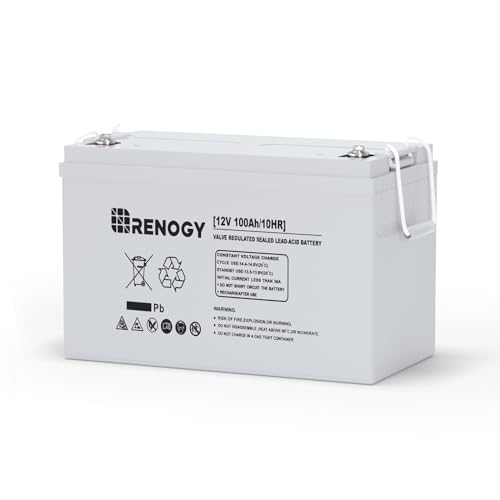
Renogy AGM Batteries: Trusted Worldwide, Exceptional Safety, Extreme Performance! Support series (No limitation), parallel (Up to 4P) connections

Heavy-Duty Rechargeable Battery: The VEVOR 12V 40Ah rechargeable deep cycle battery, with dimensions of 7.8'' x 6.5'' x 6.7'', stores a substantial amount of energy, extending the runtime of most light-duty electric devices. Note: Professional charging equipment is required during use to ensure battery security.

Maintenance Free: Manufactured with thick absorbent Glass Mat (AGM) seperators and advanced valve regulated technology, Renogy deep cycle agm batteries save you from acid leakage and frequent maintenance..Batteries Required:no
How Long Do AGM and Standard Batteries Actually Last?
AGM batteries typically last about 4 to 7 years, giving you roughly one to two extra years compared to standard flooded lead-acid batteries, which usually last 3 to 5 years. The longer lifespan of AGM units is due to their sealed design and better resistance to vibration and deep cycling. However, actual duration depends heavily on factors like climate, driving patterns, and maintenance. High temperatures, especially in extreme heat, accelerate battery wear for both types. Frequent short trips prevent proper recharging and also reduce lifespan. Using a compatible battery charger for gel or AGM types can help maintain optimal charging cycles and prevent damage. When replacing either battery, proper recycling is essential to recover lead and plastic. Using reliable crimping tools ensures secure terminal connections, which can prevent voltage drops and extend overall battery life. While high-quality AGM batteries under optimal conditions might approach a decade, such longevity remains rare and depends on how well you care for your battery. For example, regularly checking for warning signs of aging can help you replace the battery before it fails unexpectedly.
Are AGM Batteries Really More Maintenance-Free?
AGM batteries are marketed as maintenance-free, but this primarily means you won’t need to add distilled water, unlike flooded lead-acid batteries that require electrolyte checks every few months. Their sealed design employs glass mats to hold the electrolyte, significantly reducing evaporation and spillage. However, this doesn’t mean they require no attention at all. To prolong the battery’s lifespan, you should regularly clean the terminals to prevent corrosion and periodically check the voltage and state of charge. Monitoring storage temperatures and ensuring proper charging, especially after periods of inactivity, are also crucial. An AGM battery cannot be refilled once the electrolyte is depleted or damaged, making routine inspections vital to catch potential issues early. For instance, learning quick diagnosis steps can help you identify charging or voltage problems before they cause permanent damage. A battery charger with a specific AGM charging profile prevents overcharging that can permanently damage the sealed cells. While they eliminate messy watering, AGMs still depend on careful charging practices and consistent monitoring to prevent premature failure. For portable devices, choosing a top power bank with a wall outlet can provide a dependable and versatile charging solution.
How AGM Charging Differs From Standard Batteries
Charging an AGM battery requires more precise voltage control than a standard flooded battery. You need to follow stricter charging protocols because AGM units demand higher bulk voltages—typically 14.7V compared to 14.2V for flooded batteries. The float voltage also varies, with AGM batteries requiring around 13.8V instead of 13.4V. Your charger should implement a strict three-stage charging profile: initial bulk current until absorption, then hold a constant voltage at 14.4 to 14.7V, and finally switch to a float hold near 13.5 to 13.8V. AGM batteries accept higher charge currents, often between 20 and 30% of their capacity, which reduces recharge times. However, voltage regulation is critical; exceeding 14.9V can lead to dry-out since AGM batteries are sealed and cannot vent excess gas. Temperature compensation is essential for safe charging—reduce voltage in heat and increase it in cold conditions—to avoid overcharging or undercharging. Standard flooded battery chargers generally lack the necessary voltage precision and temperature adjustments, making them unsuitable for AGM batteries. A digital multimeter’s voltage regulation precision is crucial when monitoring AGM charging to prevent damaging overvoltage. Choosing a solar panel that includes precise charge controller settings can help maintain these strict AGM charging requirements.
When Is the Higher Cost of an AGM Battery Worth It?
The higher cost of an AGM battery is worth it when your application demands its specific advantages. Typically, AGM batteries cost two to three times more than flooded batteries. This premium pays off mainly in high-cycling uses like start-stop vehicles or daily deep discharges, where AGM’s ability to endure over 1,000 cycles at 80% depth of discharge reduces how often you need to replace the battery. If your environment involves frequent vibrations—such as marine settings, off-road vehicles, or engine compartments—the sealed construction of AGM batteries resists damage and lowers failure risk, justifying the higher price. Cold weather is another factor: AGM batteries retain reliable starting power down to about -4°F, which is crucial for vehicles with high electrical demands in low temperatures. Additionally, the manufacturing process for AGM involves tighter tolerances, leading to better quality control and performance. Although AGM batteries come at a higher initial cost, their lower environmental impact—due to fewer replacements—is another benefit. However, if your use is infrequent and demands are low, sticking with a flooded battery remains more economical since you won’t recoup the extra expense.

DUAL PURPOSE MARINE RV BATTERY: Interstate's marine dual-purpose AGM battery can serve as both your cranking battery to start the motor & power your trolling motor - whether the motor is on or off! Built "Interstate tough" to withstand the most rugged conditions so you can spend more time having fun & less time worrying about your battery
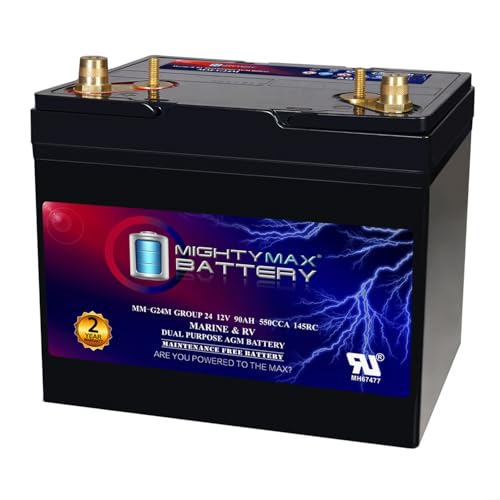
Marine-Grade Confidence: Harness the endurance and dependable energy you need to power every journey on the water, on the road, off the grid, or wherever adventure takes you.

BATTERY SPECS: 12-Volt, 750 Cold Cranking Amps, Size: 10.06" Length x 6.88" Wide x 7.94" Tall, Weight: 43.5 pounds, Dual SAE & 5/16" Stainless Steel Stud Posts, C20 Capacity: 55 AH, MCA 870
Three Scenarios Where a Standard Battery Wins
A standard battery can be the better choice if your vehicle does not have start-stop functionality or specific AGM requirements. Its simpler charging system places fewer demands on battery chemistry, making it a straightforward match for basic drivability needs. Additionally, flooded batteries offer easier access for routine maintenance, such as water checks and top-offs, which can help you extend the battery’s lifespan without paying extra for AGM’s maintenance-free advantages. In moderate climates, a standard battery also provides sufficient cold-cranking power at a lower cost compared to AGM options. This is especially true when reviews of the top battery trays confirm standard battery dimensions fit securely without requiring costly tray modifications.

IN THE BOX: 10-pack of CR2032 3 volt lithium coin cell batteries; replacement for BR2032, DL2032, and ECR2032

LONG LASTING PERFORMANCE: Panasonic CR2032 3.V batteries are engineered to provide reliable, long-lasting power

【Material】6061 electrical grade aluminum without negative health effects, and has superior resistance to corrosion.
So, Which Battery Should You Actually Buy?
Only choose a standard flooded battery when your main concern is upfront cost and your vehicle’s electrical demands are minimal. These batteries are suitable for basic starting needs, but keep in mind that they require regular water checks, pose a spill risk, and generally have a shorter cycle life. Always verify your vehicle manufacturer’s specifications before purchasing; the approved battery type ensures the best performance tailored to your vehicle’s specific driving conditions.