
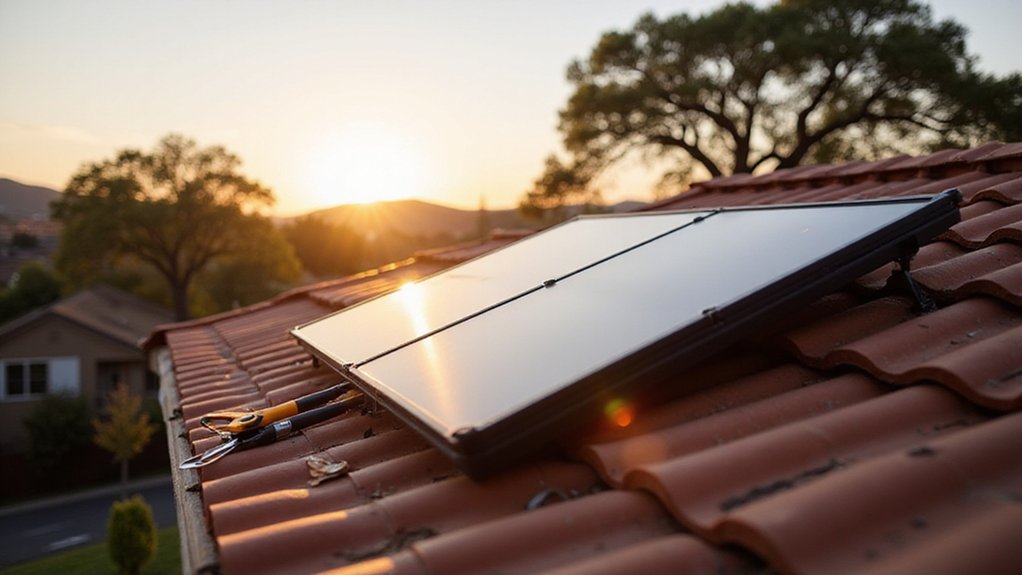

Wondering how long your solar panels will keep producing energy? Typically, they last around 30 to 35 years, but their efficiency gradually declines over time.
After 25 years, you’ll still be getting about 88% of their original output.
Proper maintenance can help extend their lifespan beyond three decades.
Keep reading to understand what impacts how long your panels will serve you.
What Does “Lifespan” Really Mean for Solar Panels?
Lifespan for your solar panels refers to their period of useful electricity production, not an expiration date. It’s an economic measure, indicating how long your panels can generate power at a cost-effective level. Over time, panels experience degradation, gradually losing efficiency and output. However, they don’t suddenly stop working at the end of their warranty period. Even after 25 to 30 years, panels can often produce electricity for decades longer, though at reduced levels. The typical 25-to-30-year figure comes from warranty terms, during which manufacturers guarantee that performance remains above a certain threshold—usually between 80% and 87.4% of the initial output. This guarantee is a minimum performance commitment, not a cutoff point for use. Once it expires, continued operation might become less financially attractive, and replacement often makes more sense. While your panels’ technical lifespan can stretch well beyond the warranty, the key factor is the declining economic value as their efficiency drops. For example, choosing a top ground mount ensures stable panel orientation to maximize energy capture during these later years. Inverters that convert panel output into usable power also require careful selection, as a high-quality pure sine wave inverter ensures your home receives clean, stable electricity throughout the panel’s extended life. Understanding this economic timeline is crucial when you consider upgrading to integrated solar shingles that combine roofing and generation.
How Much Does Solar Panel Lifespan Drop Each Year?
Modern solar panels typically degrade at about 0.5% per year, which means your system will slowly lose efficiency over time. The biggest drop generally occurs in the first year, with a loss of around 1% to 2%. After that, the degradation slows down to a steady 0.3% to 0.4% annually for high-quality modules like TOPCon and HJT. As a result, after 25 years, your panels will still produce around 88% of their original capacity if they degrade at 0.5% per year. Better materials, advanced cell designs, and improved encapsulation help reduce degradation, making modern panels last longer. Older polycrystalline panels can experience higher annual losses of 0.8% to 1%, meaning they decline faster over the years. Overall, aiming for modules with a degradation rate of about half a percent annually will give you the best long-term performance. For added protection, installing a surge protector for your breaker box can safeguard your solar inverter and panels from voltage spikes. When comparing systems, selecting quality battery terminals can ensure efficient energy storage. For more information, consult a comprehensive guide to choosing the best solar panels for renewable energy.
What Do Solar Panel Warranties Actually Cover?
Solar panel warranties typically fall into three main categories: product, performance, and workmanship. Each type covers specific aspects of your system and has its limitations. Product warranties generally cover manufacturing defects such as broken cells, delamination, or junction box failures, but they do not include damage caused by physical impacts like hail or falling branches. Critical electrical faults in the inverter system may also be excluded unless the unit is paired with a high-efficiency solar converter designed to meet warranty standards. Performance warranties promise a minimum energy output—often between 80% and 92% of the original capacity—after 25 years, though gradual degradation within these limits is not covered. Workmanship warranties address issues related to installation, such as wiring mistakes or roof leaks caused by faulty mounting. However, costs for removing and reinstalling panels usually fall outside of coverage. It’s important to be aware of limitations: damage from lightning strikes, unauthorized modifications, or improper cleaning can void your warranty. Transferring the warranty may involve fees and notice requirements, and the financial stability of your provider is crucial for long-term claims. For buyers comparing top solar generators, reliable power backup often depends on choosing panels with strong warranty protections.

✅Maximizes solar power generation by enhancing sunlight penetration and preventing power losses from dust and dirt accumulation.

【1/2 Inch Mesh】 The solar panel mesh is 1/2 inch Opens, which allows wind and water to flow from the roof and also can keep birds out, so to protect the roof, electrical wires, and equipment from being damaged.

[Wide Application]: Daily Output 800wh/day under 4 hours full sunshine condition. Perfect for RV, Caravan, Marine, Camper, Electric scooter, Golf Carts, Power wheels, Trolling motor, Tool trailer, Backup power supply for cabin shed home etc.
What Actually Kills Solar Panels Early?
Manufacturing flaws are a primary factor that can drastically shorten the lifespan of your solar panels. Poor lamination, weak soldering, or faulty junction boxes create electrical and structural vulnerabilities that can lead to early failure. These hidden defects often go unnoticed during installation or initial inspection but can cause significant issues down the line. Ensuring you select high-quality modules with thorough quality control can dramatically increase the chances your panels will reach or even surpass their expected 25-year lifespan. Even with excellent panels, pairing them with the best battery for solar chargers is crucial for long-term system reliability and performance. Using a solar power meter regularly can help you detect performance drops caused by these early defects before they worsen. For the best pairing, remember that deep cycle and AGM batteries are not the same, and selecting the correct type for your solar storage needs is essential.
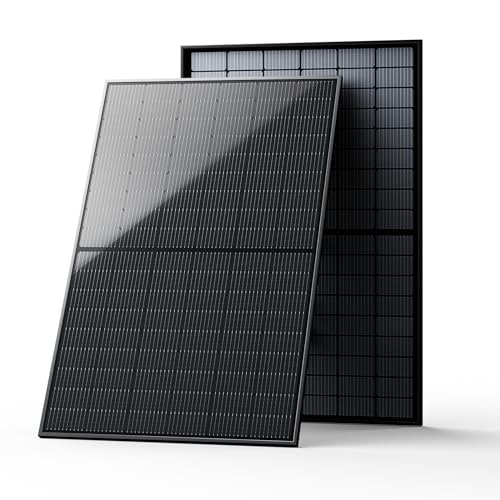
☀【Class A Solar Cell】The EPOCH solar panel features high-quality grade A+ solar cells and incorporates half-cut cell and bypass diodes.More Busbar,More Power.The Epoch 430W solar panel incorporates a high-level 16BB cell design,enhancing its lifespan for long-term performance.

EXTENDED CAMERA FIELD LIFE: Embrace renewable energy, eliminating the need for traditional batteries and ensuring a cost-effective approach to keeping your trail cameras charged; A 3000mAh Li-ion Battery extends the field life of your trail camera

Do Solar Panels Stop Working After 25 Years?
Your solar panels won’t suddenly stop working after 25 years. That age mainly marks the end of the manufacturer’s warranty, not the point at which they become useless. Typically, the warranty guarantees about 80-85% of the panels’ original output at this milestone. Over time, panels degrade at roughly 0.3% to 0.5% each year, so even after 25 years, they still produce a significant amount of power. The quality of the manufacturing process influences how well they hold up—premium panels can maintain 87-92% of their original output, while standard models stay around 80-85%. Although the warranty expires, the panels continue generating electricity well beyond that. Advances in cell technology, such as newer n-type and heterojunction (HJT) cells, help slow degradation and can extend the panels’ lifespan to 30-35 years or more. To support this, routine cleaning with proper tools can prevent buildup that accelerates wear. Just as disconnecting battery cables correctly prevents electrical damage in a vehicle, proper panel installation and maintenance avoid performance-robbing issues. Replacing panels is then based on cost-effectiveness and output decline rather than a fixed failure point at 25 years. Similar to how proper charging habits extend the life of an AGM battery, keeping solar panels clean and well-ventilated can help slow degradation and maximize their usable years.
Real-World Output: What Owners See After Decades of Use
After 25 years, your solar panels will still be capable of producing about 88% to 92% of their original output. Field data shows that modern silicon panels typically retain this percentage after two decades, with an annual degradation rate around 0.5%. You’ll notice near 95% of their initial performance after 10 years, and around 91% to 92% by year 15. This gradual decline results from slow material degradation rather than sudden failure. Small yearly decreases are often hidden by weather variability, so the system’s efficiency remains relatively stable over time. For instance, their truly renewable nature is underpinned because the silicon can be recycled into new panels at end of life. When choosing a new system, look for MC4 connectors to ensure reliable and efficient connections. A quality lithium battery charger ensures your stored solar energy is managed efficiently for long-term use.
Despite heat and UV exposure accelerating wear, quality installation and proper maintenance help your panels stay productive well beyond their warranty period. At 20 years, systems usually hold between 85% and 90% of their original capacity, ensuring substantial energy generation despite aging. This longevity makes solar panels a reliable source of renewable energy long term.
How to Tell If Your Panels Need Replacing
Visible physical damage such as cracked glass, delamination, or corrosion indicates your panels need replacing. A significant drop in output—below 75% of your expected production—especially if accompanied by higher utility bills—suggests internal faults. Thermal scans revealing hot spots point to cell damage or bypass diode failure, which can increase fire risk. As with a breaker box that trips due to overcurrent, erratic inverter readings can signal a ground fault or short circuit inside your solar array. Electrical faults are confirmed if inverter fault codes appear or if voltage readings are erratic. Moisture ingress inside the module signals seal failure and ongoing damage. For panels over 20 years old with multiple issues, replacing is more economical than ongoing repairs. Even after cleaning and addressing shading issues, if your system can’t meet your household’s power needs, consider replacement. When repair costs reach half or more of a new system’s price, upgrading makes economic sense. A charge controller may also need inspection during replacement to ensure it regulates battery storage correctly. Ignoring these signs can result in compromised safety and reduced efficiency.
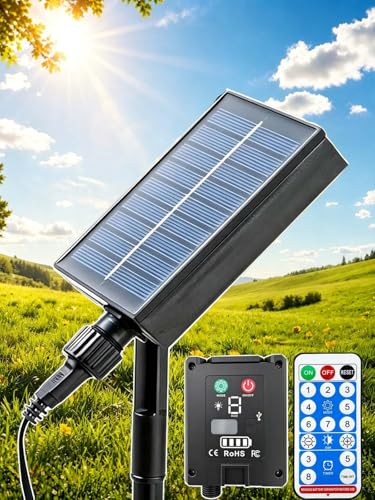
【24V Solar Panel 】Say goodbye to compatibility headaches. This solar panel for outdoor lights comes with 1,200mAh battery capacity and delivers stable 24V/1.2W output. The 30cm tinned copper leads (pre-stripped positive/negative wires) let you solder or crimp any connector you need in seconds. No more returning lights just because the plug doesn’t fit – wire it your way and keep your garden glowing.

DIY YOUR OWN SMART MODEL----Build your own powered models, solar toys, solar lights, solar displays, charging small DC batteries. It can be used for teaching purpose. Many of our customers come from school, colleague, etc.

Efficient Work: Solar Lights Replacement Top Has Excellent Work Efficiency. The Optimized Solar Panel And High-Capacity Battery Allow It To Work For 10-12 Hours A Day. No Need To Worry About Running Out Of Energy, Providing You With Stable Lighting.
Which Climate Risks Shorten Solar Panel Lifespan Most?
Heat is the primary factor that most shortens a solar panel’s lifespan. In hotter climates, panels can degrade almost twice as fast as in cooler areas, with an annual performance loss of around 0.88%. Excessive heat causes materials within the panels to accelerate their aging process, reducing energy output over time. High temperatures also increase thermal stress, which can lead to microcracks and other structural issues that deteriorate panel integrity. To combat this, selecting panels designed to operate efficiently in high-temperature environments can help extend their lifespan. Keep in mind, managing heat exposure is crucial to ensuring your system remains durable and productive over its full expected lifetime.

【Perfect Size for Class B Vans】This 200W N-Type solar panels are 7.5% smaller and 11.7% lighter than previous models, providing the same power output in a compact, space-saving design that’s perfect for tight spaces in Class B vans.


Unmatched Cell Efficiency - Renogy 100w solar panel features grade A+ cells, delivering an impressive conversion efficiency of 25%. This solar panels provide 20W more power output compared to conventional PERC panels of the same design.
How to Extend Panel Life Beyond 30 Years
Managing heat exposure is crucial to extending your panel’s lifespan, but actively maintaining your entire system is key to surpassing 30 years. Regular cleaning with demineralized water and a mild detergent helps prevent dirt buildup that can cause hot spots and reduce efficiency. Avoid using abrasive tools or high-pressure jets, as these can damage the panel surface and compromise durability. If you plan to integrate a subpanel for your solar system, ensure you use proper wire sizing and follow all local electrical codes to avoid overloads and failed connections.
Schedule annual inspections to look for microcracks, delamination, and loose connectors that may develop over time. Check mounting hardware for corrosion or UV damage, and address shading caused by new growth promptly to prevent hot spots. Providing at least 50 millimeters of airflow beneath the modules helps reduce thermal stress and keeps temperatures in check.
Monitoring your inverter’s health is equally important; keep the firmware updated and watch for signs of failure, as inverter issues often limit overall system longevity more than the panels themselves. Track your energy generation against your expected degradation curve, typically around 0.5 percent per year. Taking these proactive steps can significantly extend service life beyond standard warranty coverage, ensuring reliable performance for decades.

Dual-Speed Motor (280/400 RPM) , Say Goodbye to Hand Fatigue: Manual wiping wears you out and leaves uneven results. Choose 280 RPM for gentle dusting or 400 RPM for heavy-duty sap and hard water stains. This electric spin solar panel cleaning brush rotates 3× faster than hand scrubbing, saving your arms and shoulders while giving consistent, professional-grade pressure across every panel – clean more area in half the time.

20" Water Fed Pole Cleaning System: Featuring a wide 20" solar panel cleaning brush for greater coverage, solar panel cleaning kit is made with non-shedding, high-density nylon bristles to protect photovoltaic panels. Equipped with four high-flow nozzles for extensive water coverage and deep cleaning, plus a soap dispenser and 180° angle adapter. The solar panel brush adjusts continuously to fit panel contours perfectly, ensuring no dead angles and highly efficient cleaning.

All-in-One TONYINGO Kit for Solar Panel Cleaning & Snow Removal:This versatile kit features a 5-20FT telescopic extendable extension pole with Dual Action Flip-lock & Screw Fixing Design, engineered for daily solar panel dirt cleaning and efficient light snow removal. It’s the ultimate outdoor cleaning tool for high-reach care of windows, RV exteriors, boats, decks, roofs, gutters, car windshields and house exterior walls, meeting all multi-scenario cleaning needs for outside surfaces.
What Happens to Old Solar Panels?
When your solar panels reach the end of their usable life, they should not automatically go to a landfill; proper disposal depends on their condition and local regulations. Panels showing signs of significant damage or degradation often require specialized recycling, while functioning units can be sold, donated, or salvaged. Recyclers can reclaim up to 96% of the materials, including glass, aluminum, silicon, and copper. Some manufacturers offer take-back programs, making disposal easier. Before discarding panels, check if they still operate—refurbishing might extend their lifespan. Always consult local agencies or e-waste processors for recycling options, as landfill regulations vary widely. In many areas, non-hazardous panels can be landfilled, but restrictions are common. Store panels securely and in dry conditions before recycling to prevent damage. Professional removal is strongly recommended due to the electrical dangers and weight of solar panels.