

Ever wonder how a power meter measures your cycling effort so precisely? It’s a clever mix of sensors that track how hard and how quickly you’re pedaling, then calculate your power output in watts.
This article will explain how these devices work, from simple mechanical models to modern digital versions, so you can understand what’s happening behind the scenes.
What Exactly Does a Power Meter Measure?
A power meter measures the rate at which work is performed, expressed in watts. In cycling, it calculates power output based on torque and pedaling cadence. Strain gauges attached to the crank or pedal detect the force exerted, while an accelerometer measures how fast you’re pedaling. These signals are combined to determine your instantaneous power. For electrical meters, the device measures voltage and current to compute real power consumption. The accuracy of these readings relies on proper sensor calibration and high-quality components. Higher watt readings indicate more vigorous pedaling or greater electrical demand. The key point is that a power meter provides a precise, quantitative measure of work, whether on your bike or in your home, but it does not indicate subjective effort or physiological responses like heart rate. Like cable ties, which are rated by tensile strength in pounds, a power meter’s accuracy depends on its component specifications and calibration. Similarly, a top-rated power bank with a wall outlet must deliver dependable charging through consistent wattage output and reliable internal components. For optimal results, always ensure your tool’s sensor connections remain free of debris, much like maintaining clean wire stripper jaws prevents mechanical errors.


ATTENTION:This power meter only supports Easton-spec interfaces. Compatible chainrings: 110 BCD, 4-bolt pattern only.

★ A resistive strain gauge sensor with a 350 ohm nominal resistance which varies when a force is applied.
How Do Meters Convert Voltage and Current Into Kilowatt-Hours?
Meters convert voltage and current into kilowatt-hours by first calculating the instantaneous power at regular intervals. This is done by multiplying the voltage and current measurements to get watts. The meter’s processor samples these power values repeatedly over time. It then integrates this power—essentially summing all the sampled wattages—over the measurement period. For buyers seeking reliable hardware, similar measurement accuracy is found in top battery picks that include quality terminals for consistent connections. Because energy is power multiplied by time, maintaining a running total, the meter adds up the energy used during each sampling interval. For example, a steady 1,000-watt load sustained for one hour results in 1 kilowatt-hour (kWh). The internal register updates only after enough energy has been accumulated, providing an accurate total that reflects your actual energy consumption over time.
Why Old Power Meters Use a Spinning Disc
Old power meters use a spinning disc because its speed directly correlates with your power consumption. When your load increases, the disc spins faster; when it decreases, the disc slows down. A permanent brake magnet applies a counter-torque proportional to the disc’s speed, preventing it from spinning out of control and ensuring that rotation reflects real-time power use. Each full rotation is calibrated to a specific amount of energy, which is then accumulated into kilowatt-hours. This setup provides a contactless, purely mechanical measurement system—no electronics needed—relying solely on electromagnetic physics acting on the spinning disc. Some drivers now use a car power inverter to convert DC power into AC for running electronics on the go. Many outdoor spaces now incorporate solar panel sheds to generate their own electricity and reduce reliance on the grid. Modern solar installations often use MC4 connectors to ensure efficient and secure electrical connections.
How Digital Power Meters Measure Without Moving Parts
Digital power meters measure electricity without moving parts by using semiconductor-based sensors and real-time computation. Instead of rotating dials or mechanical gauges, they rely on integrated circuits to sense voltage and current simultaneously through dedicated metering chips. These chips feed signals into high-speed analog-to-digital converters that sample the waveforms thousands of times per second, capturing both magnitude and waveform shape.
The sampled data is processed instantly to calculate instantaneous power by multiplying each voltage and current sample. Repeating this process over time produces an accurate picture of power flow, enabling the meter to determine real power, reactive power, apparent power, and power factor. Energy consumption is tracked by integrating the calculated power over time, typically resulting in kilowatt-hours displayed for billing or monitoring purposes. This process mirrors the working principle in plain English of digital multimeters, where voltage and current are measured simultaneously to compute power. Unlike battery chargers or maintainers which focus on energy storage replenishment, power meters focus on real-time flow analysis. A similar approach to measuring energy flow is used when checking the integrity of a vehicle’s electrical connections during a battery cable replacement.
Calibration of sensors ensures input accuracy, which is essential for precise measurements. All data is stored and processed by a microprocessor, allowing for reliable tracking and reporting. Because the entire system relies on solid-state components, it functions without any spinning parts, making it durable, maintenance-free, and capable of near-instantaneous measurements.

Improved Measurement Accuracy: Our USB C Tester can accurately measure accuracy: ± (1%+5). The data is more accurate for detecting charging devices such as chargers, mobile phones, tablets, and power banks. Make this Type-C meter suitable for more 3C digital peripheral products, making it the first choice for digital gamers and electronics enthusiasts.

Face Icon Comfort Indicator: Humidity temperature gauge features face icons to indicate DRY/COMFORT/WET air conditions, quickly informs you how to adjust your humidifier or dehumidifier to achieve optimal comfort.
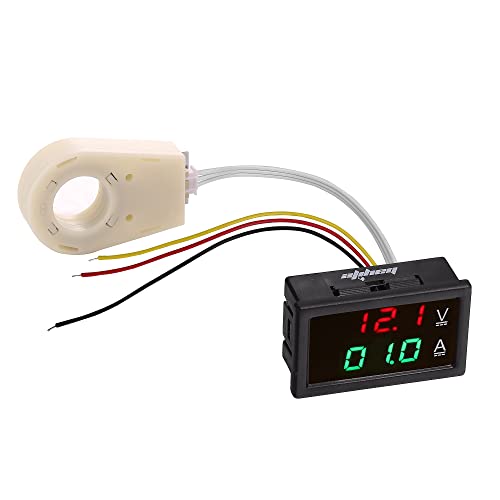
Dual display: Display Voltage and (+ -) Current at the same time; Power supply: DC 5~100V; Voltage test range: 0~300V; Current test range: ±0~100A
What Makes a Smart Power Meter Different?
A smart power meter differs from a basic digital power meter by incorporating continuous wireless communication, enabling real-time, bidirectional data exchange. This allows your utility to automatically monitor and transmit your usage data via a secure network, eliminating the need for manual readings. With this connectivity, the meter can also send a “last gasp” signal during outages to pinpoint faults precisely and support remote connect or disconnect functions.
Additionally, smart meters feature advanced anti-tamper measures that actively detect energy theft by monitoring for bypasses or interference. While these features enhance efficiency and security, they raise data privacy concerns because detailed consumption patterns are regularly transmitted to the utility. These meters also support functionalities like in-home displays, solar net metering, and prepaid billing plans, providing you with granular control over your power usage and how your home interacts with the grid through automated, continuous data flows.

SAFETY YOU CAN TRUST WITH UL CERTIFICATION: With Emporia Energy, your home energy monitoring is safe, reliable, and certified. The Emporia Vue is UL Listed, meaning it has met rigorous safety standards for electrical products in the U.S. and Canada. This certification ensures that every component has been thoroughly tested to prevent hazards, such as overheating, short-circuiting, or fire, offering you peace of mind as you manage your home’s energy consumption.
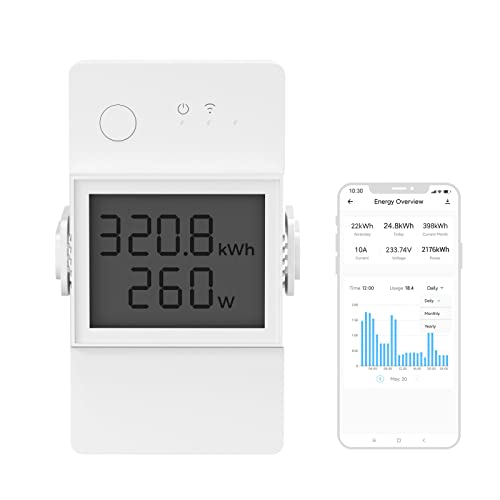
【LCD Screen】Track of power, current, voltage, and cumulative power consumption of your appliances in real-time on the LCD screen.
【LCD Screen】Track of power, current, voltage, and cumulative power consumption of your appliances in real-time on the LCD screen.