
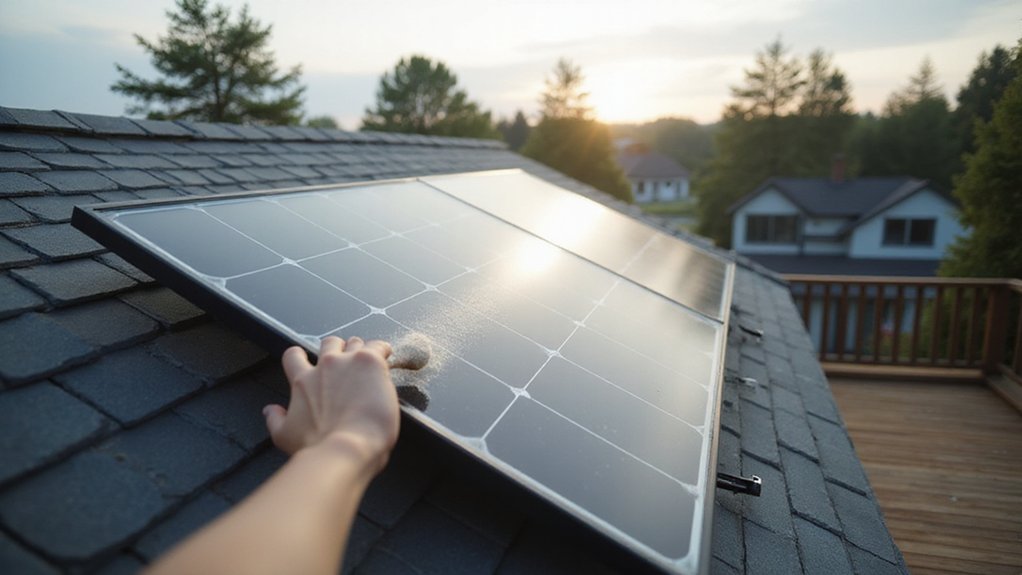

You’re wondering if solar panels are truly renewable. The short answer is yes, because they harness sunlight, a constantly replenished resource.
But the equipment itself involves manufacturing and eventual replacement, which adds complexity to their sustainability.
The full story covers how their environmental impact measures up over their lifespan and what really makes them a renewable energy source.
Are Solar Panels Truly Renewable Energy Equipment?
Solar panels are generally considered renewable equipment because they produce clean energy that doesn’t deplete natural resources. However, the hardware itself poses challenges to the label of full renewability. Manufacturing involves mining and refining materials like silicon, silver, aluminum, and copper, which are energy-intensive processes that generate environmental impacts. While about 95% of panel materials—glass, aluminum, silicon, silver, and copper—are recyclable, the potential for reuse is limited by current recycling capabilities. Worldwide, only around 10% of used panels are properly recycled, with many ending up in landfills. Recovering aluminum frames and junction boxes is straightforward, but efficiently separating high-purity silicon and other metals remains a complex, inefficient task. Despite the projected 78 million tonnes of recoverable materials by 2050, inconsistent collection infrastructure hampers full material recovery. Many homeowners choose top balcony solar panels to generate electricity in small spaces, but even these compact systems struggle with recycling logistics. To address these gaps, many homeowners pair their systems with top solar generators that ensure reliable power backup even during grid outages. As a result, even though solar panels produce renewable electricity, their hardware does not yet fully meet the criteria for being entirely renewable itself. Reviewing top battery picks can help ensure systems using batteries with terminals reliably store this renewable energy.

[Wide Application]: Daily Output 800wh/day under 4 hours full sunshine condition. Perfect for RV, Caravan, Marine, Camper, Electric scooter, Golf Carts, Power wheels, Trolling motor, Tool trailer, Backup power supply for cabin shed home etc.

Multiple Compatibility:Perfect solar power kit for variety of off grid applications like shed, cabin, gate opener, etc where 12V batteries is used, as well as to charge and maintain AGM, Flooded, GEL, Deep Cycle and Seal Lead Acid, etc batteries in car, Rv, boat, marine, trailer, camper, pump etc.

[ Package Content ] 5PC 5Voltage 200mA Polycrystalline Solar Panels with Wire
Does Sunlight or the Hardware Define Renewability?
Sunlight, not the hardware you install, defines renewability. The renewable classification hinges on the resource flow of sunlight, which is constantly replenished and effectively limitless on human timescales. Your solar panels are energy converters—they capture the radiation coming from the sun but do not generate energy from stored fuel or finite sources. Hardware factors, such as degradation, do reduce efficiency over time, typically by about 0.3% to 0.5% annually over 25 to 35 years. However, this decline only impacts the panel’s ability to convert sunlight into electricity, not the ongoing availability of sunlight itself. Even after warranties expire, panels will still produce some power, though at lower rates. The breaker box, also serving as the system’s central safety hub, uses circuit breakers to protect against overloads and faults. Removing a negative battery cable first is a safety principle unrelated to solar panels, though it similarly prevents unintended discharge or short circuits. For a complete installation, buyers should consider panels featuring MC4 connectors for reliable and standardized electrical connections. Ultimately, the renewability of solar energy depends on the sun’s continuous, natural energy flow, rather than the lifespan or durability of the hardware involved. The natural resource is what makes the energy renewable, not the longevity of your equipment.
Does Manufacturing Impact Cancel Solar’s Green Status?
Manufacturing emissions do not cancel solar’s green status. While they do create a temporary carbon debt, lifecycle assessments show solar PV consistently delivers much lower total emissions than fossil-fuel electricity—around 11 grams of CO2 equivalent per kilowatt-hour for modern utility-scale systems. The energy payback time is as short as half a year, meaning your panels offset all embodied carbon well within this period. Although silicon refining and cell fabrication can account for over 50% of energy use during manufacturing, the overall impact remains minimal over the panel’s lifespan. Upstream production is the most emission-intensive phase, but it is quickly compensated for once the system is operational. The guide to choosing solar panels often highlights these lifecycle benefits to help buyers understand the true environmental cost. After approximately half a year to two years, the panels produce enough clean energy to offset their embodied emissions and then continue generating low-carbon power for decades. Even if the manufacturing process relies on grids with high fossil fuel content, this does not negate solar’s environmental advantage. Solar still emits over 20 times less CO2 per kilowatt-hour than coal, confirming its status as a clean energy source. Regular cleaning solar panels helps maintain this low-carbon performance by preventing efficiency losses from dust and debris. Similar to how cable ties became an everyday essential through practical design, solar panels rely on robust engineering to deliver long-term value.
How Long Do Solar Panels Actually Last?
Modern solar panels typically last between 25 and 30 years in real-world conditions, but their service life often extends beyond the official warranty period. You’ll see a gradual decline in efficiency, usually around 0.3% to 0.5% per year. After 25 years, panels still produce about 80% to 92% of their original output. Higher-quality or premium modules tend to degrade more slowly, sometimes at rates near 0.25% annually, allowing them to remain functional for 30 to 40 years. The longevity of a solar array also depends on the quality of its mounting structure design and installation, as poor mounting can accelerate physical stress and degradation.
Warranties usually come in two forms: product warranties that last 12 to 25 years and performance warranties that guarantee a minimum output for 25 to 30 years, often around 80% to 92%. It’s important to note that reaching the end of the warranty doesn’t mean your panels will immediately fail; they often keep working beyond that point. Factors such as heat, humidity, and how well they were installed can speed up degradation. Ultimately, while warranties establish a baseline, real-world performance and longevity are often better, especially if you invest in high-quality panels and maintain them properly.

Advanced Performance: BigBlue 28W portable solar charger provides 20% more power from every ray, thanks to shadow-free surface design (No metal lines on the front panel). Engineered heat resistance and advanced N-type solar cells offer superior Low-Light efficiency and extending operational longevity

【Perfect Size for Class B Vans】This 200W N-Type solar panels are 7.5% smaller and 11.7% lighter than previous models, providing the same power output in a compact, space-saving design that’s perfect for tight spaces in Class B vans.
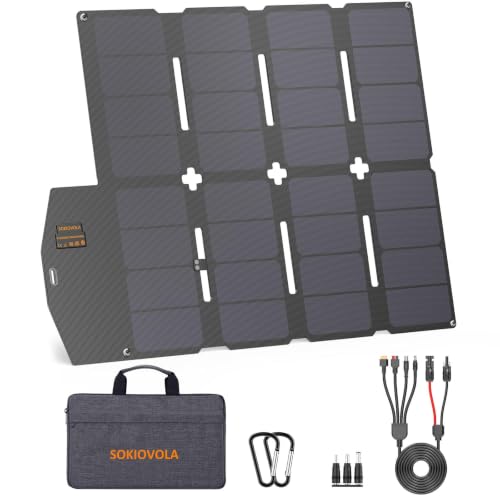
【Lightweight and Portable】This 100W portable solar panel charger features a compact size (14.69×8.67×1.78 inches after folding) and lightweight (4.6LBS) design,making it lightweight and easy to carry.After folding,it has a compact size,making it convenient for you to carry it with you during outdoor activities.Whether you are camping,hiking,or exploring,it is an indispensable power companion for you.
What Happens to Solar Panels at End of Life?
At the end of their lifespan, solar panels typically follow one of three pathways: reuse, recycling, or disposal. Recycling is increasingly favored because advanced processes can recover over 90% of panel weight. Specifically, more than 99% of aluminum, over 90% of glass, and above 96% of silicon can be recovered. However, recycling presents challenges such as delamination—separating layered materials—and maintaining material purity to ensure they can re-enter manufacturing streams effectively. Without proper recycling infrastructure, panels often end up in landfills, which undermines their renewability and environmental benefits. Disposing of panels as waste in landfills makes waste management critical, especially in regions like the U.S., where the Environmental Protection Agency classifies discarded panels as solid waste. Some components might also need hazardous waste handling due to contamination, increasing disposal complexity. To prevent environmental harm, establishing robust collection and processing systems is essential for managing panels at end of life responsibly. Heat guns used for shrink wrap tubing can also aid in delamination processes during recycling.

25% Highly Efficiency Solar Panel: NaveiTech 400w solar panel utilizes A+ monocrystalline solar cells, achieving an outstanding conversion rate of 25%. 400 Watt portable solar panels can charge your solar generator / Power station faster and more efficiently than ever

[OUTDOOR-READY] Tempered glass and aluminum frame with sealed junction boxes for backyard year-round use.

[Value Pack of 2] - This 2-pack of 9W solar panel chargers comes with 10-foot USB-C cable, 2 USB-C to Micro USB adapters, 2 wall brackets, 2 screw packs, and 2 quick start guides, enabling flexible installation in various environments
What Do Experts Say About Solar Panel Renewability?
Experts classify solar energy as renewable because sunlight is continuously replenished on a human timescale, unlike finite fossil fuels. The lifespan of a typical solar panel—around 25 to 30 years—does not change this classification; the label applies to the energy source, not the hardware. They view solar panels as conversion devices that transform sunlight into electricity rather than as primary energy sources themselves. While solar energy is renewable, manufacturing panels does require resources and energy inputs. Recycling processes help recover valuable materials like silicon and aluminum at the end of a panel’s life, reducing waste. Most experts consistently compare solar to other renewable sources such as wind and hydropower, emphasizing the replenishment rate of sunlight rather than the materials used in the equipment. This distinction keeps solar firmly in the renewable category, despite eventual panel replacement. According to the guide, adopting solar panels can also lower your electricity bills by offsetting grid dependency.