
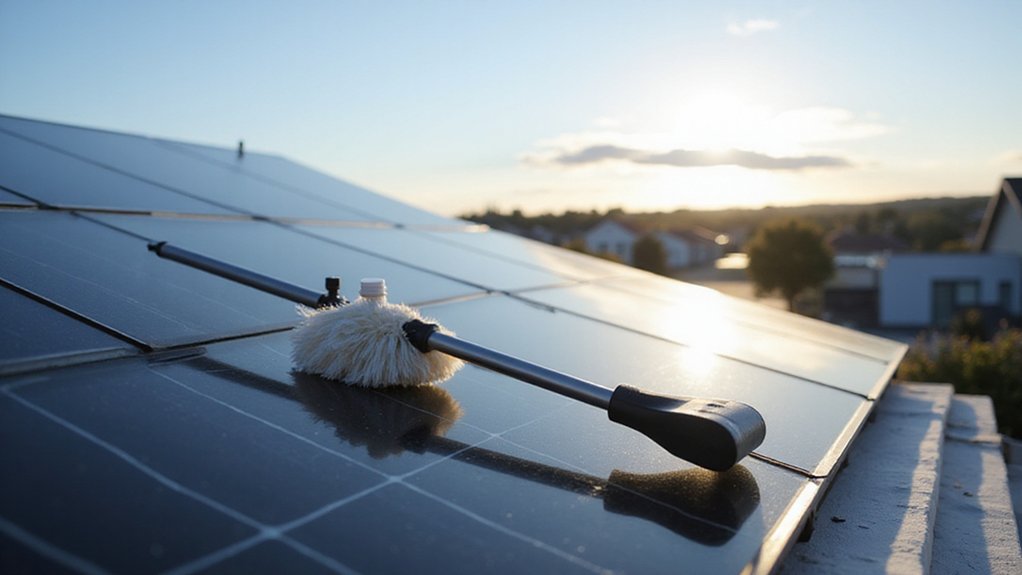

Cleaning your solar panels might seem straightforward, but knowing the best ways to do it can make a big difference in maintaining their efficiency. A well-maintained panel can produce more energy and save you money over time.
By the end of this guide, you’ll learn simple, effective steps to carefully clean your panels without causing damage.
Keep reading to find out how to keep your solar system performing at its best.
Prove the Payoff: Measure Output Before You Clean
Proving the cleaning payoff starts by measuring your system’s output before any cleaning takes place. Record your inverter display or monitoring app data during a clear, peak sunlight period—typically mid-morning to early afternoon. Log actual power production and current, along with environmental conditions like irradiance and module temperature, to establish a baseline.
Focusing on electrical output rather than visual grime prevents guesswork. By noting the time and weather conditions during measurement, you can account for variables like cloud cover or temperature shifts that affect performance. Saving timestamps and environmental data creates a benchmark that clearly isolates dirt-related losses from weather noise. For a comprehensive performance comparison, consider reviewing top battery picks with various terminal options. When comparing power solutions, remember that solar panels have no fuel costs and no moving parts, which reduces long-term maintenance expenses. For additional reliability, an APC UPS with battery backup ensures your monitoring equipment stays online during grid interruptions.
Later, after cleaning, repeat the same data collection process. Comparing the post-cleaning output to your baseline reveals the true net gain in energy production. This measurable increase not only justifies your cleaning effort but also translates into real financial value, making it evident that cleaning pays off in dollars, not just a cleaner panel appearance.
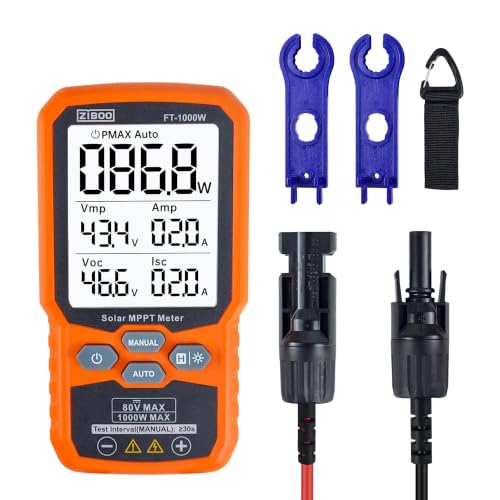
⚡ Professional-Grade PV Testing Measures maximum power (Pmax) up to 1000W, open-circuit voltage (Voc: 12-80V), and short-circuit current (Isc: 35A) with ±0.8% accuracy, ideal for validating solar panel performance in R&D, manufacturing, and field maintenance.

8 in 1 multi-function rc watt meter energy monitor: automatic detect and continuously display a real-time of Current (A), Voltage (V), Watts (W), Amp-hours (Ah), Watt-hours (Wh), Peak Amps (Ap), Minimum Volts (Vm), Peak Watts (Wp)

Real-Time Battery Insights: This battery monitor with shunt tracks state of charge (%), remaining capacity (up to 999Ah), voltage (V), and current (A) to optimize performance. Maximize efficiency, extend battery lifespan, and prevent unexpected failures—monitor your power like a fuel gauge
Shut Down the System and Secure Your Roof Access
Before accessing the roof, shut down the system at the main switchboard. Turn off the inverter first, then isolate the AC supply and activate the DC isolation switch if available. Lock out and tag out the power sources to prevent accidental re-energizing. Treat any exposed photovoltaic wiring as a live hazard, as electrical isolation isn’t complete until you verify shutdown at accessible points. For similar safety reasons, when working on a battery system you should always disconnect the negative cable first to minimize the risk of short circuits.
Minimize roof access as much as possible. Ground-based cleaning is significantly safer. If you must go onto the roof, treat it as a last resort. Secure a ladder only when no other option exists and always check that it is stable. Use guardrails, safety nets, or a personal fall arrest system near roof edges. Cover or guard skylights close to your work area. For enhanced safety, consider scaffolding or an aerial lift, which provide a safer platform than standing directly on the roof. Never skip fall protection equipment, even for a quick cleaning or maintenance session.
Select Soft Tools: Microfiber, Mild Soap, and Low-Pressure Water
To safely clean your panel surfaces, use soft tools like microfiber cloths or soft-bristle brushes. These are gentle enough to avoid scratching glass and damaging anti-reflective coatings. For stubborn grime, mix a small amount of mild dish soap with warm water. A gentle application prevents residue buildup that can affect panel performance. Rinse with a low-pressure garden hose to remove soap and loosen dirt without risking damage. Avoid abrasive pads or stiff brushes, as they can cause scratches. For tougher spots such as bird droppings, a soft-bristle brush with a long handle allows you to reach safely without applying pressure. If you’re concerned about environmental impact, opt for eco-friendly detergents—they are safe for both your panels and the environment. Never use high-pressure washers, as they can crack the panels and void your warranty. For optimal charging after cleaning, consider using a top lithium battery charger to maintain your battery system. A gentle rinse with a garden hose is all you need for an effective, damage-free clean. For further reading, consider how micro inverter solar panels integrate similar low-maintenance care into their overall system reliability. Maintaining clean panels ensures your home battery system receives adequate energy from the sun, especially when paired with reliable solar storage solutions.

20FT Long Handle Solar Panel Cleaning Brush: Extends from 5 to 20FT with up to 26FT Reach, making it easier to clean rooftop solar panels, windows, greenhouse roofs, RV roofs, and other hard-to-reach surfaces from the ground. Flip-lock clamps allow quick length adjustment, while the adjustable hex screw helps fine-tune locking tension for a secure hold

2-in-1 Cleaning Head: Combines a 10-inch rubber squeegee and a chenille microfiber scrubber into a single frame for efficient dual-surface cleaning; use the microfiber side to loosen dust, dirt, and residue from smooth surfaces, then rotate to the squeegee for water removal and streak-free finishing without changing tools during the task.

Restore Solar Panel Performance. Simply connect your garden hose to spray water directly through the brush. Effortlessly clears dust, bird droppings, and light snow that can reduce solar output, keeping your panels clean and working at their best. No electronics, no motor failures—just reliable, long-lasting performance
Clean Solar Panels: Rinse, Scrub, and Squeegee for a Spotless Finish
To achieve a spotless finish, follow the rinse, scrub, and squeegee sequence carefully. After pre-rinsing the panels to remove loose grit, use a soft-bristle brush or microfiber cloth to scrub away stubborn buildup with a gentle, circular motion. Apply a mild cleaning solution to soften grime but avoid letting it dry on the surface. Keeping the surface wet during scrubbing prevents drag and helps loosen dirt effectively. Rinse thoroughly with purified water, ideally through a water filtration system like deionization, to prevent mineral deposits and streaks. This second rinse removes all residue and cleaning solutions, preserving optical clarity. Finish by squeegeeing from top to bottom with overlapping passes, ensuring all standing water is removed before it evaporates. Check the edges and corners for missed spots, as clean glass maximizes light transmission for optimal system performance. Following this rinse-scrub-rinse-squeegee routine guarantees a streak-free, spotless panel surface.

✅【 Soft Bristle Brush Head with Rubber Bumper 】The bristles of our soft car wash brush head are made of soft high quality PVC, so they do not scratch when scrubbing. Rubber bumper around car brush head protects from damage and scratching. This car washing brush is safe for all kinds of vehicles – cars, trucks, SUVs, RVs, Marine Boats, House Siding and more!

【The New Design of 4 Handheld Places】The long handle of car cleaning brush has 4 non-slip handheld places of different heights, allowing you to hold the truck wash brush pole tightly and prevent your hands from slipping during cleaning,Stopping Straining Your Back and Saving Your Energy. After cleaning, you can hang the car wash mop on the wall or quickly disassemble it for compact storage in a bag,saving your space.

SAFE ON GENTLE SURFACES: Ultra-pliable bristles are engineered to be tough on grime yet exceptionally soft on paint, clear coats, and other scratch-prone surfaces. Whether you're using it as a soft bristle cleaning brush for your vehicle's delicate finish or as a window cleaning brush for everyday washes, your surfaces receive a meticulous clean without swirl marks or micro-scratches
Schedule Solar Panel Cleaning by Season, Not by the Calendar
Cleaning your solar panels based on seasonal triggers ensures optimal performance. For instance, perform a spring cleaning after pollen peaks in late April or May because spring rain won’t fully wash away the buildup. In dry, dusty climates, schedule a mid-summer scrub during the hottest months when dust accumulation is at its peak; dust storms may require immediate cleaning. In fall, clean before leaf drop and storms pick up, especially after a long dry season that leaves debris on the panels. For off-season maintenance, wait until winter snow, ice, and storm debris have cleared before your first spring wash. In wetter climates, frequent rain reduces the need for manual cleaning, but always monitor your energy production for signs of soiling. Adjust your cleaning schedule according to your climate zone, focusing on cleaning after significant soiling events rather than relying on fixed calendar dates. Adopting simple habits that add years to your panels can also help minimize the need for frequent cleaning.