
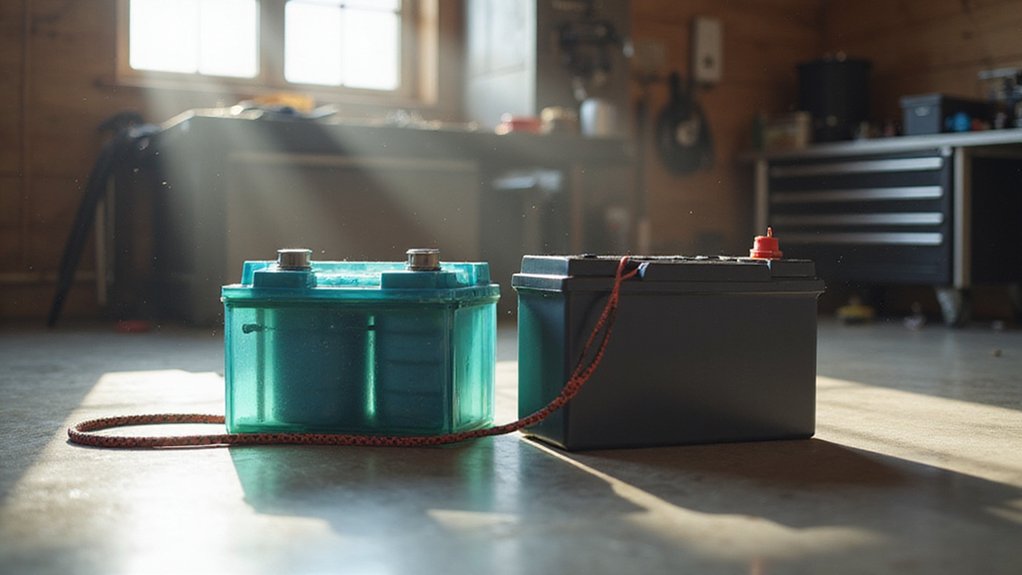

If you’re choosing between AGM and gel batteries, your decision often comes down to how you plan to use them.
AGM batteries excel with quick charging and high cold cranking amps for reliable engine starts, especially in colder weather.
Gel batteries, on the other hand, shine in deep-cycle applications where long-term capacity and durability matter most.
Below, you’ll find all the details to help you pick the right chemistry for your load.
What Is an AGM Battery, and How Does It Work?
An AGM (absorbed glass mat) battery is a sealed lead-acid battery where fiberglass mats wick and immobilize the electrolyte between the plates. This prevents spills even if the case cracks. The physical absorption of the electrolyte ensures stability, keeping acid in constant contact with the plates for efficient ion transfer during discharge and charge cycles. Because of this design, you experience minimal maintenance due to oxygen recombination, which recycles gases into water and reduces venting. The tightly packed structure also lowers internal resistance, enabling faster charging. During discharge, the acid moves into the plates while the fiberglass mats help maintain stable electrolyte contact. Recharging reverses the reaction efficiently, so you rarely need to check fluid levels. The sealed, vibration-resistant construction makes AGM batteries reliable power sources that require little upkeep. For reliable operation, many users prioritize quality, performance, and value when selecting their battery. For solar setups, pairing them with MC4 connectors ensures secure, efficient connections to your panels.
What Is a Gel Battery, and How Does It Work?
A gel battery uses a silica-based electrolyte to turn the sulfuric acid into a semi-solid gel, preventing leaks and allowing flexible orientation. It relies on the same lead-acid electrochemistry as other batteries, but the gelled electrolyte serves as the medium for ion transfer. During discharge, lead dioxide reacts with the sulfuric acid, releasing energy, while charging reverses this process to restore the active materials.
Because of its design, a gel battery features internal gas recombination, where oxygen and hydrogen produced during operation recombine into water. This process minimizes gas loss and significantly reduces the need for maintenance, as you never have to add water. The valve-regulated design includes one-way valves that vent only under excessive pressure, making it safer during overcharge or damage. To ensure your charger is not over-stressing the gel, you can use a solar power meter to verify the voltage and current levels during the charging process. For those living off the grid, pairing a gel battery with high-efficiency solar panels ensures reliable energy storage and consistent charging.
The immobilized electrolyte also limits corrosion and spills, reducing environmental hazards from acid leaks. However, careful control of recharge voltages is essential; applying too high a voltage can damage the gel and compromise its performance. Overall, gel batteries offer a maintenance-free, spill-proof, and safer alternative to traditional flooded lead-acid batteries. Users who need to track energy consumption should consult a power meter for precise monitoring of charging and discharging cycles.
The One Big Difference: How Each Battery Holds Its Acid
The key difference lies in how each type of battery holds its acid. In a gel battery, sulfuric acid is chemically combined with silica, transforming into a semi-solid paste that fills the cell uniformly. This immobilizes the acid entirely because it is part of the gel structure itself, meaning no free liquid exists within the cell. This design makes gel batteries highly resistant to vibration and shocks since there is no liquid that can move around. In contrast, an AGM (Absorbed Glass Mat) battery uses a porous fiberglass mat as its separator material. The sulfuric acid remains in liquid form but is held within the tiny pores of the mat through capillary action. About 95 percent of the mat’s pores are saturated with acid, effectively physically absorbing the electrolyte. This allows the acid to stay in place during operation but still remain fluid enough to support efficient chemical reactions. When disconnecting these batteries, always remove the negative cable first to prevent short circuits from a wrench touching a grounded surface. This physical absorption method is similar to how a surge arrester safely diverts excess energy without allowing free movement of current. A beginner using a digital multimeter to test these batteries must first set the selector dial to the correct DC voltage range to avoid damaging the meter.
This fundamental difference affects each battery’s performance. Gel batteries tend to be more resistant to vibration and can handle deeper discharges more reliably. AGM batteries, meanwhile, typically offer lower internal resistance and faster charge recovery, thanks to their free liquid acid being tightly held within the fiberglass. The choice between the two hinges on whether you prioritize vibration resistance or faster charging and maintenance.
How AGM’s Low Internal Resistance Boosts Cold Cranking Amps
AGM batteries have a notably low internal resistance, which significantly boosts Cold Cranking Amps (CCA). Because their glass mat separators hold electrolyte in close contact with the plates, electrical resistance drops. This reduction allows for a larger, faster surge of current during engine startup. The result is less voltage loss internally when a high demand occurs, making AGM batteries especially suitable for high-load starts in diesel engines, large vehicles, or cold conditions. When selecting a battery setup, understanding the difference between series and parallel configurations can help optimize performance for high-start applications. In marine environments, this immediate power supply ensures reliable ignition even under harsh weather. Even at low temperatures where chemical reactions slow, AGM’s low internal resistance helps it deliver a higher percentage of its rated CCA. However, it’s important to note that raw CCA ratings differ among brands, and lower internal resistance doesn’t guarantee higher CCA in every case. For solar energy use, AGM batteries are better suited for starting generators rather than deep cycling applications. This characteristic makes AGM a clear choice when consistent, reliable cranking performance is crucial. Warning signs of ageing like diminished cranking power can indicate when it is time to replace your AGM battery. For further protection during installation, a wire loom can be used to bundle and safeguard the battery cables from abrasion and heat.
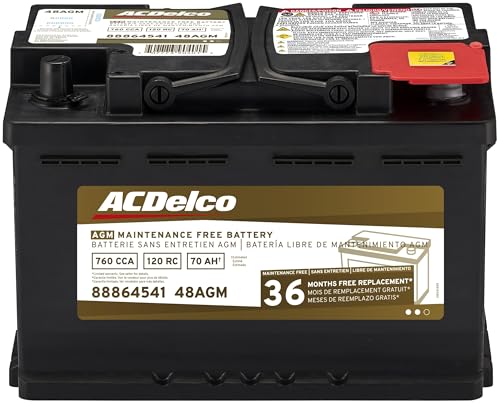
High density negative paste, improves performance and increases battery life

Fast Starting Power: This 12V 70Ah 760 CCA delivers strong, steady starts is ready for any weather in any season.
Why Gel Batteries Lose Less Capacity in Deep Discharge Cycles
Gel batteries lose less capacity in deep discharge cycles because their immobilized electrolyte prevents acid stratification and ensures more uniform plate utilization. The silica-thickened electrolyte restricts acid movement, forcing the active material on the plates to be used evenly during discharges and recharges. This consistency reduces the formation of concentrated sulfuric acid pockets and minimizes localized sulfation, which is a primary cause of capacity fade. In contrast, a failed battery isolator can cause uneven charging that accelerates sulfation and capacity loss in any battery type.
As a result, gel batteries typically endure around 800 to 1200 cycles at 50% depth of discharge, compared to 500 to 600 cycles for AGM batteries. Even at 80% depth of discharge, gels achieve about 600 to 800 cycles versus 250 to 350 for AGMs. By maintaining electrolyte stability and preventing uneven crystal buildup on the plates, gel batteries better protect their active materials. This helps extend their lifespan in deep-cycle applications, providing you with consistent capacity retention over many more cycles.
Charging AGM vs Gel: Why Gel Needs Tighter Voltage Control
Gel batteries require tighter voltage control during charging because they are more sensitive to overvoltage conditions. Typically, you should keep the absorption voltage between 14.1 and 14.4 volts for a 12-volt gel system, compared to 14.2 to 14.7 volts for AGM batteries. Exceeding 2.40 volts per cell can cause gas pocket formation, which diminishes electrolyte stability and reduces capacity. While AGM batteries tolerate higher voltages, gel batteries have a narrower safe zone, making overvoltage more damaging. During the absorption stage, set a lower voltage and limit current to about 20% of the battery’s amp-hour rating to prevent overcharging. The float voltage must also be controlled tightly, often between 13.2 and 13.8 volts, to avoid gradual overcharge and electrolyte dry-out. Proper regulation minimizes maintenance needs by preserving electrolyte health, but it requires an adjustable charger capable of precise multi-stage control. Generic AGM charging profiles are usually too aggressive for gel batteries, so you need a charger tailored specifically for gel’s tighter voltage tolerances. This is why selecting a charge controller with programmable voltage settings is essential for maintaining gel battery longevity. Similar to how a house’s breaker box must be located and inspected for safe electrical operation, your charger settings must be verified to prevent damaging overvoltage conditions. Using a data logger to monitor voltage over time helps ensure these tight tolerances are consistently maintained.

XH3P battery charger is for 7.4V XH 3pin li-ion and lipo battery. PLEASE verify your battery's connector and voltage before purchasing.

🔌【Tosiicop Design】 Battery charger accessories from Tosiicop Store and focus on the toy production of RC Car Drone model battery charger accessories

🔋【3-in-1 Battery Charger, Desulfator, Maintainer】The 12V 24V battery charger is designed to charge and maintain 12 volts or 24 volts batteries, it can works as 12Amp quick battery charger. Compatible with all 12.6V Lithium-ion batteries,12V and 24V lead-acid automotive,marine, deep-cycle batteries: flooded,gel,AGM,maintenance-free,WET,CAL,EFB batteries in Car,motorcycle,lawn mower,ATV,truck,tractor,SUV,boat marine, etc.🎁Nice holiday gifts for Christmas day,New year,etc.
Cold vs Heat: Which Handles Extreme Temperatures Better?
AGM batteries handle cold temperatures better than gel batteries, especially in freezing conditions. At -40°C, AGM delivers 124% more usable capacity under load compared to gel batteries, thanks to its lower internal resistance and stronger cold-current delivery. This makes AGM the ideal choice for winter applications such as cold cranking and solar storage, where consistent power output in low temperatures is crucial. In contrast, gel batteries’ electrolyte thickens faster at low temperatures, impairing their high-current performance and making them less reliable in extreme cold. For reference, home battery systems using LiFePO4 chemistry provide stable performance across a wider temperature range without the cold-weather limitations of gel batteries. A grounding wire failure can cause dangerous voltage surges and equipment damage in these systems.
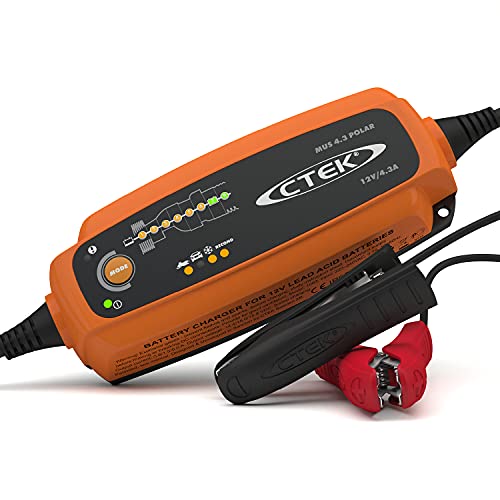
Charges down to -22°F (-30°C): Specially developed for use in extreme cold conditions and featuring Nordic-standard cables adapted for low-temperature use. Safety-orange casing for high visibility

BATTERY SPECS: 12-Volt, 800 Cold Cranking Amps, Size: 10.06" Long x 6.94" Wide x 7.88" Tall, Weight: 38.8 pounds, Dual SAE & GM Posts, C20 Capacity: 50 AH

Fast Starting Power: This 12V 95Ah 900 CCA delivers strong, steady starts is ready for any weather in any season.
Do Gel Batteries Really Deliver Double the Cycle Life?
The idea that gel batteries deliver double the cycle life of AGM batteries is an oversimplification. While at 50% depth of discharge (DoD), a Deka Gel might reach around 1,000 cycles compared to a Deka AGM’s 500, effectively doubling its lifespan, this is not a universal rule. The actual cycle life depends heavily on factors like discharge depth, charging method, and manufacturer quality. Gel batteries are designed with immobilized electrolyte, reducing stratification and enabling deeper cycling, which can extend lifespan under proper conditions. However, premium AGM batteries may perform similarly in cycle life under optimal use. Improper charging—such as exceeding voltage limits—can quickly diminish the benefits of gel technology. Ensuring you follow recommended maintenance and charging practices is essential to realize the promised extended cycle life. Comparing cycle counts at equal DoD offers a more accurate picture, as unequal discharge levels skew perceptions of longevity. Similarly, the renewable nature of solar panels depends on sustainable recycling to recover materials like silicon and silver. Additionally, longer-rated cycle life does not necessarily translate into easier battery replacement, as end-of-life considers factors like recycling economics. Always test your specific application and operating conditions before relying on the ‘double’ claim. Just as with wire ferrules, beginners must pay attention to correct settings to avoid common mistakes that undermine performance. To protect your investment, you should safely clean panels using a soft brush and deionized water to prevent scratches that reduce efficiency.
Why AGM Is Usually Cheaper and Easier to Find
AGM batteries are usually cheaper and easier to find than gel batteries because of three main factors: simpler manufacturing, higher market volume, and broader compatibility. Manufacturing AGM batteries involves fewer steps since they use absorbed electrolyte in fiberglass mats, which reduces production costs compared to the gel formulation process. This simpler process also makes AGM batteries slightly lighter, adding to their versatility in standard applications.
The higher sales volume of AGM batteries—often outselling gel batteries by about 100 to 1—allows manufacturers to produce at larger scales, lowering costs further. As a result, retailers tend to keep a wider variety of AGM sizes in stock, making them readily available locally. In contrast, gel batteries require more specialized supply networks, making them harder to find and often necessitating special orders. The broad compatibility of AGM batteries with starting and general-purpose roles, especially in automotive, marine, and backup systems, further drives demand and keeps their prices competitive.

[High Performance]: Powered by advanced AGM technology, the WEIZE BCI Group 27M has a low internal resistance and high output power, offering a reliable power supply and a long battery life, 2x more cycle life than traditional flooded marine batteries. [DUAL PURPOSE ]: The WEIZE BCI Group 27M is a dual purpose deep cycle sealed AGM marine and RV battery. It features an outstanding starting power and deep cycling capability for long-lasting power supply.Terminal: Left : Positive (+)-Red, Right: Negative (-)-Black.

Marine-Grade Confidence: Harness the endurance and dependable energy you need to power every journey on the water, on the road, off the grid, or wherever adventure takes you.
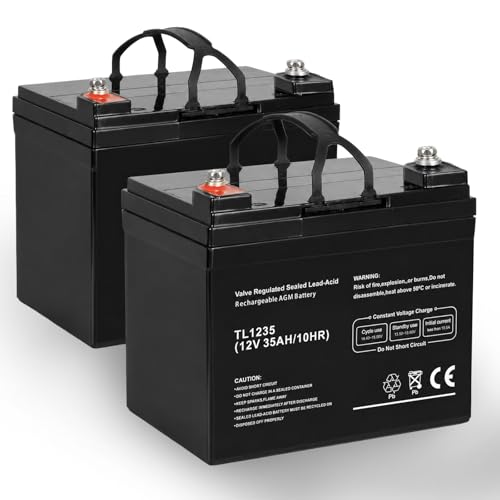
EXTENDED POWER: 12 Volt 35AH deep cycle capacity delivers reliable energy for RVs, UPS backup, marine, camping, off-grid solar setups and more, ensuring longer run times and consistent performance
How to Choose Between AGM and Gel for Your Setup
Choosing between an AGM and a gel battery for your setup depends on matching the battery’s characteristics to your system’s charge profile, load demands, and environmental conditions. Firstly, examine your charger’s absorption voltage settings: AGM batteries typically require higher voltage settings, while gel batteries need lower ones. Mismatched profiles can lead to premature failure, so adjusting your charger accordingly is essential.
If your system undergoes deep and frequent cycling, gel batteries offer better deep-discharge tolerance, making them ideal for such applications, especially in hot climates where heat can shorten battery life. Conversely, AGM batteries accept higher current loads, making them suitable for rapid recovery needs or high-burst applications.
In cold regions, AGM batteries tend to perform better because they handle low temperatures more effectively. However, it is crucial to implement temperature-compensated charging for both chemistries to prevent overcharging or undercharging. Maintenance is simpler with AGM batteries due to higher gassing tolerance, which allows for safer, minimal top-up watering. Gel batteries, on the other hand, demand stricter voltage control and careful charging discipline.
Recycling options are available for both chemistries, but check locally if facilities accept gel batteries, as their silica matrix can present different recycling considerations. Ultimately, selecting the right chemistry hinges on analyzing your main duty cycle—deep cycling versus high-current demands—and environmental factors.

PREVENT BATTERY FAILURE: Ensure reliable starts after storage with this 4-in-1 device that charges, maintains, tests, and restores batteries for cars, motorcycles, ATVs, trucks, SUVs, and boats.

【Wide Applicability】suitable for charging 6V and 12V lead-acid batteries with a capacity of no more than 40AH, and can maintain lead-acid batteries up to 60AH, It's used charging for motorcycle, ATV, lawn mowers, boat, SUV, etc。

Stay Charged: Battery Tender battery chargers and maintainers provide a full charge to your powersport vehicle’s battery before switching to float mode to maintain proper voltage levels for safe, long-term storage