


Ever wonder how your vehicle’s batteries stay charged without draining each other? A battery isolator is the key, acting as a one-way valve that ensures your alternator can charge both the starter and auxiliary batteries while preventing the house bank from sapping power from the engine.
It helps protect your batteries from damage and keeps your vehicle reliable. Stay with me to learn how it works and how to set it up properly.
What Does a Battery Isolator Do?
A battery isolator controls the flow of charging and discharging between multiple batteries, preventing them from interfering with each other. It manages current between banks by directing alternator output to each battery independently. Using one-way diodes or solid-state switches, it blocks reverse current that could backfeed into the starter battery, avoiding drain. This setup separates the circuits while maintaining continuous charging, enhancing battery efficiency by preventing parasitic discharge. It also allows for precise power management, ensuring auxiliary loads draw from their designated bank without depleting others. Many isolators are designed to integrate with MC4 connectors for efficient solar panel connections. The isolator does not equalize charge between different types of batteries, preserving each bank’s state of charge. It remains active while the engine runs, providing reliable, independent power for critical loads when the engine is off, without any interaction loss. For those managing multiple batteries, clean cable organization can prevent accidental shorts and improve system reliability. For buyers prioritizing quality, performance, and value, selecting a top-rated isolator ensures consistent charging across battery banks.
Why Your Starter Battery Needs Protection
Protecting your starter battery from deep discharge is essential because it prevents voltage from falling below the critical 9.5–10.5 volts needed for reliable engine starting. When you drain its reserve while the engine is off, the voltage can drop, leading to slow cranking or even a no-start situation that appears like starter failure. Repeated deep discharges cause sulfation, which permanently reduces the battery’s capacity and shortens its lifespan. A similar principle applies when building your own DIY battery backup system, where you must separate house loads from the starting battery to avoid unintended discharge. Additionally, deep discharging causes corrosion on terminals and increases internal resistance, worsening voltage loss and stressing your charging system. This is why mechanics always remove the negative cable first when servicing a battery, as it breaks the ground circuit and eliminates the risk of a short circuit. This can lead to hard-start conditions and false fault diagnostics, wasting time troubleshooting. To protect your starter battery, always disconnect nonessential loads before they drain the reserve, ensuring dependable cold starts and preventing you from being stranded. Proper management of battery loads helps maintain its usable capacity and extends its overall service life. For AGM batteries, watching for warning signs of ageing helps you replace them before they fail unexpectedly.

✫【WHAT IS THIS LIKE?】LI LEAD Auto Starter is NOT a Jump Starter. It's a Battery Protector (Much safer than Jump Starter). This is a kit which is installed as interference between your car's electronic draw, and the battery. If you accidentally leave on something or if you have an electronic malfunction, the battery connection will be disconnected to save what charge is in the battery. This has two connectors, one for positive and one for negative. You only use one or the other.
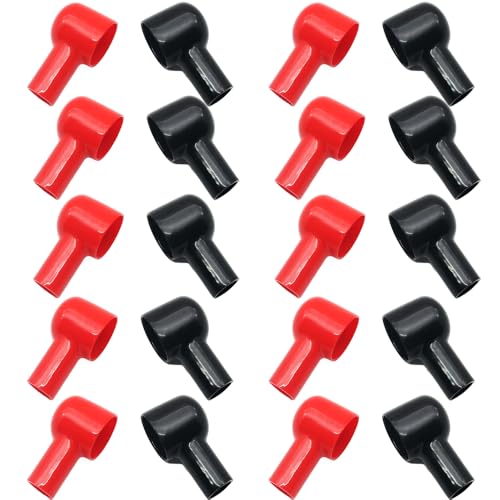
Package Included: 20pcs in total, 10pcs black battery terminal boots,10pcs red battery terminal boots. Fit terminal max dia: 20mm; fit cable max dia: 12mm.

Specially designed to protect battery terminals from corrosion, a leading cause of hard starting and battery failure.
How a Battery Isolator Works (One-Way Gate)
A battery isolator ensures that current flows in only one direction—from your alternator or charger to your battery banks—preventing any reverse drain. In a diode-based system, this is achieved through silicon diodes that permit current to pass into the batteries but block it from flowing back. The efficiency of these diodes, typically between 90 and 95 percent, directly influences how much voltage is lost during charging. Higher diode efficiency means less energy wasted but also a lower voltage drop, which helps your batteries charge more effectively. For example, a 400-watt inverter running a small appliance draws a specific current, and understanding runtime maths is crucial for sizing your battery bank to avoid draining it below safe levels. Alternatively, a relay-based isolator uses a voltage-sensitive switch that activates when the charging voltage rises and disconnects when it drops. This mechanical approach handles higher currents better and is less affected by temperature fluctuations, but it relies on moving parts that may wear over time. Both designs keep your batteries electrically separated during discharge, while sharing a common charging source, ensuring your system remains protected from unwanted current flow.

This model is anti-reverse diode MD 55A-16;Peak voltage 1600V;AC < 400VAC ;DC 3-1000VDC

PLUG-AND-PLAY BACKFEED & REVERSE POLARITY PROTECTION — This 12V one way blocking diode blocks reverse current flow to prevent switch indicator false triggers, circuit crosstalk, and parasitic battery drain. Direct 80111 replacement compatible with PRF-50506 6-switch panels, featuring pre-installed 0.25-inch spade terminals on both ends—no soldering or crimping required. Clear color-coded polarity: Red end = anode input, Black end = cathode output for instant installation.

Discharging the accessory battery, for example, will not result in also discharging the starter battery
Key Benefits of Adding a Battery Isolator
Adding a battery isolator provides three key benefits: it prevents starter-battery drain, enhances battery life and health, and ensures more reliable charging. It accomplishes this by separating your battery banks, which stops parasitic drain from accessories like fridges or radios. This preserves your starter battery’s reserve capacity needed for engine starts. The isolation also prevents deep discharge cycles, which can degrade battery capacity over time—particularly with AGM, gel, or lithium batteries. For roof-mounted solar systems, combining a battery isolator with top solar panels can further optimize energy storage. A solar panel’s semiconductor materials create the electrical current needed to replenish these batteries. For those using a portable generator as a backup power source, adding a generator interlock kit ensures safe and code-compliant connection to your home’s electrical panel.
Furthermore, a battery isolator improves charging efficiency. Your alternator can direct current accurately to each bank, allowing them to charge according to their specific needs. This setup reduces reverse-current losses and ensures each battery receives optimal charging. Separating the banks also reduces stress on each battery, lowering the chance that a weak or depleted bank pulls down the entire system. It maintains critical power availability for emergencies and minimizes the risk of getting stranded due to accessory overuse or battery failure.

Dual Battery Isolator: The smart battery isolator cuts in at 13.3 volts and cuts out at 12.8 volts to ensure your primary battery is always charged and ready to start your vehicle. It can charge two batteries simultaneously and isolate them from each other when the vehicle is turned off.

【Function】——Voltage Sensitive Relay(VSR) cuts in at 13.3v and cuts out at 12.8v to ensure your main battery is always charged and ready to run your vehicle. The dual battery isolator can display the voltage, you can check the battery voltage in time

High Battery Compatibility: With 300A high current, our dual battery isolator is the optimal charging solution for high-capacity dual-battery systems. It can adjust start-stop voltage, compatible with lithium, lead-acid and other battery types
The 4 Most Common Battery Isolator Types
There are four common types of battery isolators, each with distinct advantages and ideal applications. Diode-based isolators use one-way diodes to direct current flow, making them simple and reliable. However, they introduce a voltage drop of around 0.7 volts, which can reduce charging efficiency, especially in systems with high current demands. A beginner using a multimeter should measure voltage drop across the isolator to confirm its operation. Relay-based isolators utilize electromagnetic relays and a solenoid to connect battery banks, eliminating the voltage drop issue and handling higher currents more effectively. The downside is that the mechanical contacts can wear out over time, requiring eventual replacement. Voltage-sensitive relays (VSRs) automatically connect batteries once a preset voltage threshold is reached, ensuring the primary battery charges first and simplifying system management. For manual control, a physical switch allows you to select which bank to power or charge, but it leaves room for user error. For advanced setups where maximum efficiency and minimal power loss are critical—such as lithium battery systems—solid-state isolators are preferred. They have no moving parts, operate silently, and are highly durable, making them ideal for demanding applications. When paired with solar panels, Diode-based isolators can cause a noticeable drop in charging efficiency due to their inherent voltage loss. Choosing the correct RS485 cable is essential for reliable communication between battery monitoring systems in such advanced setups.

Heavy Duty: ABS plastic housing, durable made for safety use, rear cover insulates terminals against any short of circuits, equipped with 4 sets of bolts.


Auto & Truck Maintenance
Where You’ll Find Them in Action
You’ll find them in action by their specific application demands. In marine systems, isolators separate the starter and house banks, allowing you to preserve engine-start capability for navigation and radar while powering refrigeration and cabin lights without draining the starting battery. This setup prevents reverse drain in wet, vibration-heavy environments, directly extending your battery’s lifespan.
In RVs and overlanding vehicles, isolators protect your chassis battery while you run appliances like fridges, fans, and pumps from a secondary bank. This reduces the risk of a dead starter after extended accessory use. For trucks and work vehicles, isolators separate starter and auxiliary batteries when running high-draw equipment such as winches or compressors, supporting their operation without cross-drain. This ensures electrical safety and stops one battery bank from discharging the other when the engine is off.
How to Match an Isolator to Your Setup
To match an isolator to your setup, start by sizing it to the maximum current output of your alternator, not just the battery bank size. For example, an 80A alternator requires an isolator rated for at least 80A of source current. Using an undersized isolator creates a bottleneck, limiting the flow of charge and generating excess heat, which could damage the component. Ensure the isolator supports your system voltage—most common models are 12V, but if you’re running a 24V system, you’ll need a compatible version. This Nilight unit activates at 13.3 volts and disconnects at 12.8 volts to intelligently manage charging and prevent battery drain. For a comprehensive comparison of electrical components, you can refer to top breaker boxes that offer similar protection and reliability. Testing the isolator with a battery load tester can confirm its switching performance under real-world current draws. Many installations benefit from terminal blocks for DIN rail to organize and secure these high-current connections.
Check the per-leg ratings if you’re choosing a diode-based isolator; many models like Littelfuse deliver half the alternator’s rating per leg, so you might need a higher-rated option. Make sure your wiring matches the current requirements as well—cables should be sized based on source current and length, not just the isolator’s rating, to prevent voltage drops and overheating.
Match the isolator’s continuous current rating with your expected charging needs. Ratings between 100A and 250A are common, but it’s advisable to leave headroom to accommodate surge loads that could reach up to 600A during engine startup or other high-demand situations. Finally, verify that the isolator suits your battery chemistry and charging profile because mismatched thresholds can prevent proper switching, leading to incomplete charging or battery damage.
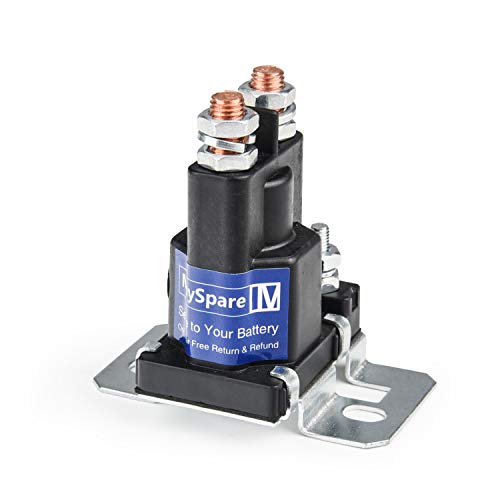
Double Batteries Isolator Control On/Off Switch; Continuous Amps: 80,Surge Max Amps:150A ,Voltage: 12VDC; 100,000 mechanical cycle life./Normally Open With Attaching Hardware, Copper Contact With Sliver Pins

High quality : ensuring the maximum electric current can be transferred, Extends battery life.Double Batteries Isolator Control On/Off Switch; Continuous Amps: 80,maximum instantaneous through current 150A,Voltage: 12V DC. /Normally Open With Attaching Hardware, Copper Contact With Sliver Pins

Universal 12VDC Applications,(such as fit for honda pioneer 1000-5,Toro Timecutter zero turn mower; house batteries in class B motorhome,Class C RV, 4 wheeler),high current relays are the most reliable and efficient way to add secondary batteries to your system,Prevents primary battery discharge,Extends battery life.