


Wondering about the biggest downsides of AGM batteries? These batteries are known for their durability and maintenance ease, but they come with some important limitations.
The main challenge is their high sensitivity to charging voltages, which can cause irreversible damage if not handled carefully.
Keep reading to understand what makes AGM batteries tricky and whether they’re right for you.
What Are the Main Disadvantages of AGM Batteries?
AGM batteries have notable disadvantages that can impact their performance and longevity. Foremost, their lifespan relies heavily on precise charging; overvoltage or using a standard charger can quickly damage the sealed internal plates. To avoid this, an AGM-specific charging profile is essential, or you risk significantly shortening the battery’s service life. Additionally, manufacturing costs are higher than those of flooded batteries, primarily due to the complex absorbed glass mat construction and sealed casing. This results in a higher upfront expense without providing any increase in energy storage capacity. When selecting a charger, look for one with a gel battery compatible profile to avoid similar damage.
Furthermore, AGM batteries tend to have lower specific energy, meaning they offer less runtime per unit of weight compared to lithium-based options. Repeated deep cycling degrades their capacity faster, so they are not suitable for applications requiring frequent deep discharges. For example, adopting simple habits that add years like avoiding deep discharges and using proper charging is crucial for maximizing battery lifespan. Operating the battery in high temperatures, such as within the engine bay, accelerates failure despite the sealed case. Lastly, modern vehicles often require battery registration after replacement, adding an extra step and potential complication to installation. If you plan to use AGMs in a DIY solar electric project, their sensitivity to overcharging requires pairing them with a compatible charge controller.

MEET THE GENIUS1 — Similar to our G750, just better. It's 35% smaller and delivers over 35% more power. It's the all-in-one charging solution - battery charger, battery maintainer, trickle charger, plus desulfator.

MEET THE GENIUS2 — Similar to our G1100, just better. It's 30% smaller and delivers over 140% more power. It's the all-in-one charging solution - battery charger, battery maintainer, trickle charger, plus desulfator.

Charger, Maintainer & Desulfator - An all-weather battery charger, battery maintainer, trickle charger, and battery desulfator. Perfect for charging and maintaining all 12-volt lead-acid, flooded or sealed maintenance free batteries (AGM and gel cell).
How Much More Will You Pay for an AGM Battery?
The upfront cost of an AGM battery is typically 2 to 3 times higher than that of a flooded battery. You’ll usually pay between $200 and $500 for a standard passenger-car AGM, compared to $80 to $200 for a flooded version. Including installation labor, which can range from $20 to $80, the total initial expense rises further. While AGM batteries cost more initially, their longer lifespan can offset the higher price over time. For example, a $300 AGM that lasts about seven years results in an annual cost of roughly $43, whereas a $150 flooded battery replaced every four years costs about $37.50 annually. Keep in mind that AGM batteries require specialized technician training due to their unique charging needs, and proper recycling is essential for lead-acid batteries for environmental safety. Ultimately, the biggest financial consideration is the initial purchase price rather than long-term expenses. However, when evaluating overall value, some buyers also factor in the potential savings from pairing AGMs with high-efficiency solar panels for off-grid or RV systems, where the battery’s low self-discharge and durability complement renewable energy setups. For those focused on quality, performance, and value, comparing top picks in detailed reviews can clarify which AGM model best suits your needs. Simple habits like avoiding deep discharges and maintaining proper charging can significantly extend a deep cycle battery’s lifespan regardless of type.

✅Batter dimensions: 9.06" L x 6.89" W x 8.82" H, Terminal: Tapered terminal (Left negative (-), Right positive (+)). ✅Please ensure to verify the dimensions and terminal position before making a purchase to guarantee compatibility with your vehicle to avoid any fitment issues.

✅Batter dimensions: 10.75" L x 6.81" W x 8.98" H, Terminal: Tapered terminal (Left negative (-), Right positive (+)). ✅Please ensure to verify the dimensions and terminal position before making a purchase to guarantee compatibility with your vehicle to avoid any fitment issues.

✅Batter dimensions: 10.94" L x 6.89" W x 7.48" H, Terminal: Tapered terminal (Left negative (-), Right positive (+)). ✅Please ensure to verify the dimensions and terminal position before making a purchase to guarantee compatibility with your vehicle to avoid any fitment issues.
Why Are AGM Batteries So Sensitive to Overcharging?
Because AGM batteries are valve-regulated, overcharging causes gas to escape through the safety valves instead of recombining inside the cell. This venting leads to permanent electrolyte loss, which accelerates electrode degradation. Maintaining tighter voltage control is crucial; even a 0.1V increase above the recommended 14.4–14.8V absorption range can shorten battery life by 5–7%. Sustained overvoltage dries out the glass mat, impairing ionic conductivity. Additionally, internal pressure and heat buildup stress the plates, while repeated venting prevents proper mixing, resulting in acid stratification. This stratification concentrates acid at the bottom, leading to uneven grid corrosion. To mitigate this, always secure connections with properly tightened cable ties to prevent vibration-induced resistance spikes that mimic overcharging conditions. Unlike some solar batteries designed for deep-cycle longevity, AGM units suffer permanent capacity loss from this damage because the glass mat cannot be refilled. The same electrical stresses that cause overcharging in AGM batteries can be mitigated by using proper surge protection. Once this damage occurs, it cannot be reversed—capacities are lost permanently, and the battery’s lifespan decreases significantly.
What Happens If You Use the Wrong Charger on an AGM?
Using the wrong charger on an AGM battery can cause serious damage. It exposes the battery to voltage levels outside its safe operating range, typically exceeding the recommended 14.4 to 14.8 volts during absorption or 13.2 to 13.8 volts during float. Pushing the battery beyond these limits can lead to internal damage that isn’t immediately visible. Initially, the battery might seem normal, but repeated misuse shortens its lifespan over time.
Without an AGM-compatible smart charger, you risk causing case bulging and dangerous off-gassing due to excessive voltage. Always choose a charger specifically designed for AGM or sealed batteries that has an explicit AGM or sealed-battery mode. Avoid using chargers set to flooded or gel battery modes because they lack the precise regulation needed for AGM chemistry. Repeatedly using a mismatched charger degrades your battery’s lifespan, even if no immediate signs are visible. To maintain optimal health, use a multi-stage charger and verify the correct voltage ranges before charging.

3-in-1 Smart Car Battery Charger: This 15A 12V car battery charger comes with a compact size and super fast charging, suitable for all 12V lead-acid batteries (including AGM, GEL, SLA, VRLA, etc.) and LiFePO4 lithium batteries. Charging, maintaining, and trickle charging modes for cars, motorcycles, trucks, boats, and more. Please note: this is a car battery charger and please connect it to a power source before use. (Please do not let the charger operating unattended for more than 12 hours.)

MEET THE GENIUS5 — Similar to our G3500, just better. It's 34% smaller and delivers over 65% more power. It's the all-in-one charging solution - battery charger, battery maintainer, trickle charger, plus desulfator.
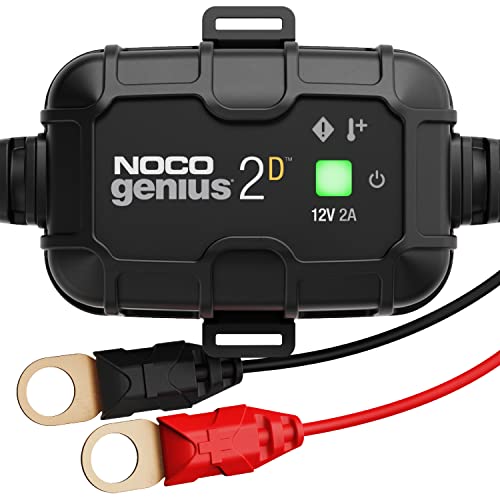
MEET THE GENIUS2D — The all-new direct-mount onboard battery charger for an under-the-hood battery charging system and year-round battery maintenance.
How Fast Does Deep Discharge Kill an AGM Battery?
Deep discharge can damage your AGM battery within 72 hours if the voltage drops below 10.5V and remains discharged. Sulfation begins almost immediately, with lead sulfate crystals forming on the plates and hardening over time. Once sulfation becomes irreversible, it blocks chemical reactions essential for charging, reducing the battery’s ability to accept a charge and lowering its overall capacity. If you leave the battery discharged for days, this damage accelerates, and repeated deep discharging below 50% of its capacity significantly shortens its lifespan. To prevent this, recharge your AGM battery promptly after deep discharges and keep its voltage above 11.9V whenever possible. Using a battery charger correctly helps reverse sulfation if applied promptly, as modern chargers often include automatic voltage detection and desulfation modes. You can verify the severity of sulfation by taking a voltage reading with a multimeter set to DC volts, as detailed in the testing guide. To further protect your battery, installing a battery disconnect switch on the negative terminal can prevent parasitic drain that leads to deep discharge when the system is not in use.
Why AGM Batteries Struggle in Heavy Cycling or Heat
Heat is one of the biggest enemies of AGM batteries. For every 10°C increase above 25°C, the battery’s lifespan roughly halves. Data from Victron confirms this: at 20°C, an AGM battery can last between 7 to 10 years, but at 40°C, its service life drops to about 2 years. Higher temperatures accelerate grid corrosion inside the cells and increase internal resistance, which lowers efficiency and stresses the battery during use. Monitoring heat buildup with a clamp-on amp meter can help identify excessive current draw that contributes to internal heating. For high-heat environments, a pure sine wave inverter can help regulate output more efficiently, reducing extra electrical stress on the battery compared to modified sine wave models. Heavy cycling also shortens AGM lifespan significantly. Repeated deep discharges below 50% state of charge cause sulfation and capacity loss, pushing the battery closer to failure sooner. High discharge rates further reduce available capacity, especially in hot conditions, making demanding applications even harder on the battery. Using an interlock kit can help prevent damage by automatically disconnecting the battery under unsafe load conditions. Managing temperature carefully and avoiding deep cycling are essential steps to protect your AGM battery’s longevity.
Are AGM Batteries Worth It for Daily Drivers?
AGM batteries are worth it if your daily driver has start-stop technology, heavy accessory loads, or requires high reliability. Their higher upfront cost is justified by faster charging, lower self-discharge, and better vibration resistance—advantages that make them ideal for short trips and frequent stopping. The maintenance-free, sealed design eliminates the need for topping off water, which is convenient for a set-it-and-forget-it approach. However, for a standard commuter without these demands, a quality flooded battery still does the job at a lower initial cost. Unlike a converter that steps voltage down for DC loads, an inverter converts DC to AC power, which is a key distinction when pairing batteries with household devices. For those safeguarding home electronics, pairing a battery with a surge protector for the breaker box helps prevent damage from power spikes. When selecting a battery for backup power, you may also need a 100 amp breaker box to safely manage the electrical load.
Consider how long the battery will last: AGM batteries typically last between 4 and 8 years, compared to shorter-lived flooded batteries. This longer lifespan reduces the annual cost despite the higher purchase price, which ranges around $200 to $350. Additionally, AGM batteries are easier to recycle effectively, making them more environmentally friendly by producing less waste over their lifetime. Still, if your vehicle’s power needs are modest, investing in an AGM might be overkill.
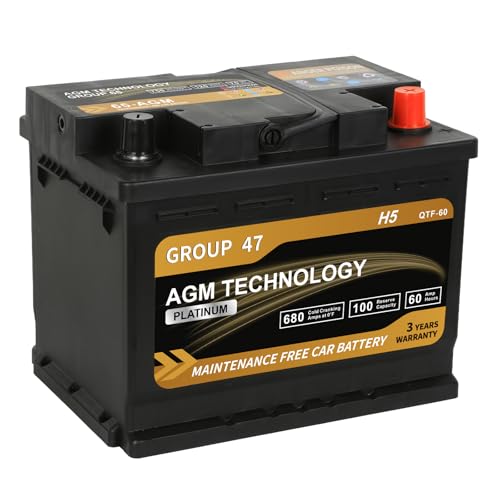
✅ Perfect Fit & Compatibility: BCI Group Size 47 (H5), 12V 60Ah, 680CCA, 100RC. Dimensions: 9.52" L x 6.89" W x 7.48" H. Terminal: Tapered terminal (Left negative (-), Right positive (+)). Ensure proper fit by comparing the size, terminal position, and CCA with your original battery. This ensures compatibility and avoids any fitment issues for your vehicle.

✅ This is the AUX14 auxiliary battery, designed for auxiliary use only and not suitable as the main starting battery. Please check compatibility before purchasing, as customers often select the wrong model. ✅ The dimensions are provided in image 3 – please ensure they match your vehicle's specifications.

Perfect Fit & Compatibility – BCI Group Size 47 (H5), 12V 60Ah, 680CCA, 100RC. Dimensions: 9.57 x 6.89 x 7.48 inches, weight: 38.76 lbs. Terminals: Left (-), Right (+). Please compare size, terminal position, and CCA with your original battery to ensure proper fit for your vehicle.
Do AGM Batteries Weigh More Than Flooded Alternatives?
AGM batteries generally weigh about the same as flooded batteries of the same group size, with the difference usually being modest—around 6 to 8 pounds at most. This small weight difference primarily stems from construction variations. AGM batteries immobilize electrolyte in fiberglass mats, which tends to make them lighter, but some manufacturers add extra lead to the plates for enhanced durability. This extra lead offsets the reduced liquid volume, often resulting in a heavier AGM. Always check the specific weight listed on the spec sheet because factors like group size and amp-hour rating influence weight more than chemistry alone. In many cases, the weight gap is small enough that it won’t make a significant practical difference in handling or installation. However, AGM batteries typically cost more than both flooded and EFB batteries, which can be a deciding factor for budget-conscious buyers. To maintain optimal performance, it is important to use a lithium battery charger specifically designed for the battery’s chemistry.
Why Leaving an AGM Undercharged Can Ruin It
Leaving an AGM battery undercharged can cause permanent damage. AGM batteries rely on full recharging to reverse normal chemical reactions, and when you leave one undercharged, lead sulfate crystals form and harden into an insulating layer on the plates. This sulfation reduces the active surface area, leading to a drop in capacity. You may notice the battery accepts charge more slowly as internal resistance increases, and it might not reach the necessary absorption stage of 14.4 to 14.8 volts. Partial charging gives a false impression of health, but the actual amp-hour capacity diminishes over time. Eventually, the battery cannot meet your load demands, even if the voltage appears acceptable. Severe buildup makes recovery difficult or impossible. To prevent this, use a charger that completes the full cycle of charging and discharging. If damage becomes permanent, responsible recycling of the battery is essential. Never gamble with undercharging your AGM, as it quietly destroys the battery over time.
When Does an AGM Battery Actually Make Sense?
An AGM battery makes sense when you need a reliable and maintenance-free power source in demanding conditions. Its low internal resistance provides quick energy delivery, making it ideal for start-stop vehicles that require frequent engine restarts. In tough environments such as off-road, marine, or motorcycle use, its vibration resistance and sealed casing prevent spillage and withstand rough handling. For backup power, such as in uninterruptible power supplies (UPS) or security systems, its low self-discharge rate ensures longer shelf life and readiness.
In applications like RVs or off-grid solar systems, AGM batteries recharge faster than flooded types and offer better deep-cycle capabilities. They are also suitable when installation space is limited or the battery needs to be placed inside the cabin, as their sealed design eliminates the risk of acid leaks. Always verify that your charging system is compatible with AGM batteries to ensure optimal performance and longevity. Additionally, AGM batteries are more environmentally friendly because their lead content simplifies recycling and reduces environmental impact compared to less durable alternatives.
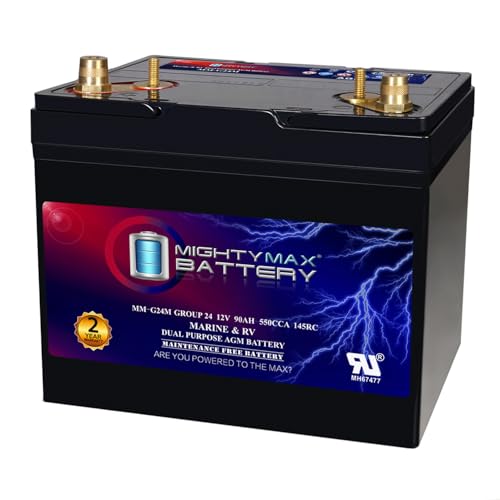
Marine-Grade Confidence: Harness the endurance and dependable energy you need to power every journey on the water, on the road, off the grid, or wherever adventure takes you.

🔋 DEPENDABLE DEEP CYCLE POWER – Power your next trip with the Newport 12V 50Ah Deep Cycle Lead Acid Battery, designed to deliver steady, consistent power for trolling motors and other 12V marine electronics.

Renogy AGM Batteries: Trusted Worldwide, Exceptional Safety, Extreme Performance! Support series (No limitation), parallel (Up to 4P) connections