


Figuring out whether to go with AGM or lithium batteries can feel overwhelming, especially when the costs and long-term benefits aren’t clear.
AGM batteries are cheaper upfront but have a limited capacity and fewer cycles.
While lithium batteries cost more initially, they last much longer and offer better performance.
Keep reading to see how each stacks up to help you make the best choice.
AGM Batteries: How They Work and Why They’re Still Popular
AGM batteries remain popular because their design offers several advantages over traditional flooded batteries. Their valve-regulated system immobilizes the electrolyte in a glass mat, which prevents spills and allows flexible installation in various orientations. During use, chemical reactions at the lead plates produce energy during discharge; when charging, this process is reversed, and internal gas recombination restores most of the energy—over 99% efficiency. This sealed, maintenance-free setup means you never need to add water. Additionally, AGM batteries charge up to five times faster than flooded lead-acid types. Their low internal resistance supports rapid cycling, making them suitable for high-demand accessories. The lead-acid chemistry also features an established recycling infrastructure, simplifying disposal and environmental concerns. Safety is enhanced since the sealed design reduces leakage if the battery cracks or tilts. Furthermore, AGM batteries perform well in cold temperatures and are capable of deep cycling, which makes them reliable for both professional applications and recreational use in boats, RVs, and Other vehicles. To safely strip a wire for connecting AGM battery terminals, mastering the use of wire strippers ensures clean cuts without damaging the conductor. When selecting a solar generator, it’s important to compare top picks on performance and quality to ensure you get the best value. Solar generators often use AGM batteries as a power storage component, providing quiet and portable energy for off-grid use.

Renogy AGM Batteries: Trusted Worldwide, Exceptional Safety, Extreme Performance! Support series (No limitation), parallel (Up to 4P) connections
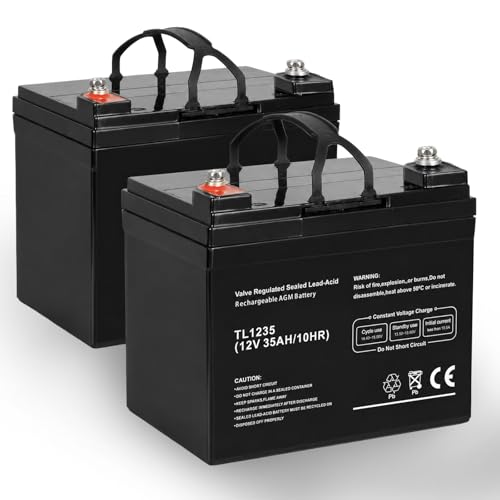
EXTENDED POWER: 12 Volt 35AH deep cycle capacity delivers reliable energy for RVs, UPS backup, marine, camping, off-grid solar setups and more, ensuring longer run times and consistent performance

Maintenance Free: Manufactured with thick absorbent Glass Mat (AGM) seperators and advanced valve regulated technology, Renogy deep cycle agm batteries save you from acid leakage and frequent maintenance..Batteries Required:no
How Lithium Batteries Differ From AGM in Chemistry and Electronics
Lithium batteries, specifically LiFePO₄, differ from AGM batteries both in chemistry and electronics. AGM batteries use lead-acid chemistry with sulfuric acid stored in fiberglass separators, while lithium batteries operate on entirely different electrochemical principles. Lithium ions shuttle between a graphite anode and an iron phosphate cathode, beyond the reactive lead plates and acid of AGM cells.
The electrolyte in lithium batteries is a non-aqueous solution containing lithium salts, which eliminates the risks associated with acid spills and handling. This shift in chemistry also results in a different internal voltage profile. Lithium batteries maintain a flatter discharge curve under load, providing a consistent power output until near depletion. In contrast, AGM batteries experience a steady voltage drop as they discharge. Gel batteries share this sealed, maintenance-free design but use a thickened electrolyte rather than the absorbed fiberglass mats found in AGM units. For users seeking top battery picks with reliable terminals, premium AGM options often provide strong performance at a lower initial cost.
Electronics are crucial with lithium batteries. A battery management system (BMS) is mandatory to monitor cell voltage, temperature, and current. This system prevents overcharging and overdischarging, safeguarding the battery’s lifespan and stability. While AGM batteries can be charged with conventional chargers, lithium batteries require chargers calibrated specifically for their chemistry, adding a layer of electronic oversight that enhances safety and performance.
AGM vs Lithium Battery Cost: How Much More Will You Pay?
Upfront, lithium batteries cost about 2 to 4 times more than AGM batteries. A 100Ah lithium battery ranges from $400 to $900, whereas an AGM of the same capacity costs between $150 and $350. This higher price is mainly due to manufacturing expenses for the lithium’s battery management system (BMS) and prismatic cells. For larger capacities like 200Ah, expect AGM prices around $600, while lithium solutions can reach $1,400 or more. For solar installations, ensure your panels use MC4 connectors for reliable and safe wiring.
But consider the long-term picture rather than just the initial cost. AGM batteries typically last 400 to 600 cycles, meaning you’ll need to replace them four to six times over their lifespan. Lithium batteries, on the other hand, can reach 2000 to 5000 cycles, significantly extending their usability. When calculating cost per cycle, AGM batteries can range from $0.50 to $2.67, while lithium batteries cost about $0.20 to $0.60 per cycle. To achieve a proper connection without a dedicated tool, you might instead need to learn crimping without a crimping tool using household items like a hammer and a vise.
This means that paying more upfront for a lithium battery can translate into savings over its lifetime. If you rely on longevity and fewer replacements, lithium batteries might offer a better long-term investment. Always weigh the total system costs over the lifespan, not just the initial expense.

【Product Overview】Designed for deep cycle energy storage applications, SUPER EMPOWER LiFePO₄ batteries provide reliable power for RV, marine, trolling motor, and off-grid systems, featuring premium LiFePO₄ cells and an integrated BMS for protection against overcharge, over-discharge, overcurrent, short circuit, and temperature extremes; ideal for auxiliary and house power needs in mobile and outdoor setups, ensuring stable and long-lasting performance. Designed for energy storage use only, this battery is not suitable for engine starting or cranking applications.

【Advanced Smart BMS & All-Weather Safety】Equipped with an upgraded 100A Smart BMS, our battery provides comprehensive protection against overcharge, over-discharge, over-current, and short circuits. Unlike standard lithium batteries, it features automatic low-temperature cut-off, preventing charging below 32°F (0°C) to avoid cell damage. Built with stable LiFePO4 chemistry, it eliminates the risk of thermal runaway, ensuring maximum safety for your RV, boat, or home energy system in any season.

【Advanced Smart BMS & All-Weather Safety】Equipped with an upgraded 100A Smart BMS, our battery provides comprehensive protection against overcharge, over-discharge, over-current, and short circuits. Unlike standard lithium batteries, it features automatic low-temperature cut-off, preventing charging below 32°F (0°C) to avoid cell damage. Built with stable LiFePO4 chemistry, it eliminates the risk of thermal runaway, ensuring maximum safety for your RV, boat, or home energy system in any season.
Usable Capacity: Why 100Ah Doesn’t Always Mean 100Ah
Although a 100Ah label suggests a uniform energy storage capacity, the actual usable energy depends heavily on the battery chemistry. AGM batteries typically limit you to about 50% depth of discharge (DoD) to preserve battery life, meaning you can practically access only around 50Ah. In contrast, lithium batteries usually allow for 80 to 100% DoD, so a 100Ah lithium battery can deliver between 80 and 100Ah of usable energy. This difference directly affects the watt-hours you can extract: a 12V 100Ah AGM provides roughly 600Wh of usable energy, while lithium batteries can offer between 960Wh and 1,200Wh. Therefore, you should interpret “100Ah” as the rated capacity, not the actual energy you can reliably use. When selecting a system, consulting top auto power inverters can help match your battery choice to an inverter that handles the expected watt-hours. The environmental impact of these batteries also varies significantly. Manufacturing lithium batteries generally consumes more energy initially, but because they deliver more usable capacity per cycle, fewer batteries are needed over the system’s lifespan. This reduces waste and material consumption overall. AGM batteries, with their lower usable capacity, require you to purchase more units upfront, leading to increased material use and more frequent disposal. Using a specialized gel battery charger ensures optimal charging and longevity for AGM-style batteries. For home backup, choosing a lithium battery allows you to match its output with portable power stations designed for extended emergency use.
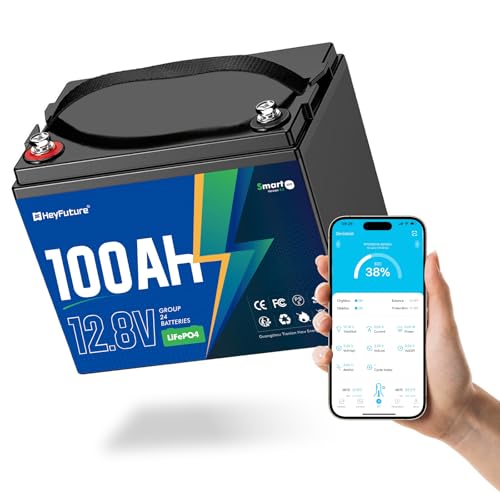
【High-Quality Lithium Batteries with Deep Cycle】Hey Future 12V LiFePO4 battery, which provides deep cycle charging and discharging, is guaranteed to provide a longer service life and will not result in energy loss. This lithium battery is a perfect replacement for lead-acid batteries, it works better, is safe and stable, has a high energy density, is smaller and lighter, you can lift it without any trouble, the 12V 100Ah LiFePO4 battery performs very well at high and low temp!

【Product Overview】Designed for deep cycle energy storage applications, SUPER EMPOWER LiFePO₄ batteries provide reliable power for RV, marine, trolling motor, and off-grid systems, featuring premium LiFePO₄ cells and an integrated BMS for protection against overcharge, over-discharge, overcurrent, short circuit, and temperature extremes; ideal for auxiliary and house power needs in mobile and outdoor setups, ensuring stable and long-lasting performance. Designed for energy storage use only, this battery is not suitable for engine starting or cranking applications.

15,000+ Cycle Life: Built with premium LiFePO4 cells, this 12V 100Ah battery delivers up to 15000+ cycles, Its service life is significantly longer than that of lead-acid batteries. Enjoy reliable power you can trust daily, with fewer replacements, lower costs, and consistent performance. Whether on road, on water, or off-grid, count on steady energy when it matters most.
Weight and Size: Which Is Easier to Install?
Lithium batteries are significantly easier to handle and install than AGM batteries because they are roughly a third of the weight for the same capacity. A 12V 100Ah AGM weighs between 63 and 70 pounds, whereas a lithium equivalent weighs around 21 pounds. This weight reduction means you can lift and position lithium units with one hand, align terminals more precisely, and secure them without risking back strain or damage to your compartment. The lighter weight also reduces the structural demands on your installation. Heavy AGM batteries require reinforced trays and mounts, while lithium’s lower mass simplifies retrofits into existing bays. However, keep in mind that lithium batteries require specialized disposal at end-of-life compared to the well-established recycling infrastructure for AGM lead-acid batteries, and understanding the composition of solar panels can help you assess compatibility with your renewable energy system. For generator backup setups, using a lighter lithium battery can also make it easier to install a best interlock kit without struggling with added weight in tight electrical panels. Overall, when it comes to installation ease—lifting, fitting, and securing—lithium’s smaller size and reduced weight make it the clear choice for RV, marine, and off-grid systems. For those powering high-draw devices like air conditioners, the weight savings also free up capacity for additional solar panels to extend runtime without adding structural strain.
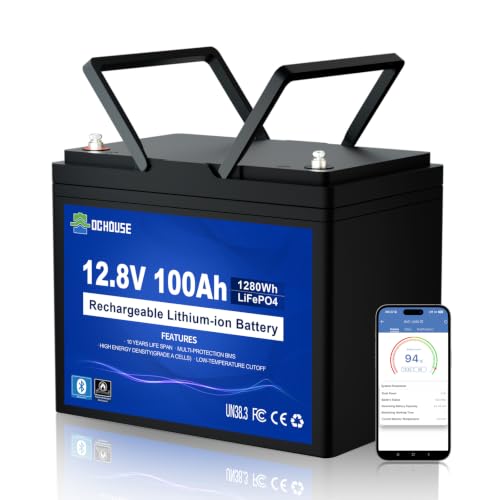
[Smart Bluetooth 5.1 Monitoring] DC HOUSE 12V 100AH battery has built-in Bluetooth, which can connect with DC HOUSE APP (Bluetooth signal range: 5-10 meters). It is convenient to monitor battery information such as SOC, voltage, current, etc., and the data is accurate to the specific cell of a battery, there is a special fault display page to help troubleshoot. Receive instant push notifications for detected anomalies, enabling timely protection for your Trolling Motors, Marine, and Boat.
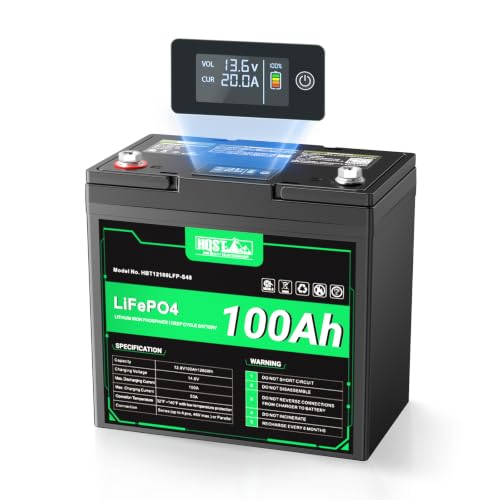
【10-Year Longevity】With 4000+ deep cycles from premium A-grade LiFePO4 cells, this 12V 100Ah Lithium battery lasts 6x longer than lead-acid. Comes with a reassuring 10-year commitment to both product quality and service life. A perfect option to replace lead-acid batteries and enjoy extended durability
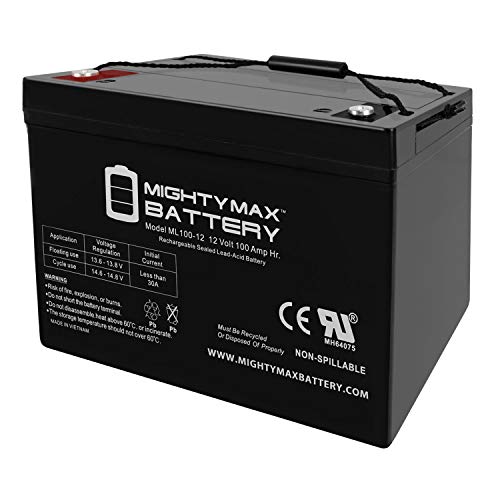
ML100-12 SLA is a 12V 100AH Group 27 Sealed Lead Acid (SLA) rechargeable maintenance free battery - UL Certified
Cycle Life: Which Battery Lasts Longer in Deep-Cycle Use?
Lithium iron phosphate batteries last significantly longer in deep-cycle use than AGM batteries. While AGM batteries typically provide between 300 and 600 cycles at 50% depth of discharge, pushing them deeper reduces their lifespan to below 200 cycles. In contrast, lithium iron phosphate batteries consistently offer between 2,000 and over 5,000 cycles at 80% capacity, even when cycled at 80% depth. This means you’ll need to replace AGM batteries multiple times before lithium batteries reach a comparable end-of-life point. The extended cycle life of lithium batteries directly translates to fewer replacements, reducing the frequency of battery recycling, which is more environmentally friendly. Although AGM batteries tend to cost less initially, their shorter lifespan results in higher long-term costs and more waste. Gel cell batteries, by comparison, also offer fewer cycles than lithium, typically lasting around 500 to 1,000 cycles at 50% depth of discharge, which is similar to AGM performance. For frequent deep cycling applications, lithium iron phosphate is the more durable and cost-effective choice over time. Using proper tightening techniques ensures secure connections for lithium batteries, preventing vibration damage and maintaining optimal cycle life. Considering the total cost over a system’s lifetime, the lower running costs of lithium make it the smarter financial investment compared to AGM.
AGM vs Lithium Battery: Which One Fits Your Setup?
AGM batteries are a better choice for applications such as engine starting, backup power, or marine cranking when you are on a budget. Their rugged packaging and vibration resistance make them suitable for harsh environments. Additionally, they generally cost less upfront, making them ideal for stationary or older systems. However, they require a charging voltage of about 14.4V to 14.8V and take longer to recharge—often over 10 hours. Their voltage remains steady during discharge, but they are less suited for frequent deep cycling. AGM batteries perform well in cold temperatures, maintaining starting power in freezing conditions, but their lifespan might be shorter with frequent cycling. When connecting terminals, ensure you use a high-quality crimping tool to avoid poor electrical connections. For sealing the shrink tubing around battery cable connections, you may need a reliable heat gun to ensure a proper insulation fit. For heavy-duty wiring, it is important to torque the terminal screws to the manufacturer’s specification to prevent overheating.
Lithium batteries shine in high-demand deep-cycle roles such as RV house banks, off-grid solar setups, and marine trolling motors. They are much lighter and more compact, which simplifies installation in weight-sensitive setups like electric vehicles and drones. Lithium batteries charge faster—about 3 to 4 hours—and deliver a steady voltage during discharge, enhancing performance and efficiency. They require a charging voltage around 14.6V and are more sensitive to environmental conditions, struggling in extreme cold conditions. Over the long term, lithium often provides a better value due to its superior cycling capability, provided your setup can meet its specific charging requirements.

DUAL PURPOSE MARINE RV BATTERY: Interstate's marine dual-purpose AGM battery can serve as both your cranking battery to start the motor & power your trolling motor - whether the motor is on or off! Built "Interstate tough" to withstand the most rugged conditions so you can spend more time having fun & less time worrying about your battery
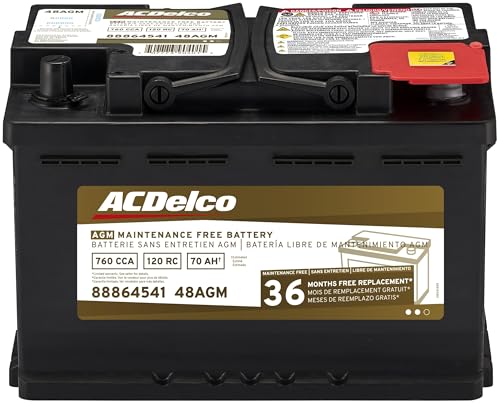
High density negative paste, improves performance and increases battery life

BATTERY SPECS: 12-Volt, 800 Cold Cranking Amps, Size: 10.06" Length x 6.88" Wide x 7.94" Tall, Weight: 38.4 pounds, Dual SAE & 5/16" Stainless Steel Stud Posts, C20 Capacity: 50 AH, MCA 1000