


Wondering whether to call them cable ties or zip ties? Both names refer to the same self-locking nylon strap, but your choice depends on factors like strength, material, and environment.
Matching the tie’s load capacity and UV stability to your specific needs ensures you get the right fit. Keep reading to find out how to pick the best one for your project.
Cable Ties and Zip Ties Are the Same Thing: Here’s Why
Cable ties and zip ties are the same self-locking fastener, known by different names depending on the region. In the US, the term “zip tie” is more common in casual settings, while “cable tie” is preferred in the UK and industrial environments. Both consist of a nylon strap with a locking head that secures wires or items together. They come in various colors, from standard black to UV-resistant options for outdoor use, allowing for identification or organization. Most designs include a release tab for reuse, though many are intended for single use. Originally invented by Thomas & Betts for aircraft wire harnessing, the design has since become an everyday essential. When purchasing, focus on the material quality and design features rather than the name, as both serve the same primary purpose. For users seeking battery storage solutions, look for top picks with terminals that ensure secure connections and reliable performance.
Choose by Tensile Strength, Not the Name on the Package
Choose by tensile strength, not the name on the package. The key factor is the numeric tensile rating, which indicates how much load the tie can bear. Industry standards like IEC 62275 ensure consistent measurement, making comparisons across brands reliable. A tie labeled “heavy duty” might only support 50 pounds, while another rated at 175 pounds provides the strength you need. Width and length also influence capacity; for example, a 2.5 mm tie typically holds about 18 pounds, whereas a 13 mm tie can support up to 250 pounds. Always verify that the bundle diameter falls within the tie’s limits alongside checking its tensile strength. When comparing products, you can also look for solar panel kits that use ties with documented tensile ratings for reliable outdoor installations. Remember, color coding is only for identification purposes and does not indicate load capacity. To avoid under- or over-specifying your fastening, bundle, or electrical task, choose ties based on the load requirement expressed in pounds or kilograms. For outdoor solar setups, using a solar charger without battery can simplify the electrical system and reduce weight. When using ties in electrical panels, always follow the correct removal and fitting order detailed in your circuit breaker box replacement guide to ensure safety.
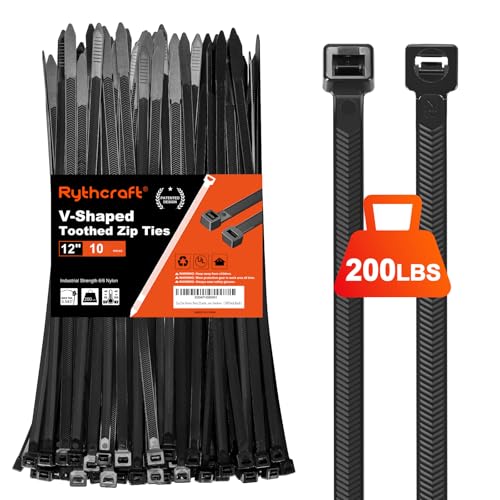
【200lb Tensile Strength】: The more width and Thickness, the more tensile strength. our zip ties 12 inch width is 0.3 inch(7.6mm), while industry standard is 0.19 inch(4.8mm), our zip ties 12 inch Thickness is 0.076" inch(1.95 mm), while industry standard is 0.055 inch(1.38mm),Our Double sided tooted heavy duty zip ties, provide 200 lbs tensile strength.

MULTI-PURPOSE CABLE TIES: These 50 lb zip ties provide dependable cable management for electrical wiring, automotive repairs, construction, industrial projects, gardening, office organization and household use

Heavy Duty Strength for Tough Jobs: Our 100-pack of 8-inch black zip ties is built to last with a 120-pound tensile strength, making them perfect for both indoor and outdoor projects. Whether you're securing cables, organizing tools, or handling industrial tasks, these durable ties won't break under pressure, ensuring reliable performance every time. Ideal for electricians, landscapers, and DIY enthusiasts.
Nylon 6.6 vs. Metal vs. Composite: Which Material Works Best?
Nylon 6.6 is ideal for indoor bundling because it offers a good balance of cost, flexibility, and ease of use. For outdoor applications, you’ll need UV-stabilized black nylon since standard nylon lacks resistance to prolonged sunlight exposure. Metal ties, typically made from stainless steel, excel in environments with high heat, extreme chemicals, or fire risks, providing unmatched durability. However, they are heavier and conduct electricity, which can be a concern in electrical setups. For safe electrical work, always open your breaker box with the main switch off to prevent shock. Composite ties, made from nylon with added substances, are suited for detection in food or pharmaceutical contexts but do not outperform nylon in temperature resistance or cost-efficiency. Choose nylon for corrosion-free electrical environments, metal for extreme durability, and composite for specialized detection needs. Nylon 6.6 offers the best balance of cost and flexibility for indoor bundling, while metal ties provide unmatched durability in extreme conditions. For applications requiring seamless power transitions during outages, an automatic transfer switch ensures backup generators engage without manual intervention.

Made with UV resistant industrial strength 6/6 Nylon

Heavy Duty: Karoka black zip tie 12 inch is 0.19 inch(4.8mm), while industry standard is 0.14 inch(3.6mm), Stronger than other wire ties.

Made with UV resistant industrial strength 6/6 Nylon
What UL 62275 and IEC 62275 Say About Cable Ties
IEC 62275 specifies Type 1 and Type 2 performance classifications for basic bundling needs, focusing on loop tensile strength as a key mechanical indicator. UL 62275 builds on this by including additional designators such as Type 11, 2S, 21, and 21S, which reflect more stringent requirements specific to the U.S. market. Both standards emphasize the importance of matching the cable tie’s type to its intended application, especially considering factors like mechanical strength and environmental conditions. Do not rely solely on a compliance mark; always verify the exact type and scope to ensure suitability for your electrical installation.
When to Upgrade to Heavy‑Duty or Reusable Cable Ties
You should upgrade to heavy-duty or reusable cable ties based on your application needs. Heavy-duty ties, capable of handling up to 785 N of tensile strength, provide secure fastening for permanent installations such as electrical panels and infrastructure that require high load capacity. For permanent setups like these, selecting a breaker box with quality and performance ratings similar to top reviewed models ensures compatibility with high-strength fasteners. Reusable ties, on the other hand, are ideal when frequent reconfiguration or adjustments are necessary, as they tighten and release without cutting, making them well-suited for maintenance tasks or network setups. For temporary repairs or adjustments on battery cables, implementing a proper disconnection and repair procedure often eliminates the need for single-use fasteners entirely.
Performing a cost analysis shows that reusable ties can lower long-term expenses because you don’t need to replace cut-off fasteners repeatedly. They also help reduce environmental impact by producing less waste. However, reusable designs typically have lower tensile strength compared to self-locking ties because of their release mechanisms. Choose heavy-duty ties for structural or permanent fixtures, and opt for reusable ties when flexibility and waste reduction are priorities. For example, when securing electrical panels, a generator interlock kit often requires heavy-duty ties to ensure a permanent, high-load fastening.

Extra Heavy Duty: The width of our 18 inch zip ties is 0.35", provide 220 lb tensile strength.

【Heavy Duty】 Strength tensile is decided by Width-- Our wire ties 0.14inch / 3.5mm wider make the ties stronger than the same size for more projects.
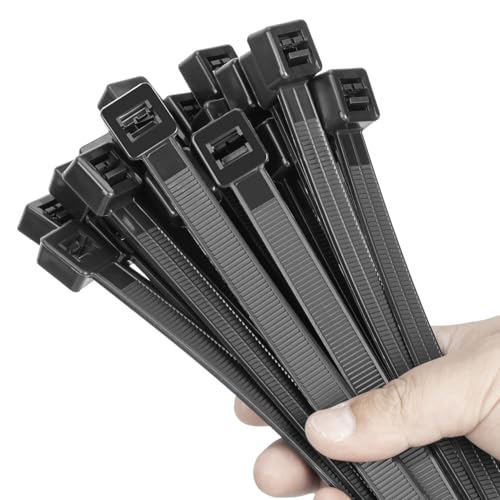
High Quality Material: Made of nylon PA66, UV resistant, Heat resistant, Cold resistant, High flexibility, can be used in temperature from -40℉ to 185℉
Match Your Cable Tie to Indoor or Outdoor Conditions
Choosing the right cable ties depends on whether your environment is indoor or outdoor. Indoor conditions, characterized by low UV exposure and controlled humidity, typically require standard nylon 6/6 ties. These are cost-effective and offer sufficient tensile strength for many applications. However, even indoors, consider flame ratings near electrical panels and moisture resistance in areas like basements or HVAC spaces to ensure safety and durability. For installations requiring robust data transmission over long distances, understanding RS485 cable specifications helps ensure signal integrity in noisy environments. When organizing battery trays, selecting the right battery tray ensures secure placement and prevents short circuits.
For outdoor conditions, the key is selecting UV-stabilized ties. Carbon-black-filled models resist photo-oxidation and cracking caused by prolonged sun exposure. Avoid natural or white ties outdoors because they degrade quickly under UV rays. For moderate outdoor environments, nylon 6/6 with UV stabilization is usually enough. In harsher settings, such as coastal or salt-exposed locations, upgrade to nylon 12 or stainless steel ties. Temperature ratings are also crucial: match the tie’s specified operational range to your climate, since standard nylon can become brittle in cold or hot conditions. For installations near solar panels, consider using MC4 connectors which are designed for reliable outdoor electrical connections.

HEAVY DUTY 120LB STRENGTH: Built for demanding applications, these 8 inch cable zip ties deliver a strong 120 lb tensile strength, ensuring secure fastening for heavy cables, equipment bundling, and industrial use.

100 Pack: With 100 zip ties in each package, you don't have to worry about running out of in the middle of your project.

Details: nylon 66,UL 94v-2,UV rated,50 lbs tensile strength heavy duty,can up to 70 LBS
Use “Cable Tie” for Work and “Zip Tie” for the Workshop
For professional documentation and technical work, use “cable tie.” This formal term clearly signals precision, standardization, and adherence to specifications. It reduces ambiguity when ordering or including installation details in electrical diagrams, procurement lists, or official reports. The same attention to detail applies when selecting the right ferrule crimp tool to ensure secure and reliable wire terminations. Choosing “cable tie” helps ensure consistent terminology across technical contexts and simplifies color coding schemes, making diagrams easier to interpret without confusion. When selecting a setup, you can also consider series or parallel solar panel wiring to match your system’s voltage and current needs. Similarly, proper electrical safety protocols dictate that you disconnect the negative cable first to prevent accidental short circuits.
In a workshop environment, switch to “zip tie.” This more casual, familiar name matches hands-on projects and quick conversations. It’s instantly recognizable on shelf labels and shopping lists, fitting naturally into DIY discussions and quick-installation tips. Both terms refer to the same ratcheting nylon fastener, but selecting “zip tie” keeps the language accessible and practical during casual or rapid-paced work. Using “cable tie” for formal documents and “zip tie” for workshop talk maintains clarity without altering the function or performance of the fastener.

Wide Application - Secure your car fenders, engine covers, mudguards, bumpers, and interior parts with these nylon universal cable tie buckles. Unlike traditional screws, they work with any hole depth or shape, making installation fast, easy, and stress-free.

【V-shaped tooth patent design, more stable】V-shaped double-sided tooth nylon universal cable tie buckle structure and unique tooth design enhance the shock resistance, Preventing loosening and malfunction during vehicle movement. At the same time, The support force of the V-shaped tooth fixion tools is also increased by 100% compared to ordinary car zip ties.
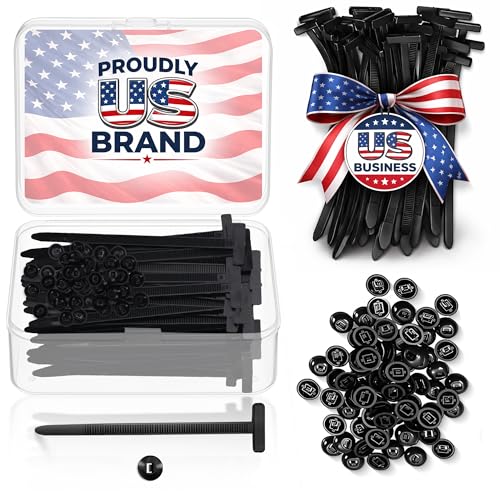
Universal Fit & Versatile Use — Ideal for securing car bumpers, fenders, and underbody panels, as well as for everyday use. Effectively replaces over 90% of traditional screws and clips, making it essential for automotive repairs.