


Ever wondered how to get a clear picture of your energy consumption right now? A power meter measures voltage and current in real time, giving you a detailed look at active, reactive, and apparent power.
Depending on your needs, you can choose between analog or digital models, as well as single-phase or three-phase options. The full details are just below.
What Does a Power Meter Actually Do?
A power meter performs three critical electrical analyses in real time. First, it provides instantaneous readings of voltage, current, power factor, and frequency. This allows you to monitor how load conditions change as equipment cycles on and off. Second, it converts these raw measurements into active, reactive, and apparent power values, which are displayed in watts or volt-amperes. This helps you understand the composition of power flow, showing whether it’s primarily usable energy or involves reactive components. Third, it tracks efficiency by comparing real power consumption against the total apparent power, helping you identify losses in motors or machinery. These analyses are visible through the user interface, giving you a real-time snapshot of current demand. Unlike long-term data logging, which stores historical trends, the core function of the power meter is to show you the present power situation instantly. The meter’s own longevity is influenced by similar factors that shorten a solar inverter’s lifespan, such as heat and poor ventilation. To ensure safe and accurate installation, the meter’s wiring must follow code-safe practice, including proper torque on all terminations and secure conduit connections to the enclosure. Just as a simple plastic strip revolutionized bundling in industrial applications, the power meter’s straightforward design has become a staple for electrical monitoring.
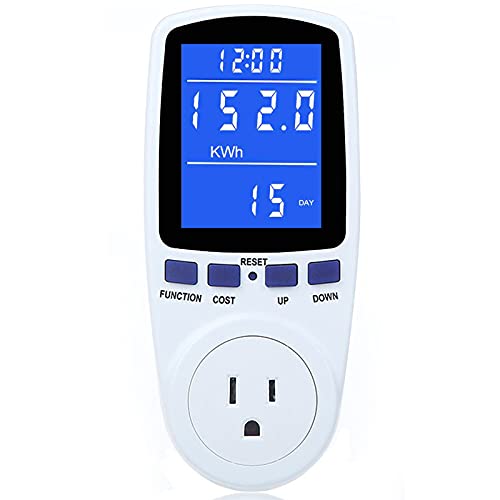
Various Monitoring Parameters: The power meter plug can monitor the power (W), energy (kWh), volts, amps, hertz, power factor, cost, minimum and maximum power (W), cumulative days and time of your appliances. By switching 7 display modes, you can easily know the various parameters while the appliance is working. The home energy monitor can also calculate and display how much power your appliance uses and how much electricity bill it cost in cumulative time

Intuitive Electric Usage Monitoring: Measure power (W), volts, amps, frequency, power factor, max/min power (W), cumulative time, and energy (kWh) with this watt meter; Automatically calculate costs based on set prices and track home energy usage for efficient electricity savings; This watt hour meter makes managing your energy consumption easy

Various Monitoring Parameters: The power meter plug can monitor the power (W), energy (kWh), volts, amps, hertz, power factor, cost,minimum and maximum power (W), cumulative days and time of your appliances. By switching 8 display modes, you can easily know the various parameters while the appliance is working. The wattage meter can also calculate and display how much power your appliance uses and how much electricity bill it cost in cumulative time
How Does a Power Meter Measure Electricity?
A power meter measures electricity by continuously sampling both voltage and current in real time, then calculating power from those inputs. For AC systems, this isn’t just a simple multiplication; you need to account for the phase shift between voltage and current, which affects the power factor. The meter’s signal processing chain digitizes these analog signals, then computes instantaneous power by multiplying the voltage and current samples taken simultaneously.
The accuracy of this measurement depends heavily on the sampling rate and synchronization. Faster sampling captures rapid fluctuations in the signals, while precise timing ensures that the voltage and current data correspond to the same moment in time. Without proper synchronization, errors can occur, leading to inaccurate readings. After obtaining instantaneous power values, the meter’s processor integrates them over time to determine total energy consumption. To further enhance precision, modern meters apply calibration constants that correct for sensor non-linearities, ensuring reliable measurements for billing, load analysis, and energy management. Similarly, the integrated solar shingles used in top residential systems require analogous precision to optimize energy capture and conversion. reliable charging solutions like power banks with wall outlets use precise power management to maintain consistent energy delivery. For electrical safety during installation or maintenance, always follow proper procedures such as disconnecting negative battery cables first to prevent short circuits.
Single-Phase vs. Three-Phase: Which System Do You Have?
You can identify whether you have a single-phase or three-phase system by examining your main switch and labels. A single-phase system‘s main switch typically has one pole, which is often narrower and simpler, while a three-phase system’s main switch will have three poles or be noticeably wider to accommodate the three separate phases. Your meter label can also provide clues: “1P2W” indicates a single-phase system with one pole and two wires, whereas “3P4W” points to a three-phase system with three poles and four wires. Count the service fuses—one fuse usually serves a single-phase installation, while three fuses are common in a three-phase setup. When connecting solar panels to these systems, ensure they use MC4 connectors for reliable and weather-resistant electrical connections. These differences in physical hardware and labeling ensure you correctly identify your system, which is crucial for selecting compatible equipment and planning safe work procedures. A frequent cause of tripping in these systems is an overloaded circuit, where too many devices draw more current than the breaker is rated for. For safety during maintenance, many experts recommend turning the main breaker off to prevent accidental contact with live components.

Accurate Single-Phase Energy Meter – Class 1.0 accuracy kWh meter designed for precise power consumption measurement in 110V/220V split-phase systems (L1-L2 = 220V, L1-N/L2-N = 110V). Ideal for residential and light commercial sub-metering.
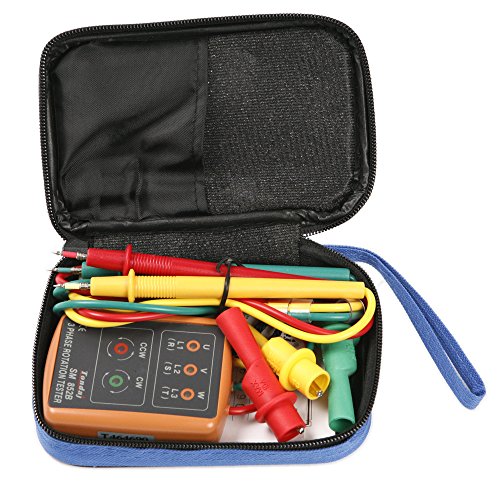
【Limit Support Voltage】 2000 V/min
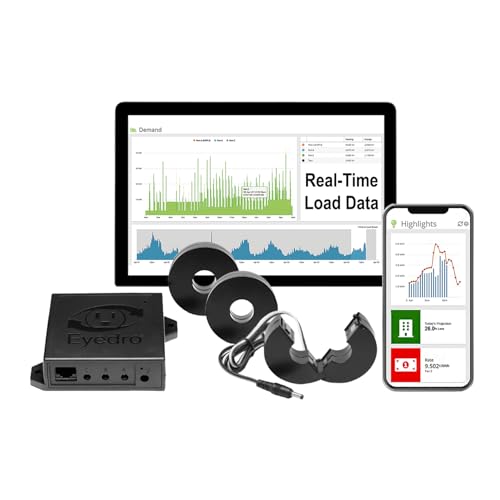
3-Phase Power Meter with Real-Time Data: see energy usage and solar generation vs. consumption with instant readings in kWh, Watts, Amps, Volts, Power Factor and cost ($).
Analog vs. Digital Power Meters: Which Do You Need?
Digital power meters are generally the better choice for most applications because they offer higher measurement accuracy and additional functionality. Analog meters are useful if you only need to observe trend patterns or fluctuations with a simple, low-cost device. Unlike analog meters, digital power meters can provide stable readings without being affected by sulfation issues common in older battery monitoring systems. For charging applications, using a digital meter helps you monitor AGM battery charging voltage limits more precisely to prevent overcharging.
Analog meters display electrical changes with a moving needle, making them effective for visualizing rapid voltage or current fluctuations. However, their accuracy suffers, with typical errors around 4.34%. In contrast, digital meters provide precise measurements with errors as low as 0.11 to 0.23%. They support quick, exact readings and monitor multiple parameters such as voltage, current, and power factor simultaneously. When installing or replacing any meter, following a safest fix order ensures you avoid electrical hazards.
User experience also favors digital meters—they eliminate parallax errors, are easier to read from a distance, and tend to be shock resistant. Cost-wise, analog meters usually require a smaller upfront investment and are suitable for stable, simple environments. But digital meters deliver greater value over time, especially when you need data logging, remote communication, or analysis of non-sinusoidal signals.
Choose analog if you need basic trend observations and want to keep costs low. Opt for digital if you require detailed accuracy, multiple measurements, and enhanced functionality for more complex or professional use.

Improved Measurement Accuracy: Our USB C Tester can accurately measure accuracy: ± (1%+5). The data is more accurate for detecting charging devices such as chargers, mobile phones, tablets, and power banks. Make this Type-C meter suitable for more 3C digital peripheral products, making it the first choice for digital gamers and electronics enthusiasts.

Parameters --- Input Voltage is 6-70V; Output Voltage is 0-60V; Output Current is 0-20A; Output Power 0-1200W. Fixed output voltage can be set: 5V/9V/12V/24V/36V/48V/60V.

VERSATILE USB TESTING: Test voltage from 3 to 20V DC and current from 0.05 to 3A (USB-A) and current from 0.05 to 5A (USB-C), covering most common standard USB ports, including Qualcomm Quick Charge ports
Where Power Meters Cut Costs in Homes and Factories
Tracking your electricity use with a power meter can lead to significant savings in both homes and factories. In homes, the meter helps you identify standby loads and devices that are always on, such as water heaters and kitchen appliances. By targeting these, you can eliminate unnecessary overnight consumption, reducing your bills through behavioral changes rather than technical fixes. For example, interpreting the meter’s display and numbers reveals which specific devices are contributing to base load. For those also monitoring battery systems, selecting battery picks with quality terminals ensures accurate power transfer and consistent meter readings. Using a wire stripper to properly prepare the cables for the meter connections prevents poor contact, as poor stripping can lead to inaccurate readings.
In factories, meter data enables you to schedule non-critical loads during off-peak times and stagger motor starts, which can cut peak demand charges by 10% to 20%. It also reveals idle machines and operational inefficiencies, allowing you to address waste quickly. Typically, factories see a payback period of three to six months, making energy management a fast and verifiable way to cut costs.

Multi-function power monitor: Our electric usage monitor can monitor the power (W), electricity(kWh), voltage(V), frequency(Hz), current(A), power factor(PF), unit price($/kWh), total cost($) of your appliances. By switching 8 display modes, you can easily know the various parameters while the appliance is working. The “electricity” mode can calculate and display how much power your appliance uses. And the “total cost” mode will show how much electricity bill it cost in cumulative time


Choose Your Power Meter by Phase, Accuracy, and Needs
Choose your power meter based on your electrical service’s phase, measurement accuracy needs, and the criticality of your application. Single-phase meters are suitable for residential loads, while three-phase meters are designed for commercial and industrial systems. For higher current applications, meters operated via current transformers (CTs) are necessary, whereas direct-connected meters are ideal for simpler setups. Ensuring the phase count matches your system prevents wiring errors and guarantees accurate measurement. It is essential to choose the right meter that measures true power in a circuit, as reactive components can distort readings from less capable devices. A basic battery tester at home works on a similar principle by applying a small load to measure remaining capacity, though it avoids reactive power complexity.
Installation considerations include proper meter configuration and CT placement. The type of meter also impacts maintenance: revenue-grade meters require periodic calibration to maintain accuracy, while Class 1.0 units generally need less oversight. The accuracy class you select should align with your measurement precision requirements; for non-critical sub-metering, Class 1.0 or 2 may suffice. Industrial energy management applications demanding higher accuracy should use Class 0.5 or 0.5S meters, and revenue metering mandates Class 0.2S meters. When dealing with variable loads, especially under low power factor conditions, choosing meters capable of low phase error is crucial. In three-phase systems, calibrate each phase individually, as environmental factors can degrade the meter’s stated accuracy over time. Finally, match your meter grade to your business criticality—avoid overspending on simple monitoring needs. Understanding the function of terminal blocks can simplify wiring in a home setup by providing secure, organized connections for meter installation.

Energy Meter 6 in 1: Voltage measuring range: AC 40-300V, Current measuring range: 0-100A, Active power: 0-30000W, Electric energy: 0-99999kWh, Frequency: 45-65Hz, Power factor: 0.00-1.00PF.

Versatile Metering: Single Phase Energy Meter for measuring power usage in residential or commercial settings.

3-Phase Power Meter With Real-Time Data: see energy usage and solar generation vs. consumption with instant readings in kWh, Watts, Amps, Volts, Power Factor and cost ($).