

If your breaker box keeps tripping, it can be frustrating and raise concerns about safety. Usually, this happens when the system detects an overload, short circuit, or ground fault to prevent fires.
By understanding the common causes, you’ll know when it’s a simple fix or time to call in a professional.
Here’s what you need to know to troubleshoot the issue effectively.
Why Your Breaker Keeps Tripping (3 Common Causes)
A breaker keeps tripping because of three common electrical faults: short circuits, ground faults, and arc faults. A short circuit happens when a hot wire directly contacts a neutral wire, causing an immediate surge of current. This usually results from damaged insulation or loose connections and triggers the breaker to trip right away upon reset. Ground faults occur when current leaks to grounded surfaces, often due to moisture in places like kitchens or bathrooms; ground fault circuit interrupter (GFCI) breakers detect this leakage quickly. Arc faults involve sparking caused by worn cords or backstabbed outlets, which arc fault circuit interrupter (AFCI) breakers identify as potential fire hazards. Each type requires careful wiring and safety measures. If you hear popping sounds or notice burning odors, turn off the device and call a qualified electrician. Never repeatedly reset a breaker that’s showing these signs, as it could lead to serious electrical damage or fire. Just as mechanics disconnect the negative cable first to prevent accidental sparks during car battery service, correctly identifying the specific fault type before resetting a breaker prevents dangerous arcing and electrical fires. Choosing a breaker with quality terminals can improve connection reliability and reduce the risk of loose wiring faults. Monitoring your home’s electricity usage can help you spot abnormal power draw that signals a developing fault before the breaker trips.
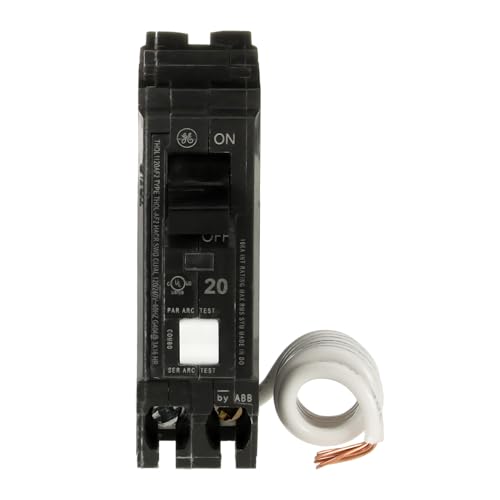
SUPERIOR ARC FAULT PROTECTION – The ABB THQL1120AFP2 AFCI Breaker provides advanced protection against electrical fires caused by arc faults. This 20-amp single-pole circuit breaker is designed to detect and mitigate arc faults, enhancing the safety of residential and commercial electrical systems.

QO 20 Amp single-pole Combination AFCI circuit breaker

RESIDENTIAL CIRCUIT PROTECTION: Square D Homeline Miniature Circuit Breakers are engineered and designed for fast installation and superior circuit protection; This Combination Arc Fault Circuit Interrupter protect against overloads and short-circuits
Is an Overloaded Circuit Tripping Your Breaker? (The #1 Culprit)
An overloaded circuit is the most common reason your breaker trips. This happens when the electrical demand on a single circuit exceeds its rated capacity, which is usually 15 or 20 amps in homes. When you run multiple high-wattage devices like a microwave, space heater, and hair dryer at the same time on the same circuit, you exceed this limit. As a safety measure, the breaker shuts off power to prevent wiring from overheating. Understanding the load management is crucial, as microinverter vs optimizer technologies can help distribute solar energy more efficiently.
You will notice overload trips happen during intensive use rather than immediately. Signs include lights dimming, outlets feeling warm, or buzzing sounds coming from them. To fix this, unplug some devices, switch loads to other circuits, or operate high-power appliances one at a time. For a more permanent solution, identify circuits shared by multiple devices and consider adding dedicated circuits for heavy appliances. If the breaker keeps tripping despite these measures, contacting a licensed electrician is advisable. For solar panel installations, using MC4 connectors ensures a secure and standardized connection that minimizes electrical faults.

Single pole, 20 Amp, 120V type QP Circuit Breaker

Single pole, 15 Amp, 120V type QP Circuit Breaker

Product: Compact, single pole, push-to-reset thermal circuit breakers, Thermal Overload Protector L1 Series.
Short Circuit vs. Ground Fault: How to Spot the Difference
Both short circuits and ground faults can trip your breaker, but they involve different current paths and present distinct hazards. A short circuit happens when a low-resistance connection forms between the hot and neutral wires, causing an immediate surge of current. This often results in sparks, smoke, or a burning smell, and a standard circuit breaker will trip quickly to protect the wiring. For vehicles with dual battery setups, using a high-quality isolator can help prevent power surges that mimic these faults. For homes using a generator with a Square D panel, an interlock kit ensures safe and code-compliant power transfer during outages. When selecting a power inverter, pairing it with the right battery type is crucial for consistent performance and preventing system strain.
In contrast, a ground fault occurs when hot current escapes to a grounded surface such as a metal appliance or damp area. Even at low currents, this creates a shock hazard because the current is diverted away from the normal path. Ground fault circuit interrupters (GFCIs) are designed to detect this imbalance and trip much faster than standard breakers.
To distinguish between the two, observe the pattern of trips. Frequent trips of a standard breaker usually point to a short circuit. Repeated trips of a GFCI indicate a ground fault. Always inspect for signs like damaged insulation or moisture exposure that can cause these issues. Recognizing these differences helps you identify and address electrical problems safely and effectively.
One Quick Test to Confirm If a Faulty Appliance Is to Blame
Unplugging all devices on the affected circuit, then resetting the breaker, helps you determine if the fault is in the wiring or the appliances. If the breaker remains off with nothing plugged in, the wiring is likely fine. Reconnect devices one at a time, waiting 2–3 minutes between each, starting with low-draw items like chargers and lamps, then moving to larger appliances. Watch for the breaker to trip after reconnecting a specific device, which indicates it may be faulty. To confirm, plug that device into a different circuit. If it causes the breaker to trip there too, the appliance probably has an internal defect. A similar diagnostic approach can be used when comparing high-quality solar panels from leading brands to ensure their electrical output is stable before installation. Remember to stop testing immediately if you notice scorch marks, a burning smell, or excessive heat, as these signs signal hazards that need professional attention. Damaged cords or persistent circuit trips are red flags that require expert assessment. For comparison, similar electrical troubleshooting principles apply when deciding between wind generators vs solar panels for your home’s energy setup. Choosing a reliable uninterruptible power supply like a battery backup can protect sensitive electronics from the power surges that often accompany tripped breakers.

ACCURATE CIRCUIT BREAKER IDENTIFICATION: Quickly locate the correct breaker with precision using the transmitter and receiver of the circuit breaker finder, ensuring efficient electrical troubleshooting
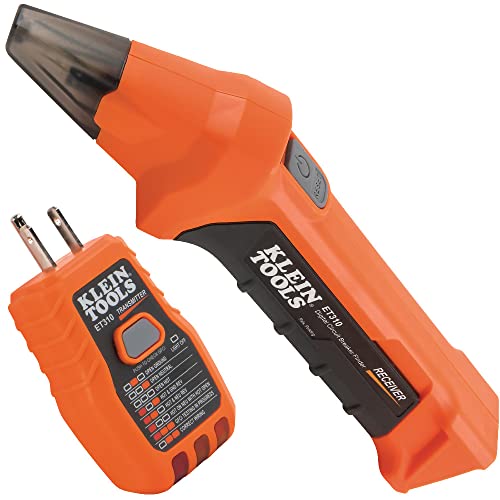
ACCURATE CIRCUIT BREAKER IDENTIFICATION: Quickly locate the correct breaker with precision using our circuit breaker finder, ensuring efficient electrical troubleshooting

All-in-One Circuit Diagnosis: KT301P circuit breaker finder Easily locate breakers, check outlet wiring, and test GFCI protection—all with one compact tool. Combines a Circuit Breaker Finder, Outlet Tester, and GFCI Tester for fast, reliable troubleshooting on North American 120V AC circuits in residential or commercial settings
Could Your Old Wiring or Breaker Be the Real Issue?
Old wiring, a failing breaker, or an undersized panel could be the real culprits if your breaker keeps tripping. Wiring installed before 1980 often wasn’t designed for today’s high-demand appliances. For instance, space heaters and microwaves draw more current than older circuits were meant to handle, leading to frequent trips.
Over time, insulation deteriorates and connections can loosen, creating unstable current paths that generate heat, flickering lights, or buzzing sounds. Breakers also wear out mechanically; they may trip prematurely on normal loads or fail to reset altogether, indicating internal failure. Older panels with 60 or 100 amps are often too small for current power needs. Watch for signs like flickering lights, strange smells, or warm outlets—these are urgent signals that your electrical system needs professional inspection.

TWELVE CIRCUITS WITH GROUND: Supports twelve ATO or ATC fused branch circuits with integrated negative bus

Includes a surface mount indoor cover

DIY Fixes vs. When to Call an Electrician
Many circuit trips can be fixed with a simple DIY check, but some signs indicate you need a professional electrician immediately. First, turn the breaker fully OFF, then back ON. Unplug all devices on that circuit. If the breaker stays engaged, reconnect the devices one by one to identify any overload. Check nearby GFCI outlets and press reset if needed. Inspect cords for damage and use a non-contact voltage tester—the kind of basic safety tool that detects live wires without contact—to spot loose connections. Just as deep discharges shorten an AGM battery’s lifespan, frequently overloading a breaker can wear out its internal components. The breaker box acts as the central safety switch that disconnects power when a fault is detected, preventing electrical fires. Unlike string inverters that can fail entirely from a single panel issue, a tripped breaker from an overloaded circuit still protects each branch independently.
Stop immediately if the breaker trips again with nothing plugged in, or if you notice a burning smell or hear buzzing noises. These are red flags that require an electrician. Repeated trips after redistributing the load suggest deeper wiring issues. Avoid attempting wiring upgrades yourself, as they require specialized tools and expertise. If you cannot determine the cause after basic troubleshooting, contact a professional to diagnose and fix the problem safely.

SAFETY FIRST: It will send out multiple alarms through sound and light. When the voltage is detected, the tip will send out red light and beep. When the higher the sensed voltage is, or the closer it is to the voltage source, it beeps at a higher frequency and the percentage value will be larger. At the same time, the screen will be red or green, red means high voltage and live wire are detected, green means low voltage and null wire are detected

NON-CONTACT DETECTION of AC voltage in cables, cords, circuit breakers, lighting fixtures, switches, non-tamper-resistant outlets, and wires

VERSATILE VOLTAGE DETECTION: This Voltage Tester offers non-contact detection of low voltage in security, entertainment, communications, environmental control, and irrigation systems