
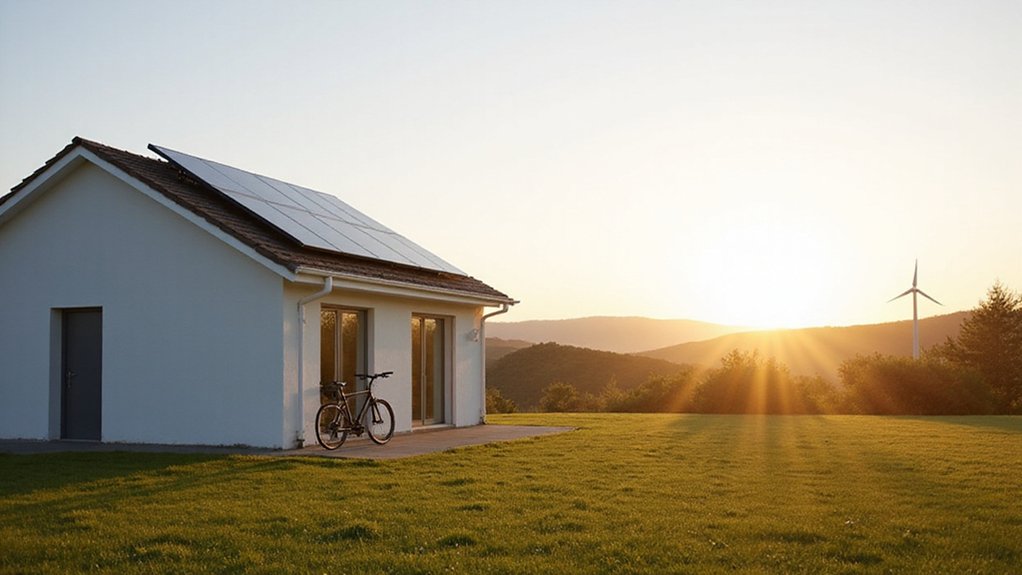

Deciding between a wind turbine and solar panels can feel overwhelming, especially if you have land that’s both open and windy.
Generally, wind turbines produce more power annually on windy sites, but solar panels are simpler and often cost less upfront.
Your choice comes down to your specific location and how you weigh each option’s costs and maintenance.
Here’s what you need to know to make the best call.
What Makes Solar Panels and Wind Turbines Different?
Solar panels and wind turbines differ mainly in how they capture energy and where they operate best. Solar panels are static systems with no moving parts, relying on sunlight through photovoltaic cells to generate electricity. This design makes them highly durable, often lasting 25 to 30 years with minimal maintenance. To maintain this longevity, regular cleaning is essential, as dirt and debris can block sunlight and reduce efficiency, and a gentle water rinse is the safest first step to avoid scratching the glass surface. Wind turbines, on the other hand, are mechanical devices with spinning blades and a generator, which require more upkeep due to moving components and potential wear over time. For those considering a hybrid approach, pairing solar panels with a 100 amp breaker box can provide reliable circuit protection and distribution for your home’s energy system. Additionally, selecting the right transfer switch is crucial for safely switching between generator and grid power during an outage.
Where each system works best also varies. Solar panels are well-suited for urban areas and rooftops because of their flat, compact design and silent operation. Wind turbines need open, windy locations to operate effectively and can produce noise from the blades and gear systems. Solar energy is predictable during daylight hours, while wind energy offers the advantage of generation both day and night but can be inconsistent. Overall, solar systems are easier and cheaper to install and maintain, making them ideal for many settings. Wind turbines, however, are better for open spaces with strong, consistent wind resources despite their higher complexity and maintenance needs.

Dual-Speed Motor (280/400 RPM) , Say Goodbye to Hand Fatigue: Manual wiping wears you out and leaves uneven results. Choose 280 RPM for gentle dusting or 400 RPM for heavy-duty sap and hard water stains. This electric spin solar panel cleaning brush rotates 3× faster than hand scrubbing, saving your arms and shoulders while giving consistent, professional-grade pressure across every panel – clean more area in half the time.

All-in-One TONYINGO Kit for Solar Panel Cleaning & Snow Removal:This versatile kit features a 5-20FT telescopic extendable extension pole with Dual Action Flip-lock & Screw Fixing Design, engineered for daily solar panel dirt cleaning and efficient light snow removal. It’s the ultimate outdoor cleaning tool for high-reach care of windows, RV exteriors, boats, decks, roofs, gutters, car windshields and house exterior walls, meeting all multi-scenario cleaning needs for outside surfaces.
All-in-One TONYINGO Kit for Solar Panel Cleaning & Snow Removal:This versatile kit features a 5-24FT telescopic extendable extension pole with Dual Action Flip-lock & Screw Fixing Design, engineered for daily solar panel dirt cleaning and efficient light snow removal. It’s the ultimate outdoor cleaning tool for high-reach care of windows, RV exteriors, boats, decks, roofs, gutters, car windshields and house exterior walls, meeting all multi-scenario cleaning needs for outside surfaces
Which Puts Out More Power Over a Full Year?
Wind generally produces more power over a full year than solar, provided your site has adequate wind resources. Capacity factors are key: onshore wind turbines typically operate at 25 to 45 percent efficiency, while solar panels usually reach only 15 to 25 percent. A 10-kilowatt wind turbine in a strong wind location can generate between 15,000 and 25,000 kilowatt-hours annually. In comparison, a 10-kilowatt solar array will produce around 12,000 to 18,000 kilowatt-hours a year. This higher energy output from wind is especially beneficial when pairing with energy storage, as it allows you to store more surplus power. It also improves grid stability, since wind’s steadier output from a higher capacity factor puts less strain on local infrastructure. For those pairing wind with storage, choosing the right battery with terminals ensures efficient energy capture and release. To maximize safety during installation or maintenance of that battery, always remember negative cables come off first to prevent short circuits. Proper home energy setups can also benefit from pairing wind with solar to cover generation gaps during different seasons.
However, site conditions greatly influence results. Poor wind quality can significantly reduce annual generation, making solar a better option in sunny regions with low wind. Your choice depends heavily on proper site assessment—location is more important than technology.
Solar vs. Wind: Which Has Lower Costs and Faster Payback?
Solar systems generally have lower upfront costs and faster payback periods than wind. This is because they are easier to install and benefit from a more mature supply chain. For residential projects, a rooftop solar array typically pays back in 6 to 11 years, while a small wind turbine often takes 10 to 15 or more years and costs between $30,000 and $50,000 fully installed. Checking reviews of best solar battery chargers can help ensure your system stores energy reliably.
Advancements in solar manufacturing have significantly lowered module prices, making solar more economically viable even in markets with moderate energy rates. For utility-scale projects, the levelized cost of energy (LCOE) for solar drops to about $29 per megawatt-hour, compared to wind at around $31 in the same timeframe. The simpler deployment process for solar also helps keep project costs lower. Adopting correct charger settings ensures you avoid overcharging and maintain battery health, which is critical for solar storage systems.
Payback for wind is more site-dependent, as location quality and tower expenses heavily influence costs and timelines. Solar, on the other hand, largely avoids these issues through standardized financing and quicker installation processes. Incentives support both options, but solar consistently delivers quicker returns for your investment. For those interested in residential systems, reviewing a guide to the best solar panels can help identify the most cost-effective models for your project.

System Components:Delivers up to 10kW power output with 120V/240V single-phase split-phase support, making it suitable for smoothly running common household appliances. The system includes 5 × 590W solar panels with a total PV capacity of 2950W, capable of generating up to 11.8 kWh per day under optimal conditions, along with one 48V 314Ah portable LiFePO₄ battery offering 16.1 kWh of energy storage. Complete with necessary cables, this all-in-one solar solution is designed for convenient setup and reliable home power support.

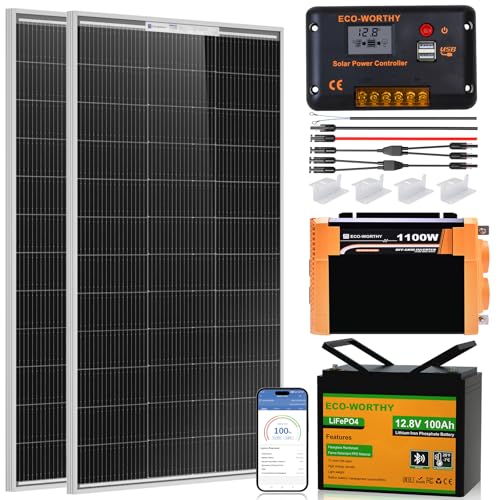
One-Stop Solar Solution: This complete 200W solar complete system generates 800Wh of power daily and stores 1.28Kwh of power, making it the essential kit for your RV trip. This system comes with everything you need to build an off-grid solar system, no additional purchases required. It includes 2pcs 100W solar panel, 12.8V 100Ah lithium battery, 1100W inverter, a 30A PWM charge controller, and all necessary cables.
Where Does Each Technology Perform Best?
Solar panels perform best in high-irradiance, low-shade environments such as deserts or open rooftops, where consistent and direct sunlight maximizes energy output. Wind turbines thrive in areas with steady and persistent winds, like plains or offshore zones, making them ideal for open, unobstructed landscapes. In terms of geographic suitability, solar is most effective in regions like the U.S. Southwest or North Africa, where sunlight remains reliable throughout the year. Wind energy, on the other hand, excels in the Great Plains or along coastlines, where consistent breezes ensure higher capacity factors. Before installing any system, you should use a clamp-on amp meter to verify the actual current output of your wind turbine or solar array under real operating conditions.
Environmental impacts differ: solar installations generally require less land disturbance per unit of energy produced, whereas wind turbines, especially taller structures, pose greater risks for birds and bats. Aesthetic considerations also influence suitability; solar panels tend to blend into rooftops and less disrupt skylines, while wind turbines are more visible and often face local opposition due to their visual and noise footprint. Ultimately, your choice depends on resource reliability—solar needs steady irradiance, while wind requires persistent winds—not just occasional gusts or sunshine. Site-specific factors like space availability and permitting constraints can outweigh raw resource advantages, so assess your local conditions carefully before deciding. For monitoring data transmission between system components, ensure you use properly shielded cables to maintain signal integrity and prevent interference. Understanding your system’s energy storage needs is critical, and comparing AGM vs deep cycle batteries can clarify which option handles variable charging from renewable sources most effectively.

System Components:Delivers up to 10kW power output with 120V/240V single-phase split-phase support, making it suitable for smoothly running common household appliances. The system includes 18 × 590W solar panels with a total PV capacity of 10620W, capable of generating up to 39.36 kWh per day under optimal conditions, along with two 48V 314Ah portable LiFePO₄ battery offering 32.2 kWh of energy storage. Complete with necessary cables, this all-in-one solar solution is designed for convenient setup and reliable home power support.

Max Battery Voltage: 32V

【High Conversion Rate】This 20W solar panel with monocrystalline A+ solar cell has an excellent cell efficiency of 21%-30%. Designed to charge and maintain 12V rechargeable batteries like LiFePO₄, Lithium Ion, AGM, SLA, GEL, EFB, MF, etc. Keep batteries in charged for trailer, tractor, truck, boat, motorcycle, RV, car, lawn mower, water pump, gate opener, electric fence, etc
Are Solar Panels or Wind Turbines Easier to Install and Maintain?
Solar panels are much easier to install and maintain than wind turbines. Installing solar panels typically takes a few days, as you mostly mount flat modules onto roofs or ground setups without complex towers or moving parts. In contrast, wind turbines require constructing a sturdy foundation, erecting a tall tower, and carefully siting the turbine to maximize efficiency, making the installation process more involved and time-consuming.
Maintenance for solar remains simple and infrequent. You mainly need to clean the panels and check the inverter periodically, which helps ensure consistent performance. Wind turbines demand regular inspections of blades, tightening bolts, and adjusting guy wires due to the movement of parts. This hands-on upkeep results in higher annual maintenance costs—often between $1,000 and $3,000—compared to solar, which usually costs around $150 to $300 each year. Additionally, wind turbines tend to experience more downtime because of mechanical wear and tear, further increasing maintenance demands. If you prefer a straightforward setup with lower regular upkeep, solar panels are the clear choice.
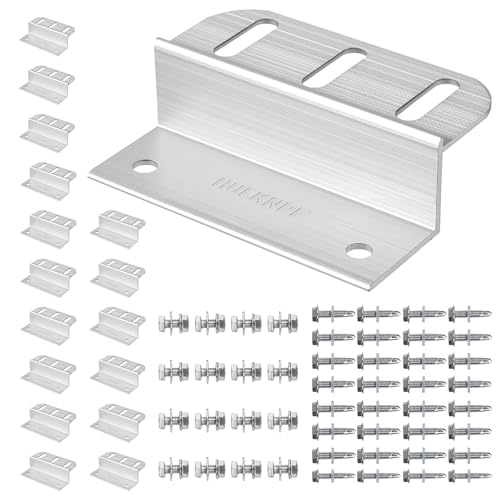
Durable & Wind-Resistant Build: Crafted from corrosion-resistant aluminum alloy, these heavy-duty Z brackets provide long-lasting, stable performance and withstand high winds for outdoor solar installations.

【Complete 4-Panel Roof Mounting Kit】 Includes mid clamps(between panels), end clamps (at ends), and mounting rails with rubber pads & self‑drilling screws for side‑by‑side installation of framed solar panels,and M6 Allen Key tool for clamps. Clamps firmly secure panels to mini rails, resisting wind and vibration. Ensures strong connection from PV modules down to roof and building structure.

Reliable & Multi-Functional: Torsion-resistant and corrosion-resistant, these solar panel mounting brackets provide high stability and precise manufacturing, making them ideal for secure attachment of photovoltaic and solar modules. The tilt angle can be adjusted from 0-90° without tools
How Do You Match Your Choice to Your Home or Project?
If you’re deciding between wind and solar power for your home or project, the best choice depends on your property’s characteristics and energy needs. Wind turbines generally require at least an acre of open land with steady, strong wind conditions to be effective. Solar panels, on the other hand, can fit on small roof surfaces, making them suitable for most residential properties. Land restrictions, such as setback rules and parcel size, often make wind projects impractical in densely built neighborhoods, leaving solar as the more feasible option. For homeowners seeking reliable energy storage, reviewing options like battery backup systems can help ensure power availability during outages.
Structural considerations are also important: solar panels need a solid roof with at least 15 years of remaining lifespan and proper shading conditions. Wind turbines require sturdy foundations and plenty of clearance for safe operation. Your energy production profile matters: solar provides reliable daytime power, while wind can generate electricity at night if your site experiences consistent wind. For most homes, solar is the default unless you own large, open acreage in an area with reliable, steady wind.
Why a Solar-Wind Hybrid System Could Be Your Best Bet
Combining solar panels and wind turbines into a hybrid system enhances your energy reliability by harnessing their complementary generation patterns. Solar energy peaks during the day, while wind often increases at night or in different seasons. This resource complementarity ensures a steadier power supply because when one source underperforms, the other can compensate. Choosing the right roof mounts for your solar panels is crucial to maximize their performance and longevity. For optimal energy storage in such a setup, you should consider lithium batteries, which are often the best batteries for power inverters due to their deep-cycle durability and efficiency.
Sharing infrastructure such as inverters and land reduces capital costs by approximately 7 to 16 percent compared to installing separate systems. Additionally, hybrid setups lower your battery storage requirements because their combined output extends the hours of power availability. This makes them especially advantageous for off-grid or weak-grid locations, providing more stable power with less reliance on diesel generators.
For critical loads or continuous operations, hybrid systems offer increased resilience, maintaining stable energy flow even during fluctuations in weather or seasons.

【Y&H Pure sine Wave Inverter】This 1000W Pure sine Wave Inverter 12V DC to AC 220/230/240V (Single phase/A Hot Leg 230V Output, Can't Output 110V AC), built in 40A Mppt charge controller, is a new all-in-one hybrid solar inverter charger, fit for 12V Lead-Acid (Seal, AGM,Gel, Flooded) and Lithium battery

【Smart 13.2kW Hybrid Energy Management System】 All-in-one single-phase on/off grid pure sine wave solar inverter integrates 8000W+8000W dual PV input, 48VDC battery bank, utility grid & generator power; delivers 13200W rated AC output at max 98% DC-AC conversion efficiency. Built-in 160A MPPT solar charger, supports battery-free operation, auto-switch between solar, battery and grid power to cut utility bills and secure backup power during blackouts, with dual communication ports reserved for BMS battery data transmission and wireless remote monitoring modules.

All-in-one Inverter Charger: Not only a power inverter with 3600 watt rated/7200 watt peak power, but with built-in 120A MPPT solar charge controller, and 100A AC battery charger. PV input voltage range 60V-500VDC, Max. PV input power 4200w, 16A
Are Noise, Space, and Visual Impact Dealbreakers?
Noise, space, and visual impact can be significant dealbreakers for wind turbines. Turbines produce a noticeable hum of around 35 to 45 decibels, which may become bothersome within half a mile, especially if the noise fluctuates. This sound can detract from the aesthetic appeal of your property and disturb neighbors. Additionally, space requirements are substantial: your tower needs setbacks from 1.1 to 2 times its height and a buffer zone of 100 to 150 feet from living areas. These requirements consume far more land than solar panels, which can be installed efficiently on rooftops. Visually, wind turbines are prominent and can dominate your skyline, unlike solar panels that lie low and blend into surroundings. For those prioritizing minimal land use, ground mount systems offer a flexible alternative that can be placed in open yards without roof limitations. These drawbacks become more pronounced on smaller lots and can reduce your overall power reliability if your location lacks strong wind resources, making wind energy less practical for your property. Properly sizing your charge controller is essential to prevent battery damage and ensure efficient energy regulation. For clean and quiet operation, solar panels with plugs provide a low-profile alternative that avoids noise complaints entirely.
The Bottom Line: One Clear Winner Depends on Your Site
Solar is generally the better choice for most homes because sunlight is a predictable resource with low variability. It’s accessible on roughly half of all building rooftops, making installation straightforward and practical. Solar panels are less affected by installation challenges like shading, turbulence, or terrain, which can significantly impact wind performance. Understanding how solar panels work explains why they convert sunlight directly into electricity with minimal moving parts, adding to their reliability. For buyers who do not need a battery, a top solar charger without battery offers a lightweight and cost-effective alternative.
Wind can outperform solar if your site has strong, consistent winds and open terrain. However, its success depends heavily on specific site conditions—low turbulence, minimal shading, and ample space. The complexity and cost of installing wind turbines increase with site constraints, often limiting their feasibility for urban or shaded locations.
For sites with decent wind resources, a hybrid system combining both wind and solar can boost reliability. But in most urban environments, solar’s broader applicability and simpler logistics make it the clear winner, unless your location offers exceptional wind conditions.