


Are you wondering whether microinverters or string inverters are better for your solar setup?
The choice largely depends on your roof’s shading and layout. Microinverters can recover 40-50% of shading losses by optimizing each panel individually.
Meanwhile, string inverters work well with simple, uniform arrays.
This guide will help you weigh their wiring and maintenance differences to make the best call.
When to Choose Microinverters vs. String Inverters
For complex roofs with multiple planes, dormers, or mixed orientations, microinverters are the better choice. They handle fragmented layouts without compatibility issues that can arise with string inverters. Panel-level monitoring is a key benefit, allowing for quick troubleshooting and maintenance. Microinverters also facilitate phased expansion, since each panel operates independently, making it easier to add more panels over time. For those needing portable backup options, some top-rated models also integrate power banks with wall outlets for dependable charging. For homeowners using Square D panels, a similar safety solution like a generator interlock kit ensures safe grid disconnection during outages. When selecting the main panel for these setups, a robust 100 amp breaker box provides the necessary capacity for integrating microinverters and future expansions.
Although microinverters typically have a higher initial cost, they maximize energy yield in challenging roof geometries. Installation may take slightly longer compared to string inverters, but the improved performance and flexibility can justify the extra time and expense. They are especially suitable if your roof material complicates centralized access or if future system expansion and troubleshooting ease are priorities.

Electronic Leveling Control Panel Compatible with Lippert Ground Control TT and Level-Up Leveling System Replace Number : 425306 Direct Installation, Plug and Play Support...
How Shade and Panel Mismatch Affect Performance
Microinverters outperform string inverters by a significant margin in shaded conditions because they isolate each panel’s output. While a string inverter’s performance drops sharply when a single panel is shaded or mismatched—losing 15 to 30 percent of annual energy—microinverters typically only lose 3 to 5 percent. This is because each microinverter operates independently, preventing shading on one panel from affecting the entire system. Bypass diodes in string inverters activate during shading, further reducing output and amplifying energy loss. Additionally, panel mismatch from differences in orientation or manufacturing variations can cause losses of 5 to 10 percent on complex roofs. Microinverters mitigate these issues by optimizing each panel individually, recovering about 40 to 50 percent of shading-related losses and providing more consistent energy production overall. For those seeking similar reliability in their solar setup, consider top battery picks with terminals for quality performance and value.
Why Upfront Cost Isn’t the Only Number That Matters
While the initial cost difference between microinverters and string inverters may be $0.10 to $0.30 per watt, this savings can be misleading once you consider total ownership costs. Microinverters typically come with a 25-year warranty, whereas string inverters usually offer just 10 to 12 years. That means you will likely need at least one full replacement of a string inverter during the system’s lifetime, adding to the total expense.
String inverters have a lower upfront price, but their failure rate can be up to 15% per year. Failures create a single point of failure for the entire system, which can lead to increased downtime and service calls. Over time, these costs—replacements, repairs, and potential system downtime—can erase any initial savings. For those researching top solar chargers without batteries, similar principles of long-term value apply when evaluating reliability and performance.
When weighing the total cost, consider that a $1,500 to $2,500 saving upfront on a 10 kW system may be quickly offset by the need for replacement within a decade. Also, include labor costs for replacing an inverter, system downtime, and possibly multiple service visits. The longer warranty and lower failure risk of microinverters often make them the more cost-effective and reliable choice in the long run. Never be fooled by a low initial price; the real expense is what you pay over the system’s lifetime. Comparing top options from reputable reviews can help you identify which microinverter models offer the most durable performance and best align with your long-term savings goals. A clamp meter, for example, enables technicians to measure AC current and verify system output without interrupting the circuit, using a non-contact measurement principle for safer diagnostics.

Simply Put the Solar Panel in the Sun & Plug the Electric Cord to Your Wall.


Simply Put the Solar Panel in the Sun & Plug the Electric Cord to Your Wall.
Panel-Level Monitoring vs. Array-Level Monitoring: What You Gain
Panel-level monitoring provides the detailed visibility you need to optimize performance at the individual module level. You can track voltage, current, power, and temperature for each panel separately, enabling precise performance analysis. This granularity allows you to quickly identify whether an issue is affecting a single panel or an entire string.
When it comes to fault detection, panel-level data pinpoints the exact source of problems—such as shading, soiling, or a failing bypass diode—much faster than array-level monitoring. This precision reduces downtime and prevents the need for broad, time-consuming troubleshooting. Array-level monitoring, by contrast, only signals that there is a problem without revealing whether it is isolated to a single panel or spread across multiple units. For a hands-on approach, a DIY battery tester design can provide similar diagnostic granularity by isolating faults at the component level.
With panel-level visibility, you gain better diagnostics and stronger warranty support through detailed historical records for each module. This detailed data helps you address issues before they escalate, lowering maintenance costs by narrowing the scope of repairs and avoiding unnecessary panel replacement. Just as monitoring individual battery cells in a LiFePO4 system can extend lifespan by catching early failures, tracking each solar panel separately prevents minor faults from causing long-term performance degradation.
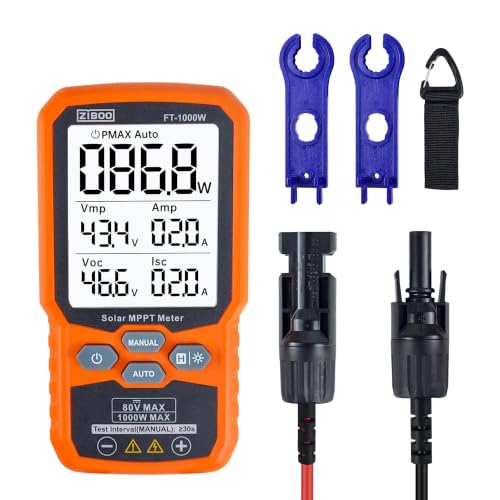
⚡ Professional-Grade PV Testing Measures maximum power (Pmax) up to 1000W, open-circuit voltage (Voc: 12-80V), and short-circuit current (Isc: 35A) with ±0.8% accuracy, ideal for validating solar panel performance in R&D, manufacturing, and field maintenance.
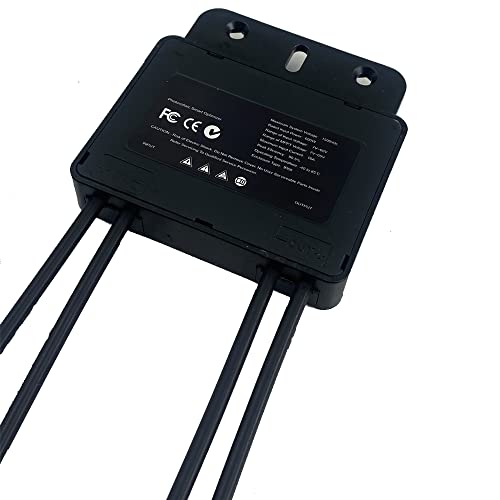
To solve mismatch issues caused by shading, dust/snow, orientation differences, power derating differences, dual-surface cells and so on.

Remote Monitoring With Instant Alerts: Stay informed wherever you are with 2.4G/5G WiFi connectivity that lets you check real time and historical liquid levels anytime through the App. Instant alerts from both the App and repeater help you respond quickly to low water levels, empty tanks, or potential overflows, bringing greater peace of mind to homes, farms, and outdoor systems
How Microinverters and String Inverters Actually Work
Choosing between microinverters and string inverters mainly depends on where the DC-to-AC conversion takes place. Microinverters convert DC to AC right at each solar panel, mounting behind the module. This means each panel operates independently, performing its own maximum power point tracking, which enhances efficiency on a per-panel basis. Microinverters are especially effective if your roof experiences shading issues, as shading on one panel won’t affect the entire system. For safe and reliable installation, understanding how to properly strip and terminate the DC wiring is as essential as selecting the right inverter. After completing the wiring, it is critical to test all connections to verify system integrity and prevent hazards. When selecting a complete power solution, some users also consider 24V battery with charger systems for off-grid storage.
In contrast, string inverters handle all panels in series, sending a combined DC output to a central inverter. This single unit manages conversion and string-level maximum power point tracking for the entire array. Using string inverters simplifies installation with fewer components and wiring than microinverters. However, if one panel underperforms due to shading or dirt, it can reduce the performance of the whole string. The choice hinges on your roof’s shading profile and your preference for system complexity versus granular optimization.