

Figuring out which solar panel connectors you need can feel confusing, especially with so many options out there.
The most common choice for new installations is the MC4 connector, known for its durability, weather resistance, and standard size.
Choosing the right connector is crucial for safety and system performance.
Keep reading to find out how to match the best connector to your solar setup.
MC4 vs. MC3 vs. T4: A Side-by-Side Comparison
MC4 connectors are the safest choice for new installations due to their 4mm contact pin, positive locking mechanism, and IP68 weather resistance. These features ensure a secure and reliable connection that withstands harsh outdoor conditions. MC4 also offers broad compatibility, making customization and system expansion easier. In comparison, T4 connectors employ a similar modern locking design and IP68 protection but are manufacturer-specific, so verifying compatibility before use is necessary. MC3 connectors, with their 3mm pin and friction-based connection, are outdated and should only be used if servicing legacy systems. During installation, always check that the voltage rating (1000–1500V DC) and current capacity (up to 30A) match your system’s specifications. Stick with MC4 for universal compatibility unless T4 is explicitly required by your equipment. The MC4 connector uses a positive locking mechanism that prevents accidental disconnection under load. For maximum safety, ensure your chosen connector meets industry testing standards such as UL 6703 for durability and fire resistance. Just as with batteries, disconnecting the negative terminal first prevents short circuits and sparks during solar connector maintenance.

Quick Parallel 2 Solar Panels: BougeRV 1 to 2 Y branch cable can parallel 2 solar panels. The kit includes 1 male to 2 female (M/FF) and 1 female to 2 male (F/MM) solar connectors

Package Included: 6 pairs solar panel connectors Male and Female + 6 pairs solar connector pins (male and female) + 1 pair of spanners

Don’t Mix Solar Connectors: Why Compatibility and Locking Design Keep Your System Safe
Mixing solar connectors from different brands or families is a serious safety risk. Even if connectors look similar, incompatible parts can increase contact resistance, which generates heat and enhances the chance of DC arcing—a persistent fire hazard. To ensure safety and system reliability, you must use identical connectors from the same manufacturer for every plug and socket in your solar array. Just as with solar arrays, using a dependable charging solution requires verified compatibility to prevent hazardous resistance and overheating. Understanding the core energy transfer process of a solar generator helps you recognize why stable connections are critical for overall system performance.
Locking mechanisms are essential in maintaining consistent contact pressure. They prevent connectors from loosening due to thermal cycling or vibrations, reducing the likelihood of resistance buildup and heat generation. Incompatible locks may snap together but fail to hold the necessary force, leading to cracks, moisture ingress, and eventual connection failure. Always verify part numbers before installation. Cross-mating connectors without proper certification not only voids warranties but also violates electrical codes. To keep your system durable and compliant, stick with a single connector family throughout the entire installation.

Solar panel connectors allow you to connect 2 pcs solar panels in parallel.

High-Quality Materials for Maximum Efficiency:Crafted with premium PPO material and tinned copper conductor pins, these solar connectors ensure excellent conductivity and minimal energy loss. Designed for durability, they deliver reliable performance for long-term use in any solar power system.

Solar Y Branch Connectors: 1 male to 2 female(M/FF) and 1 female to 2 male(F/MM), it is compatible with solar cables or connectors in 14AWG to 10AWG, it could be used for paralleling solar panels
How to Match Voltage, Current, and Weather Ratings to Your System
To ensure safe and reliable operation, match the connector’s voltage, current, and weather ratings precisely to your system requirements. Start by selecting a connector with a voltage rating that meets or exceeds the highest open-circuit voltage your array strings can produce—whether your system operates at 1000V or 1500V DC. Proper voltage matching prevents insulation breakdown and arcing, which are critical safety concerns.
For current capacity, choose a connector rated for at least the maximum continuous current your circuit will carry, including contributions from module output and parallel string connections. Always consider derating for high temperatures; some connectors specify their limits at 85°C or higher, so verify the rating aligns with the climate conditions. For reliable performance, look for connectors used on top solar panels with MC4 connectors as they are tested for quality and value. Following the DIY build order helps ensure these connectors are properly seated during assembly. Selecting connectors with tested terminals ensures consistent electrical contact and longevity.
Weather protection is equally important. Opt for connectors with an IP68 rating for outdoor installations—they are dust-tight and water-resistant when mated. In coastal or humid environments, ensure the connector’s housing is UV-resistant and flame-retardant. Additionally, verify the temperature range, typically from -40°C to +85°C, to confirm compatibility with your local climate conditions. Proper matching minimizes risks like brittle housings, reduced ampacity, and weather-related damage.

PG7 Waterproof cable gland used for all cable types 2mm² to 6mm² in Dia ,Widely used for solar project when routing the cables

Upgraded Design: Solar panel connectors is pre-assembled with 0.33 ft 10awg wire, save a pair of waterproof glands, meanwhile,speed up the installation.Built-in screw slot for easy installation to prevent screws from slipping.There is a groove on the bottom, which is convenient for gluing, and improves the fastness and waterproof of the paste.
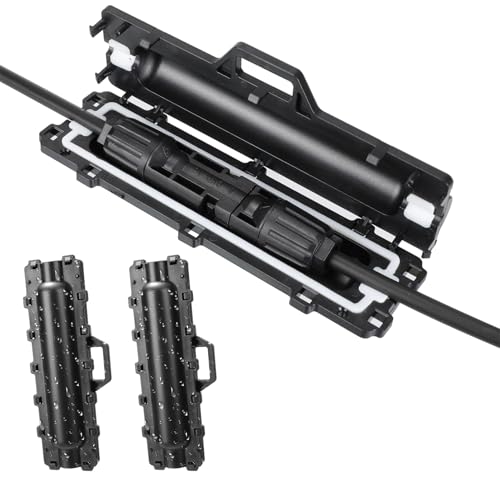
Material: Material: Marine solar connector protection box is made of PPO material,with excellent performance of IP68 waterproof, UV resistant and corrosion resistant, especially suitable for marine environment
Choose the Right Connector for New Installations vs. Legacy Upgrades
For new installations, choosing MC4-family connectors is the best option. They offer enhanced durability, secure locking mechanisms, and weather resistance, making them suitable for outdoor use. Most modern solar panels ship with MC4 connectors already attached, streamlining the setup process. For systems designed to operate at higher voltages, such as commercial arrays exceeding 1000V, opt for MC4-Evo 2 connectors rated for 1500V to ensure safety and compliance. As with any high-quality lithium battery charger, selecting the right connector ensures optimal performance and avoids compatibility issues.
When upgrading existing systems, start by identifying the type of connector previously used. Do not assume compatibility—MC3, SolarLok, and Radox connectors do not mate with MC4 connectors, and trying to force a connection can void certifications and create safety hazards. To maintain system integrity, replace old leads with compatible connectors or use rated adapter cables designed for your specific connector families. Never mix different brands or connector types in the same system. Your upgrade approach depends on whether you are fully modernizing the array or replacing only a small section. Keep legacy connectors only if manufacturer parts remain available and meet current safety standards.

Y Branch Parallel Connector – Offered in two configurations: 1 male to 2 female (M/FF) and 1 female to 2 male (F/MM) solar connectors, designed to wire 2 solar panels in parallel.
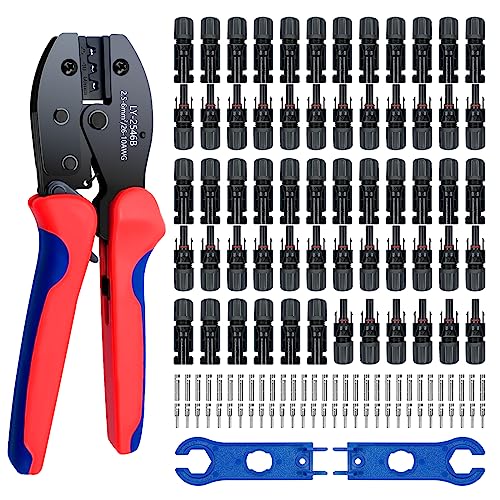
Compatible Cable: Solar connectors compatible with PV cables with different insulation diameters. Solar crimping tool kit for 2.5/4/6 mm² solar PV wire.

One Pair of Solar Y Branch Parallel Connectors: Great to have four solar panels in parallel, with 1 male to 4 female (M/FFFF) and 1 female to 4 male (F/MMMM). Extra long at 24.81''/63cm, they are long enough to reach the panels without extensions and connect them without being tight
Which Solar Connector Should You Buy? A Practical Decision Guide
When selecting a solar connector, ensure its electrical specifications match your system’s voltage and current ratings. Check that the connector is certified to standards like UL 6703 and IEC 62852, which ensure safety and compatibility for photovoltaic applications. A minimum IP67 rating provides decent water and dust resistance, but IP68 with mated waterproof performance offers better protection for harsh environments. Match the connector’s crimp range to your PV wire size, typically 4–6 mm², and confirm it can handle your system’s string current, usually around 30A. Always buy male and female halves from the same manufacturer to guarantee proper mating. For residential setups, a UL-certified MC4-style connector with IP68 protection is a practical baseline. Never compromise on certification or sealing to save costs; these connectors are critical for system safety and longevity. For similar reasons, use only bare copper wire for grounding to ensure reliable conductivity and corrosion resistance. To verify accuracy in your system’s electrical readings, you may also want a digital multimeter with True RMS capability for measuring AC signals from inverters.

【UL 6703 & TÜV Certified Solar PV Connectors】 Certified to UL 6703 (RU Mark) and TÜV IEC 62852 / EN 62852, meeting major photovoltaic connector safety standards commonly referenced for compliant solar installations in residential, RV and off-grid solar systems.

FUNCTION & PURPOSE: When the solar connectors are not in use, the solar connector dust cap can protect the solar connectors from the insect netting, leaf entry, ash accumulation, moisture, rust, and oxidation, and effectively avoid internal erosion by dust, debris, and moisture

【UL 6703 & TÜV Certified Solar PV Connectors】 Certified to UL 6703 (USA) and TÜV IEC 62852 / EN 62852, meeting major photovoltaic connector safety standards commonly referenced for compliant solar installations in residential, RV and off-grid solar systems.