

Thinking about a Tesla Powerwall is like picking the perfect dance partner for your solar panels; one wrong move and you’re left with wasted energy instead of savings. So, which of these eight standout setups actually makes that investment pay off? Let’s walk through the configurations that turn sun rays into real, long term value.
| ECO-WORTHY 9.36KWH 48V Solar Power System Kit | 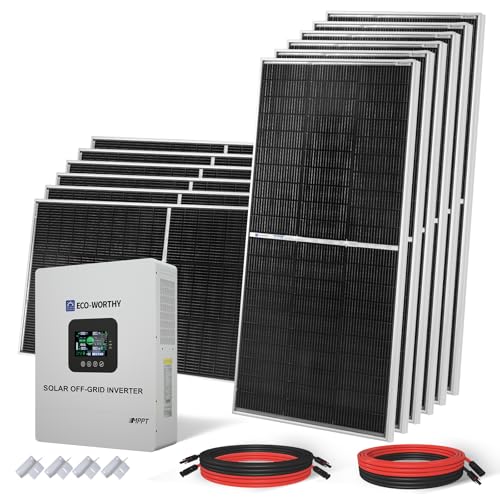 | Best For Whole Home | Power Output (Wattage): 2340W (12 panels × 195W), 9.36KWh daily | Solar Cell Efficiency: 25% | Panel Type / Design: Rigid, fixed-mount glass panels | VIEW LATEST PRICE | Read Our Analysis |
| AMPSOS 36W Portable Solar Panel with MPPT |  | Best For Ultra-Portable | Power Output (Wattage): 36W | Solar Cell Efficiency: 23% | Panel Type / Design: Foldable, portable | VIEW LATEST PRICE | Read Our Analysis |
| 40W Foldable Solar Panel for iPhone iPad Laptop |  | Budget-Friendly Pick | Power Output (Wattage): 40W | Solar Cell Efficiency: 22% | Panel Type / Design: Foldable, portable | VIEW LATEST PRICE | Read Our Analysis |
| SOKIOVOLA 50W Foldable Solar Panel Charger |  | Best Lightweight Option | Power Output (Wattage): 50W | Solar Cell Efficiency: Up to 24.8% | Panel Type / Design: Foldable, portable | VIEW LATEST PRICE | Read Our Analysis |
| ECO-WORTHY 25W 18V Monocrystalline Solar Panel |  | Best For Small Rigs | Power Output (Wattage): 25W | Solar Cell Efficiency: High-efficiency monocrystalline (not specified) | Panel Type / Design: Rigid, fixed-mount panel | VIEW LATEST PRICE | Read Our Analysis |
| VEVOR 60W Foldable Solar Panel Charger |  | Best Value | Power Output (Wattage): 60W | Solar Cell Efficiency: ≥24% | Panel Type / Design: Foldable, portable | VIEW LATEST PRICE | Read Our Analysis |
| VEVOR 300W Foldable Monocrystalline Solar Panel |  | Heavy-Duty Pick | Power Output (Wattage): 300W | Solar Cell Efficiency: 22–23% | Panel Type / Design: Foldable, portable | VIEW LATEST PRICE | Read Our Analysis |
| 45W Portable Solar Panels for Camping IP67 Foldable Small Solar Charger |  | Best For Adventurers | Power Output (Wattage): 45W | Solar Cell Efficiency: Up to 23.5% | Panel Type / Design: Foldable, portable | VIEW LATEST PRICE | Read Our Analysis |
More Details on Our Top Picks
ECO-WORTHY 9.36KWH 48V Solar Power System Kit
If you want whole home power, the ECO-WORTHY 9.36KWH 48V Solar Power System Kit is a solid pick. You get twelve 195W mono panels hitting 25% efficiency with 18 busbars for better conductivity. Plus, double-sided generation adds up to 100Wh daily. Your 5000W pure sine wave inverter pairs with a 100A MPPT controller, handling solar, mains, or hybrid charging. You’ll run AC units, fridges, and microwaves easily. And you can parallel up to six systems for 30KW total. Just remember: professional installation is key for safety and performance.
- Power Output (Wattage):2340W (12 panels × 195W), 9.36KWh daily
- Solar Cell Efficiency:25%
- Panel Type / Design:Rigid, fixed-mount glass panels
- Water/Dust Protection Rating:IP68
- Output Ports Included:AC outlets (110V) via inverter, PV input ports
- Weight:Not specified (full system with 12 panels)
- Additional Feature:Supports parallel up to 6 systems
- Additional Feature:Double-sided generation capability
- Additional Feature:30-year expected lifespan
AMPSOS 36W Portable Solar Panel with MPPT
The AMPSOS 36W panel is your go to for ultra portable energy on the go. It folds down to just 1.9 pounds, so you’ll easily stash it in your backpack. But don’t let the size fool you. Those M10 182mm cells hit over 23% efficiency, and the built-in MPPT controller boosts energy capture by up to 30% in shade or shifting light. It’s smart tech that actually works.
You get a dedicated USB-C port plus multiple voltages (12V, 15V, 20V, 5V, 9V). So you can juice up your iPhone 16/17, iPad, or even a portable power station on the trail. And with heavy-duty 900D polyester fabric, this thing laughs at rocky terrain. Here’s what’s included:
- Carabiners and reinforced eyelets for clipping onto your pack
- USB-C connector and user manual
- Retail box
Rated 4.4 out of 5 stars, it comes with a 30-day return policy and a one-year warranty. Perfect for topping off your Tesla Powerwall gear during camping trips!
- Power Output (Wattage):36W
- Solar Cell Efficiency:23%
- Panel Type / Design:Foldable, portable
- Water/Dust Protection Rating:Weather-resistant (not rated)
- Output Ports Included:USB-C, multiple voltage ports (12V, 15V, 20V, 5V, 9V)
- Weight:1.9 lbs
- Additional Feature:Built-in MPPT controller
- Additional Feature:Weighs only 1.9 pounds
- Additional Feature:900D polyester fabric construction
40W Foldable Solar Panel for iPhone iPad Laptop
Why rely on bulky generators when you can grab this budget-friendly pick and charge your phone, tablet, or laptop right from the sun? This 40W foldable panel is your go-to for camping, hiking, or travel. It’s built with monocrystalline silicon, hitting a solid 22% conversion efficiency. You get three output ports: a DC port (18V/2.27A), a USB-C, and a QC3.0 USB. That means you can power up a small fridge, camera, or power bank too. It’s lightweight at 3.3 pounds, water-resistant, and folds down to 13.3 x 11 x 2 inches. Plus, TIR-C technology optimizes charging speed and prevents overloading. Just aim it at sunlight above 40,000 Lux and you’re set.
- Power Output (Wattage):40W
- Solar Cell Efficiency:22%
- Panel Type / Design:Foldable, portable
- Water/Dust Protection Rating:Water-resistant (not rated)
- Output Ports Included:DC 18V port, USB-C, QC3.0 USB
- Weight:3.3 lbs
- Additional Feature:Includes 10 DC adapters
- Additional Feature:TIR-C device identification technology
- Additional Feature:Works above 40,000 Lux
SOKIOVOLA 50W Foldable Solar Panel Charger
Lightweight at just 2.095 pounds, the SOKIOVOLA 50W Foldable Solar Panel Charger makes an excellent lightweight option for your Tesla Powerwall setup. You’ll appreciate its compact folded size of 14.69 x 7.88 x 1.19 inches, perfect for tossing in your pack during camping or RV trips. Its ETFE and UV-resistant EVA materials give it IP68 waterproofing (though the junction box isn’t waterproof), so you can trust it in light rain.
This panel hits up to 24.8% conversion efficiency with high transmittance (95%) materials. You get three output ports: USB-A (QC3.0 18W max), USB-C (PD 30W max), and DC (18V/2.78A max). It includes DC5521, XT60, DC7909, and Anderson connectors, so you’ll charge phones, tablets, or power banks easily. Plus, it comes with a 12-month warranty and responsive customer support.
- Power Output (Wattage):50W
- Solar Cell Efficiency:Up to 24.8%
- Panel Type / Design:Foldable, portable
- Water/Dust Protection Rating:IP68 (panel only, junction box not waterproof)
- Output Ports Included:USB-A (QC3.0), USB-C (PD 30W), DC 18V port
- Weight:2.095 lbs
- Additional Feature:ETFE laminated construction
- Additional Feature:95% light transmittance material
- Additional Feature:12-month manufacturer warranty
ECO-WORTHY 25W 18V Monocrystalline Solar Panel
Pair this panel with your Tesla Powerwall for a compact off-grid boost. This 25W monocrystalline panel is your perfect accessory for smaller loads, like charging a 12V battery on your RV or running LED lights. It pushes 1.22 amps at 18V, but don’t worry—it steps down to 12V for your system. And with that durable frame, it shrugs off snow loads up to 5400Pa. You get roughly 100Wh daily from four hours of sun. Easy to mount with pre-drilled holes, it’s a rugged, portable add-on for your Powerwall’s energy arsenal.
- Power Output (Wattage):25W
- Solar Cell Efficiency:High-efficiency monocrystalline (not specified)
- Panel Type / Design:Rigid, fixed-mount panel
- Water/Dust Protection Rating:Waterproof (not rated)
- Output Ports Included:Extension cable (DC output, no multi-port)
- Weight:2.06 kg (approx. 4.5 lbs)
- Additional Feature:39.3-inch extension cable included
- Additional Feature:Withstands 2400Pa wind loads
- Additional Feature:Withstands 5400Pa snow loads
VEVOR 60W Foldable Solar Panel Charger
You want a portable solar setup that won’t weigh you down. At just 4 pounds, this foldable panel packs easily for camping or road trips. Its 16BB N-Type monocrystalline cells hit ≥24% efficiency, so you’ll snag more sun even on cloudy days. You get multiple ports: one USB-A, one QC 3.0, one Type-C, and a DC port. That means charging your phone and tablet simultaneously is no problem. Plus, the MC4 cable and included adapters (XT60, Anderson, DC5521) make hooking up to power stations a breeze. With an IP65 rating, rain and dust won’t stop you.
- Power Output (Wattage):60W
- Solar Cell Efficiency:≥24%
- Panel Type / Design:Foldable, portable
- Water/Dust Protection Rating:IP65
- Output Ports Included:USB-A, USB-A QC3.0, Type-C, DC port, MC4
- Weight:4 lbs
- Additional Feature:Built-in MC4 cable included
- Additional Feature:16BB N-Type monocrystalline cells
- Additional Feature:Four carabiners for setup
VEVOR 300W Foldable Monocrystalline Solar Panel
Need portable solar that won’t weigh you down on a camping trip or RV adventure? The VEVOR 300W foldable monocrystalline solar panel hits the sweet spot between power and portability. It weighs just 25.6 pounds, folding down to a compact 98.8 x 28.9 x 0.5 inches. Those premium monocrystalline cells achieve 22-23% efficiency, converting more sunlight into juice for faster charging. You’ll get a built-in MC4 cable plus a 4-in-1 connector cable with XT60, Anderson, DC5521, and DC5525 options, along with a 10-in-1 DC adapter set. It’s IP67 rated, so dust and water won’t stop it. Temperatures from -4°F to 149°F? No problem. Pair it with most power stations for energy independence on the trail or at home.
- Power Output (Wattage):300W
- Solar Cell Efficiency:22–23%
- Panel Type / Design:Foldable, portable
- Water/Dust Protection Rating:IP67
- Output Ports Included:MC4 cable, 4-in-1 connector (XT60, Anderson, DC5521, DC5525), 10-in-1 DC adapters
- Weight:25.6 lbs
- Additional Feature:4-in-1 MC4 connector cable
- Additional Feature:25.6 pounds total weight
- Additional Feature:IP67 water/dust resistance rating
45W Portable Solar Panels for Camping IP67 Foldable Small Solar Charger
For rugged adventurers who need reliable power off the grid, this 45W portable solar panel delivers unmatched durability and efficiency. You’ll love how it folds down to just 14.5 x 9.8 x 0.6 inches, weighing only 3.3 pounds, so it slips right into your backpack. Its IP67 waterproofing and ETFE coating resist UV rays and harsh weather, keeping those monocrystalline silicon cells hitting up to 23.5% efficiency. Charge your phone, tablet, or power bank through the DC, USB-A, or Type-C ports. Use the built-in kickstands for steady sunlight exposure. An 18-month warranty backs it up.
- Power Output (Wattage):45W
- Solar Cell Efficiency:Up to 23.5%
- Panel Type / Design:Foldable, portable
- Water/Dust Protection Rating:IP67
- Output Ports Included:DC output, Type-C, USB-A
- Weight:3.3 lbs
- Additional Feature:ETFE coating for UV resistance
- Additional Feature:Built-in kickstands for placement
- Additional Feature:18-month repair/warranty coverage
Factors to Consider When Choosing Tesla Powerwall With Solar Panels
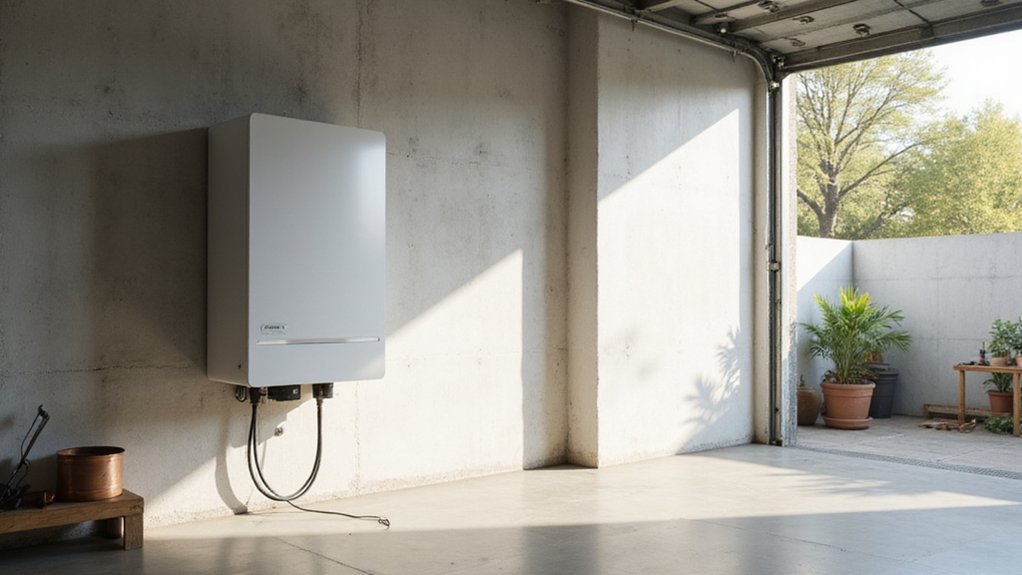
When you’re picking a Tesla Powerwall with solar panels, you’ll need to focus on capacity and output to match your home’s energy needs. And don’t overlook durability and weatherproofing, since these components face the elements every day. But charging speed and efficiency, along with compatibility and connectivity, will ultimately determine how smoothly your system performs.
Capacity & Output
How do you make certain your solar-plus-storage setup actually works for your home? You match capacity and output to your daily consumption and backup needs. The Powerwall stores energy in kilowatt-hours (kWh), so calculate your household’s average daily usage. Then, guarantee your solar panels generate enough power to fill that battery. Your solar panel output depends on wattage and sunlight, so don’t oversize or undersize.
And don’t forget continuous output. This determines how much power the Powerwall can supply at once. For high-demand appliances like your AC or oven, check the peak output. You need enough to handle surges during outages or peak times. A mismatch leaves you in the dark when you need lights most. Get these numbers right, and your system actually pays off.
Portability & Weight
The weight of your Tesla Powerwall setup directly affects portability, especially if you’re planning to move or reconfigure your system. Lighter components, like portable solar panels, make transport a breeze—some weigh as little as 1.9 pounds for easy backpacking. But as panels scale up, so does the heft; foldable models over 20 pounds demand extra muscle or gear for relocation.
You’ll want to weigh portability against your needs. For temporary setups, prioritize lighter panels and compact batteries. But if you’re installing permanently, heavier isn’t a dealbreaker—just factor in transport logistics. Here’s a quick guide:
- Under 20 lbs: Perfect for camping or mobile use.
- 20-60 lbs: Requires planning; use carts or straps.
- Over 60 lbs: Stick with stationary installations.
Choosing lighter gear shifts your system’s mobility, adapting it to any environment!
Durability & Weatherproofing
What keeps your Tesla Powerwall and solar panels going strong through storms, blazing sun, and years of use? It all starts with smart material choices. You’ll want solar panels built with tempered glass and corrosion-resistant aluminum frames. Those aren’t just buzzwords; they’re your first defense against rust and impact. Check for a waterproof rating like IP68 or IP67. That means dust and water won’t sneak inside.
Weather-resistant coatings matter too. Look for ETFE or UV-resistant EVA layers. They protect your panels from sun damage and cracking over time. And don’t forget wind and snow loads. Make sure your system’s rated for extreme weather where you live. Advanced lamination and sealed junction boxes keep moisture out, preventing performance loss.
Combine these features with your Powerwall’s durable design, and you’ve got a setup built to last. No fluff, just solid protection for the long haul!
Charging Speed & Efficiency
Now that you’ve got a weatherproof setup locked in, let’s talk about how fast that Powerwall actually fills up with solar energy. Your charging speed hinges on two things: total solar input and the Powerwall’s inverter capacity, which ranges from 3.3kW to 13.5kW. Higher panel efficiency (up to 25%) and more sunlight exposure directly boost that rate. MPPT technology in your inverter optimizes power transfer, making charging quicker and more efficient. But shading, poor panel orientation, or cloudy weather can slow things down. Want faster fills? Add more panels or pick higher wattage, more efficient ones. That way, your Powerwall hits full capacity sooner, maximizing every ray of sun you capture.
Compatibility & Connectivity
Before you get too excited about charging speeds, you’ve got to make sure your Powerwall actually talks to your solar panels. That means checking compatibility with your inverter type and the specific panels you’re using. You’ll need to verify it supports communication protocols like Wi-Fi or Ethernet, and standards like EN50438 for seamless integration. Also, confirm your system handles bidirectional energy flow so solar power charges the Powerwall while powering your home simultaneously. Don’t forget voltage and current specs; mismatches kill efficiency. And check whether your home runs on single phase or three phase your Powerwall must match that capacity. A quick compatibility checklist keeps the whole setup singing together without frustrating surprises.
Installation & Setup
Once you’ve confirmed your Powerwall and solar panels can talk to each other, it’s time to tackle installation and setup—and that’s where professional guidance becomes non-negotiable. You’ll need a licensed pro to handle electrical code compliance and safe integration with your home’s system. For the Powerwall itself, you’ve got two mounting options: wall-mounted or floor-standing. Wall mounts save floor space but require sturdy wall support, while floor stands are simpler but take up more room. Your installer will also conduct a site assessment to optimize solar panel placement for maximum sun exposure. During setup, they’ll configure inverter settings and secure all electrical connections. This isn’t a DIY job; you’re relying on experts to ensure seamless backup and energy independence. And honestly, that peace of mind is worth every penny.
Warranty & Support
Why does warranty length matter so much when you’re pairing a Tesla Powerwall with solar panels? Simple: it’s your safety net against costly repairs or replacements down the road. A solid warranty, often spanning 10 to 25 years, should cover manufacturing defects for both the Powerwall and your compatible solar panels, but check if each component has separate terms. Some policies offer prorated coverage after the initial years, so you’re not left stranded as your system ages. Don’t overlook support channels either, you’ll want quick access to phone, chat, or even in-person help when something goes wrong. Reliable technical assistance and maintenance guidance make all the difference, turning a potential headache into a manageable fix. Choose a warranty that backs both your battery and panels, because confidence in your setup pays off over time.
Price & Value
How do you really know if a Tesla Powerwall plus solar panels delivers good value? You calculate the long-term energy savings against your total price, which should cover installation, maintenance, and any future upgrades. Higher efficiency panels generate more electricity per square foot, so you’ll need fewer of them, slashing your overall system cost. That’s real value.
But don’t forget subsidies, tax credits, and financing options. They can dramatically lower your upfront expenses, making that return on investment come quicker. And for lasting value, invest in durable, high-capacity components. You’ll avoid costly replacements down the line.