
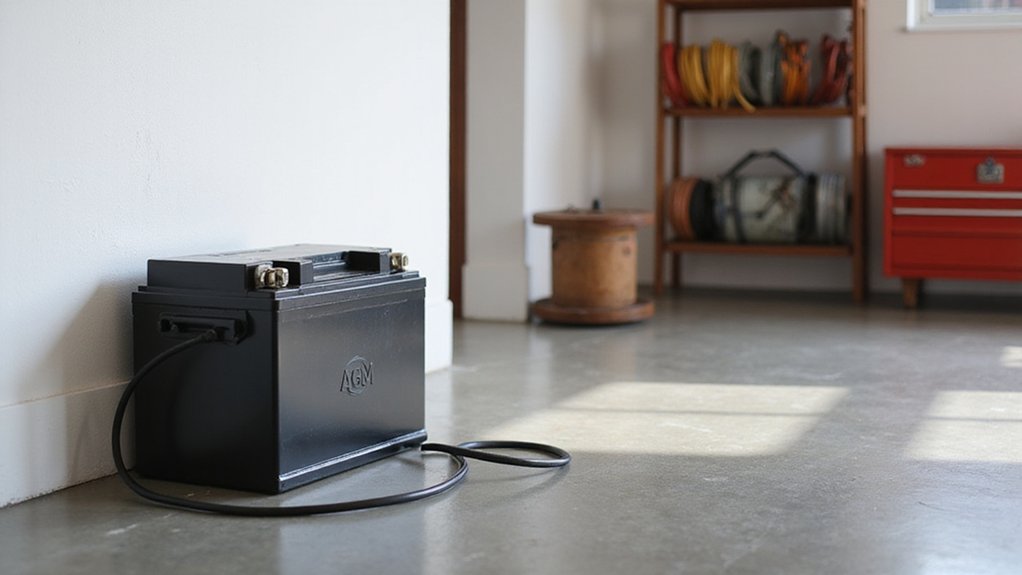

You’re wondering if a deep cycle battery is the same as an AGM battery. The quick answer is no, but they often get mixed up because of their similarities.
A deep cycle describes how a battery can be discharged repeatedly to a certain level without damage, while AGM refers to its internal design.
Keep reading to understand how these types compare and which might be right for your needs.
No: Here’s How Deep Cycle and AGM Batteries Are Different
Deep cycle and AGM batteries differ primarily in their design and how they used. Deep cycle refers to how the battery discharges, meaning it can repeatedly provide a steady amount of power over time, especially during deep discharges. AGM, or Absorbed Glass Mat, describes how the battery is constructed—specifically, the electrolyte is held in fiberglass mats rather than liquid form. Proper installation of a battery system is similar to installing a breaker box because both require careful attention to wiring and safety to prevent costly mistakes.
This construction makes AGM batteries more durable and resistant to vibration, which is especially beneficial for frequent deep cycling. As a result, a deep cycle AGM battery typically lasts longer than a flooded deep-cycle battery because it is less prone to plate damage and can handle faster recharging. Additionally, AGM batteries are sealed and spill-proof, eliminating the need for watering or electrolyte checks. They require minimal maintenance, making them a convenient choice. Conversely, flooded deep-cycle batteries are cheaper but require regular water top-ups and ventilation. If neglected, their lifespan shortens, and their performance diminishes over time. Choosing an AGM construction within the deep-cycle category usually offers longer life and lower maintenance requirements, and for those prioritizing quality, performance, and value, selecting a top-rated model ensures reliable operation. To maintain peak performance, owners should regularly clean the panels of any solar system using a soft brush and deionized water to prevent dust buildup from reducing charging efficiency.

Renogy AGM Batteries: Trusted Worldwide, Exceptional Safety, Extreme Performance! Support series (No limitation), parallel (Up to 4P) connections
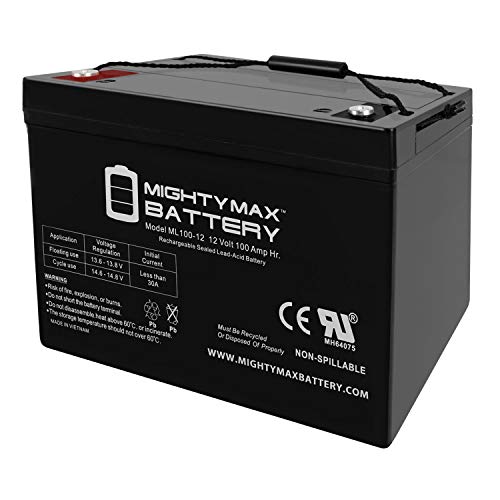
ML100-12 SLA is a 12V 100AH group 30H Sealed Lead Acid (SLA) rechargeable maintenance free battery - UL Certified
What Does “Deep Cycle” Actually Mean for Your Battery?
A “deep cycle” battery is designed to be discharged to a significant extent and then recharged repeatedly, typically between 50% and 80% of its capacity. This pattern of a substantial discharge followed by full recharge defines its cycle life. Unlike starter batteries meant for quick, high-current bursts, deep cycle batteries prioritize endurance and sustained power delivery over quick starts. Their construction allows them to handle deep discharges without damage, making them ideal for applications like marine systems, RVs, and off-grid setups. The depth of discharge directly influences how long the battery lasts; shallower discharges, such as going to 50% instead of 80%, can extend the overall lifespan considerably. Proper charging methods are essential; you need chargers that can fully replenish the battery’s capacity after each deep cycle, preventing incomplete recharges that can degrade performance over time. Pairing your battery with quality MC4 connectors ensures efficient energy transfer and system reliability. Just as the invention of cable ties revolutionized bundling tasks, the deep cycle battery’s design revolutionized energy storage for sustained use. To ensure reliable power delivery, selecting a high-quality battery disconnect switch can help isolate the battery when not in use, protecting its performance and longevity.
How Is an AGM Battery Different Inside?
Inside an AGM battery, the electrolyte is immobilized within compressed fiberglass mats, which serve as both separators and sponges. This design prevents the liquid from sloshing around, making the battery spill-resistant and ensuring the acid remains in constant contact with the plates. The fiberglass mats also maintain precise separation between the positive and negative plates by compressing tightly, which reduces the risk of internal short circuits. Additionally, AGM batteries use lead-calcium alloys that reduce water loss and support a sealed, valve-regulated structure. One-way valves control gas release and internally recombine oxygen, minimizing venting and maintaining internal pressure. This configuration lowers electrical resistance and allows for high-rate power output, unlike flooded batteries where free liquid can shift. AGM batteries also utilize conductive busbars to efficiently distribute current between cells. When selecting a battery, it is important to consider the top tray options for secure mounting and protection. The result is a stable, maintenance-free power source that differs significantly from traditional deep-cycle batteries. Properly disconnecting battery cables is a critical skill when repairing or replacing these sealed batteries, as mishandling can damage the valve-regulated system or cause short circuits.
Deep Cycle vs. AGM: What’s Actually Different?
AGM batteries generally outperform flooded deep cycle batteries in several key areas. They can be discharged to about 50% depth of discharge reliably, whereas flooded batteries may reach up to 80%, but with a shorter overall cycle life—around 200 to 500 cycles compared to 300 to 700 cycles for AGM batteries. AGM batteries charge faster and require no electrolyte checks, making them more convenient for mobile applications. Flooded batteries tend to cost less upfront but need regular maintenance, including refilling electrolyte levels.
In terms of environmental impact, flooded batteries are easier to recycle due to simpler separation processes, which reduces their ecological footprint. AGM batteries contain glass mats that complicate recycling, slightly increasing processing costs. These differences highlight the tradeoffs you need to consider when choosing between the two types for your specific application.

Maintenance Free: Manufactured with thick absorbent Glass Mat (AGM) seperators and advanced valve regulated technology, Renogy deep cycle agm batteries save you from acid leakage and frequent maintenance..Batteries Required:no

🔋 DEPENDABLE DEEP CYCLE POWER – Power your next trip with the Newport 12V 50Ah Deep Cycle Lead Acid Battery, designed to deliver steady, consistent power for trolling motors and other 12V marine electronics.
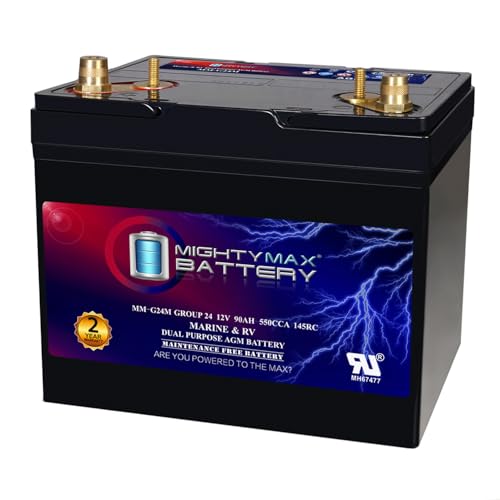
Marine-Grade Confidence: Harness the endurance and dependable energy you need to power every journey on the water, on the road, off the grid, or wherever adventure takes you.
Why AGM Batteries Dominate Deep Cycle Sales
AGM batteries dominate deep cycle sales because they offer several key advantages. Their spill-proof, sealed design means you don’t need to check electrolyte levels regularly, making maintenance simpler and safer. The low internal resistance allows for charging up to five times faster than traditional flooded lead-acid batteries, which improves compatibility with solar panels, alternators, or generators. This rapid charging capability also helps extend battery lifespan by reducing stress during cycling and enabling quicker recovery after deep discharges. Furthermore, their compressed mat construction resists vibration and shock much better, making them ideal for mobile applications like marine, RV, or off-grid setups. With lower self-discharge rates and reliable cold-weather performance, AGM batteries remain dependable across seasons. For reliable data transmission in such mobile or off-grid systems, shielded twisted-pair cabling is often critical to prevent signal interference. These benefits—durability, fast recharging, minimal upkeep—have helped AGM batteries capture nearly half the deep-cycle market. Pairing them with a solar panel shed can provide a fully self-sustaining power solution for outdoor storage or workspaces. However, for setups prioritizing lighter weight and longer cycle life, lithium batteries offer a compelling alternative despite their higher upfront cost.

Heavy-Duty Rechargeable Battery: The VEVOR 12V 100Ah rechargeable deep cycle battery, with dimensions of 13.0'' x 6.7'' x 8.4'', stores a substantial amount of energy, extending the runtime of most light-duty electric devices. Note: Professional charging equipment is required during use to ensure battery security. Energy storage battery, can not be used as a power battery or a starting battery (car ignition).

𝗘𝗫𝗔𝗖𝗧 𝗗𝗜𝗠𝗘𝗡𝗦𝗜𝗢𝗡𝗦: Compact 7.14" x 3.01" x 6.59" (LxWxH) form factor and lightweight 12.46 lbs build. please confirm the battery can fit your device's battery compartment before ordering.

【Product Overview】Designed for deep cycle energy storage applications, SUPER EMPOWER LiFePO₄ batteries provide reliable power for RV, marine, trolling motor, and off-grid systems, featuring premium LiFePO₄ cells and an integrated BMS for protection against overcharge, over-discharge, overcurrent, short circuit, and temperature extremes; ideal for auxiliary and house power needs in mobile and outdoor setups, ensuring stable and long-lasting performance. Designed for energy storage use only, this battery is not suitable for engine starting or cranking applications.
How to Choose Between Deep Cycle and AGM
Choosing the right battery depends on its intended function more than the label. Deep-cycle batteries are designed to endure repeated, deep discharges, making them ideal for solar energy storage where regular deep cycling occurs. AGM batteries, on the other hand, are sealed, maintenance-free, and resistant to vibration, making them suitable for mobile applications or environments where easy access and durability matter. You don’t have to pick one over the other arbitrarily; instead, match the battery to your load pattern and operational needs. For home backup, modern portable power stations often incorporate lithium-ion technology for higher energy density and longer cycle life compared to traditional battery types.
Cost is a key factor in the decision. Flooded deep-cycle batteries generally cost less upfront and are suitable for stationary systems with easy maintenance access. AGM batteries tend to be more expensive but offer advantages like sealed construction and minimal maintenance, which justifies their higher price in mobile or hard-to-reach setups. When considering usable capacity, remember that shallow discharges usually extend the cycle life of AGM batteries, whereas traditional deep-cycle models tolerate deeper depletions. Your choice should balance cycle frequency, maintenance willingness, and budget constraints—labels alone don’t tell the full story.
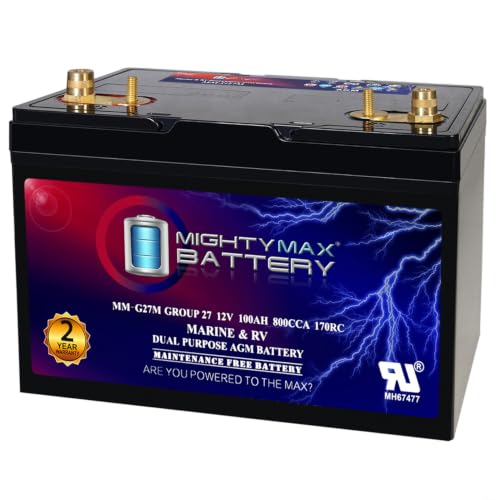
Marine-Grade Confidence: Harness the endurance and dependable energy you need to power every journey on the water, on the road, off the grid, or wherever adventure takes you.

SPACE-SAVING DESIGN --- A dual purpose marine battery eliminates the need for two separate units by combining the functions of a starter and deep cycle battery. This frees up space in your boat and simplifies your electrical system.

BATTERY SPECS: 12-Volt, 750 Cold Cranking Amps, Size: 10.06" Length x 6.88" Wide x 7.94" Tall, Weight: 43.5 pounds, Dual SAE & 5/16" Stainless Steel Stud Posts, C20 Capacity: 55 AH, MCA 870
Do Deep Cycle and AGM Batteries Need Different Chargers?
Deep Cycle and AGM batteries require different chargers because their charging profiles are distinct. An AGM-specific charger is necessary for AGM batteries, typically providing a voltage of 14.4V to 14.8V during bulk charging and 13.2V to 13.8V for float. Unlike standard chargers, these units use precise electronics similar to those found in inverter generators to regulate power delivery. Standard flooded lead-acid chargers may overcharge or undercharge AGM batteries, risking damage and reducing lifespan. AGM chargers use multi-stage charging profiles, including bulk, absorption, and float stages, to ensure proper care. Conversely, flooded deep cycle batteries can usually be charged with standard lead-acid chargers without issue, as their requirements are less precise. For buyers seeking top reliability, a pure sine wave inverter can pair well with AGM batteries for stable AC output. Always match the charger’s chemistry setting to your battery’s label to maximize performance and longevity. For those seeking efficient off-grid power solutions, solar chargers without batteries can also be a valuable complement to maintaining proper battery charging.

5.5 x 2.1 mm plug. UL/FCC/CE/RoHS approved. Only use for 12V 12.8V LiFePO4 battery pack, charge to 4S 9V-14.6V Rechargeable Lithium Iron Phosphate Battery Pack. Attention please: It can't charge for 3S 12V rechargeable lithium ion battery pack.

Charger, Maintainer & Desulfator - An all-weather battery charger, battery maintainer, trickle charger, and battery desulfator. Perfect for charging and maintaining all 12-volt lead-acid, flooded or sealed maintenance free batteries (AGM and gel cell).

【****NOTE: The DC port of this adapter is 5.5x2.5 & 2.1mm, which is only suitable for devices with the same specification DC port . Cannot be used for other DC interface specification equipment. Please confirm before purchasing. Normally, the specifications of the DC port of the device will be marked on your device manual or label. The unmatched DC interface will not be able to supply power.****】