
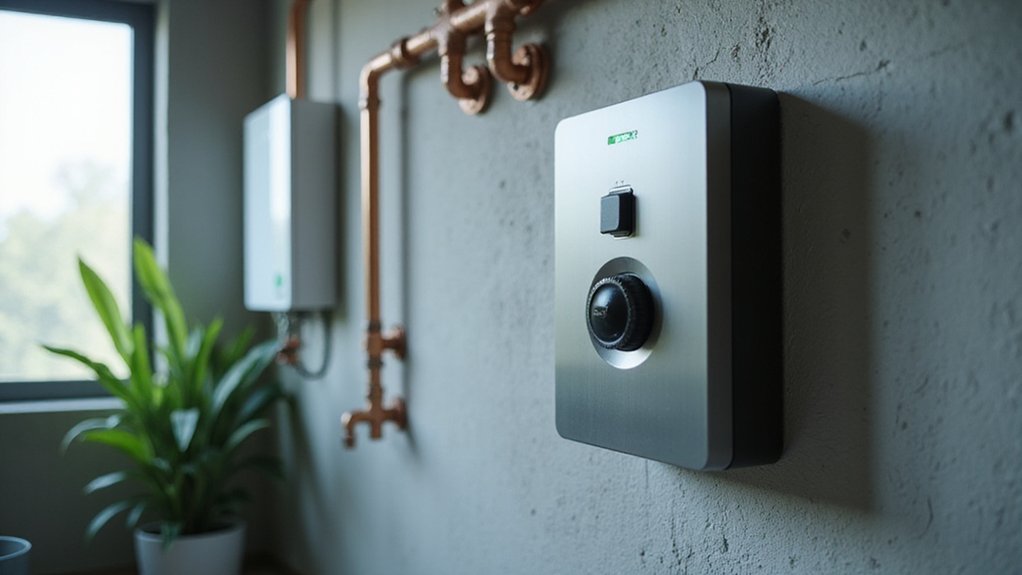

Ever wonder how automatic changeover switches keep your power steady during outages? These devices constantly monitor your utility voltage and switch to backup power when needed.
They act quickly, disconnecting your home from the main supply and starting your generator, all without you needing to lift a finger.
The full process ensures safety and reliability—here’s how it all works.
What Is an Automatic Changeover Switch?
An automatic changeover switch, also known as an automatic transfer switch (ATS), is a device that seamlessly shifts your electrical load from your primary power source to a backup generator or inverter without human intervention. It is installed between your main utility supply and the backup source, automatically detecting power failures or irregularities. When a problem occurs with the utility grid, the switch isolates both sources to prevent backfeeding and then safely switches the load to the backup power. Once the main supply is restored and stable, the switch automatically transfers the load back to the grid. This process ensures continuous power to critical equipment like lights, computers, or medical devices, similar to how a UPS battery backup provides instantaneous power during grid interruptions. To guarantee reliable performance, selecting components with proven quality and performance can help maintain stability during these transfers. Proper installation safety is essential since incorrect wiring can be hazardous. Regular testing of the switch’s logic and contact points is necessary to ensure reliable operation during outages, reducing the risk of system failure and downtime when it matters most. Understanding how to read solar power meter readings can help you monitor the exact power output your backup system provides to your gear during such automatic transfers.

【CONVERSION FUNCTION】: The automatic transfer switch seamlessly transitions between power sources, ensuring continuous power supply during power outages, thereby protecting your appliances and eliminating downtime

Superior Quality: This 100 amp transfer switch is UL listed and its housing meets NEMA 3R standards, making it rust-proof, durable, and weatherproof. It can withstand harsh weather conditions and ensure uninterrupted functionality even in rain, hail, or high winds
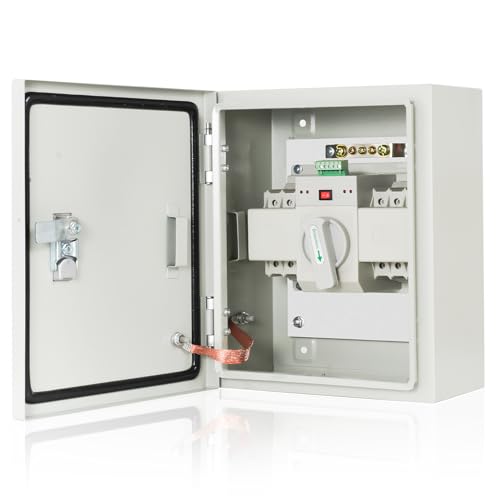
Versatile Application & Reliable Protection This 125A automatic transfer switch provides seamless dual power transfer for residential, commercial, and industrial applications. Designed as a reliable transfer switch for home generators, it ensures complete protection for your electrical equipment and systems during power outages.
How an Automatic Changeover Switch Detects Power Failures?
An automatic changeover switch detects power failures by continuously monitoring the incoming mains voltage with sensing circuits or voltage-sensing relays. These components perform constant testing by comparing the measured voltage against preset thresholds. For example, a voltage drop below approximately 80-85% of the nominal supply voltage indicates a potential outage or brownout condition. To avoid false alarms during brief dips, the system uses undervoltage pickup and dropout bands, ensuring it only reacts to sustained issues. A time delay, typically between 0.5 and 3 seconds, confirms that the fault is genuine before initiating a transfer. This delay prevents unnecessary switching due to transient voltage sags. The switch also relies on a mechanical interlock to prevent both power sources from connecting simultaneously, which is a crucial safety feature in automatic transfer switches. Advanced systems may also monitor for overvoltage or frequency irregularities, providing comprehensive detection before the switch acts. This process mirrors how solar panels convert sunlight into electricity, using semiconductor materials to produce a continuous direct current. The detection method is similar to testing a battery by checking voltage against a known threshold to assess its condition.

Nirakoka RV Automatic Transfer Switch has been pre-wired to automatically change the primary source of AC current from shore power to generator or inverter power when activated.

【Dual Power Automatic Tranfer Switch】: The automatic transfer switch is an online switching relay that facilitates the transition between the primary power source and the backup power source. In the event of a power outage from the primary source, the load power is seamlessly switched to the backup source. Conversely, when the primary power source is restored, the load power is switched back to the primary source.

AUTO TRANSFER ZERO-DELAY SEAMLESS POWER: Experience true uninterrupted power with 0-second switching time. The AB20 instantly detects and automatically transfers to the stronger power source (LiFePO4 and LiPO battery banks, also lead-acid, AGM, gel), ups backup power, off-grid power, eliminating downtime for critical systems like UPS, data centers, and security alarms. AB20 is automatical transfer switch, not support set primary and backup power. To set Primary and Backup Power, please go for Autoro AB18 DC Dual Power Automatic Transfer Switch ATS 60V 18A.
What Happens When the Power Goes Out?
When the power goes out, your system detects a mains failure and begins an automatic response. The changeover switch instantly disconnects your load from the utility to prevent unsafe overlap. It then sends a start command to your standby generator, which begins cranking and gradually builds up stable power output. There is typically a delay of 10 to 30 seconds to ensure voltage and frequency stabilize before transferring the load. This pause prevents unnecessary starts caused by brief utility flickers, conserving energy. During the transfer, you might notice momentary blinking of lights—if you lack a UPS, sensitive equipment could experience brief interruptions. Once the generator’s output is stable, the switch opens the utility connection, closes the generator connection, and your critical circuits resume operation. To prevent electrical hazards during installation, always follow safe cable clamp procedures when securing wiring to the switch and generator. The system continues monitoring mains, and when it detects a stable return, it transfers back, shuts down the generator, and completes the cycle—all automatically and seamlessly. To further extend battery life in backup systems, using correct charger settings prevents overcharging and sulfation. Always disconnect negative battery cables first to avoid short circuits when servicing the battery.
Why the Switch Must Break Before Making a Connection
Breaking the switch before making a connection is essential to prevent electrical hazards and equipment damage. This open transition—disconnecting the utility first, then connecting the generator—creates a gap that avoids backfeeding, which could send generator power into the grid. Backfeeding poses risks to line workers and can damage your gear. Overlapping two unsynchronized power sources can also cause destructive fault currents, risking short circuits or equipment failure. Unlike a lightning arrester vs surge arrester comparison, which focuses on protecting equipment from voltage spikes, the break-before-make method guards against simultaneous power flows that cause dangerous faults. For DIY setups, using standardized cable labels helps you clearly identify each power source and connection point, reducing wiring errors during installation.
This approach is called break-before-make because it ensures only one power source connects at a time. It simplifies load prioritization, allowing you to choose which source supplies critical circuits without risking concurrent power flows. Additionally, it maintains system redundancy by keeping a single, clear power path. Although there is a brief period when no power is supplied—known as dead time—this tradeoff is key for safety. Without proper synchronization, closing both paths simultaneously could lead to dangerous faults, so always break first and then make the connection.
How the Switch Verifies Utility Power and Shuts Down the Generator
The switch verifies utility power by continuously monitoring voltage and frequency. When utility power drops below preset thresholds, the automatic transfer switch (ATS) detects an outage or abnormality. It uses specific pickup points and a short time delay to ignore brief dips, ensuring stability before activating the generator. Once utility power fails, the ATS sends a start command to the generator, but the load continues to stay on utility until the generator produces acceptable voltage levels. During installation, all connections must follow proper grounding techniques to ensure safe and code-compliant operation of the transfer switch. To confirm utility restoration during maintenance, the ATS employs a longer retransfer delay. After switching back to utility power, the generator runs unloaded for a cooldown period, typically between 2 and 15 minutes, before shutting down to prevent heat stress and prolong engine life. This is different from a manual interlock kit, which requires you to physically flip switches and block backfeeding. For a detailed comparison of the top manual options, review the best interlock kit ratings to see how they stack up against an ATS in cost and convenience.
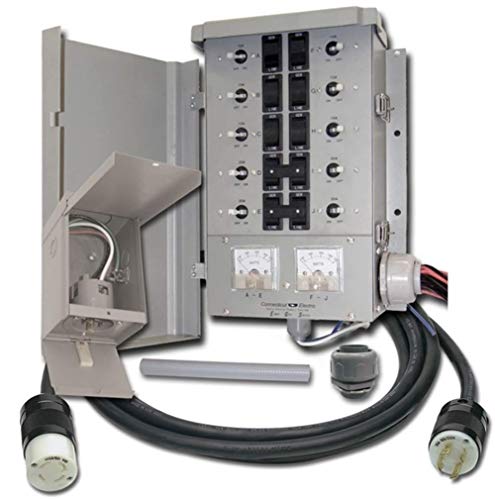
FOR PORTABLE GENERATOR: This transfer switch kit is designed to be used with emergency generators that have up to a 30-amp output, NEMA L14-30 receptacle. With easy-to-follow instructions, this unit is straightforward to install and a cheaper and safer alternative to running your portable generator without it.
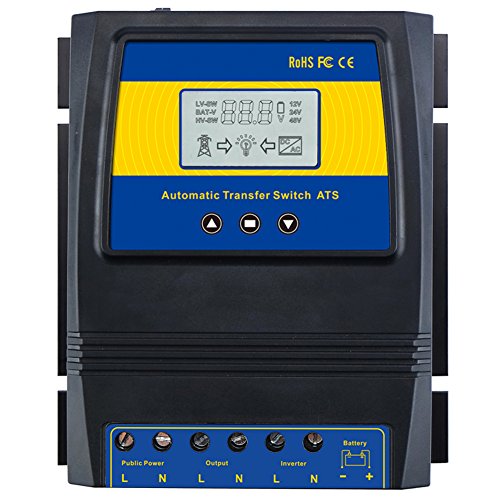
【Beneficial to Solar or Wind System】: On cloudy or windless days when your battery gets low, it will automatically switch to grid power, protect your battery.

Power Up to 10 Essential Circuits – Seamlessly connect your generator to home power systems, keeping lights, appliances, and critical devices running during outages.
Open vs. Closed Automatic Transfer Switches: What’s the Difference?
Open transition switches use a break-before-make process, disconnecting the load from one power source before connecting to the other. This results in a brief power interruption, typically around 50 milliseconds, which is acceptable for loads that can tolerate short outages. The simplicity of this design prevents source paralleling, making it a cost-effective choice for general generator transfers. It’s ideal when load continuity isn’t critical and a brief power dip won’t cause issues. Interestingly, the development of reliable switching mechanisms in automatic transfer switches has parallels to the invention of cable ties, which also required simple but effective fastening solutions. A similar focus on safety and simplicity guides the correct removal and fitting order when changing a circuit breaker at home. For maximum protection against power surges, your breaker box should also include a whole-house surge protector that can be installed alongside the transfer switch.
Closed transition switches, on the other hand, perform a make-before-break process, momentarily paralleling both sources to ensure seamless power transfer. This requires advanced synchronization to match voltage and frequency between sources. When done correctly, it provides uninterrupted power with no noticeable downtime. However, this process depends on the health of both sources; if the utility fails completely, the switch automatically reverts to open transition mode. Closed transition switches are best suited for sensitive loads like data centers or hospitals, where continuous power is essential.
Versatile Application & Reliable Protection This 125A automatic transfer switch provides seamless dual power transfer for residential, commercial, and industrial applications. Designed as a reliable transfer switch for home generators, it ensures complete protection for your electrical equipment and systems during power outages.
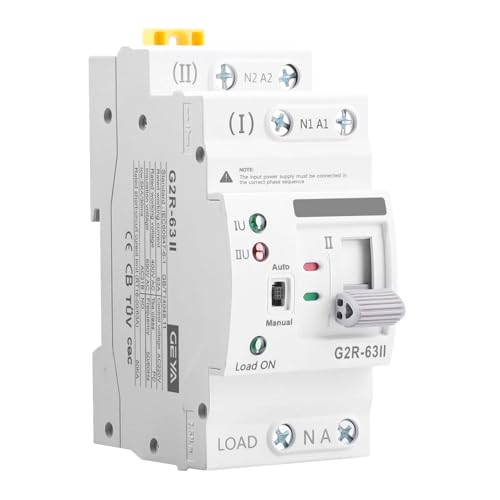
FUNCTIONS AND FEATURES: The Mini ATS G2R transfer switch is a PC-class, low-frequency transfer switch designed for automatic or manual switching between two power sources. mini ats can detect the functioning of either the primary or backup power source. transfer switch switches power sources (either mains or inverter) within 0.05 seconds, ensuring uninterruptible power supply. If the primary power source experiences an abnormality, the backup source immediately takes over, ensuring continuity, reliability, and safety. When the primary power source returns to normal, 63Amp ats transfer switch automatically switches back to the primary source.

Functions and Features: ATS transfer switches G2R is a PC-level infrequent switching switch, mainly used for automatic or manual conversion of two power supplies, and can test whether the common power supply or backup power supply is normal. It can switch power supply (can be city power grid and inverter power supply)in 0.05 seconds to build uninterruptible power supply. When the normal power is abnormal, the spare power works at once, which therefore ensures the continuirty, reliability,and safety of power supply. When the normal power supply is normal, it will automatically switch back from the backup power to the normal power supply
Where Are Automatic Changeover Switches Installed?
Automatic changeover switches are typically installed near your main breaker panel. This placement keeps wiring short and makes it easier to integrate into your existing electrical system. Another common location is close to the generator, allowing for quick switching to backup power when needed. In larger facilities, you might see them installed within the primary electrical room, which helps centralize power distribution and simplifies wiring paths. For selective backup applications, a dedicated electrical closet or sub-panel is ideal because it feeds only the critical loads. Always choose dry, accessible spots away from water sources and heat sources. Mount the switch on a sturdy wall or, if the equipment is heavy, opt for a floor-mounted unit. Proper wiring involves clean feeder routing and easy access for maintenance, ensuring reliable operation and safety. Since the changeover switch connects to the main electrical service, it is common to install it near your breaker box, which is often found in a basement, garage, or utility closet. To ensure reliable data transmission between the switch controller and a remote monitoring system, the installation often uses twisted-pair cabling for its resistance to electromagnetic interference. For powering the monitoring equipment in off-grid installations, you can also rely on a solar charger without battery to provide direct energy without storage.

Versatile 3-Position Control: Features a clear 1-0-2 (ON-OFF-ON) indexing mechanism with 8 terminals. Specifically designed for manual motor reversing and generator transfer systems, ensuring safe and synchronized circuit switching for industrial or DIY projects.

High-Performance Specs - Rated at 40A (Ith) and 660V (Ui), fully compatible with AC 240V/440V systems. This heavy-duty cam switch is built to handle high-current electrical loads with long-lasting stability

Seamless Power Transition: The double electronic power circuit breaker is engineered to ensure a slick and instantaneous power transition within less than 50 milliseconds. This rapid switching capability guarantees uninterrupted power supply, allowing your essential devices to continue operating without any noticeable disruption.