
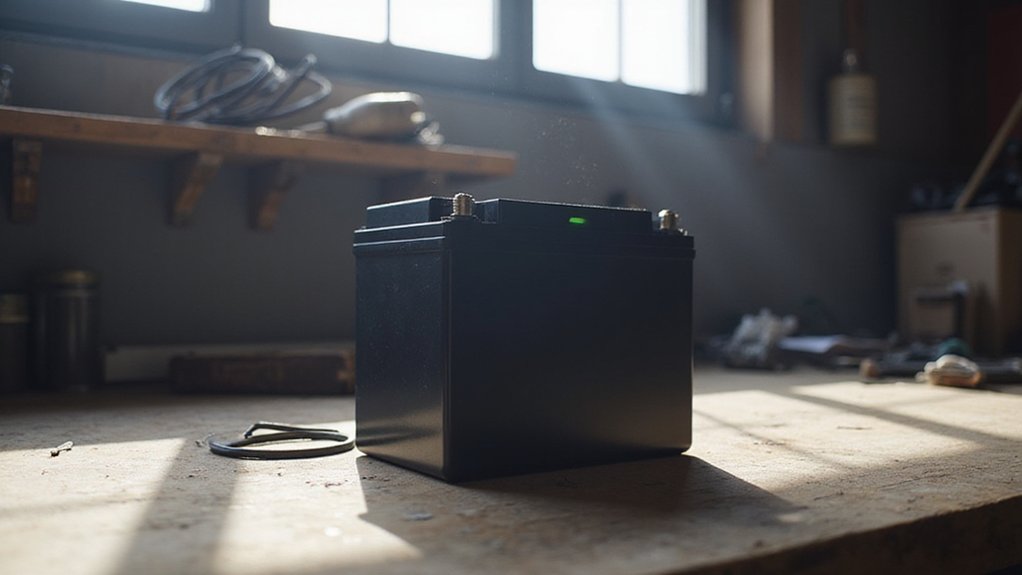

Ever wondered what makes sealed lead acid batteries different from traditional ones? These spill-proof, maintenance-free power sources are designed to be safe inside enclosed spaces by recycling over 99% of their gases.
With a typical lifespan of 3 to 5 years, understanding how to care for them can help you get the most out of your investment. Keep reading to discover how charging and storage habits impact their performance.
What Makes a Sealed Lead Acid Battery Different From a Flooded One?
Sealed lead acid (SLA) batteries differ from flooded ones primarily in their electrolyte containment and ventilation needs. Unlike flooded batteries, which depend on freely flowing liquid electrolyte that can spill if tipped, SLAs immobilize the electrolyte using a fiberglass mat (AGM) or silica gel. This design prevents leakage regardless of orientation, reducing spill-related risks and allowing you to mount the battery in any position. Many modern solar installations use MC4 connectors to ensure safe and efficient connections between panels and charge controllers. The change in electrolyte structure also impacts ventilation. Flooded batteries vent hydrogen and oxygen gases freely, necessitating constant airflow to prevent gas buildup and potential explosion. In contrast, SLA batteries are valve-regulated and internally recombine over 99% of the gases they produce. This allows you to place them in enclosed or poorly ventilated areas without significant hazard, although you still need to ensure the safety valve vents correctly if a severe overcharge occurs. To maximize battery life and performance in a solar system, you should also consider the semiconductor materials used in the panels, as they directly affect charging efficiency and voltage compatibility. When selecting a monitor for your setup, prioritize models with a low power consumption rating to reduce overall electricity usage.

【Type】:12 Volt 7 Amp 20 hours sealed lead-acid battery (SLA), "F1" type terminals
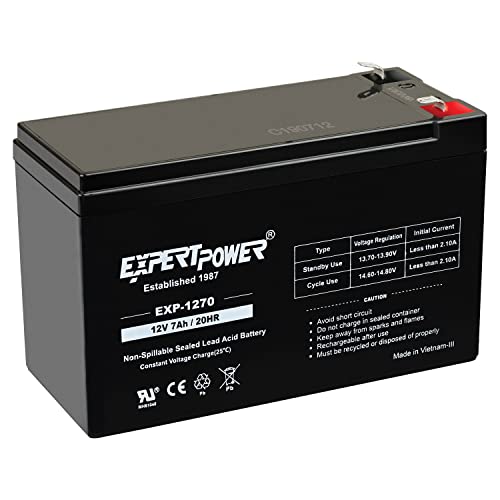
Universal Compatibility: Works with alarm systems, security devices, UPS, kids ride-on cars. 12V7Ah/20HR rechargeable battery replaces 1270 batteries, UB1270, RT1270, CA1270, 12FM7 and more.
Pros and Cons of Choosing Sealed vs. Flooded Lead Acid Batteries
Sealed lead acid batteries are generally more convenient but come at a higher cost compared to flooded types. They require less maintenance because you don’t need to water or regularly check electrolytes, making installation safer in confined indoor spaces. However, sealed batteries typically cost 20–40% more upfront and tend to last only 3–5 years, whereas flooded batteries can last 5–10+ years with proper care. Flooded lead acid batteries can handle heavy uses and improper charging better but require ventilation and periodic maintenance, such as watering and electrolyte checks. This is analogous to how terminal blocks simplify wiring by eliminating the need for twisting and taping connections. Regarding recycling, both types are processed similarly, but sealed batteries present less handling risk during disposal. Environmentally, flooded batteries may have a lower impact if maintained properly and kept at maximum lifespan, but sealed batteries need more frequent replacement due to shorter cycles. When comparing top picks, buyers often weigh quality and performance against upfront cost. For those considering a portable energy system, a solar generator often pairs best with sealed batteries due to their safe indoor operation. Choose sealed if you want low-maintenance operation; opt for flooded if you prioritize cost and durability for systems where maintenance is feasible.

Battery Type: 12V 5Ah/20hr sealed lead acid design with AGM structure that supports steady output for long backup needs. Check dimensions: 3.54" x 2.76" x 3.98" (total height: 4.21" with terminals)
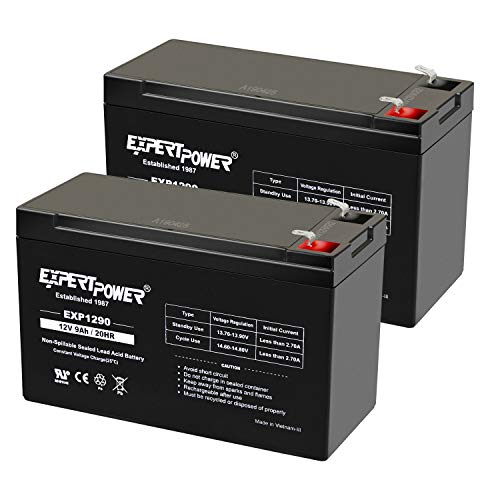
Universal Compatibility: Ideal 12V lead acid battery for kids electric car or to use as APC battery replacement, alarm battery, 12V 8Ah -12V 9Ah battery, mobility scooter battery replacement or electric bike battery with (+ -) polarity.
AGM vs. Gel: Which Sealed Lead Acid Battery Type Is Right for You?
AGM batteries generally tolerate higher charge voltages between 14.4 and 14.7 volts, making them more forgiving of charging variations. In contrast, gel batteries require strict voltage limits of 13.8 to 14.2 volts to prevent thermal runaway. Overvoltage on gel batteries can lead to overheating, swelling, or permanent damage, so precise voltage regulation is essential. This is because the photovoltaic effect in solar panels generates variable voltage output that demands careful matching. AGM batteries have a lower internal resistance, allowing for high-current demands such as engine starting or quick alternator charges, while gel batteries excel in deep-cycle applications where slower, steady charging and discharging are preferable. Proper charging practices are crucial for both types: incorrect voltage settings can compromise safety, lifespan, and performance. For example, when used in solar-powered farming setups, top solar panels often pair best with AGM batteries due to their higher tolerance for fluctuating charging from renewable sources. When selecting a solar charger without a battery, it is important to consider that AGM batteries are more forgiving of voltage variations from the panel.

Reliable Backup Power: Consistent 12 V 12 Ah battery for security system, UPS, small EPS (single-lift emergency descent power), mobility devices, medical devices and other standby systems.

High-Quality Battery: Our product is a durable ca 1240 12v 4ah alarm battery. Packed with power, this ca1240 12v 4ah alarm battery is designed to keep your system running efficiently and effectively.

Reliable SLA AGM Power: Durable 12V AGM battery designed for reliable, maintenance-free energy storage. Ideal for UPS, alarm systems, small EPS, medical devices and other standby power applications.
How Long Do Sealed Lead Acid Batteries Really Last in Real Use?
Sealed lead acid batteries typically last 3 to 5 years in standby use or 300 to 500 cycles in deep-cycle applications, depending on how you treat them. Their lifespan is significantly influenced by the depth of discharge. At 100% DoD, expect only about 150 to 200 cycles before capacity diminishes considerably. Conversely, at around 30% DoD, you can often surpass 1,000 cycles, vastly extending their useful life. Using a compatible lithium charger can help achieve more efficient charging for lithium alternatives. When selecting a new power system, evaluating a top power inverter ensures you match battery output with efficient AC conversion. In contrast, solar systems using microinverters often avoid the efficiency losses seen in string inverter setups.
Temperature plays a critical role in longevity—every 8°C increase can halve the battery’s lifespan. Keeping batteries near 25°C helps maximize life. Overcharging accelerates corrosion of the plates, while undercharging leads to sulfation, both of which shorten battery health. Using the correct float voltage prevents early failure by maintaining optimal electrochemical conditions.
Most sealed lead acid batteries reach end of life when they decline to about 50% of their original capacity, not through sudden failure. Warranty coverage typically reflects this lifespan, often guaranteeing 1 to 3 years but not the full cycle life. When it becomes time to retire the battery, proper recycling processes are essential to recover lead and sulfuric acid, reducing environmental impact. To prolong their lifespan, match your cycling profile and thermal environment precisely.
Where You’ll Find Sealed Lead Acid Batteries in Everyday Life
Sealed lead acid (SLA) batteries are commonly found in everyday life because they are spill-proof, maintenance-free, and cost-effective. You’ll see them power essential systems without hesitation. For example, your home security alarm and emergency lighting depend on compact SLA units to operate reliably during power outages. Your uninterruptible power supply (UPS) keeps your network equipment running during outages, while mobility devices like scooters and power wheelchairs utilize deep-cycle SLAs for safe indoor use. Even solar energy storage relies on these dependable batteries to store energy efficiently. To maintain their performance, keeping the battery terminals clean can prevent efficiency loss and extend their lifespan.
However, SLA batteries do have a limited lifespan. It’s important to prioritize battery recycling to reduce their environmental impact. Never dispose of them with regular waste. Instead, return used units to certified recyclers who can safely reclaim lead and sulfuric acid. Proper recycling ensures responsible end-of-life management and helps protect the environment from hazardous materials.

BN675M1 Sealed Lead Acid Battery - Direct Replacement by UPSBatteryCenter

ML9-12 SLA is a 12V 9AH Sealed Lead Acid (SLA) rechargeable maintenance free battery - UL Certified
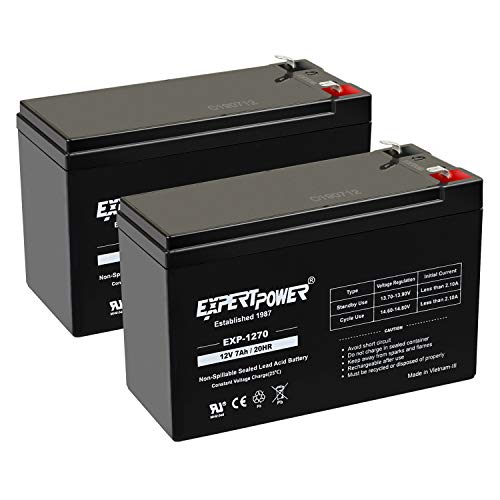
Universal Compatibility: Works with alarm systems, security devices, UPS, kids ride-on cars. 12V7Ah/20HR rechargeable battery replaces 1270 batteries, UB1270, RT1270, CA1270, 12FM7 and more.
How to Charge and Maintain Your SLA Battery for Maximum Lifespan
To maximize the lifespan of your SLA battery, proper charging and maintenance are essential. Use a charging system tailored to your battery’s chemistry—AGM, GEL, and VRLA types each require specific voltage settings. During the charging process, implement bulk, absorption, and float stages. Float charging at 2.25 to 2.30 volts per cell at 25°C helps maintain the battery without overcharging, while bulk charging should stay between 2.4 and 2.5 volts per cell to prevent grid corrosion caused by overcharge. For best results, consider using a top-rated 6V battery charger that matches your battery’s specifications. Adjust charging parameters and cycle profiles based on your battery’s use pattern. Shallow discharges—meaning smaller amounts of energy removal—will prolong overall service life. Always recharge immediately after a discharge to prevent sulfation, which diminishes capacity over time. When storing your SLA battery, keep it fully charged and in a cool, dry environment. Elevated temperatures above 30°C accelerate self-discharge, so recharge at least every six months if stored at room temperature. Avoid leaving the battery connected to an overvoltage charger, as this can cause damage. For gel batteries specifically, never exceed 45°C during charging to avoid thermal runaway. Tighten any metal cable ties on battery terminal connections carefully to ensure a secure fit without damaging the casing. Adhering to these best practices ensures your SLA battery reaches its maximum lifespan of 3 to 5 years and reduces the risk of early failure.

HQRP® Sealed Lead Acid Smart Battery Charger with Charging Light; Built-in Auto Voltage Detection Feature Intelligently Identifies the Voltage of your SLA Battery and Delivers the most Suitable Charging Output; Accurate Positive Voltage Detection Function: It will not charge when the battery is full; In-built LED Indicator shows the charging status;

✅【Specification】: Input: AC 100V-240V 50/60Hz; Output: 6Vdc 0-500mA; Net Weight: 90g; Outline Dimension: 76*28*47mm/70*39*26mm; DC Cable: 2464 24AWG L1000mm.

COMPATIBILITY: 6V Sealed Lead Acid Battery Charge designed for 6V lead-acid batteries. It is compatible with ExpertPower EXP645, Moultrie MFHP12406, Mighty Max Battery ML4-6 SLA, Power Patrol SLA0905, Wildgame Innovations WGIBT0013 and more.