
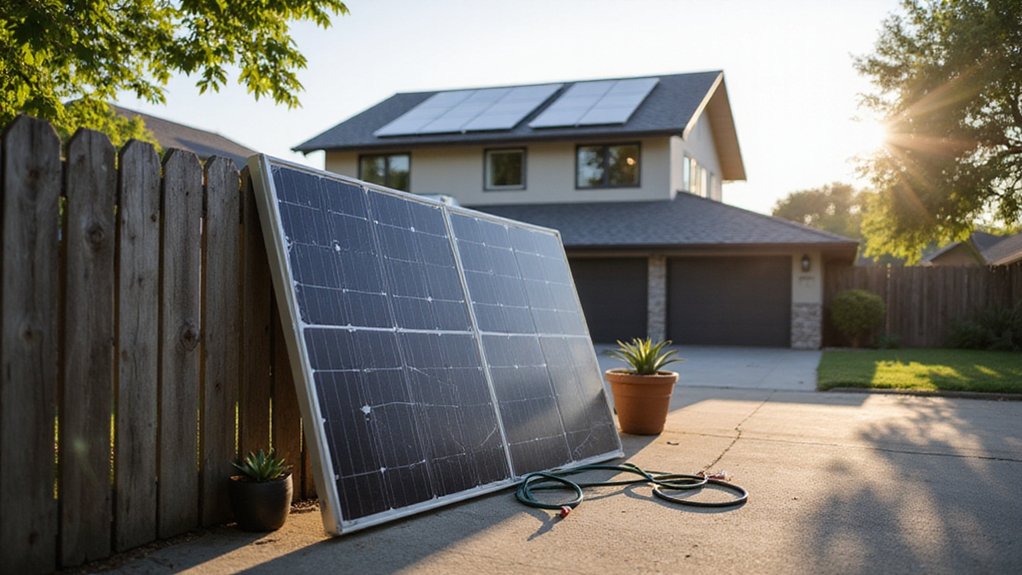

Thinking about installing solar panels and wondering if they’re worth it? You might save up to 90% on your electric bill, but you’ll also face a lengthy payback period and upfront costs that could be $20,000 to $30,000.
The decision depends on factors like shading and local incentives. Keep reading to see what really works for your home.
What Realistic Solar Payback Periods Look Like for Your Home
Most realistic payback periods for a home solar system are between 6 and 12 years, though this varies greatly based on your local conditions. Your specific payback depends on factors like electricity rates, roof condition, and your energy consumption patterns. In regions with high electricity rates and favorable policies such as net metering, you’ll see faster returns. For homeowners who want to monitor real-time energy flows between their solar panels and household loads, a CAN bus data logger can provide precise performance data.
Payback tends to be shorter in sunny, high-rate markets and where incentives are strong. Paying cash upfront can reduce your payback time, while financing options often lengthen it. To plan effectively, calculate your own break-even point by analyzing your utility bills, rate increases, and local policies. Remember, most solar systems have a lifespan of about 25 years, so once the initial payback period is over, you’ll continue to enjoy savings for many more years. Homeowners who also install a backup power source may benefit from a generator interlock kit for safe and seamless energy integration.
Adding batteries can improve economic returns, especially where export credits are limited, but they also alter the payback timeline. Ultimately, focus on your personal financial numbers rather than national averages, and consider the long-term benefits beyond just the initial payback period. Choosing top battery picks with terminals can further enhance the performance and value of your overall energy storage system.
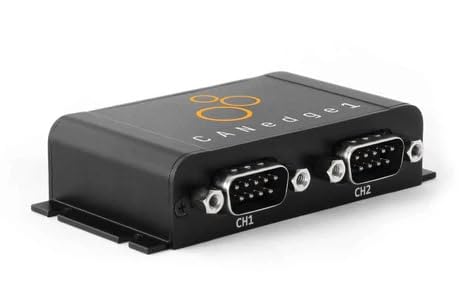
PLUG & PLAY - configure in 2 mins, then connect & forget (<1W power usage)

Multi-use temperature data logger, 32,000 recording points, with wide measuring range -30℃~70℃ / -22℉~158℉. Up to 6 months battery life, replaceable battery, low power consumption.

High-Precision Monitoring: This Fresh Tag 1 temperature logger uses a sensor and battery imported from Japan, providing more accurate temperature monitoring. The temperature measurement range is -30°C to +70°C (-22°F to +158°F), with a temperature accuracy of ±0.5°C (±0.9°F) (F.S.). Data reports are available in both °F and °C. It features a stable, long-life battery with a 3-year shelf life.
Why Upfront Cost Still Stops Homeowners
High upfront costs remain a major barrier to going solar. A typical installation can cost between $20,000 and $30,000 before any incentives or rebates. That sticker shock can be intimidating, making solar feel more like a major renovation than a simple upgrade. Many homeowners see the initial expense as a hurdle they’re not prepared to clear. Even with financing options, monthly payments can feel like an added fixed expense, which adds to your financial stress. Competing urgent home repairs, like roof or HVAC replacements, often take priority, delaying solar projects further. Although incentives can reduce the overall bill, they don’t immediately ease the burden of that large initial payment, making affordability a persistent concern. Similarly, replacing a faulty breaker in your electrical panel can cost hundreds of dollars if you hire an electrician, highlighting how urgent home repairs can compete with solar savings. In contrast, many top motorhomes with solar panels come pre-equipped, eliminating the need for a separate upfront installation for off-grid adventures. Proper battery safety, however, dictates that negative cables come off first to prevent accidental short circuits during installation or maintenance.

Full Tool Kit: Includes 1 wire crimper, 10 pairs of solar connectors, 2 spanner wrenches, and a durable zipper case to keep everything organized.
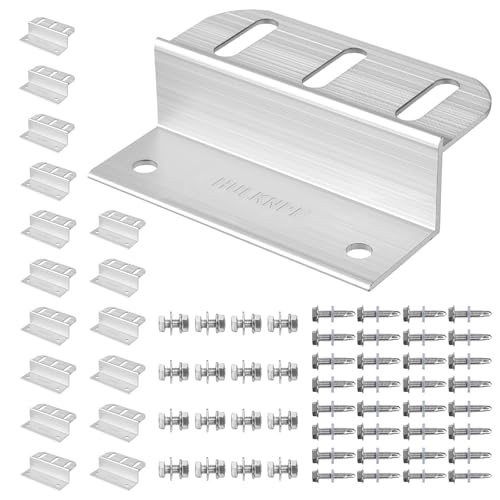
Durable & Wind-Resistant Build: Crafted from corrosion-resistant aluminum alloy, these heavy-duty Z brackets provide long-lasting, stable performance and withstand high winds for outdoor solar installations.

Practical Design & Easy to Install: End clamps and T-shaped middle clamps ensure a secure and easy grip during the solar panel installation. It also reduces the impact of the weight of the PV system on the suction of the roof covering. The grooved strips of the rails allow for a more secure connection to the solar panels
How Much Can Solar Panels Lower Your Electric Bill?
Solar panels can typically reduce your electric bill by 50% to 90% on the electricity portion. This translates to monthly savings of around $100 to $200, which is a reasonable expectation for most properly sized systems. The actual savings depend on factors such as system size, local electricity rates, and roof conditions. Using a compatible LiFePO4 battery for energy storage ensures optimal charging habits that extend battery life and maximize your savings. Understanding the working principle of solar panels helps homeowners appreciate how sunlight is converted into usable electricity for their home. Because a power meter tracks this energy flow in real time, it provides crucial data to accurately measure savings from your system.
Choosing how to finance your system affects your savings; taking out a loan may mean your payments offset some of your utility savings, while paying upfront maximizes long-term profit. Adding energy storage allows you to use solar energy at night, especially if your utility has time-based rates, further increasing your savings.
While solar can significantly cut your costs, it won’t eliminate your utility bills entirely. Fixed charges still apply, and you will need to draw power from the grid during cloudy days or periods of high usage. Overall, you can expect to reduce your annual electric costs by approximately $1,200 to $1,800, making solar a worthwhile investment.

【15Kwh Battery Box】We provide all you need to build a DIY 15Kwh solar energy storage system, but not include batteries. This applies to the size 174x72x207mm Class A LiFePO4 cells (280AH, 302AH, 304AH, 314AH). We recommend using EVE 280Ah cells or EVE 314Ah cells. You can DIY 48V LiFePO4 battery packs.


12V100Ah Battery Case Replace Lead Acid Battery for Lithium-ion Battery Pack
What Solar Incentives Are Still Available After 2025?
Federal tax credits for your own rooftop panels are no longer available after 2025. However, regional incentives remain an important part of the financial picture. Many states offer income tax credits, such as Massachusetts’s 15% credit up to $1,000, New York’s 25% credit up to $5,000, and South Carolina’s 25% credit with no cap. These credits can significantly reduce your tax bill and improve your solar investment return. For those with limited roof space, balcony solar options provide a flexible alternative that still qualifies for many of these regional benefits. Homeowners looking for top performance should consider panels with MC4 connectors for reliable and efficient system wiring. For those planning an off-grid setup, understanding proper wiring layout is essential to ensure safety and efficiency, much like in a DIY UPS battery backup build.
In addition to tax credits, upfront rebates like New York’s NY-Sun program provide $0.20 to $0.50 per watt assistance, making installation more affordable. Maryland offers grants of $1,000 to help offset initial costs. Net metering policies also continue to benefit solar owners by crediting excess energy sent back to the grid, reducing energy bills. Property tax exemptions and sales tax exemptions further lower the overall costs, increasing the appeal of solar power in the post-2025 landscape.
Stacking these incentives carefully can still create a financially sound case for installing solar panels, even without federal tax credits.

PROFESSIONAL MC4 CONNECTOR KIT: a wire stripper, a wire crimper, 24 Pairs 1000V 30A solar panel connectors male & female, 24 Pairs solar connector pins male & female, 2PC solar connector spanner.

Package Included: 6 pairs solar panel connectors Male and Female + 6 pairs solar connector pins (male and female) + 1 pair of spanners
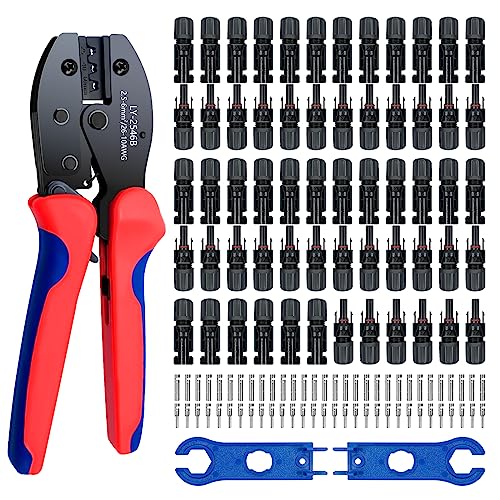
Compatible Cable: Solar connectors compatible with PV cables with different insulation diameters. Solar crimping tool kit for 2.5/4/6 mm² solar PV wire.
When Does Solar Not Make Sense? Roof Issues, Shade, and Nighttime
Solar panels stop producing power at night, so if you don’t have batteries—especially expensive ones—you’ll still rely on grid electricity after sunset. If your home has shading issues or a roof not ideal for solar installation, your system’s efficiency drops significantly. Homes with high evening energy demand and obstructed sunlight often see the slowest payback periods. In such cases, solar may not be a cost-effective solution for you. For those who still need portable power backup, a top power bank with built-in outlets can provide reliable energy for essential devices. Proper crimping tool selection is critical for durable electrical connections in solar battery systems. To keep those backup cables organized, you can use creative cable wrapping without ties, ensuring they remain tangle-free and ready for use.

【SLIM & POCKETABLE】This portable power bank is about the size of a smartphone (6.5×3.3×4 inches) and weighs only 2.54 pounds. It features an ergonomic soft handle for easy portability. It easily fits into a backpack for convenient portability. Pro Tip: Fully charge and discharge the battery twice initially for the best experience.(Solar panel and cable not included)

【Upgraded USB-C1 Input Power】R101 (black) delivers 65 W, compared with 45 W for R100 (gray).

Remarkably Compact & Power Station: 24000mAh 88.8Wh portable power station with 120V/65W AC outlet, a great solution to AC power supply. Provides enough power to most of your devices such as smartphone, tablet, and laptop. It’s perfect for your travel and business trip
Solar’s Hidden Payoff: Cleaner Energy and Less Grid Dependence
During daylight hours, your solar system’s real payoff is generating clean electricity with nearly zero operational emissions. This means you significantly reduce your carbon footprint—more than 90% per kilowatt-hour compared to conventional grid power. You also draw less energy from the grid, leading to lower utility bills and less reliance on fossil-fuel plants that emit nitrogen oxides, sulfur dioxide, and particulate matter into the air. The impact is measurable and immediate: you increase your energy independence by relying less on centralized power plants, which helps protect your community’s air quality. Additionally, your system alleviates stress on the grid during peak demand times, like scorching afternoons. Every kilowatt-hour you produce means fewer resources required from distant coal or gas plants, resulting in fewer line losses, reduced strain on the system, and cleaner air. To ensure your solar array delivers that power efficiently, a charge controller regulates the voltage and current from your panels to keep your batteries safe and optimize daily output. For instance, properly securing the cables from your solar panels with metal cable ties prevents loose wiring that could lead to short circuits or energy loss. If you need to disconnect a battery for maintenance, always remove the negative cable first to avoid accidental short circuits. That’s the hidden payoff you start experiencing as soon as your solar system goes live.
3 Questions to Answer Before You Buy Solar Panels
Before purchasing solar panels, ensure your home is ready, they will save you money, and the installer is reputable. First, evaluate your roof’s condition. Check its age—most solar panels last around 25 to 30 years—and ensure the surface faces south for maximum sun exposure. Avoid installation on roofs that need replacement soon, as costs will outweigh benefits. An unobstructed, shade-free space is ideal because shade significantly reduces energy production.
Next, analyze your past utility bills. Calculate your annual electricity consumption in kilowatt-hours (kWh) and compare it with local electricity rates. If your electricity is cheap, the payback period for your solar investment may be longer, making it less cost-effective. Understanding your usage helps determine the right system size and expected savings.
Finally, thoroughly vet your installer before signing any contracts. Verify their licensing, insurance, and warranties. Clarify who will handle permitting, monitoring, and ongoing maintenance. Don’t be swayed by a low upfront price if it means sacrificing support or quality. Maintenance costs are usually modest but important—make sure your contract covers panel and inverter repairs to avoid surprises. Answering these questions confidently ensures your solar investment is sound and tailored to your needs.