
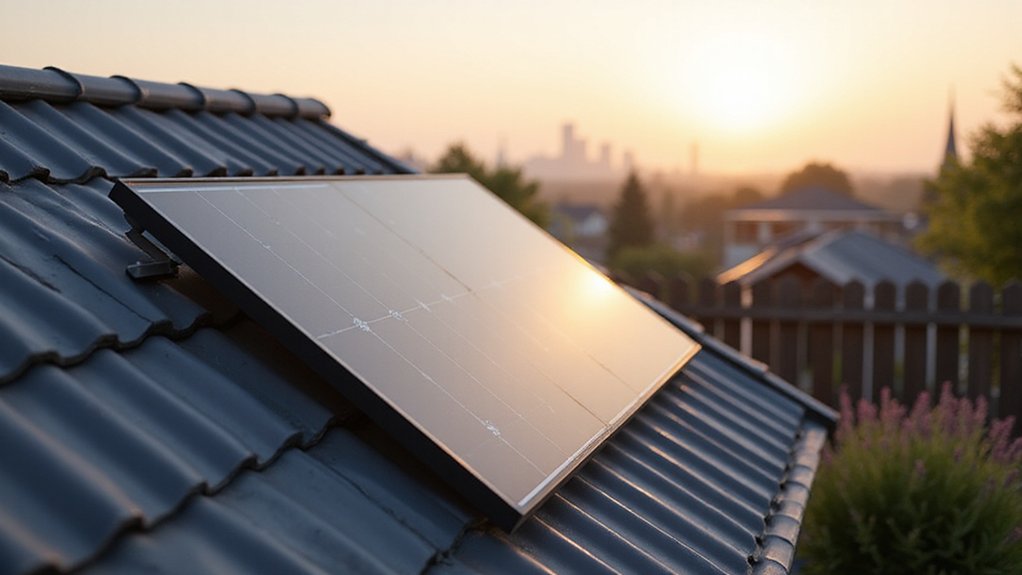

If you’re wondering whether to choose monocrystalline or polycrystalline solar panels, the key difference often comes down to space and efficiency.
Monocrystalline panels typically offer about 20 to 23 percent efficiency and can produce more power in a smaller area. This makes them ideal for limited or oddly shaped roofs.
The full details can help you decide which type fits your needs best.
Why Monocrystalline vs Polycrystalline Efficiency Differences Matter for Your Roof
Monocrystalline panels are more efficient, typically achieving 20% to 23%, compared to polycrystalline panels at 15% to 17%. This higher efficiency means you get more watts per square foot, allowing you to meet your energy goals with fewer panels. Because of this, installation becomes simpler: fewer modules, less wiring, and fewer mounting attachments are needed, which can reduce fit issues around vents and chimneys. However, regardless of type, adopting simple habits that add years to your system can maximize your solar panel lifespan by protecting performance against common aging factors. For those using stored solar energy, selecting a compatible lithium battery charger is crucial to maintain battery health and efficiency. Aesthetically, monocrystalline panels offer a more uniform black look, which tends to blend better on visible roof planes. Polycrystalline panels have a blue, speckled appearance that some may find less visually appealing. On irregular or complex roofs with dormers or unique shapes, the higher power density of monocrystalline panels preserves layout flexibility, while the lower efficiency polycrystalline panels may require more units, potentially forcing layout compromises or restricting installation to less visible roof areas. For buyers prioritizing value and terminal quality in their battery storage, comparing top-rated models ensures both performance and long-term reliability. Overall, choosing monocrystalline panels means investing a bit more upfront to optimize space utilization and achieve a cleaner, more uniform appearance on your roof.

【200W N-Type 16BB High Efficiency】Built with advanced N-type monocrystalline cells and 16BB busbar technology, the Callsun 200 watt solar panel delivers up to 25.6% conversion efficiency. N-type cells provide excellent power generation and reliability, while the 16BB design helps reduce hot spots and microcrack risks for dependable long-term performance.

Unmatched Cell Efficiency - Renogy solar panel 100w features grade A+ cells, delivering an impressive conversion efficiency of 25%. This solar panels provide 20W more power output compared to conventional PERC panels of the same design.
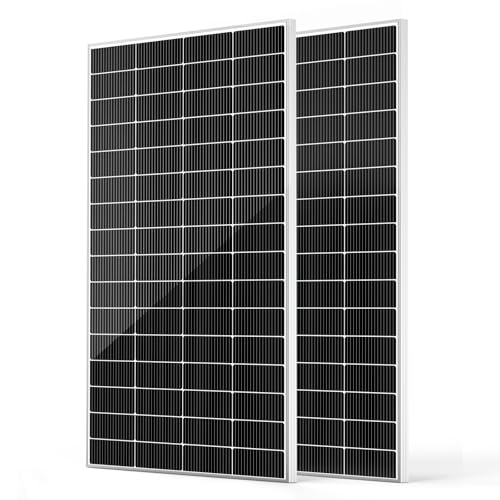
【13% Smaller & 14.5% Lighter, Ideal for Class B Vans】Compared to conventional PERC cell panels, this compact and lightweight 200W solar panel is ideal for Class B campervans and tight rooftop spaces. Compared with using multiple 100W panels, it requires fewer mounts and cables, helping reduce the total cost of your off-grid system. With fewer parallel connections, power loss is minimized and energy output is maximized. The panel measures 30.1 × 46.3 × 1.2 inches and weighs 20.17 lb.
Monocrystalline vs Polycrystalline: Head-to-Head Comparison
Monocrystalline panels are more efficient than polycrystalline panels, typically achieving 17 to 22 percent efficiency compared to 15 to 17 percent. This higher efficiency means you generate more power per square foot, making them ideal for tight roof spaces. They also have a better temperature coefficient, ranging from -0.26% to -0.35% per degree Celsius, whereas polycrystalline panels are around -0.5% per degree Celsius. This means monocrystalline panels lose less energy in hot conditions. Both types generally have a lifespan of 25 years; however, monocrystalline systems tend to produce more energy over their lifetime, which can lead to greater long-term savings. For roofs with limited space or in hot environments, monocrystalline panels are typically the better choice. Polycrystalline panels are more budget-friendly and work well when space is ample and cost is a priority. The conductive busbars inside the panels are typically made from materials like copper or silver to carry the generated electricity efficiently. If your home’s electrical system experiences frequent breaker trips, it may indicate an overload from installing a high-wattage solar array without proper circuit upgrades.

ShadowFlux Anti-Shading Technology - Renogy shadowflux technology delivers enhanced power generation even in shaded areas caused by buildings, plants, or stains. This solar panel innovative ShadowFlux anti-shading tech significantly reduces hot-spot risks, ensuring reliable power output and peace of mind.

Unmatched Cell Efficiency - Renogy's 100W solar panel features grade A+ cells, delivering an impressive conversion efficiency of 25%. This provides 20W more power output compared to conventional p-PERC panels of the same design.
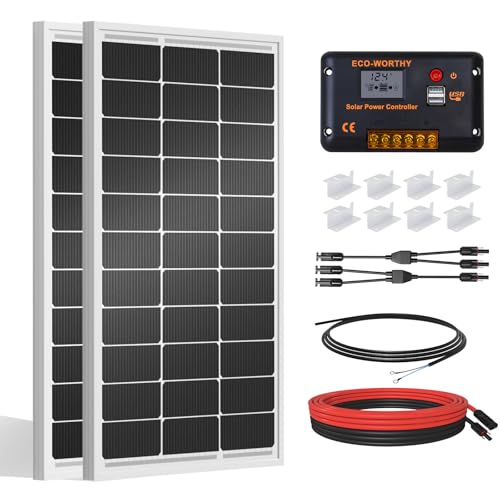
[Wide Application]: Daily Output 800wh/day under 4 hours full sunshine condition. Perfect for RV, Caravan, Marine, Camper, Electric scooter, Golf Carts, Power wheels, Trolling motor, Tool trailer, Backup power supply for cabin shed home etc.
How Much More Do Monocrystalline Panels Really Cost?
Cost difference between monocrystalline and polycrystalline panels varies by region but is generally modest. In India, monocrystalline panels cost ₹20–₹28 per watt-peak (Wp), whereas polycrystalline panels range from ₹15–₹22 per Wp. This difference is smaller than older U.S. listings, which showed around $1.00–$1.50 per W for monocrystalline and $0.90–$1.00 per W for polycrystalline panels. When considering installed system costs in 2026, monocrystalline systems typically run between $2.50 and $3.50 per watt, while polycrystalline systems are around $2.20 to $2.80 per watt.
Though monocrystalline panels have a higher upfront cost, their increased efficiency—generally 20 to 23 percent compared to 15 to 17 percent for polycrystalline—often offsets the initial expense over time. This higher efficiency means they produce more power in the same space, lowering overall balance-of-system costs, especially in limited areas or shaded environments.
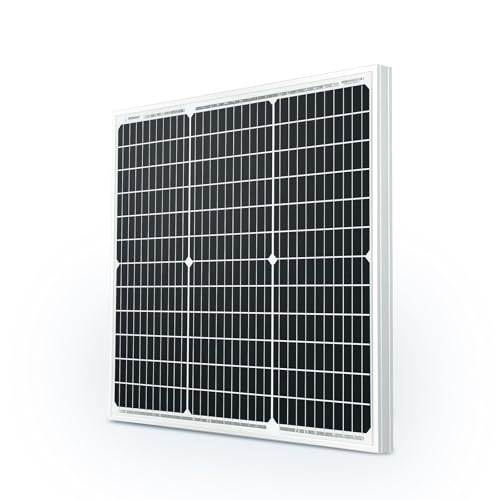
Advanced encapsulation material with multi-layered sheet laminations to enhance cell performance and provide a long service life.

⚡ Ultra-Lightweight & Ultra-Portable: 100W Foldable Solar Panel Weighing only 4.1lbs (1.85kg) with a sleek 0.59-inch profile, this solar charger is engineered for ultimate portability. It folds down to a compact 12.99 x 10.43 x 2.17" (330x265x55mm) and includes a premium carry bag, making it effortless to transport during camping, hiking, or road trips. The generous unfolded size of 45.47 x 26.18" ensures maximum power capture while remaining easy to handle.

[25% Efficiency] ECO-WORTHY 100W N-Type Bifacial Solar Panel is built with advanced N-type solar cells and 16BB busbar technology, delivering up to 25% conversion efficiency.Compared to traditional P-type cells, N-type technology offers higher power output and superior reliability, while the 16BB design significantly reduces the risk of hot spots and micro-cracks — ensuring consistent performance and a longer lifespan for your off-grid system.
Which Lasts Longer and Has Better Warranties?
Monocrystalline panels generally last longer and offer better warranties than polycrystalline panels. They typically have lifespans of 25 to 40 years, compared to 20 to 35 years for polycrystalline. This difference is mainly due to lower degradation rates: monocrystalline panels degrade at about 0.3% to 0.5% annually, while polycrystalline panels degrade at around 0.5% to 0.8%. As a result, monocrystalline modules retain more of their original efficiency over time. This principle of prioritizing longevity is similar to why negative battery cables come off first when disconnecting a car battery, as it prevents dangerous short circuits. Both types usually come with 25-year performance warranties. However, premium monocrystalline options often extend to 30 years, whereas polycrystalline panels rarely exceed the standard. In terms of guaranteed output, monocrystalline warranties typically ensure 87% to 92% of the original output at year 25, while polycrystalline warranties generally cover 80% to 85%. Product warranties, which cover physical defects, tend to be shorter—usually 12 to 15 years for both types—so it’s important to review the fine print and not just compare warranty lengths. When selecting a setup, remember that series or parallel solar panels configurations can also affect overall system performance and warranty compliance. For buyers seeking reliable connections, many top-rated panels feature MC4 connectors for secure and efficient wiring.

Package Included: 6 pairs solar panel connectors Male and Female + 6 pairs solar connector pins (male and female) + 1 pair of spanners

Quick Parallel 2 Solar Panels: BougeRV 1 to 2 Y branch cable can parallel 2 solar panels. The kit includes 1 male to 2 female (M/FF) and 1 female to 2 male (F/MM) solar connectors

One Pair of Solar Y Branch Parallel Connectors: Great to have four solar panels in parallel, with 1 male to 4 female (M/FFFF) and 1 female to 4 male (F/MMMM). Extra long at 24.81''/63cm, they are long enough to reach the panels without extensions and connect them without being tight
Do Monocrystalline or Polycrystalline Panels Perform Better in Low Light and Heat?
Monocrystalline panels perform better in low light and heat conditions compared to polycrystalline panels. They have a lower temperature coefficient, typically around -0.3% to -0.5% per degree Celsius, whereas polycrystalline panels often range from -0.35% to -0.5% per degree Celsius. This means mono panels lose less power as temperatures rise; for example, at 50°C, a mono panel might only decline by about 7.5% in output, while a polycrystalline panel could experience a slightly larger decrease. As a result, monocrystalline panels tend to maintain higher efficiency during hot days and low-light conditions, making them a better choice for hotter climates or locations with limited sunlight. Their ability to generate more consistent power under these circumstances directly translates to improved overall performance and durability in challenging environmental conditions.
Space Constraints: When Power Density Becomes the Deciding Factor
Monocrystalline panels deliver the highest power density, making them ideal when space is limited. Their efficiency of 20–23% is significantly higher than the 15–18% of polycrystalline panels. This means they produce about 220–230 watts per square meter compared to 160–180 watts for polycrystalline. As a result, you need less area to generate the same amount of power; roughly 4.5 to 5 square meters per kilowatt versus 6.5 to 7 square meters. On a small rooftop, balcony, or RV, this higher density allows you to install more capacity within the same footprint. For example, on a 100 square meter roof, you could fit about 20 kilowatts of monocrystalline panels instead of only 15 kilowatts with polycrystalline. This 25% capacity increase means more energy production without expanding your space. Additionally, fewer modules are needed to reach your desired system size, simplifying installation and reducing shading concerns from vents or skylights. To confirm your panels are producing as expected, you can use home electricity monitoring to track real-time output per square meter. When space is tight, the efficiency and compactness of monocrystalline panels make their premium worthwhile, especially when paired with a solar-powered battery to store the extra energy. Adding a reliable power backup system further ensures uninterrupted usage during outages or low-sunlight periods.

【Powerful and Save Space】: SUNGOLDPOWER 450W monocrystalline solar panel can produce up to 2250Wh of electricity per day with smaller space compared to 4pcs 100W or 2pcs 200W solar panels

[REAL-WORLD POWER] Rated 400W at STC; actual output varies with sun angle, temperature, shading, cable runs, and controller—MPPT helps keep charging steadier.

YOUR BACKPACK IS THE SOLAR CHARGER: An integrated 13W monocrystalline solar panel turns this solar backpack into a mobile solar charging station. Harvest sunlight on the go for compatible electronics while hiking, commuting, or camping — no extra solar panel required.
Has the Monocrystalline vs Polycrystalline Price Gap Narrowed?
The price gap between monocrystalline and polycrystalline panels has significantly narrowed but has not disappeared entirely. Currently, you might pay about $0.05 per watt more for mono panels in U.S. markets, which results in roughly $500 extra for a 10 kW system. In India, the difference is around ₹4 to ₹5 per watt peak, down from a much wider margin in the past. Advances in manufacturing—particularly the adoption of PERC cell technology—have driven down the production costs of monocrystalline panels. This has compressed the long-standing cost difference between the two chemistries.
Today, the overall economics of a solar project depend more on efficiency and space utilization than on panel type alone. In residential installations, the remaining cost gap is often negligible, and installer quotes tend to present monocrystalline panels as the default choice. This shift reflects how technological improvements have made mono panels more competitively priced, reducing the traditional price premium that historically favored polycrystalline options.
When Does Polycrystalline Still Make Practical Sense?
Polycrystalline panels still make practical sense in situations where land or roof space isn’t limited. Since their efficiency is generally lower than monocrystalline panels, you can compensate by installing more modules to achieve the same power output. For large ground-mount systems such as utility-scale or solar farms, space isn’t usually a concern, so cost and system design flexibility take precedence over high efficiency. On expansive commercial rooftops like warehouses, adding extra modules is straightforward without worrying about space constraints.
Off-grid applications like remote cabins or rural electrification benefit from polycrystalline panels because of their simple installation and reliable performance across various climates. These setups often prioritize ease of deployment and scale over the highest possible efficiency. Aesthetic appeal is rarely a factor in these functional installations, which often focus on utility, such as agricultural or temporary sites, where practicality outweighs appearance.
Manufacturing processes for polycrystalline panels are mature and cost-effective, making them a dependable and widely available choice. Their durability suits a range of environmental conditions, and their reliable performance ensures you get consistent solar generation when the demand is straightforward. When cost-effectiveness and proven durability are key, polycrystalline panels remain a sensible option.
Choosing Based on Your Budget, Roof, and Energy Goals
When choosing panels, monocrystalline generally makes the most sense if space is limited, energy goals are high, and you want to maximize long-term value despite a higher upfront cost. These panels achieve efficiency ratings of 19% to 23%, translating to more power per square foot. This higher efficiency allows you to pack more capacity into a smaller or irregular roof footprint, reducing installation challenges on non-ideal surfaces. Their durable material construction often justifies the higher cost of $0.70 to $1.50 per watt, especially when you prioritize output density. For reliable electrical connections in your solar setup, consider using DIN Rail terminal blocks to ensure secure wiring. When comparing total system costs, consulting a guide to the best options can help you evaluate these trade-offs against your specific roof conditions.
Polycrystalline panels cost less, around $0.50 to $1.10 per watt, and are suitable when roof area is plentiful. They require roughly 15% to 20% more space per kilowatt of capacity, meaning you’ll need a larger area to produce the same energy as monocrystalline panels. If your roof has ample space and budget constraints are tight, polycrystalline panels provide a more economical option that still meets modest energy goals with efficiencies of 15% to 18%. The key is to analyze your roof’s usable area; monocrystalline panels excel when roof shape or limited space restrict capacity, while polycrystalline remains a viable choice when space is not a concern. Following a safest fix order for cleaning helps maintain efficiency by removing dirt that can reduce power output.
What’s the Simplest Rule for Picking the Right Panel?
For tight spaces, choose monocrystalline panels because their efficiency ranges from 19% to 23%, providing more power per square foot. This higher efficiency directly addresses the limited roof area, helping you maximize energy output. The key difference lies in their single-crystal structure, which reduces resistance to electron flow and boosts performance.
Polycrystalline panels, with their multiple-crystal structure, typically cap at 15% to 17% efficiency. They generate slightly less power in the same space but are often cheaper upfront. If your roof has varied installation angles, monocrystalline panels also maintain better low-light performance, making them more reliable for consistent output.
Aesthetically, monocrystalline panels generally feature a uniform black color, offering flexible design options for visible roofs. You should opt for monocrystalline unless you have very abundant space and are focused mainly on minimizing initial costs. In most cases, monocrystalline panels are the smarter choice for maximizing output per square foot. When paired with lithium batteries, this panel type ensures your setup efficiently stores the higher energy yield for long-term use.