
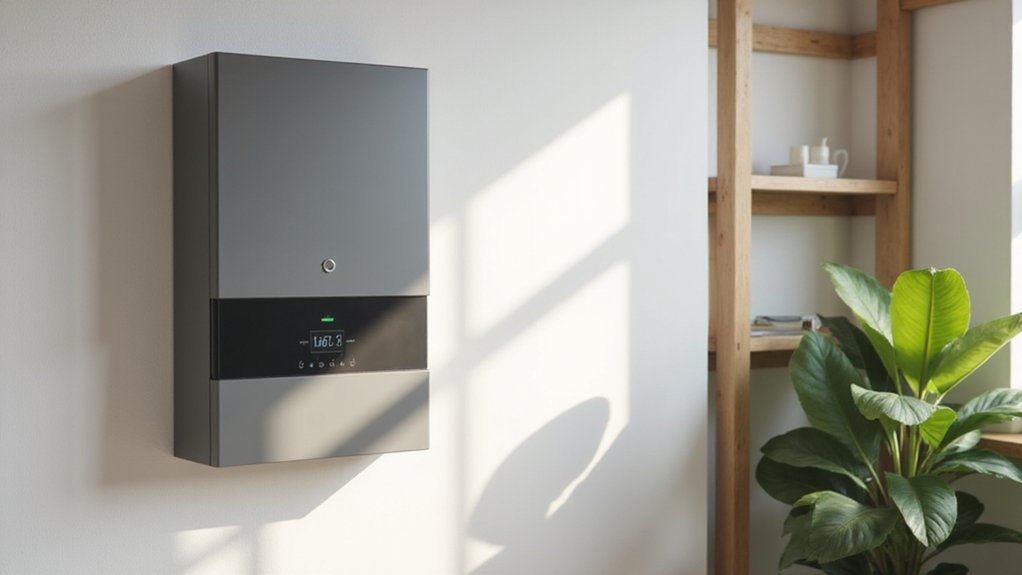

Thinking about how to manage your solar and battery system efficiently? A hybrid inverter might be the answer, replacing both your solar and battery inverters with one device that acts as your system’s central energy manager.
It converts DC from panels to AC, charges batteries, and coordinates with the grid—all seamlessly. Keep reading to understand if a hybrid inverter is right for you.
How Does a Hybrid Inverter Actually Work?
A hybrid inverter works by integrating both a solar inverter and a battery inverter into one device, allowing you to manage solar energy, battery storage, and grid power seamlessly. Its core function is to convert DC electricity generated by your PV panels into AC electricity suitable for your household loads or for export to the grid. Excess solar energy not used immediately is directed into the battery for later use. Additionally, the inverter can support reverse power flow, allowing the battery to charge from the grid when needed. This setup fundamentally relies on solid-state electronics to efficiently switch between power sources with minimal energy loss.
An essential part of its operation is a sophisticated internal logic system that continuously monitors various parameters, including load demand, solar output, battery capacity, and grid status. Based on this real-time data, the inverter automatically prioritizes power sources: initially drawing from solar, then charging the battery with surplus solar energy, and finally exporting excess energy to the grid if the local loads are satisfied. During periods of low solar production, the system discharges the stored energy from the battery. If the battery cannot meet the load, the grid steps in to provide additional power.
Embedded software manages these transitions automatically, removing the need for manual switching. This dynamic power management improves your self-consumption of solar energy, enhances backup capabilities during outages, and optimizes overall energy efficiency. For those comparing options, reviews of solar panel picks rank systems based on quality and value to help buyers choose the best setup. For reliable backup needs, specific models are often highlighted as the top solar generators for their performance and value.
What Are the 6 Core Functions of a Hybrid Inverter?
A hybrid inverter integrates six key functions into one unit, making it versatile for solar energy systems. First, it performs DC-to-AC conversion, transforming direct current from your solar panels into alternating current that can be used immediately or exported to the grid. Second, it manages battery charging by directing excess solar or grid power into storage and regulating how quickly the batteries charge to avoid damage. Third, it handles battery discharge, supplying stored energy to your loads when solar output drops, which enhances self-consumption. When selecting equipment, it is important to compare the best solar panel kit to ensure compatibility with your inverter’s capabilities and battery storage. Reviewing cost comparisons of different solar panel options can help you choose a system that fits your budget and energy needs. Prolonging inverter lifespan requires simple habits such as keeping the unit cool and clean to avoid common causes of degradation like overheating or dust buildup.
Fourth, the inverter coordinates with the utility grid, syncing voltage and frequency to allow importing or exporting electricity as needed. Fifth, it provides backup power by switching to island mode within milliseconds during outages, ensuring critical circuits stay energized. Finally, it controls system modes—whether connecting to the grid, operating in hybrid or off-grid configurations, or providing backup—and enables remote monitoring and efficiency optimization. Combining these functions reduces maintenance by consolidating multiple pieces of equipment into a single, manageable unit.
What’s the Difference Between a Hybrid Inverter and a Standard One?
A hybrid inverter differs from a standard inverter primarily in its ability to manage energy bidirectionally. While a standard inverter converts solar DC directly into AC power for immediate use or export to the grid, a hybrid inverter can also charge and discharge batteries. It handles energy flow from solar panels or the grid to the battery and then supplies stored power to your loads when needed. This capability results in higher efficiency for battery charging at about 92 to 96 percent, compared to 85 to 90 percent for a standard inverter paired with a separate battery charger. For those choosing a battery to pair with their inverter, selecting a model with high-quality terminals can further boost system performance and overall longevity.
However, maintenance demands differ significantly. Standard inverters have a simple, one-way design with fewer failure points, making them easier to maintain and troubleshoot. Hybrid inverters, with their integrated batteries, controllers, and switching systems, require more ongoing monitoring. You will need to keep an eye on firmware updates, battery health, and overall system diagnostics.
Cost differences are also notable. Standard inverters typically come with a lower upfront price and are simpler to install. In contrast, hybrid inverters usually involve higher initial costs but offer added benefits such as backup power during blackouts and better optimization of self-consumption.

All-in-one Inverter Charger: Not only a power inverter with 3600 watt rated/7200 watt peak power, but with built-in 120A MPPT solar charge controller, and 100A AC battery charger. PV input voltage range 60V-500VDC, Max. PV input power 4200w, 16A

【Crystal-Clear Glass LCD with Intuitive Control】Features a premium 6.25-inch tempered glass display with responsive touch buttons. Offers exceptional clarity for real-time monitoring of power output, battery status, and solar input, ensuring effortless operation day or night.

【All in One Solar Inverter】:SUNGOLDPOWER 5000 Watt 48V solar inverter combined with Max 80A battery charging (SOLAR+AC), Max 5500W 500V PV Array. It is widely used in off-grid 48V system.UL1741 listed by ETL. Does not support PARALLEL
How Your Solar Panels, Battery, and Grid All Connect Through One Inverter
A hybrid inverter connects your solar panels, battery, and grid into a single unit for streamlined operation. It accepts DC power directly from your solar panels, converting it to AC for household use. The internal control system then determines whether to send this AC power to your loads, charge your batteries, or export excess energy to the grid. Your battery bank connects on the DC side, allowing solar energy to charge it directly without extra conversions, which boosts efficiency. For optimal battery performance, a hybrid inverter can work with gel batteries to handle deep discharges without damage. When using sealed batteries like AGM, proper venting is still required to prevent gas buildup in enclosed spaces. The grid connection is managed through your main electrical panel or a dedicated AC line, enabling safe export or backup power. This integrated setup simplifies wiring, reduces installation complexity, and allows for future expansion, such as adding more solar panels or batteries, without extensive rework. The inverter automatically manages power distribution from all sources, optimizing flow and synchronizing with the grid for safe export or backup operation. To ensure an efficient and reliable DC connection, the hybrid inverter is compatible with MC4 connectors, which are the industry standard for solar panels.
Why a Hybrid Inverter Boosts Your Solar Self-Consumption
A hybrid inverter boosts your solar self-consumption by prioritizing your household loads and battery charging over exporting excess energy to the grid. Its smart energy-flow control ensures that midday solar power first goes to running appliances, then charges the battery, and only exports surplus energy after these needs are met. This approach captures more of your PV generation for evening use, helping to address the common mismatch between solar production and household demand. The integrated battery management system optimizes efficiency by cycling charge and discharge based on real-time load requirements. Export control features, such as zero-export settings, further minimize feed-in to the grid, enhancing your solar autonomy. All operations remain compliant with grid standards, preventing connection violations while maximizing local energy use. To understand this further, consider how a charge controller works to prevent overcharging and protect the battery health in a similar system. This setup effectively shifts consumption away from the grid, cutting down on purchased electricity and making every kilowatt-hour work harder for you. Ensuring safe integration of these components requires following torque and connection tips to maintain code-compliant and reliable wiring. For sustained performance, selecting a battery with deep cycle durability ensures reliable power during repeated daily charging and discharging.

Unique Glass Cover Design: Tempered glass upper cover with big 6.25 inch LCD display and touchable buttons, cool look with high transparency, more clear to see real-time data of your inverter


In the event of grid failure, Victron Energy Quattro takes over the supply to the connected loads. This happens so fast that computers and other electronic equipment will continue to operate
5 Trade-Offs to Consider Before Buying a Hybrid Inverter
While a hybrid inverter offers an all-in-one solution for solar conversion, battery management, and energy control, its higher upfront cost is a significant consideration. You’ll pay a premium for its built-in battery-ready architecture, which can increase initial expenses. Additionally, the installation process is often more complex and typically requires a qualified technician, further raising the startup costs. Following correct charger settings is essential for safe battery charging and maximizing lifespan.
Battery integration limits can impact system scalability. Not all hybrid inverters support a wide range of battery chemistries or voltage levels, which can restrict future expansion. For example, an inverter optimized for 48V lithium-ion batteries may deliver high efficiency but may not accommodate other chemistries or larger capacities easily. Retrofitting an existing solar array usually involves replacing equipment, potentially wasting your initial investment.
Performance differences also matter: DC-coupled hybrid systems generally achieve around 95% round-trip efficiency, whereas AC-coupled systems tend to be closer to 90%. The additional conversion stages in AC-coupled arrangements lead to higher energy losses. Hardware complexity can complicate maintenance and troubleshooting, potentially increasing long-term costs and efforts to keep your system running smoothly.

2-in-1 Hybrid Solar Inverter: Our 2-in-1 hybrid solar inverter combines an inverter and controller in one efficient unit. With a powerful 6000W pure sine wave output at 220/230V AC, it meets high-energy demands. It is ideal for off-grid solar photovoltaic systems, providing efficient power solutions for various applications.
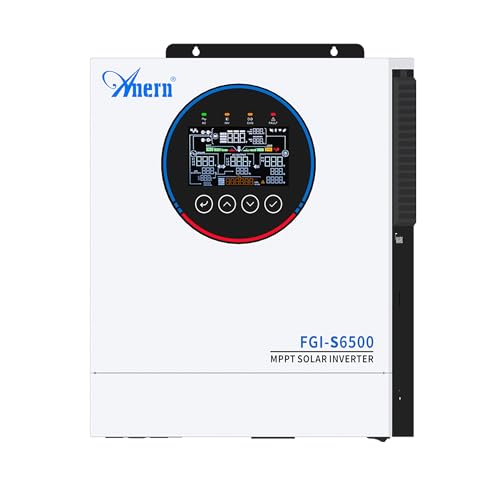
【PURE SINE WAVE INVERTER】6500W Off-Grid Solar Inverter, 48V, Built-in 120A MPPT Charge Controller, Pure Sine Wave Inverter, Single-phase Output 230VAC. This new 6.5kw All-In-One inverter combines the functions of an inverter, solar charger, and battery charger, offering uninterrupted power support in a single package. The inverter supports operation without a battery.

【ALL-IN-ONE SOLAR CHARGE INVERTER PARAMETER】Converts 48V DC to 120Vac AC and is equipped with a dual-channel MPPT solar charge controller. Features an LCD display and touch buttons, with optional WiFi/GPRS remote monitoring. Single AC output. Max. PV Array Power 4000W; Max. PV Array Open Circuit Voltage 300VDC; PV Array MPPT Voltage Range 90VDC–260VDC; Max. Solar Input Current 22A; Max. Solar Charge Current 80A (configurable); Max. AC Charge Current 40A ; Max. Combined Charge Current (PV + AC) 80A.
Will a Hybrid Inverter Keep Your Lights On During a Blackout?
A hybrid inverter can keep essential circuits active during a blackout, but only if your system includes a backup battery. During an outage, solar panels can continue to recharge the battery in daylight, providing power to connected loads. The inverter isolates from the utility grid and switches on in less than 20 milliseconds, preventing visible flicker. However, it will only support critical circuits like main lighting, the refrigerator, and the internet router. You won’t be able to power the whole house unless you have a sufficiently large battery bank. The duration of backup power depends entirely on your battery capacity and what you’re running. Without a backup battery, the inverter cannot supply power during a blackout. To safely manage that switchover, the inverter first disconnects from the grid in a specific sequence, much like the negative battery cable is removed first when servicing a car to prevent arcing and accidental short circuits. To confirm all connections are sound, use a quality digital multimeter with clamp to verify current flow and prevent overloads. Always check for exposed metal parts on connections before finalizing the setup to avoid unintended grounding faults.
Hybrid Inverter Costs: Upfront Price vs. Long-Term Savings
The upfront cost of a hybrid inverter ranges from $1,200 to $5,000, with battery modules making up 45 to 55 percent of the total system price. You will pay an additional $800 to $1,500 compared to a standard grid-tied inverter, primarily because of the batteries and associated components. Although this initial investment is higher, the hybrid system offers benefits like time-of-use optimization, which can lead to significant long-term savings. In regions like California, annual savings can reach up to $3,660, while in the UK, they typically range from £200 to £400. This translates into payback periods between approximately 4.2 and 9.7 years. For example, when comparing AGM vs Flooded Batteries, opting for the right battery type can further impact system cost and longevity. Understanding whether your setup requires an old breaker box is also critical for safely integrating the hybrid inverter with legacy electrical panels. A failing system can cause dangerous electrical faults that damage connected equipment and pose a fire risk.

Home Backup Power Station: Still worried about power outages? This kit includes one 51.2V 100Ah LiFePO4 battery and one 5000W MPPT inverter, providing 5120Wh capacity and 5000W output power. It can ensure the basic operation of household appliances during power outages.

【Smart 13.2kW Hybrid Energy Management System】 All-in-one single-phase on/off grid pure sine wave solar inverter integrates 8000W+8000W dual PV input, 48VDC battery bank, utility grid & generator power; delivers 13200W rated AC output at max 98% DC-AC conversion efficiency. Built-in 160A MPPT solar charger, supports battery-free operation, auto-switch between solar, battery and grid power to cut utility bills and secure backup power during blackouts, with dual communication ports reserved for BMS battery data transmission and wireless remote monitoring modules.

【PURE SINE WAVE INVERTER】4200W Off Grid Solar Inverter 24V Built-in 120A MPPT Charge Controller, Pure Sine Wave Inverter Single-phase output 230VAC, 4.2kw new all-in-one inverter combining functions of inverter, solar charger and battery charger to offer uninterruptible power support in a single package.The inverter supports battery-free operation.
How to Choose the Right Hybrid Inverter for Your Setup
To choose the right hybrid inverter, start with inverter sizing. The inverter’s continuous AC output should match your peak simultaneous load, not just your average usage. For most residential systems, this typically means selecting a unit between 3 and 8 kW. Adding a buffer—around 20 to 25 percent above your maximum load—helps prevent nuisance trips during motor starts or compressor cycles, ensuring smooth operation.
Next, verify that the battery voltage aligns with common standards, with 48 volts being typical for residential setups. Confirm that the inverter supports your battery chemistry, whether lithium, lithium iron phosphate (LFP), or lead-acid. Don’t overlook the importance of BMS (Battery Management System) compatibility; a compatible BMS optimizes charge behavior, extends battery lifespan and prevents degradation.
Finally, ensure the solar panel array matches the inverter’s MPPT (Maximum Power Point Tracking) voltage window. Using multiple MPPT inputs can help mitigate shading issues across different strings. Confirm compliance with grid standards such as UL 1741 and IEEE 1547 to ensure safe connection to your utility. Look for inverters with efficiency ratings above 95 percent and an outdoor IP65 (or higher) rating for durability in harsh environments.

This Pure Sine Wave Solar Inverter is a combination of an inverter, ac battery charger , MPPT solar charge controller and AC auto-transfer switch. Support Single-phase,Split Phase and Three-phase 120/208V/240Vac Output, High transfer efficiency is above 92%.

230V SINGLE-PHASE COMPATIBILITY - Rated 6200W/6200VA at 230VAC with pure sine wave output and 12,400W surge capacity for 5 seconds. Selectable 220V, 230V, or 240V output and 50Hz/60Hz frequency. For dedicated 220-240V loads only; not for 120V appliances or 120/240V split-phase systems.

12000W Split-Phase Output for Whole-Home Backup:Designed for residential and light commercial energy storage systems, this 12000W hybrid inverter delivers stable 120V/240V split-phase pure sine wave output, making it ideal for powering air conditioners, water pumps, refrigerators, tools, RV systems, workshops and essential household appliances during outages or off-grid operation.