


Wondering if your AGM battery needs to be vented? Most of the time, it doesn’t require external venting because its pressure-relief valve only opens if internal gas buildup becomes a problem.
However, if you overcharge or store it in a sealed space, you might need to install proper ventilation to prevent dangerous hydrogen buildup.
Keep reading to learn exactly how and when to vent your AGM battery safely.
Do AGM Batteries Need Venting? Here’s the Truth
AGM batteries do not require external venting under normal conditions. They are sealed valve-regulated lead-acid (VRLA) units that internally recombine gases during operation, preventing the need for a vent hose. In open-air installations, standard airflow around the battery is sufficient to maintain safety and performance. For optimal care, always use a top battery charger designed for sealed lead-acid batteries to avoid overcharging. Proper placement is crucial: avoid airtight enclosures, as trapped heat can shorten battery life and reduce efficiency. If installing in a cabinet, ensure adequate ventilation paths to prevent hydrogen buildup from any abnormal charging. Regularly check that your charger settings match AGM chemistry and keep terminals clean. For those seeking top battery picks with reliable terminals, comparing quality and value ensures you choose a model that performs well under normal conditions. For off-grid setups, pairing an AGM battery with a solar charger without battery can provide a streamlined energy solution while maintaining ventilation requirements. Good ventilation—not excessive venting—is the key to safe, long-lasting AGM battery use.

MEET THE GENIUS1 — Similar to our G750, just better. It's 35% smaller and delivers over 35% more power. It's the all-in-one charging solution - battery charger, battery maintainer, trickle charger, plus desulfator.

Charger, Maintainer & Desulfator - An all-weather battery charger, battery maintainer, trickle charger, and battery desulfator. Perfect for charging and maintaining all 12-volt lead-acid, flooded or sealed maintenance free batteries (AGM and gel cell).

24V 2A SLA Battery Charger with 3-Pin XLR Connector – 24 Volt 2 Amp (2000mA) Automatic Battery Charger Designed for Compatible Mobility Scooters and Power Chairs Using 24V Sealed Lead Acid (SLA/AGM) Battery Systems.
When Does an AGM Battery Actually Release Gas?
An AGM battery releases gas only under four specific conditions: overcharging, extreme heat, physical damage, or when its pressure-relief valve opens. During normal operation, the sealed design prevents gas from escaping, as the system is engineered to recombine gases internally. However, overcharging overwhelms this recombination process, producing hydrogen faster than the mats can absorb, which causes the safety valve to vent. High temperatures accelerate internal reactions, increasing pressure until the valve opens even during proper charging. Physical damage like cracks or punctures bypass the valve-regulated pathway entirely, leading to uncontrolled gas leakage. The pressure-relief valve itself opens at approximately 1.5 PSI, releasing hydrogen and oxygen to prevent case rupture. These events are signals of malfunction or improper maintenance since they indicate that the battery’s safety mechanisms have been triggered. When gas is vented, it is a sign that the internal gas recombination has failed, and venting becomes an unavoidable safety response. For example, when disconnecting an AGM battery, mechanics always remove the negative cable first to prevent accidental sparks from short circuits, a standard safety practice also derived from understanding how gas ignition occurs. Many solar installations pair these batteries with MC4 connectors for safe, weatherproof wiring. Choosing a high-quality crimp ensures a reliable connection, much like selecting the best ferrule crimping tool secures terminal ends in wiring.
How to Vent an AGM Battery in a Sealed Compartment
AGM batteries vent gas through their pressure-relief valve when internal pressure builds up. Since their batteries are sealed but not completely airtight, you need to provide passive ventilation to safely release gases. Install a high-mounted outlet to allow lighter gases like hydrogen to escape upward naturally. Place intake vents low in the enclosure to promote airflow and prevent gas buildup.
If your battery model supports external venting, attach vent tubing to the designated port. Route this tubing to open air or an exhaust path outside the compartment. In confined spaces such as vehicle trunks or lockers, consider relocating the battery remotely or installing a dedicated duct system to direct gases away from the area. Always screen vent openings to prevent debris from entering and avoid sealing or partially sealing the enclosure, as this can trap gas and increase pressure. Never direct vent outlets toward living spaces or ignition sources to reduce fire risk.
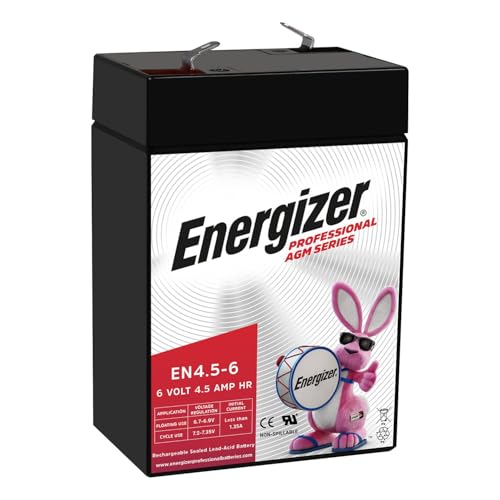
ENERGIZERS EXPERTISE: Our non-spillable design, powered by Absorbent Glass Mat (AGM) technology, ensures efficient gas recombination and virtually eliminates the need for maintenance. Say goodbye to electrolyte maintenance and water adding - enjoy hassle-free operation with reliable power developed by professionals.

PowerStar Brand Batteries
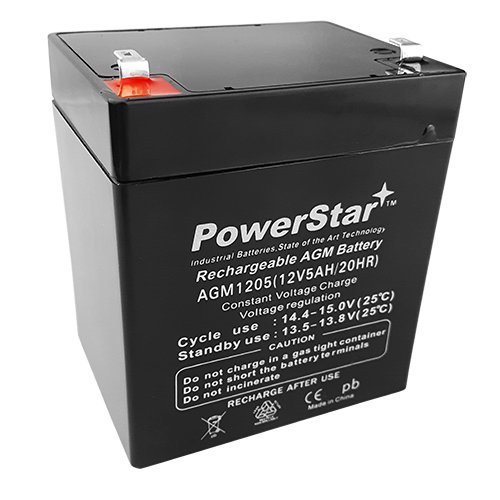
Industry Leading Warranty - Only offered by PowerStar 3 Year Warranty in Back up or Float Applications 2 Year Warranty all other applications
Why Overcharging Poses the Biggest Venting Risk
Overcharging AGM batteries poses the biggest venting risk because it pushes the battery beyond its gas-recombination capacity. Under normal conditions, AGM batteries internalize most of the gases produced during charging, minimizing venting. However, when overcharged, the excessive voltage—above approximately 14.6V in the absorption phase—causes electrolyte electrolysis, generating hydrogen at a rate faster than the internal mats can absorb it. This leads to pressure buildup inside the sealed case and forces the safety valve to release flammable gases. Unlike lightning arresters, which protect external infrastructure from direct strikes, surge arresters safeguard sensitive electronics from transient voltage spikes; however, both are unrelated to the internal pressure dynamics of AGM batteries. Beyond venting, overcharging significantly increases the internal temperature of the battery. Elevated heat accelerates electrolyte degradation and raises the risk of thermal runaway—a dangerous situation where heat causes further chemical reactions, creating more heat in a vicious cycle. The higher temperature also reduces the efficiency of the separator and electrolyte saturation, which exacerbates venting and contributes to battery damage. Sustained overvoltage from an incorrect charger setting is particularly hazardous, as it causes long-term damage and makes the battery more susceptible to dangerous venting. While brief voltage spikes may have minimal effects, continuous overcharging will permanently impair the battery and create an explosive hazard. For electricians selecting a multimeter to monitor charging, a high-quality digital multimeter can accurately detect voltage spikes and prevent overcharging risks.

Notes to buyers ①Designed for 12V batteries, please don't connect to higher voltage batteries. ②The PV Voc needs to be higher than the battery voltage, the minimum is 15V, and the maximum should not exceed 30V. ③Connection sequence: first connect the battery, then connect the solar panel.

[100% Waterproof] The solar charge controller is built to last in any weather. It has a waterproof seal that keeps it safe from rain, snow, and dust. It’s perfect for outdoor use.

MEET THE GENIUS2 — Similar to our G1100, just better. It's 30% smaller and delivers over 140% more power. It's the all-in-one charging solution - battery charger, battery maintainer, trickle charger, plus desulfator.
AGM Battery Installation: Airflow vs. Airtight Enclosures
Proper airflow is essential for AGM battery safety and performance. Overcharging can cause gases to vent, but whether these gases pose a hazard depends on the installation environment. You must prioritize designing for airflow over sealing the enclosure airtight. A sealed box traps heat and hydrogen gases, increasing the risk of explosion or damage. Instead, ensure your enclosure has both an inlet and an outlet to enable natural convection. This setup allows gases to dilute and heat to dissipate, reducing hazards. Unlike standard solar panels, solar shingles integrate directly into the roof structure, offering a different installation dynamic for homeowners to consider when designing battery enclosures. To maximize energy capture for battery charging, you should also consider selecting panels with the highest efficiency ratings available on the market. A fuse block is commonly used to safely distribute power from the battery to multiple circuits, requiring careful selection to match the system’s amperage and wire gauge.
Maintain adequate clearance above and below the battery bank to prevent heat buildup. In confined spaces, add forced ventilation or ducting to actively move air through the enclosure. Do not rely on a sealed environment; passive airflow is insufficient for safe operation under typical charging conditions.
To size ventilation openings correctly, use the formula \(Q = 0.05\,n\,I_{gas}\,C_{rt}\,10^{-3}\) cubic meters per hour, where \(n\) is the number of batteries, \(I_{gas}\) is the gas generation current, and \(C_{rt}\) is the correction factor. Once you determine the required airflow \(Q\), calculate the opening area with \(A \ge 28 imes Q\) in square centimeters. Proper ventilation is your best strategy for safely managing both heat and hydrogen gases generated during battery operation.
Common AGM Venting Myths You Should Ignore
AGM batteries are often labeled “sealed,” but that doesn’t mean they are entirely airtight or completely maintenance-free. These batteries have pressure-relief valves designed to release hydrogen gas during overcharge or internal stress, so they can vent gases when necessary. Unlike flooded batteries, AGM units do not require dedicated vent hoses because they internally recombine the gases produced during normal operation. Proper charging is crucial to prevent gassing and electrolyte loss. It’s also important to avoid completely airtight enclosures, as trapped heat and gases need a way to escape to maintain safety. Don’t assume that the absence of a vent tube makes the battery safe—correct voltage levels and adequate enclosure airflow are what truly matter. Misconceptions about AGMs not producing hydrogen or requiring special venting can lead to unsafe conditions; instead, focus on proper charging practices and ventilation to ensure safety and longevity. For context, gel batteries benefit from similar care, as avoiding overcharging is essential to maximize their lifespan and prevent premature failure.