

Not sure whether to go with an AGM or a flooded battery? The right choice depends on how you use your vehicle and what matters most to you.
AGM batteries last longer, handle deeper discharges better, and require less maintenance, but they come at a higher initial cost.
Here’s what you need to know to make the best decision for your needs.
AGM vs. Flooded Batteries: What Sets Them Apart?
AGM batteries are generally more durable and better suited for demanding applications than flooded batteries. This is because AGM batteries immobilize the electrolyte within fiberglass mats, making them spill-proof and resistant to vibration. They also have lower internal resistance, allowing for faster charging and improved deep-discharge recovery, which extends their cycle life—often doubling that of flooded batteries. Additionally, AGMs maintain voltage more consistently under load and are less prone to leakage, making them ideal for portable or orientation-variable uses. For buyers seeking top battery picks that balance quality, performance, and value, AGM models are frequently recommended for demanding applications. AGM batteries also provide a longer cycle life compared to EFB batteries in high-demand start-stop vehicles. This principle is similar to how terminal blocks simplify home wiring by creating secure, reliable connections without complex soldering.
Flooded batteries, on the other hand, rely on free-flowing liquid electrolyte and are less expensive upfront. They require caps to vent gases during charging, and because of the liquid electrolyte, they can spill if tilted, which limits their versatility. While easier to recycle, flooded batteries pose a higher environmental risk during transport due to potential leakage. Despite their lower cost, they typically have shorter cycle life and less resistance to vibration, which can make them less reliable in demanding or portable settings.

Renogy AGM Batteries: Trusted Worldwide, Exceptional Safety, Extreme Performance! Support series (No limitation), parallel (Up to 4P) connections
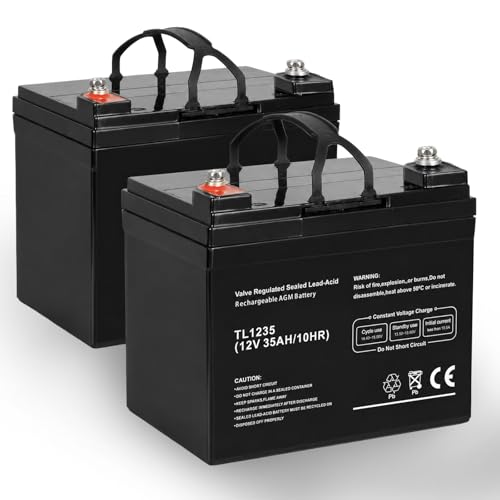
EXTENDED POWER: 12 Volt 35AH deep cycle capacity delivers reliable energy for RVs, UPS backup, marine, camping, off-grid solar setups and more, ensuring longer run times and consistent performance

Maintenance Free: Manufactured with thick absorbent Glass Mat (AGM) seperators and advanced valve regulated technology, Renogy deep cycle agm batteries save you from acid leakage and frequent maintenance..Batteries Required:no
AGM vs. Flooded Batteries: Which Needs More Maintenance?
AGM batteries require significantly less maintenance than flooded batteries. Because they are sealed and valve-regulated, you avoid routine watering, cleaning, and equalization procedures needed for flooded batteries. There’s no need to check electrolyte levels or add distilled water, as the absorbed glass mat design prevents electrolyte loss. Flooded batteries, on the other hand, demand monthly watering, terminal cleaning with baking soda, and periodic equalization charges to prevent stratification. Proper ventilation is essential for flooded units to disperse explosive hydrogen gas, a key safety concern. AGM batteries are spill-proof and safe for use in confined spaces with minimal ventilation. When considering recycling, both types are recyclable, but AGM’s sealed construction reduces the risk of acid spills during transport and handling. Corrosion incidents on AGM terminals are less frequent, meaning you can extend inspection intervals. For a residential balcony, for example, a setup using AGMs can pair neatly with compact solar panels that are easy to install and maintain. Overall, switching to AGM batteries greatly reduces your maintenance workload, making them the preferred choice for low-upkeep applications. To maintain optimal performance, use a compatible lithium charger for AGM-style charging profiles if available. Additionally, adopting simple habits like avoiding deep discharges can significantly extend battery lifespan over years of use.
AGM vs. Flooded Batteries: Is the Higher Upfront Cost Worth It?
AGM batteries typically cost about twice as much as flooded batteries initially, so you need to determine if the extra expense offers enough value for your situation. If your vehicle requires AGM for start-stop systems or handles high electrical loads, choosing AGM is essential to avoid compatibility issues. For everyday commuters with standard setups, flooded batteries are usually the more cost-effective choice, as their lower purchase price aligns with lower demand. However, to get accurate results when testing either battery type, it is critical to follow correct settings for the specific battery technology on your load tester. Understanding deep cycle applications can further clarify which battery type best suits sustained power needs, such as for trolling motors or solar storage. For sustained power needs, AGM batteries typically offer faster recharging and better performance under high electrical loads compared to flooded batteries.
Environmental impacts and recycling considerations also play a role. AGM batteries’ sealed design minimizes spill risks but uses more materials per unit, potentially generating more waste. Flooded batteries are easier and cheaper to recycle but can leak acid if mishandled or damaged. Ultimately, the higher upfront cost of AGM is justified only if your charging system specifically demands it or if you’re prioritizing performance. For simpler, older vehicles, flooded batteries often provide the most economical solution.
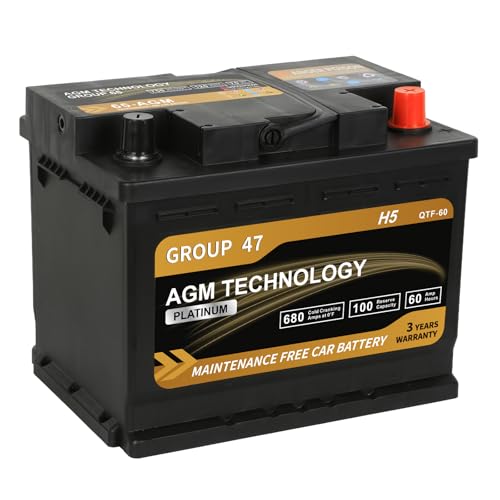
✅ Perfect Fit & Compatibility: BCI Group Size 47 (H5), 12V 60Ah, 680CCA, 100RC. Dimensions: 9.52" L x 6.89" W x 7.48" H. Terminal: Tapered terminal (Left negative (-), Right positive (+)). Ensure proper fit by comparing the size, terminal position, and CCA with your original battery. This ensures compatibility and avoids any fitment issues for your vehicle.

✅ Battery dimensions: 9.37" L x 5.08" W x 8.78" H, Terminal: Tapered terminal (Left negative (-), Right positive (+)). ✅ Please ensure to verify the dimensions and terminal position before making a purchase to guarantee compatibility with your vehicle to avoid any fitment issues.
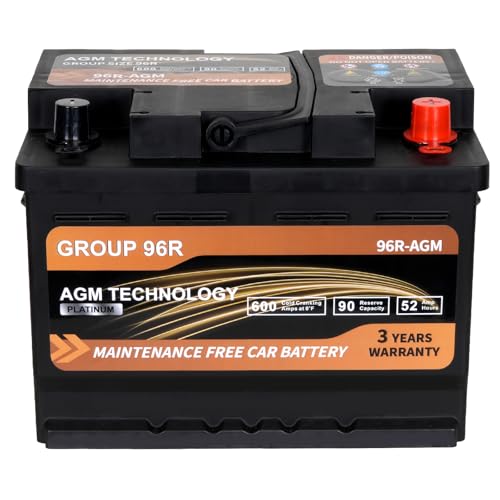
✅ Battery Dimensions: 9.53" L x 6.89" W x 6.89" H, Terminal: Tapered terminal (Left negative (-), Right positive (+)). ✅ Please ensure to verify the dimensions and terminal position before making a purchase to guarantee compatibility with your vehicle to avoid any fitment issues.
AGM vs. Flooded Batteries: Lifespan Compared Under Normal Use
AGM batteries generally last 1 to 2 years longer than flooded batteries under normal use. While flooded units typically provide 3 to 5 years of service, AGM batteries usually range from 4 to 7 years. Their higher cycle-life rating, handling 400 to 600 cycles at 50% depth of discharge compared to 200 to 300 cycles for flooded batteries, contributes to this longer lifespan. This means you get more usable life, especially when repeatedly charging and discharging the battery. Correct wiring and installation practices are critical to maximizing AGM battery performance.
The sealed design of AGM batteries eliminates the need for electrolyte maintenance, reducing risks of failure caused by neglect. Flooded batteries require regular water checks, and neglecting these can shorten their service life significantly. Additionally, the longer lifespan of AGM units can influence recycling patterns—they arrive later at recycling facilities, which can lower the overall manufacturing costs per use over the system’s lifespan. Although flooded batteries cost less upfront, the durability of AGM batteries makes them a more cost-effective choice over time for normal-use applications. Proper charging practices benefit both types, but AGM’s longer life generally gives it the edge. For optimal integration in a solar setup, pairing these batteries with MC4 connectors ensures reliable and efficient connections.

MAINTENANCE FREE: 12.99x 6.73x 8.43 inches. Weize 12v 100Ah sealed lead acid battery is manufactured with absorbent glass mat(AGM), which can help to save you from acid leakage and frequent maintenance. Terminal: Left : Positive (+)-Red, Right: Negative (-)-Black. Terminal: Left : Positive (+)-Red, Right: Negative (-)-Black.
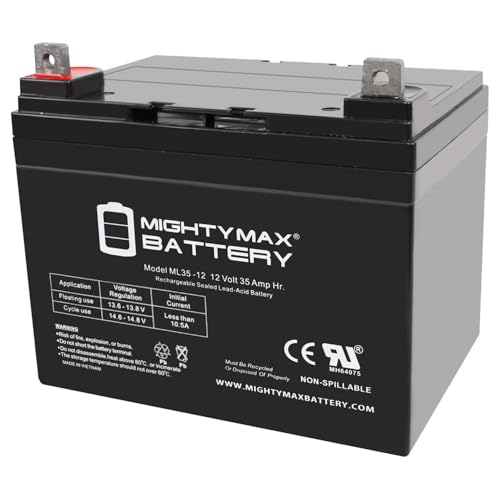
ML35-12 SLA is a 12V 35AH Sealed Lead Acid (SLA) rechargeable maintenance free battery - UL Certified
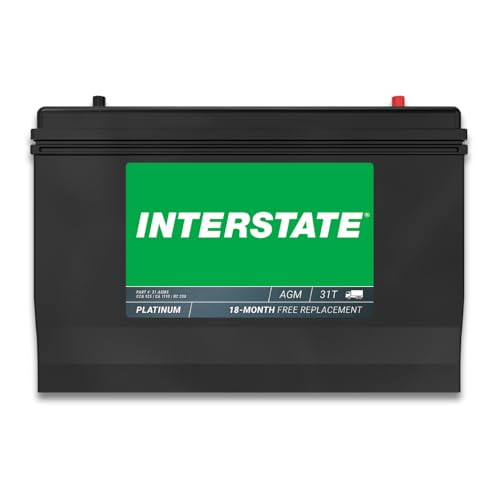
EXTREME DEEP-CYCLE POWER: This 2-in-1 pure lead AGM battery delivers high-cranking, extreme deep cycle power. It's designed to provide reliable force over an extended period to power your boat's motor & all of its accessories (appliances, trolling motor, audio systems, depth finders, fish locators, windlass). Not all marine batteries are the same - but this one exceeds the rest. Built with thick plates to allow the battery to continuously discharge power so you can recharge it many times over without decreasing its lifespan
AGM vs. Flooded Batteries: Which Can Handle Vibration and Deep Drains Better?
AGM batteries handle deep discharges better than flooded batteries. They can support up to 80% depth of discharge without significant capacity loss, whereas flooded batteries typically tolerate around 50%. This means AGM batteries can endure more frequent and deeper cycling without degrading quickly. Their lower internal resistance and resistance to sulfation enable them to recover after repeated deep drains, maintaining higher capacity over time. Flooded batteries tend to degrade faster under similar conditions. Therefore, if your system involves frequent deep cycling, vibration, or rough conditions—such as in off-road vehicles, marine setups, or RVs—AGM batteries are the better choice. For example, just as surge protection for breaker box systems safeguard sensitive electronics from power spikes, AGM batteries protect your electrical system from the damaging effects of deep discharges and vibration. Flooded batteries are best suited for environments with stable, shallow discharges and less mechanical stress. To maximize AGM battery longevity, it is important to use a charger with correct voltage limits to prevent overcharging and premature aging. Additionally, choosing a battery that pairs well with a hybrid inverter can optimize energy storage and system efficiency, ensuring your setup handles both daily cycling and backup demands reliably.

DUAL PURPOSE MARINE RV BATTERY: Interstate's marine dual-purpose AGM battery can serve as both your cranking battery to start the motor & power your trolling motor - whether the motor is on or off! Built "Interstate tough" to withstand the most rugged conditions so you can spend more time having fun & less time worrying about your battery

HIGH OUTPUT POWER: 12V 100Ah capacity with 1150A max discharge current, delivering reliable energy for demanding RV, solar, and marine systems

Heavy-Duty Rechargeable Battery: The VEVOR 12V 100Ah rechargeable deep cycle battery, with dimensions of 13.0'' x 6.7'' x 8.4'', stores a substantial amount of energy, extending the runtime of most light-duty electric devices. Note: Professional charging equipment is required during use to ensure battery security. Energy storage battery, can not be used as a power battery or a starting battery (car ignition).
Charging Differences: AGM vs. Flooded Batteries
Charging strategies differ significantly between AGM and flooded lead-acid batteries due to their fundamental design differences. AGM batteries require more precise voltage control, typically between 14.4 and 14.8 volts during absorption, and can accept higher charging currents—up to about 30% of their amp-hour (Ah) capacity—for faster charging. Flooded batteries, on the other hand, tolerate higher absorption voltages up to 15.8 volts but need lower charging currents, roughly 10 to 20% of Ah, to prevent damage. Beginners should also ensure their wire ferrule connections are properly crimped when setting up battery chargers, as loose terminations can cause voltage drops that disrupt charging profiles.
Temperature effects are more pronounced with AGM batteries, which demand voltage compensation to account for temperature variations. Overcharging sealed AGM batteries can cause permanent damage as they cannot be water topped up, unlike flooded batteries where electrolyte levels can be maintained with distilled water. For LiFePO4 batteries, the correct charger settings involve a strict voltage limit of 14.6 volts to avoid cell damage. The float voltage for AGM batteries ranges between 13.2 and 13.8 volts, while flooded batteries can handle slight overcharging without immediate harm. When selecting conductors for these setups, understanding the current rating differences between busbar types helps ensure safe distribution of charging power.
Recycling procedures also differ: flooded lead-acid batteries are widely recycled through established closed-loop processes, whereas AGM batteries require specialized handling due to their absorbed electrolyte and sealed design. Using a smart charger with chemistry-specific profiles is crucial to avoid damaging either type, ensuring safe and efficient charging tailored to each battery’s characteristics.

【High Conversion Rate】This 20W solar panel with monocrystalline A+ solar cell has an excellent cell efficiency of 21%-30%. Designed to charge and maintain 12V rechargeable batteries like LiFePO₄, Lithium Ion, AGM, SLA, GEL, EFB, MF, etc. Keep batteries in charged for trailer, tractor, truck, boat, motorcycle, RV, car, lawn mower, water pump, gate opener, electric fence, etc
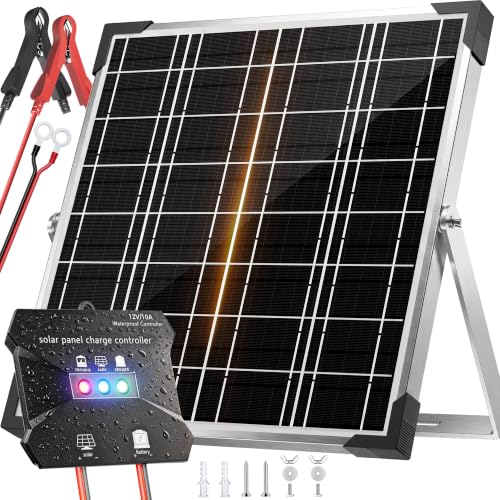
High-Efficiency MPPT Solar Charger - Advanced tracking technology delivers 20-30% faster charging for 12V batteries. A+ monocrystalline panels maximize power conversion. Perfect 20W solar trickle charger for cars, RVs, boats, and trailers. More sun captured, less time waiting.

Compatibility Guide: Engineered to efficiently manage all solar panels below 300W, this 20 amp solar charge controller is your system's reliable core. For complete safety and compatibility, it is designed solely for 12V batteries and is not compatible with 24V or 36V battery packs. Please note: This unit does not include a polarity converter and must be connected with correct positive/negative polarity
Which Battery Performs Best in Your Vehicle?
AGM batteries outperform flooded units in several key areas essential for reliable vehicle operation. They provide stronger cold-cranking power, ensuring your vehicle starts easily in freezing temperatures. Their vibration resistance is over 15 times better, making them ideal for off-road or rough-road driving, where durability is critical. AGM batteries also maintain a more stable reserve capacity—often 100 to 120 minutes—ceasing voltage drops even under high electrical loads. They sustain voltage better during prolonged starter use and temperature fluctuations, leading to cleaner, more consistent starts.
Because AGM batteries are sealed and absorbent, they resist vibration and shock much more effectively than flooded batteries. This results in longer lifespan and reduced maintenance needs. They are particularly suited for vehicles with heavy electronics, high accessory loads, or frequent cold starts. Check the manufacturer’s warranty, as AGM options usually offer deeper-cycle protection which enhances longevity. Proper recycling options are also important, as AGM batteries are easier to recycle at end of life due to their design and materials.
AGM vs. Flooded Batteries: Final Verdict by Driving Style
AGM batteries generally outperform flooded ones in demanding driving conditions, especially in terms of cold starts, vibration resistance, and reserve capacity. If your driving involves frequent short trips, heavy electrical accessory use, or rough terrains, AGM’s quicker recharge rate and ability to handle deeper cycles provide a noticeable advantage. They also tend to last longer when operated at a partial state of charge and under high electrical loads. In hot climates or on rough roads, sealed AGM batteries resist vibration better and have a longer lifespan compared to flooded models. Similar to how parallel solar panel setups boost current capacity, AGM batteries excel at delivering higher power to meet heavy electrical demands. This makes them a strong choice for applications requiring deep cycle performance over extended periods. Additionally, when considering rooftop solar integration, AGM batteries offer superior reliability for energy storage systems.
On the other hand, for drivers mostly doing steady highway cruising with low electrical demands, a flooded battery can still be practical. They fully recharge more consistently, which narrows the performance gap with AGM batteries. Budget considerations also come into play: flooded batteries usually cost less upfront. However, they have a shorter lifespan, which can increase environmental impact over time due to more frequent replacements.
Always follow your vehicle manufacturer’s specifications when choosing a battery type. If your car calls for AGM, sticking to that recommendation ensures optimal performance. For simpler driving patterns and tighter budgets, a flooded battery remains a viable option.