

Wondering whether to go with MPPT or PWM for your solar setup?
If your system is over 200W, faces cold weather, or has long wire runs, MPPT is usually the better choice because it captures more energy by actively tracking the panel’s maximum power point.
For smaller, budget-friendly systems, PWM can work fine.
Keep reading to see which option fits your needs best.
What’s the Difference Between PWM and MPPT Controllers?
PWM controllers connect your solar panels directly to your battery using a high-speed switching signal during charging pulses, regulating the charge by varying their duty cycle. This process forces the panel voltage down to match the battery voltage, so performance depends heavily on how well the panel’s voltage aligns with your battery’s voltage. If the voltage mismatch is large, the system becomes less efficient. This is similar to how a wind generator directly connects to a battery and relies on matching voltage for optimal charging.
In contrast, MPPT controllers use a DC-to-DC converter to separate the panel’s voltage from the battery voltage. They continually adjust their input conditions to operate at the panel’s maximum power point, which is typically higher than the battery voltage. This allows MPPT systems to extract more energy from the panels, especially in conditions where the panel voltage exceeds the battery’s voltage by a significant margin. Properly removing and replacing a breaker in your box is essential before making any wiring changes to an MPPT or PWM system.
This difference affects compatibility and installation. PWM controllers work best when your panel voltage closely matches your battery’s nominal voltage, making them more straightforward and safer to install. MPPT controllers can handle larger voltage mismatches and allow you to wire panels in series, reducing current and resistive losses, leading to higher overall efficiency. For those interested in building their own system, a DIY crimping tool can be designed and assembled at home, though it requires careful sourcing of parts and has trade-offs in durability compared to a shop-bought unit.
How MPPT Harvests More Power Than PWM
MPPT controllers harvest more power than PWM because they actively track the panel’s maximum power point and convert excess voltage into usable current. Instead of forcing the panel to operate near battery voltage, MPPT adjusts its operation continuously to find where the product of voltage and current peaks. It sweeps through the voltage-current curve as sunlight and temperature change, ensuring it captures the maximum available power at all times. Charge controllers like these also protect the battery from overcharging and reverse current, which is a key function explained in the essentials of charge controllers. Unlike PWM systems, MPPT designs are less prone to cable corrosion caused by sustained low-voltage high-current flow, which degrades terminals over time.
The core advantage comes from the DC-DC conversion stage. This stage trades high panel voltage for increased current, which improves charging efficiency by delivering more watt-hours to the battery. It also decouples the panel’s voltage from the battery voltage, reducing mismatch losses, especially when panels are installed in flexible layouts or with varying shading patterns. For shoppers comparing options, a typical high-performance MPPT model offers superior reliability and terminal build quality similar to the best battery picks reviewed in other guides. In colder, cloudier, or fluctuating conditions, MPPT’s rapid tracking maintains high performance, ensuring you get the most energy from your solar setup.
How Much More Energy Does MPPT Deliver?
In real-world conditions, especially when the panel voltage significantly exceeds the battery voltage, MPPT’s advantage can rise to 20–45%. For modern residential solar panels, you can generally expect 20–30% more energy with MPPT. However, if your array is low-voltage and well-matched to the battery, the gain narrows to about 10–15%. This efficiency gain is further enhanced when paired with high-quality equipment like MC4 connectors that minimize power loss at the panel-to-controller interface. To protect your investment, remember that consistent full discharges can significantly shorten the lifespan of many battery types, including LiFePO4. If a cable tie is damaged during removal, it should be replaced rather than repaired, as repairing a zip tie rarely restores its original strength.
This efficiency gain translates to tangible energy savings but comes with trade-offs. MPPT controllers are compatible with a broader range of battery types but are more complex to install. While PWM controllers typically operate at efficiency levels between 65–80%, MPPT controllers can reach 93–97%, offering better conversion efficiency that results in increased daily energy harvesting.
Why Cold and Hot Weather Change the PWM vs MPPT Gap
Cold weather widens the PWM versus MPPT performance gap, especially due to the way crystalline silicon panels respond to temperature changes. When temperatures fall, the panel voltage increases because of their negative voltage temperature coefficient. This means that on a chilly morning, your array’s voltage can rise by 20 to 30 percent above its nominal value. MPPT (Maximum Power Point Tracking) controllers take advantage of this increased voltage by converting the extra energy into charging current, which can result in up to 40 percent more energy compared to PWM (Pulse Width Modulation) controllers. For example, comparing the top charge controllers for solar helps buyers understand which technology best suits their climate. PWM controllers, on the other hand, clamp the panel voltage close to the battery voltage, which means they cannot utilize the additional voltage generated in cold conditions. As with a tripping breaker box, diagnosing a persistent tripping issue often requires checking for an overload or short circuit, though the energy source here is solar rather than utility power. This performance difference is similar to how a generator interlock kit offers a more cost-effective but manual alternative to a transfer switch.
In hot weather, this voltage difference diminishes because high temperatures cause the panel voltage to drop. When the cell temperature exceeds about 52°C, the voltage margin MPPT relies on largely disappears, reducing its efficiency advantage. It’s important to remember that cell temperature under sunlight often exceeds ambient air temperature significantly, which directly impacts voltage. For off-grid systems, deploying MPPT controllers in cold climates is particularly beneficial, as they can capture the extra power potential that would otherwise be lost with PWM controllers. In grid-tied systems, temperature-related voltage variations influence inverter sizing and panel degradation, but understanding this temperature effect helps optimize system performance across seasons.
When Should You Stick With a PWM Controller?
If your solar system is small, tightly matched, and budget-conscious, using a PWM controller makes the most sense. PWM works best when your panel voltage closely matches your battery voltage, such as a 36-cell panel supplying a 12V battery bank. This setup ensures efficient bulk charging without the conversion losses associated with MPPT controllers on mismatched arrays. Additionally, PWM controllers are simpler to install and more compatible with standard lead-acid or lithium battery profiles at low voltages. For those seeking reliable power, top solar battery chargers often prioritize these PWM-compatible setups for small systems. When selecting your wiring components, choosing the right wire ferrules ensures a secure and corrosion-free connection in the battery terminals. For a budget-friendly small system, a PWM controller is often the most cost-effective choice among the top options reviewed.
They are well-suited for short cable runs and basic DC loads like lighting or camping equipment, where the high-voltage wiring advantage of MPPT provides no benefit. If your system is under 200 watts and you do not plan to expand, a PWM controller offers enough performance without the higher cost and complexity of an MPPT system.

12V Universal Solar Charge Controller- Renogy Solar controller optimizes charging for 𝐋𝐢𝐭𝐡𝐢𝐮𝐦, 𝐀𝐆𝐌, 𝐆𝐞𝐥, & 𝐅𝐥𝐨𝐨𝐝𝐞𝐝 𝐛𝐚𝐭𝐭𝐞𝐫𝐢𝐞𝐬. Smart PWM solar panel controller technology auto-selects the perfect charging curve (𝐁𝐮𝐥𝐤/𝐁𝐨𝐨𝐬𝐭/ 𝐅𝐥𝐨𝐚𝐭/ 𝐄𝐪𝐮𝐚𝐥𝐢𝐳𝐚𝐭𝐢𝐨𝐧) for your RV, boat, or off-grid setup. Renewable energy controllers easily switch battery types and monitor real-time charging stages via intuitive LEDs, mmaximizing battery lifespan.

[100% Waterproof] The solar charge controller is built to last in any weather. It has a waterproof seal that keeps it safe from rain, snow, and dust. It’s perfect for outdoor use.
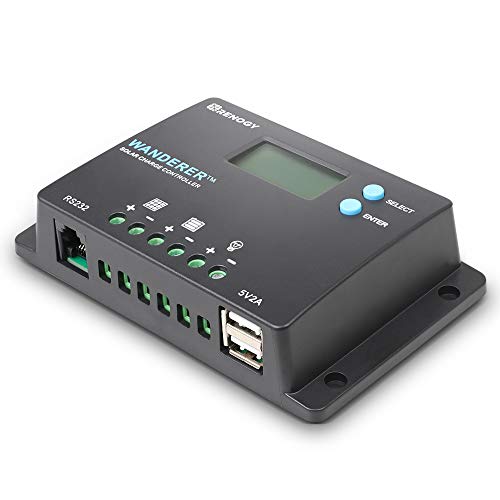
𝐒𝐦𝐚𝐫𝐭 𝟒-𝐒𝐭𝐚𝐠𝐞 12V/24V Solar Charge Controller: Renogy charge controller 𝐦𝐚𝐱𝐢𝐦𝐢𝐳𝐞𝐬 𝐁𝐚𝐭𝐭𝐞𝐫𝐲 𝐋𝐢𝐟𝐞 & 𝐒𝐨𝐥𝐚𝐫 𝐄𝐟𝐟𝐢𝐜𝐢𝐞𝐧𝐜𝐲, this advanced pwm solar charge controller utilizes intelligent 4-stage charging (Bulk/Boost/ Float/Equalization) to optimize power delivery for AGM, Gel, Flooded and Lithium batteries. RV solar charge controller prevents overcharging and gas buildup while 𝐚𝐜𝐡𝐢𝐞𝐯𝐢𝐧𝐠 𝟑𝟎% 𝐥𝐨𝐧𝐠𝐞𝐫 𝐛𝐚𝐭𝐭𝐞𝐫𝐲 𝐥𝐢𝐟𝐞𝐬𝐩𝐚𝐧 compared to basic charge controllers.
Three Signs You Need an MPPT Controller Instantly
Cold-weather string voltage approaching your controller’s voltage limit is a clear sign you need an MPPT upgrade. On a chilly morning, your panel’s open-circuit voltage (Voc) can rise several volts above its rated value at 25°C. This increase can push your series string close to or beyond the controller’s maximum voltage, risking damage. Bare wiring that was barely suitable at room temperature becomes a critical failure risk when temperatures drop. Upgrading to an MPPT controller with a higher voltage capacity ensures your system stays within safe limits and continues to operate efficiently in cold conditions. This is similar to why negative battery cables come off first, as disconnecting the grounded side minimizes the risk of accidental short circuits and sparks when working with electrical systems.

【Superior MPPT Technology】 This 100A MPPT solar controller is equipped with an advanced MPPT maximum power point tracking technology algorithm. It automatically recognizes 12V/24V/36V/48V systems and features dual USB 5V charging ports. The controller can swiftly track the maximum power point of the PV array in any environment, ensuring a tracking efficiency of no less than 99.5%. This significantly enhances the energy utilization in the solar system.

【120A HIGH-POWER MPPT | UP TO 11,520W PV】Built for large off-grid solar systems, this 120A MPPT solar charge controller supports up to 1440W at 12V, 2880W at 24V, 4320W at 36V, 5760W at 48V, 7200W at 60V, 8640W at 72V, 10080W at 84V, and 11520W at 96V. Maximum PV open-circuit voltage (VOC): 230V
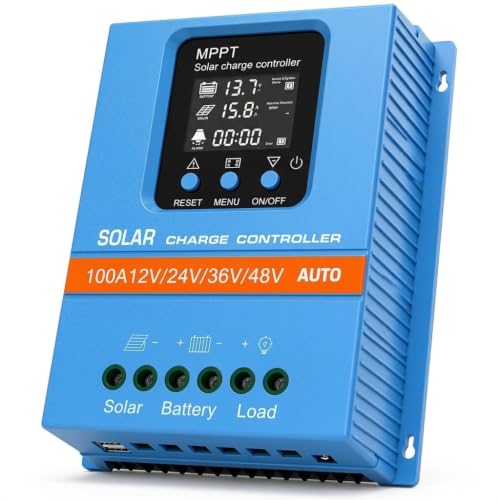
【Product Advantages 】: 100A intelligent adjustment controller with precise time control and light control, can switch loads on and off at a fixed time, adjustable voltage parameters, and memory function. Large LED display screen, real-time display of working voltage, clearer data reading. Flame retardant materials are safe and durable, fashionable and simple. Large section wiring port, wire spacing increased by 99mm
PWM vs MPPT: What You Pay Upfront vs Over Time
The upfront cost for a 30A PWM controller ranges from $25 to $80, while an MPPT controller costs between $100 and $250—about two to four times more. That higher initial expense largely pays off with an 18% to 25% increase in energy harvest, providing around 95W from a 100W panel instead of 78W. This extra power can lead to faster charging and help prevent chronic undercharging, which extends the lifespan of lead-acid batteries. For larger systems above 400W, the additional investment typically pays off within 14 to 20 months. In smaller setups below 200W, opting for a PWM controller is usually more economical due to its lower upfront cost. Also consider your inverter compatibility: MPPT controllers deliver a stable, regulated voltage better suited for sensitive inverters, while PWM controllers can produce higher voltages from the panel that might stress these inverters. The choice also depends on your battery chemistry; MPPT’s adaptive algorithm provides a more precise charge profile for certain types like lithium or deep-cycle batteries. To maximize lifespan, maintaining proper charge levels can help avoid sulphation damage which permanently reduces capacity. If you are wiring your own system, performing safety checks before connecting the isolator can prevent costly damage to your controller. For any setup, you must reference the charge controller sizing chart to ensure your controller’s rated current safely exceeds the panel’s short-circuit current by a 25% margin. Overall, your decision hinges on your system size, budget, and how long you plan to use it.

UPGRADED SOLAR CONTROLLER: With the built-in industrial microcontroller, this PWM solar charge controller automatically helps you manage the working of solar panels and batteries in solar systems. When the battery runs out, it will memorize various parameters you set, so you don't need to reset it, which is easy and safe
![[Upgraded] 30A PWM Solar Charge Controller with Auto Parameter LCD Display](https://m.media-amazon.com/images/I/41opvkWthjL._SL500_.jpg)
【UPGRADED SOLAR CONTROLLER】This solar charge controller helps you manage the working of solar panels and batteries in solar systems automatically with the build-in industrial microcontroller. You don't need to reset it when the battery runs out cause it will memorize various parameters set by the user

[ 30A Solar Charge Controller ]: The solar charger controller compatible with 12V 24V system. Discharge Current: 10A,a built-in industrial micro controller, automatically manage the working of solar panel and battery in sol ar system. Dual USB output 5V/2.5A (max), to support mobile phone charging
Does MPPT Handle Mixed Voltages and Long Wires Better?
Yes, MPPT handles mixed voltages and long wire runs better than PWM. It decouples the array voltage from the battery voltage, allowing you to connect higher-voltage panels in flexible configurations. This prevents mismatched nominal voltages from reducing performance, as PWM requires PV operating voltage to match the battery level. On long wire runs, MPPT’s higher input voltage reduces the current flowing through the cable, decreasing I²R losses and enabling smaller conductors without losing power. In contrast, PWM’s lower voltage results in higher current, which needs thicker wire and causes more heat loss. Similar to how cable ties became an everyday essential by solving a simple fastening need, MPPT’s ability to convert excess panel voltage into additional charging current boosts power harvest, especially when panel Vmp exceeds battery voltage—important for 24V or 48V systems. However, MPPT does not fix issues caused by mismatched panels, which can create multiple power peaks and reduce overall output by 5–15%. Proper panel matching and string grouping remain essential to optimize performance.
Final Decision: Which Solar Controller Fits Your Setup?
The best controller for small, matched systems under 200W is a PWM (Pulse Width Modulation) controller. If your solar panel voltage closely matches your battery voltage—such as a 12V panel on a 12V battery bank—and your total system wattage remains low, PWM is the practical choice. PWM controllers are simpler, more affordable, and ensure efficient charging without losing energy during the process. They work well when the panel’s voltage matches the battery’s voltage, allowing a straightforward connection without any conversion losses.
In contrast, MPPT (Maximum Power Point Tracking) controllers excel when there is a significant voltage difference between your panel and battery. They utilize DC-DC conversion to recover and transfer more energy from high-voltage arrays to lower-voltage batteries, which can boost overall efficiency and energy harvest—especially in colder climates where panels perform differently. Larger solar arrays and ambitious energy goals typically benefit from MPPT technology since it can optimize power output under varying conditions. However, for small-scale, matched setups, PWM controllers still provide reliable, cost-effective performance.

✔️【Waterproof Solar Charge Controller】IP67 waterproof, suitable for outdoor use. Automatically identify voltage, 12V Max power: 150W, 24V Max power: 300W. The maximum current is 10A. Compatible with various 12V/24V deep-cycle batteries, such as AGM, GEL, Flooded. Adopting brand MCU chips to realize fast intelligent control and ultra-low standby power consumption.
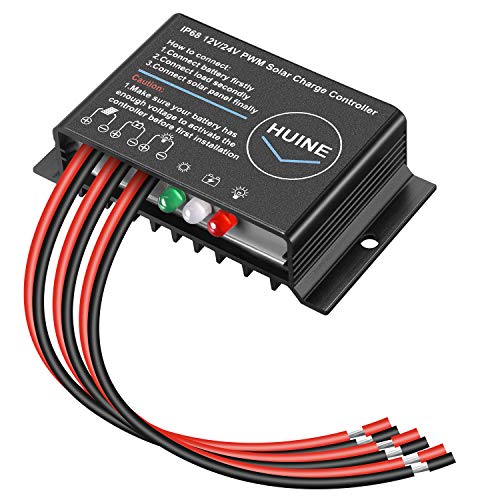
IP68 Rated Waterproof, this Intelligent 4-stage PWM solar charging controller is suitable for outdoor use,you can use it for solar fencing system, solar monitoring system, solar lighting system or other solar system.

4-STAGE PWM Technology: The Voyager controller is equipped with advanced smart PWM technology with high charging efficiency. It provides 4-stage charging (Bulk, Absorption, Float and Equalization) in order to protect the battery.
Pick Your Controller: Budget or Maximum Energy Harvest
Choosing between PWM and MPPT controllers depends largely on your budget and energy needs. PWM controllers are the budget-friendly option, offering the lowest purchase price and simpler installation with direct panel-to-battery wiring. They work best when your panel voltage closely matches your battery voltage and deliver an efficiency of about 65% to 80%. This means you’re only capturing a portion of the potential energy, leaving around 20% to 35% on the table.
MPPT controllers, on the other hand, maximize energy harvest by converting between 93% and 99% of panel power into usable charge. They typically provide 15% to 30% more energy daily than PWM controllers, with even higher gains of up to 40% in cold or low-light conditions. While MPPT units cost more upfront and involve more intricate wiring, their ability to extract the maximum power from your panels makes them the better long-term investment if every watt counts. For systems where efficiency and higher energy yields are critical, MPPT is the clear choice.

ADVANCED 40A MPPT SOLAR CHARGE CONTROLLER: This Dyness MPPT solar charge controller continuously tracks solar panel output and combines multiple MPPT algorithms for efficient charging under changing weather and temperature conditions. Supports up to 600W at 12V or 1200W at 24V, with PV input below 100Voc.
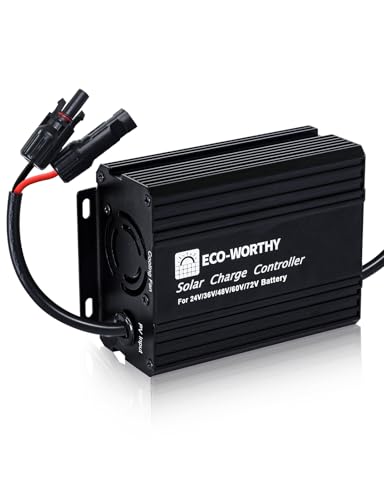
【Boost Charging】Boosts the voltage of 12 V or 24 V solar panels to charge 24/36/48/60/72 V batteries in Golf Cart, Electric Vehicles, and Solar System Kit; No need to add additional solar panels or change the connection of solar panels

【True MPPT Tech | 30% More Solar Power Harvest】Our authentic MPPT solar charge controller delivers up to 30% higher charging efficiency than basic PWM controllers, maximizing energy capture from your 12V solar panels for non-stop power. Engineered exclusively for 12V battery systems (RV, boat, shed) – the perfect solar upgrade for off-grid living and outdoor gear. ⚠️It is NOT compatible with 24V/36V batteries or panels with built-in controllers.