
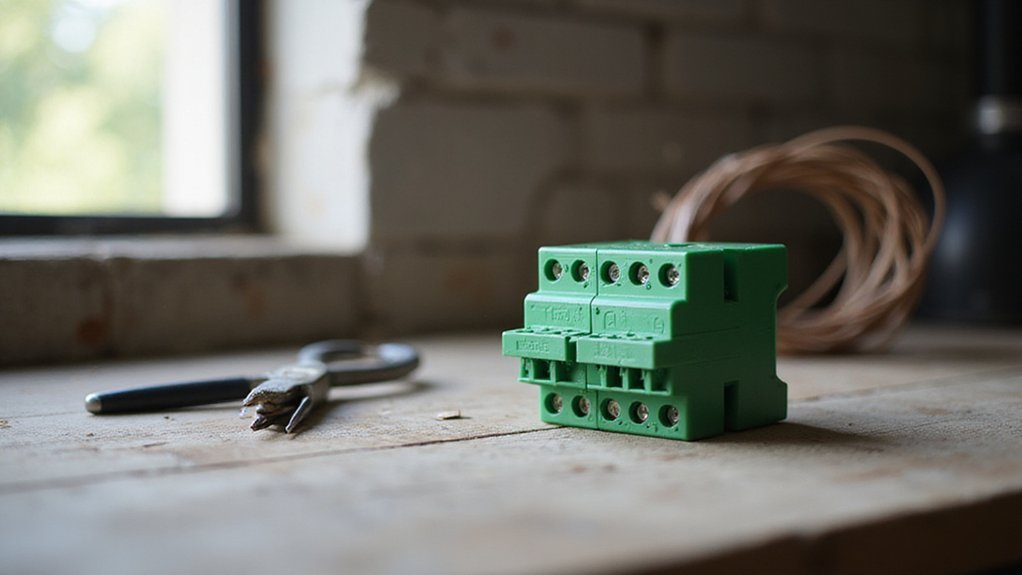

Ever wonder how to keep your electrical connections secure and organized without the mess of twisting wires or soldering? Terminal blocks are the answer, providing a simple way to connect multiple wires safely.
They use a clamp or spring mechanism to establish reliable electrical contact while insulating each connection. Keep reading to learn everything you need to know about these handy connectors.
What Is a Terminal Block and How Does It Work?
A terminal block is a modular, insulated connector used to securely join two or more wires. To make a connection, you insert the stripped end of a wire into the clamping chamber and then tighten a screw or activate a spring mechanism. This action presses the conductor against an internal metal strip, establishing an electrical path between the wires. The insulated housing ensures that adjacent connections remain isolated, preventing short circuits.
You use terminal blocks primarily for organized power distribution and signal routing within control panels. They can serve as a central hub where multiple wires connect, simplifying system management. Following standard wire color coding helps you identify circuits quickly for inspection or modifications. Since the connections are removable, you can test or replace individual wires without cutting or damaging conductors, making maintenance straightforward. This is crucial when connecting solar panels to loads because a terminal block limits the total wattage you can safely draw, just as a 100W solar panel has strict power limits for the appliances it can run. For reliable system performance, you should always select a terminal block that matches the quality, performance, and value of your battery and load requirements. When choosing a charger, you should look for models that provide a suitable charging current to ensure your 6-volt battery receives the correct amount of power without overheating.
Why Choose Terminal Blocks Over Direct Wire Connections?
Terminal blocks offer a safer, more secure connection than directly twisting or soldering wires. Their insulated housings reduce the risk of accidental contact, and secure clamping prevents the wires from coming loose, which helps avoid shorts. Installation is faster because you can easily insert wires into the terminal, and maintenance becomes simpler, allowing faulty devices to be swapped without disturbing neighboring connections. Terminal blocks also improve reliability in environments with vibration or corrosion, as they retain wires firmly over time. Additionally, color-coding helps organize and trace circuits quickly against wiring diagrams. Their modular design allows for reconfiguration without permanent rewiring, providing a flexible solution for complex control panels or field installations. This design philosophy mirrors the importance of solar panel efficiency in renewable energy systems, where maximizing every connection’s reliability is critical for long-term performance. For example, in automotive battery maintenance, always removing the negative cable first prevents accidental shorts by breaking the ground circuit before the positive side. Overall, terminal blocks enhance safety, efficiency, and reliability in wiring systems. When selecting mounting hardware for outdoor installations, considering ground mount durability ensures consistent performance against environmental stressors like wind and corrosion.
5 Most Common Terminal Block Types You’ll Encounter
There are five common types of terminal blocks, each designed for specific installation needs and operational demands. Screw terminal blocks provide a mechanically strong and durable connection, making them suitable for higher-current applications where stability is critical. Spring clamp terminal blocks use a preloaded mechanism, offering superior vibration resistance and faster wiring, ideal for environments with constant movement or vibration. Push-in terminal blocks allow for tool-free, rapid connections, making them perfect for high-density panels where space and speed matter. Barrier terminal blocks incorporate physical barriers between terminals, reducing the risk of short circuits and aiding in clear circuit identification through color coding—important for safety compliance. Pluggable terminal blocks combine a fixed header with a removable plug, simplifying maintenance, upgrades, and replacements. Each type balances speed, reliability, and safety, tailored to meet different operational needs in electrical installations. For systems using gel batteries, a charger with a temperature sensor is essential to prevent overcharging and ensure optimal performance. To properly protect these connections, you must select them alongside appropriately rated fuse blocks that match the voltage and amperage of your system. In larger systems, these terminal blocks often distribute power from copper or aluminum busbars, which serve as central conductors to manage high current loads efficiently.

It is made of brass conductors, with great electrical conductive and reliability.
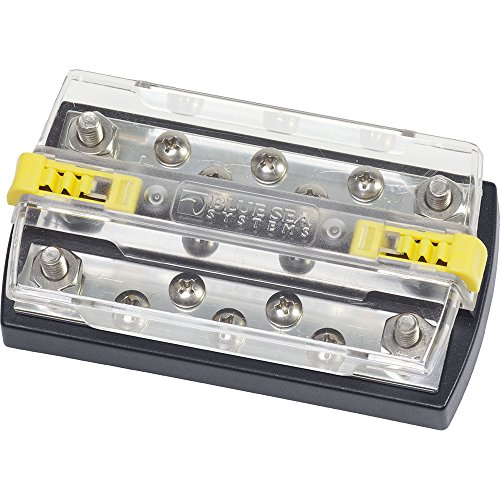
Package length: 22.86 cm
Where Are Terminal Blocks Used in Real-World Systems?
Terminal blocks are used extensively in real-world systems to provide safe, organized, and serviceable electrical connections. You’ll find them in industrial control panels and PLC cabinets, where they centralize wiring for sensors, actuators, and I/O devices, making troubleshooting and modifications easier. In electrical distribution boards, they serve as distribution blocks that split main circuits into multiple branches, supporting phase distribution and ensuring proper grounding. HVAC equipment relies on terminal blocks to route control and field wiring neatly inside cramped enclosures, allowing for secure access during maintenance. Energy storage systems use busbar terminal blocks to manage battery and inverter connections efficiently, supporting reliable system operation. Even in wireless sensor setups, terminal blocks are vital for powering base stations and processing local data from remote monitoring systems. They act as structured points where every connection can be traced, maintained, and kept secure, making them indispensable across a wide range of real-world electrical systems.
How to Match Terminal Block Ratings to Your Load
To match a terminal block to your load, select a block with a continuous current rating that equals or exceeds your steady-state current demand. Don’t base it on short-duration peak currents. Size your terminal block by adding a safety margin to your circuit’s continuous current, especially if it’s inside an enclosure where heat buildup reduces the effective capacity. Consider thermal management by derating the terminal’s rated current when ambient temperature exceeds 25°C or 40°C; for example, at 75°C, derating coefficients drop to around 0.47. High-density mounting also requires derating: a nominal 32 A block may only handle about 26 A at 35°C if adjacent terminals share heat. For safe installation, always pair your terminal block with top breaker boxes that offer robust overcurrent protection. Similarly, solar panels with MC4 connectors provide a reliable and standardized mating interface for high-current DC circuits in photovoltaic systems.
After selecting the appropriate current rating, match your wire gauge to the terminal’s rated conductor range. For a load up to 20 A, use 12 AWG wire with a 30 A rated terminal block. For loads between 21 and 30 A, opt for 10 AWG wire and a 40 A rated terminal block. Finally, verify that your conductor’s insulation temperature classification aligns with the thermal limits of the terminal block to prevent insulation failure or overheating. For portable applications, consider using a top solar charger that matches your load’s power requirements without needing a battery.

【Sturdy & Long-Lasting Construction】All copper connector terminal built with heavy-duty copper material, these battery terminals offer exceptional durability and high-current capacity for reliable performance
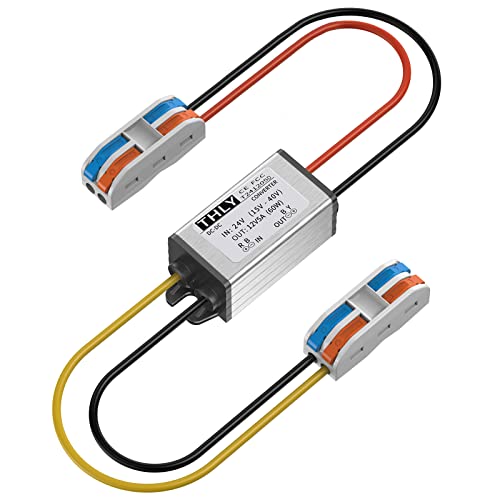
[24V to 12V Converter] This DC-DC step down converter 24V to 12V converts the DC 24V into DC 12V. Low power consumption. Voltage input: DC 15-40V, output: DC 12V. Max Current: 5A 60W. WARNING: 1.Please test whether the output voltage is correct before use; 2.Please confirm the positive and negative polarity of the power before wiring; 3.Must hook the negative wire to GND before use, or the output volts will not change!

【Product Name】: Vehicle and Ship Battery Fuse/Fuse Holder; Rated Voltage: Max 58VDC; Current: 200A
Screw vs. Spring vs. Push-In: Which Terminal Block Clamp Is Best?
Once you’ve selected the appropriate current ratings and wire gauges, the next decision is choosing the right clamping mechanism. Screw terminals give you direct torque control, allowing for adjustable, secure connections. For instance, when powering an appliance through a 400-watt inverter, the wiring stability provided by a screw terminal is critical to handle the peak draw loads without loosening over time. However, they can loosen over time under vibration, which might require periodic retightening. For solar panel installations where vibration from inverters is common, top string inverters often pair well with spring-clamp blocks for reliable performance. Spring-clamp blocks use factory-set force, providing vibration-proof stability right out of the box and enabling faster installation, making them ideal for control panels and environments with constant vibrations. Push-in terminals are designed for high-density builds, offering quick, tool-free connections that are reliable with solid or ferruled conductors. They are perfect for applications where space is limited and quick assembly is needed. For a similar reason, applying a corrosion-resistant grease to battery terminals helps prevent oxidation and ensures stable conductivity in high-vibration environments.
Your labeling protocol also factors in here. Screw terminals often accommodate larger wire jackets, making labeling more visible. In contrast, spring and push-in types require tighter fitment to ensure connections stay secure, which can limit labeling options. For environmental toughness, spring clamps resist dust and vibration-related maintenance issues, suitable for mobile or dusty environments. Screw blocks tend to be more cost-effective and handle higher current loads, making periodic re-tightening acceptable. For environments prone to vibration, prioritize speed and stability with spring or push-in clamps. If you prefer familiarity and broader wire compatibility for general-purpose wiring, screw terminals are a reliable choice.

Insulation Material: This electrical quick connector is made of high-quality, flame-retardant technical plastic, which is not only non-toxic and corrosion resistant and has a long service life, but is also corrosion and high temperature resistant and can work from -40ºC to 150ºC.

Suitable for spring terminals with a conductor cross-section of up to 1.5 mm

【Parameters】- Rated Load: AC 100V / 1.5A; Color Polarity Coding: Red/Black; Length: 45mm/1.76"; Width: 21mm/0.82"; Digit: 2.
Which Mounting Style and Housing Materials Fit Your Panel?
To match your panel layout, choose between DIN rail and direct panel mounting styles based on your reconfiguration needs and available space. DIN rail mounting uses standardized NS 15 or NS 35 rails, supporting modular arrangements and enabling easy reassembly or adjustments. This style is ideal if you plan to modify or expand your setup over time. Direct panel mounting involves screws through flanges onto a flat surface, making it suitable for fixed installations with limited rail space. Some blocks feature snap-in feet, allowing use on either rail or panel, providing added flexibility in your mounting approach.
Housing materials influence thermal management and electrical insulation. Polyamide 66, with a UL94-V2 flame rating, offers reliable insulation for standard industrial panels. For environments with higher temperatures, polyphenylene housings provide greater heat resistance. Conductive paths are typically made from copper or brass, ensuring good electrical conductivity and durability. Reinforced hardware such as zinc-plated steel screws and mounting parts enhance structural strength. In humid or corrosive conditions, stainless steel components help prevent corrosion and maintain performance. For enclosures requiring ignition resistance, select flame-rated blocks to ensure safety and compliance. For charging applications, selecting blocks designed with appropriate electrical ratings ensures compatibility with lithium battery chargers.
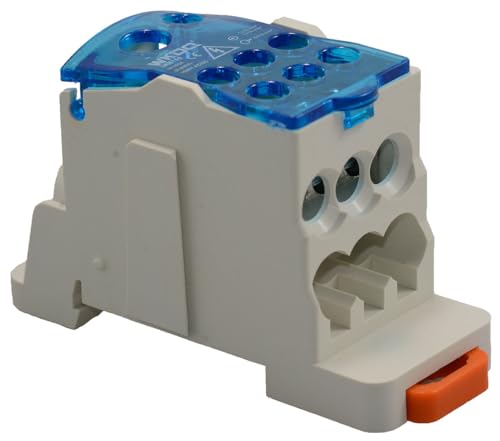
Product Type: Power Distribution Terminal Block

Safety and reliability: JANDECCN DIN rail wire connector is made from insulated material, flame-retardant, corrosion resistance, aging resistance, high pressure resistance. Strong structure firmly locked to DIN guide, long service life.

DIN Rail Mount 24A/400V 12 Position Screw Terminal Block Distribution Module.
How to Install and Maintain Terminal Blocks for Long-Term Reliability
To ensure long-term reliability, proper installation and maintenance of terminal blocks are essential. Begin by completely de-energizing the circuit before starting. Strip insulation to the manufacturer’s specified length, which is typically between 6 and 11 millimeters. Insert conductors fully into the terminal, then tighten the screws to the recommended torque—usually between 0.5 and 0.8 Newton-meters. Under-torquing is a common cause of approximately 30% of field failures. After tightening, perform a light tug test to ensure the conductor is securely clamped. For choosing a terminal block, consider the same factors as selecting a busbar for optimal current handling and safety. Always use a multimeter to confirm the circuit is dead before working, as testing your breaker box helps identify any unexpected voltage. When stripping conductors, use the proper gauge setting on your tool to avoid nicking the wire, a common mistake that weakens the connection.
Maintain strict separation between low-voltage signal terminals and high-power terminals to prevent interference. Use proper ferrules where specified to ensure solid connection and safety. Label each circuit clearly before the terminals become crowded to prevent confusion during maintenance. For electrical grounding, assign dedicated terminals and verify continuity after installation.
Regular inspections are critical for long-term reliability. Check periodically for looseness, corrosion, or heat stress, and retighten connections as needed. Replace any damaged terminal blocks immediately. In environments subject to vibration, plan inspections every six months to prevent failures and maintain system integrity.
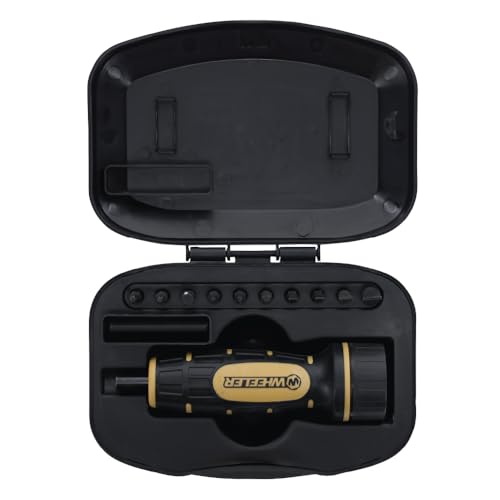
ACCURACY: +/- 2 inch/pounds up to 40 inch/pounds; 40 – 65 is +/- 5%. The FAT wrench measures 2 L x 2 W x 6.25 H inches and the storage case measures 7.5 L x 5.5 W x 1.75 H inches

"No Hub" Torque Wrench
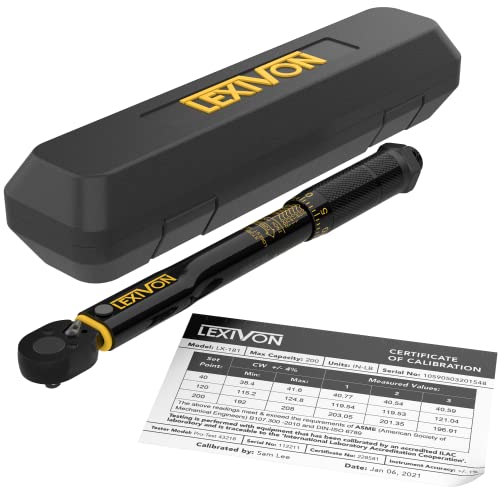
PRECISION & RELIABILITY - Manufactured in Taiwan and pre-calibrated to an accuracy of +/- 4%, ensuring dependable results. Includes a calibration certificate with a traceable serial number, so you can trust in the precision of every use.