
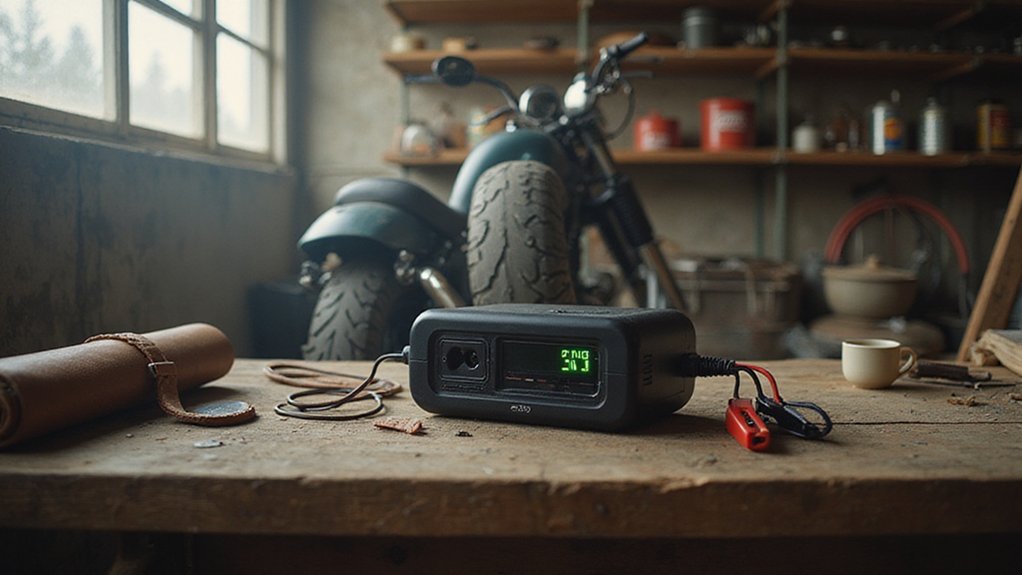

Ever wonder how to keep your car battery topped up without constantly worrying about overcharging? A trickle charger provides a gentle, steady current—usually 1 to 3 amps—to compensate for natural battery self-discharge.
Modern models even automatically adjust to prevent damage, making long-term battery health easier to maintain. Keep reading to learn everything you need to know about choosing and using these devices.
What Is a Trickle Charger and How Does It Work?
A trickle charger supplies a low, steady current typically between 1 and 3 amps to maintain a vehicle’s battery over time. It works by providing just enough energy to offset the battery’s natural self-discharge without causing stress or damage. When connected, the charger gradually replaces lost energy, keeping the battery at a full, safe level. Modern trickle chargers come with smart charging algorithms that automatically adjust the current. Once the battery reaches a certain voltage, these units switch to a “float mode,” reducing current to a maintenance level and preventing overcharging. This feature allows you to leave the charger connected for weeks without worry. Unlike rapid chargers designed for quick recovery, trickle chargers are ideal for long-term battery maintenance, providing slow, consistent charging that preserves your battery’s health. These devices share common technology with micro inverter solar panels that also use smart algorithms to optimize output. Using a multimeter with battery testing helps you monitor the trickle charger’s voltage output to ensure safe, consistent charging. For sealing battery connections or protecting wiring, a heat gun for shrink wrap tubing provides the reliable heat needed to secure insulation.
5 Situations Where a Trickle Charger Actually Makes Sense
A trickle charger makes sense for vehicles and equipment that sit idle for long periods, especially over seasons. For storage durations of several weeks or more, applying a 0.5 to 2 amp maintainer prevents battery self-discharge. This low-current charge helps preserve battery lifespan by avoiding deep discharges that can shorten it. Small batteries on motorcycles, ATVs, and snowmobiles benefit from low amp rates to prevent overcharging, which can damage them. RVs and motorhomes with large battery banks require a trickle charger during off-season storage, especially when connected to mains power. Marine deep-cycle batteries also need this minimal maintenance during winter to counter natural discharge. You should also consider using a trickle charger for lawn equipment and standby vehicles to ensure reliable starts after long idle periods, enhancing automotive safety. For similar low-current applications, using high-quality wire insulation like heat shrink tubing prevents shorts and corrosion in outdoor setups. For buyers comparing options, focusing on top battery picks ensures a balance of quality, performance, and value. For those prioritizing reliable maintenance, choosing a pure sine wave inverter can also improve efficiency when charging sensitive electronics during storage.
The Biggest Risks of Leaving a Trickle Charger Connected
Leaving a trickle charger connected permanently can lead to overcharging and damage to your battery, especially if you use a non-smart charger without automatic shutoff. Once the battery reaches full charge, such chargers continue supplying constant current, which pushes the voltage beyond safe limits. This causes heat buildup inside the battery, accelerating internal plate corrosion and significantly reducing its lifespan. When servicing a battery, it is standard practice to remove the negative cable first to prevent sparks near the terminals.
Flooded lead-acid batteries are particularly vulnerable because gassing causes electrolyte loss. Gas buildup within the battery creates a fire hazard due to the explosive nature of hydrogen. Signs of dangerous pressure include swelling, bulging, or leakage, which indicate that the battery is under stress and at risk of failure. For a safer setup, you can integrate a solar panel with MC4 connectors to pair with a modern smart controller. Never leave a basic trickle charger unattended for extended periods. Modern smart chargers are equipped with regulation and automatic shutoff features that reduce these risks. However, non-smart models require close supervision to prevent thermal failure, damage, or potential safety hazards.
Trickle Charger vs. Battery Maintainer: What’s the Real Difference?
A battery maintainer is superior for long-term maintenance because it automatically monitors and adjusts its charging output. Unlike a trickle charger, which continuously supplies a fixed current regardless of the battery’s state, a maintainer detects voltage levels and reduces or stops charging once the battery reaches full capacity. It then switches to a float or maintenance mode, only restarting when the voltage drops again. This smart control prevents overcharging and damage when the device is left connected for extended periods, making it ideal for storage or seasonal use. In contrast, a trickle charger requires you to disconnect it promptly after charging to avoid overloading or harming your battery. For those seeking off-grid setups, the same principle applies when choosing solar panels without batteries, which prioritize direct power usage instead of storage. When selecting mounting hardware for such systems, it is important to consider roof mount options that ensure stable and efficient panel placement.

Compact & Robust - Compact size for easy storage. Enhanced plastic case with top grade fire-resistant feature. Perfect for charging and maintaining all 12-volt lead-acid, flooded or sealed maintenance free batteries (AGM and gel cell). Up to 8.5FT cables with SAE quick release connection options: 7.5amp fuse protected Ring Terminals Harness and Fully insulated enhanced 50amp Alligator Clamp Harness. Works with all devices with standard SAE connectors.

Efficient, Energy-Saving, and Fast Charging: The TowerTop 12v battery charger offers 4 adjustable current settings (2A/10A/25A/AUTO) to meet your diverse needs. With a max charging current of 25A, you can fully charge a 100Ah battery in under 3.5 hours. Achieving an 85% charging efficiency (industry average 75%), this battery chargers is more efficient, increasing charging speed by 1640% compared to 2A car battery charger. Not only is it energy-efficient, but it also saves you a lot of wait time

Charger, Maintainer & Desulfator - An all-weather battery charger, battery maintainer, trickle charger, and battery desulfator. Perfect for charging and maintaining all 12-volt lead-acid, flooded or sealed maintenance free batteries (AGM and gel cell).
4 Tips for Choosing and Using a Trickle Charger Safely
Ensure compatibility by matching the trickle charger to your battery’s chemistry and voltage. An incompatible charger can cause damage or even start a fire. Always check the charger’s output specifications against your battery’s requirements and use only units that are certified. Set up the charger in a dry, well-ventilated area away from flammable materials. Before each use, inspect cables, connectors, and the battery case for cracks, swelling, or leaks, and clean any corroded battery cables to ensure safe connections. Use cable tie removal tools to neatly secure and later cut away any loose wires if needed.
Connect the charger with the power off to minimize spark risk. During the first cycle, monitor for abnormal heat or sounds. The capacity of your battery determines the appropriate charging speed—too fast can overheat small batteries, while too slow may leave large batteries partially charged. For LiFePO4 batteries, set the charger to a constant voltage of 14.6V to prevent undercharging or damage. Remove the charger once the battery reaches a full charge unless the manufacturer advises otherwise. Keep conductive objects like jewelry or tools away from the terminals to prevent short circuits.
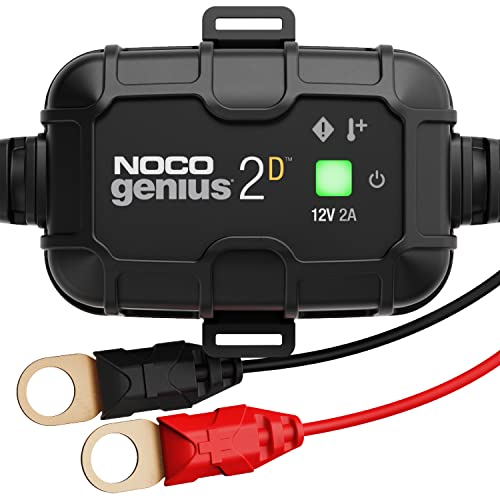
MEET THE GENIUS2D — The all-new direct-mount onboard battery charger for an under-the-hood battery charging system and year-round battery maintenance.

MEET THE GENIUS1 — Similar to our G750, just better. It's 35% smaller and delivers over 35% more power. It's the all-in-one charging solution - battery charger, battery maintainer, trickle charger, plus desulfator.

Charger, Maintainer & Desulfator - An all-weather battery charger, battery maintainer, trickle charger, and battery desulfator. Perfect for charging and maintaining all 12-volt lead-acid, flooded or sealed maintenance free batteries (AGM and gel cell).