


If you’re wondering how a power inverter turns battery power into usable household electricity, you’re asking the right question. The key is that it changes DC electricity from a battery into AC, which your devices need to run.
By understanding how inverters use pulse width modulation and match voltage levels, you’ll learn how to choose the right one to keep your electronics safe.
The full explanation below will give you all the details you need.
What Is a Power Inverter and Why Do You Need It?
A power inverter is an electronic device that converts direct current (DC) into alternating current (AC). You need one because most household appliances and electronic devices operate on AC power, which is what you get from standard wall outlets. DC power typically comes from batteries found in your car, RV, or solar energy storage systems. Without an inverter, the stored energy in these batteries remains unusable for powering AC devices. The inverter acts as a bridge, enabling you to run lights, appliances, power tools, or refrigerators directly from a battery source. Whether you’re off-grid, traveling in an RV, or facing a power outage, an inverter makes stored DC power compatible with your AC-powered devices. In solar energy systems, the inverter also plays a critical role in converting DC from solar panels into usable AC for your home. The performance of your system also depends on using quality battery picks with terminals that ensure efficient and safe DC power delivery. When shopping for a reliable backup system, you will often find inverters integrated into top solar generators to provide essential energy during outages.

Ample Power: Continuous 500W, peak 1000W, inverter 12 V to 110 V that'll charge your devices in no time, 1 cigarette lighter adapter and a pair of battery clamps. Ideal for camping lights, tablets, routers, laptops & other gadgets

【Main function】 The inverter converts 12V DC into 110V AC, 2 AC sockets can charge electrical appliances with a rated power of less than 500W, and 2 USB ports can charge mobile phones and tablets

Power Inverter Modified Sine Wave : The Home and outdoor inverter provides dual 110V AC outlets with continuous DC to AC power output, converts 12V DC battery power to standard 110V AC, featuring 2 AC outlets and 2 USB ports( QC 3.0 and 30W PD3.0). Note: Our power inverter provides 750 Watts continuous power and 1000 Watts peak power
How Does a Power Inverter Turn DC Into AC?
Power inverters create AC from DC using a technique called pulse width modulation (PWM). Instead of changing the voltage level directly, the inverter rapidly switches the DC current on and off, creating a series of pulses. By adjusting how long each pulse stays on—making pulses wider when the voltage is near its peak and narrower when close to zero—the inverter shapes these pulses to resemble a sine wave. This rapid switching produces a pulse train that, when filtered or processed further, approximates a smooth AC waveform. Although this method produces a rougher output than a pure sine wave, it allows for efficient and controlled conversion of DC into usable AC power. The specific type of busbar used in the inverter’s internal circuitry significantly affects overall cost and current-handling capability. If the load on the inverter exceeds its rated capacity, it can cause a tripping circuit breaker in your home’s main panel, just like an overloaded circuit does. For homes combining solar shingles with an inverter, choosing a system with high quality solar shingles can improve overall energy production and system durability.
What Kind of AC Power Does an Inverter Make?
An inverter makes different types of AC power, with the most common being square wave, modified sine wave, and pure sine wave. The waveform type you get depends on the inverter’s design and controls. Pure sine wave output closely matches utility grid power, with a smooth, continuous waveform that produces stable voltage and frequency—typically 120 V or 240 V at 60 Hz in North America. This version has total harmonic distortion often below 3%, making it ideal for sensitive electronics and appliances.
Modified sine wave inverters generate a stepped approximation of a sine wave, which introduces higher harmonic distortion and results in less consistent power. They are generally less expensive but may cause noise or inefficient operation with certain devices. Square wave inverters produce the simplest waveform: a basic on-off signal, which delivers the poorest quality of power and is suitable only for very basic or non-sensitive loads. Your choice depends on the requirements for waveform quality, voltage, and frequency for your applications. Pure sine wave inverters provide the most reliable, grid-like power, ensuring your devices run smoothly and efficiently.
Why Cheap Inverters Can Damage Sensitive Electronics
Because cheap inverters typically produce a modified sine wave rather than a pure sine wave, your sensitive electronics are exposed to higher harmonic distortion. This stepped waveform causes AC motors and transformers to run hotter, which reduces inverter efficiency and accelerates insulation wear. You may notice an audible hum from audio devices due to waveform noise. Devices with rectifier-based power supplies, such as medical equipment or delicate electronics, draw current erratically under distorted power, leading to instability or malfunction. Clocks can drift, and medical devices like CPAP machines could suffer damage over time. Without adequate surge protection, voltage spikes from low-quality inverters also pose a risk to connected equipment. This is similar to the safety step of disconnecting negative battery cables first, which prevents accidental shorts during vehicle repair. Over time, the thermal and electrical stresses shorten component lifespans, meaning you pay more in the long run for cheaper inverters that contribute to premature electronic failure.
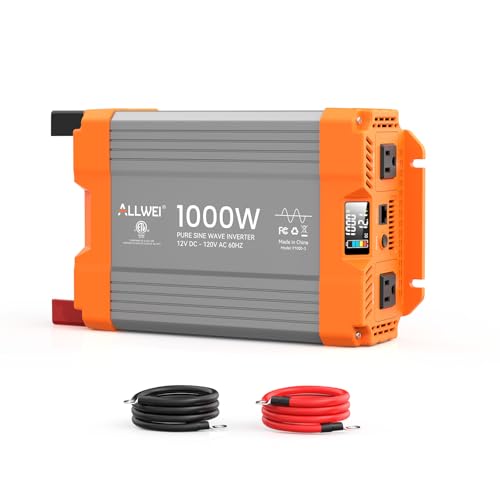
【Powerful DC-AC Converter - Effortless Start】: ALLWEI 1000 watt inverter delivers continuous DC 12V to 110V/120V AC power, 2000W peak surge handles smooth load start-ups effortlessly, is suitable for inductive and capacitive loads—no more startup power struggles. Pure sine wave with maximum conversion efficiency >91%, this power inverters for vehicles minimizes conversion loss while powering RVs, trucks, off grid electrical appliance.This inverter has got ETL UL458 certificate

【600W Pure Sine Wave Inverter – 1200W Peak Power】 - Convert 12V DC battery power into clean 110V/120V AC electricity with 600W continuous output and up to 2000W peak surge power. Pure sine wave output helps reduce electrical noise and interference compared with modified sine wave inverters. Designed for compatible laptops, TVs, game consoles, routers, small refrigerators, and other household electronics. Ideal for RV travel, car camping, truck cabins, and off-grid battery systems.
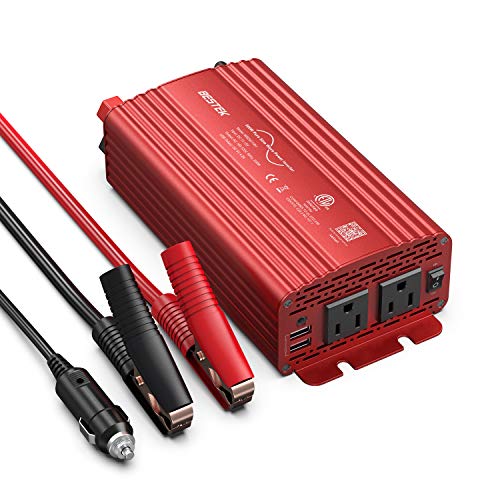
BESTEK 500W Pure Sine Wave Car Inverter:Its output waveform is same as the AC power waveform of mains power grid which delivers a smoothly-varying sine wave for sensitive electronics provided by the electric utility.Perfects for off-grid system,Lower THD,Less wear,Strong inductive Loads Capability.It has little interference with radios, communication and precision equipment.It's also recommended by most cordless tool manufacturer that a pure sine wave inverter is used to ensure long battery life
How Does an Inverter Keep the Power Steady?
An inverter keeps its output steady through closed-loop feedback, continuously adjusting to load changes. It measures the output voltage and compares it to a set reference, generating an error signal whenever there is a deviation. The controller then modifies the pulse-width modulation (PWM) duty cycle to narrow the gap between the target and actual voltage. This real-time correction happens instantly, ensuring the voltage remains stable, even as the load varies. To confirm the inverter’s true power output, you would need a true power meter that accounts for both voltage and current phase differences. Faster PWM switching allows for finer control over the output waveform, making the power cleaner. Low-pass filtering smooths the pulsed output, transforming it into a near-sine wave that is safer for sensitive electronics. The feedback loop compensates automatically for load fluctuations, reducing steady-state errors and maintaining consistent voltage levels. When paired with PWM control, this setup provides steady, high-quality power that protects your devices from voltage fluctuations.
What Parts Are Inside a Power Inverter?
The interior of a power inverter is organized into several essential sections that work together to convert DC into AC power. The process begins with the DC input section, which connects to a battery or solar panel, featuring input connectors and protection circuitry to guard against reverse polarity or voltage surges. A reliable fuse box often uses best circuit breakers to protect against similar electrical faults. For secure and reliable wiring in these connections, using correctly crimped ferrules on stranded wires prevents stray strands from causing short circuits.
Next is the control and timing circuit, which produces switching signals—often managed by a microcontroller—that regulate the frequency and voltage of the output. The power switching stage employs components like MOSFETs or IGBTs arranged in a bridge configuration to quickly switch the DC input into an alternating current waveform.
Following that, a transformer steps up the voltage and isolates the output electrically, ensuring safety and compatibility with standard appliances. The output filtering section then uses capacitors and inductors to smooth the waveform, reducing harmonic distortion. Cooling hardware such as fans or heat sinks and protection circuits monitor and manage overloads or overheating, maintaining reliable operation of the inverter. Simple habits like cleaning dust from the cooling hardware can significantly improve the inverter’s lifespan and performance.

40A Per Circuit, 150A Total — Six independently fused positive circuits for auxiliary DC power distribution

【Smart LED Diagnostic Indicator】Stop guessing which circuit failed. Our fuse block each of the 6 load features a built-in LED that lights up when a fuse blows or a short occurs, letting you identify and fix issues in seconds. *Note: A small residual voltage may be detected without a fuse due to the internal LED circuit resistance, This does not indicate a fault, leakage, or safety issue. If you are using highly sensitive testing equipment, please be aware this reading is an expected characteristic of the built-in diagnostic system.

10 free blade fuses with most common AMP (3A/5A/7.5A/10A/15A/20A/25A/30A/35A/40A) included.
Where Are Power Inverters Used in Everyday Life?
Power inverters are used in everyday life wherever there’s a need to convert DC power into AC power. At home, they serve as backup systems during power outages, supplying electricity to lights, routers, and small appliances from a battery bank. Solar power systems depend on inverters to transform the direct current generated by panels into usable AC current for household devices. In vehicles, inverters power laptops, chargers, and small tools directly from the starter battery, ensuring stable voltage and a reliable power supply. When camping or traveling in an RV, they enable you to run small appliances and electronics from portable batteries. Off-grid cabins, boats, and marine setups also rely on inverters to operate AC devices from solar or battery sources. Many users find it essential to pair their inverter with a battery charger designed for AGM batteries to ensure optimal charging performance and longevity. During emergencies or emergencies, inverters can keep critical equipment like CPAP machines and communication devices running without access to the grid. Many users prefer models that combine inverter and battery charger functionality for seamless backup and charging. Properly wiring the inverter to a solar array ensures safe and efficient energy transfer during installation.

Portable Generator with 60W Solar Panel Included: with a big battery pack, ZeroKor 300W solar powered generator are powerful enough to charge smartphones,tablets,laptops,headphones or other outdoor small camping supplies(Tips:Using electrical appliances over 300W may damage the portable solar generator, especially some devices that are prone to heat or built-in air compressor such as coffee maker,Hair dryer, water pump etc )

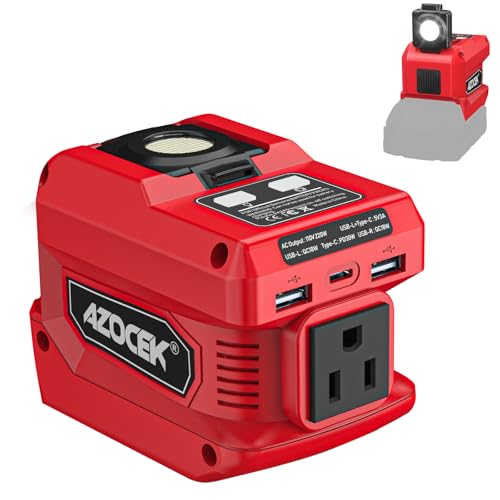
Compatible with 18V Batteries: This Azocek power inverter is specifically designed Compatible with Mil-wau-kee 18V batteries (e.g., 48-11-1815, 48-11-1850, 48-11-1820), powered directly by the battery, provides portable power for outdoor activities or emergencies anytime, anywhere (Battery not included)
How to Choose the Right Power Inverter
To choose the right power inverter, start by calculating your total running load. Add the running watts of every device you plan to operate simultaneously. Then, add a headroom of 20 to 25 percent to accommodate future expansions or unexpected power surges, and round up to the next standard inverter size. Similarly, in a farming setup, comparing top solar panels for efficiency can help ensure your power generation matches your inverter’s capacity. Understanding the semiconductor materials used in solar panels can also inform how efficiently your panels convert sunlight into electricity, directly impacting your system’s overall performance.
It is crucial to verify the inverter’s surge capacity as well. Devices with motors, such as pumps or compressors, can demand 2 to 5 times their running watts at startup. Your inverter’s surge rating must be high enough to handle these peak loads without tripping or shutting down unexpectedly.
Next, ensure precise voltage matching. Your inverter’s input voltage should match your battery bank, which is typically 12V, 24V, or 48V. Proper matching prevents unstable operation and helps in sizing your DC cables correctly for maximum current draw.
Finally, select a pure sine wave inverter if you have sensitive electronics or mixed loads. Also, consider the inverter’s efficiency rating; for example, a 90% efficient inverter will draw approximately 1111W from a 1000W AC load at 12V, meaning less wasted energy and better performance overall. This step-by-step approach ensures your system runs reliably and safely, and understanding the automatic switchover mechanism can further protect your setup by seamlessly transitioning to backup power during grid failures.

【PURE SINE WAVE INVERTER】: The power inverter output waveform is consistent with the AC waveform of the utility grid and is suitable for inductive and capacitive loads. It extends the service life of the equipment and reduces the fault rate. Can be used with electrical equipment such as televisions, home theaters and other sensitive loads for a long time

BESTEK 300W Pure Sine Inverter (Patent Number US D818,853 S): Designed for your devices that require careful protection, provide 300W continuous DC to AC power and 700W of peak power featuring 2 AC outlets and 2 USB charging ports, great for Christmas gift, charging string lights, laptop, speakers, camera, nebulizer, game console, kindle, iPad and other

【500W Pure Sine Wave Inverter】: Pure Sine Inverter delivers clean, stable AC power identical to that from a standard household outlet. Safely powers sensitive electronic devices such as laptops, medical equipment (e.g., CPAP machines), and various tools without risk of damage. Most cordless power tool manufacturers also recommend using a pure sine wave inverter to ensure longer battery life.