


Thinking about how to get cleaner energy without ruining your roof’s look? Solar shingles might be the answer.
They generate electricity just like traditional solar panels but blend seamlessly with your roof as weatherproof tiles.
While they cost more upfront, they can significantly cut energy bills and offer tax credits.
Keep reading to see if this sleek solution is right for you.
What Are Solar Shingles and How Do They Work?
Solar shingles are integrated roofing materials that generate electricity while mimicking traditional shingles’ appearance and function. They contain embedded photovoltaic cells that convert sunlight into direct current (DC) power. An inverter then transforms this DC into alternating current (AC), which powers your home. Because they replace your existing roof, the installation process is more complex than adding standard solar panels. You’ll need a specialized contractor to handle proper electrical connections and water sealing to ensure the roof remains weatherproof. Their dual function means you’re building a weather-resistant, energy-producing roof that seamlessly blends with your home’s design. When choosing materials, consider durability options like silicon or thin-film cells, which offer different levels of weather resistance and efficiency. When wiring multiple shingles together, understanding the differences between series and parallel solar panel setups can affect overall system cost and performance. For those requiring backup power, pairing these shingles with a top solar generator ensures reliable energy storage and supply during outages. When evaluating total system cost, it is also wise to compare the shingles against the best battery backup options for your home to understand long-term energy savings.
Solar Shingles vs. Solar Panels: Which Is Better for Your Home?
Solar shingles generally have a higher upfront cost, ranging from $4.50 to $8.00 per watt, compared to traditional solar panels which typically cost between $2.50 and $4.50 per watt. However, if you are already planning a roof replacement, installing shingles can save on labor costs since they are integrated into the roofing process. Before choosing, consider reviewing a complete solar panel kit comparison for insights on overall system value. When evaluating value, prioritize batteries with terminals that offer a strong balance of quality, performance, and value to ensure your energy storage matches your system. For a reliable energy backup, you should also consider deep cycle batteries that are designed for sustained power delivery.
In terms of efficiency, solar panels usually produce more power per square foot—around 20 to 23 percent efficiency—while solar shingles range from 14 to 20 percent. This means panels will generate more electricity in less space, making them more effective if you have limited roof area.
Aesthetically, solar shingles blend seamlessly into your roofline, making them ideal for maintaining low-profile roof appearances. Traditional panels sit on top and are more noticeable, which can be a concern for curb appeal or homeowner association rules.
If your priority is maximum power output and budget efficiency, solar panels are generally the better choice. But if you want an integrated look and are already re-roofing, solar shingles can be a compelling alternative.

- FITS MOST STANDARD SOLAR PANELS : Fits standard 350W ~ 550W solar panels—the most common choice for homes. Securely mounts up to 4 standard solar panels side-by-side. Compatible with aluminum frames 1.18" to 1.38" (30mm to 35mm) thick. Complete hardware included—ready to install.

Product Includes: a kit containing 8 L-Foot mounts with flashing, complete with bolts and hardware, specifically designed for asphalt shingle and composite tile roofs, compatible with most common photovoltaic rails, meeting the installation needs of residential solar modules

[Roof Solar Mounting Brackets] Suitable for metal roof, shingle roof. 10 set of solar mounting brackets can hold up to 4 solar panels.Instead of the very short 4” mini rails, we offer 10x 6” rails, which are 50% longer and more flexible. -- Please notice that this solar panel mounting brackets is compatible to solar panel thickness: 1.37-1.4 inches.
How Much Do Solar Shingles Actually Cost?
The cost of installing solar shingles for a full home typically ranges from $25,000 to $60,000. Your final price depends heavily on your roof’s size, the brand you choose, and the complexity of the installation process. This wide range reflects significant pricing variability. For example, a 2,000-square-foot roof often costs between $42,000 and $50,000, while systems from Tesla can reach $57,500 to $75,000. Top solar panel options can help you compare costs across different systems. When choosing a system, you may also want to consider how compatible solar converters ensure efficient energy conversion from your shingles.
A major factor influencing the cost is installation difficulty. Unlike traditional panels, solar shingles replace your entire roof, meaning you’ll need to cover tear-off expenses and employ specialized labor. This pushes the per-square-foot cost to about $21 to $25, which is substantially higher than the $3 per watt you might pay for conventional solar panels. Brands like GAF Timberline typically fall within the $40,000 to $60,000 range, while premium options such as SunRoof can go as high as $85,000. *When comparing options, remember that the best battery straps are an entirely different product category for securing batteries, not for rooftop energy systems.*
Additional costs may also arise from your roof’s pitch and electrical complexity, which can further increase expenses. Being aware of these factors helps you prepare for the potential sticker shock upfront.

Product Includes: a kit containing 8 L-shaped brackets and flash baffles, complete with bolts and hardware, specifically designed for asphalt shingle and composite tile roofs, compatible with most common photovoltaic rails, meeting the installation needs of residential solar modules

-DIY SOLAR INSTALLATION : Quick and straightforward.Featuring height-adjustable design, it securely fits all standard framed PV panels from 30mm to 35mm thick.Ideal for building off-grid power solutions, it's perfect for cabins, RVs, boats, and homes, and is specifically designed for side-by-side installation of 2 solar panels.

【an easy set-up solar panel roof mounting bracket kit for sloped tile roof】Specially designed to vertically mount solar panels, Whether you are using small, medium or large solar panels, this solar panel hook can match, it has great flexibility. You can extend the rail length by rail splice included in the package. If you need to mount more solar panels, please add the kit quantities as you like.
How Long Does It Take to Break Even on Solar Shingles?
It typically takes between 10 and 20 years to break even on solar shingles. This payback period depends heavily on your local electricity rates, amount of sun exposure, system size, and available incentives. In areas with high electricity rates and strong incentives, you might shorten the payback to around 8 to 14 years. Conversely, in regions with lower rates, the payback period can extend toward the upper end of that range. Notably, using MC4 connectors can improve system reliability and performance by ensuring secure, weather-resistant connections between panels. Maintenance costs for solar shingles tend to be relatively low since they are integrated into the roof and require less cleaning than traditional panels. However, these costs usually don’t significantly impact the overall return on investment.
Aesthetics may be a factor to consider—solar shingles are designed to blend seamlessly with your roof, offering a sleek, integrated look—though this beauty doesn’t accelerate financial returns. Your payback calculation should use the net system cost after tax credits and rebates divided by your annual utility savings. Keep in mind that if you’re not replacing your roof at the same time as installing solar shingles, the timeline to break even could be longer because of the added roofing costs.

Y Branch Parallel Connector – Offered in two configurations: 1 male to 2 female (M/FF) and 1 female to 2 male (F/MM) solar connectors, designed to wire 2 solar panels in parallel.
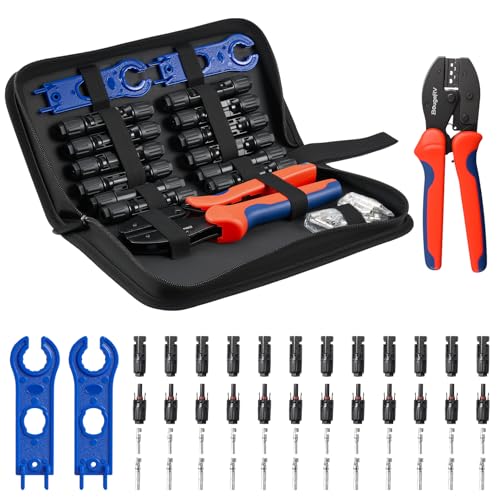
Complete Tool Kit: This complete BougeRV solar crimping tool kit includes a wire crimper, 2 spanners, a convenient carrying case and 12 pairs of standard pv connectors. Great for beginners and experienced installers

FUNCTION & PURPOSE: When the solar connectors are not in use, the solar connector dust cap can protect the solar connectors from the insect netting, leaf entry, ash accumulation, moisture, rust, and oxidation, and effectively avoid internal erosion by dust, debris, and moisture
Can Solar Shingles Power Your Home Efficiently?
Solar shingles can generate enough power to offset a significant portion of your home’s energy needs, but you’ll need enough roof space to do so. Typically, they convert around 10% to 20% of sunlight into electricity, compared to 20% to 23% or higher for traditional solar panels. This lower efficiency means you’ll require more roof area to reach common household kilowatt targets. On large, unobstructed roofs, solar shingles can offset roughly 50% to 75% of your energy consumption. However, achieving full-home coverage is more challenging with limited space or shaded areas. Installation complexities, such as vents or chimneys, can further reduce usable roofing surface. Additionally, solar shingles tend to trap more heat, which can decrease their energy production. The main advantage lies in their sleek, integrated appearance, offering a more aesthetic solution but sacrificing some raw power compared to conventional panels. For maximizing energy output, traditional solar panels still generally perform better. Many users prefer battery-free designs for simplicity, as highlighted in Top Solar Chargers reviews. Understanding the composition and function of these shingles can help buyers make informed decisions about their home energy setup. A DIY solar panel kit often provides a more cost-effective path to higher efficiency for homeowners willing to build their own system.
The Biggest Benefits of Switching to Solar Shingles
Switching to solar shingles can cut your energy costs by approximately two-thirds. Because they function both as your roof and a source of renewable power, you save money on installation and maintenance over time. Additionally, you may qualify for the 30% federal tax credit, which directly reduces your overall investment and improves your return on investment. To further maximize your long-term savings, adopting simple habits like regular cleaning and inspection can help extend the solar panel lifespan beyond the typical 25 to 30 years. By understanding the benefits of solar panels, you can make a more informed decision about this upgrade.
Solar shingles seamlessly blend with traditional roofing materials, enhancing your home’s curb appeal while satisfying HOA standards. They also provide significant environmental benefits by reducing your carbon footprint. The shingles act as a durable shield against snow, hail, and high winds, offering long-lasting protection. Since they typically involve replacing your roof rather than adding separate solar panels, you’re reducing waste and extending your home’s value—on average by around $15,000. This makes switching to solar shingles a practical, long-term upgrade that benefits you from day one.
The Main Drawbacks You Need to Consider First
The main drawbacks you need to consider first are the high costs and compatibility issues. Solar shingles typically cost about three times more than standard roofing materials, with total projects often reaching tens of thousands of dollars before any incentives. The payback period can stretch out over many years, so you’ll need to evaluate if the investment makes financial sense for your situation.
Roof compatibility also limits your options. Solar shingles generally require a full roof replacement, making them suitable mostly for new construction or major reroofing projects. If your roof has been recently replaced, partial or complete rebuilding might be necessary. Not all roof shapes, slopes, or materials work well with solar shingles, so thorough compatibility checks are essential before proceeding.
Which Tax Credits and Rebates Apply to Solar Shingles?
Solar shingles qualify for the federal Residential Clean Energy Credit, allowing you to claim 30% of the qualifying costs for systems installed within eligible years and up to a certain size. This tax credit covers only the solar-electric component — typical roofing costs or non-solar features do not qualify. Installation labor costs are included, but you should keep detailed receipts to substantiate your expenses.
You can combine these federal credits with state-level tax incentives, which vary by location. Some states offer additional income-tax credits that can be carried forward if you cannot use them all in one year, providing continued savings over multiple years.
Rebate programs from utilities or state clean-energy initiatives can further reduce your upfront costs. These rebates usually lower the initial expenditure directly but may subtract from your qualified expenses before you claim federal credits. Be sure to review local program details, as rebates are often based on system capacity and have limited funding.


1.18"-1.38" Adjustable Solar End Clamp: This updated solar panel clamp features an innovative adjustable design with the addition of flexible clamp spacing adjustment. It is widely compatible with solar panels that are 1.18", 1.3", or 1.38" thick

-SOLAR RACKING KIT : Designed for easy setup on shingle or metal roofs, all-in-one system includes pre-drilled aluminum rails,heavy-duty clamps,stainless steel hardware,and waterproof seals. It securely fits all standard 35mm-frame solar panels for reliable off-grid or grid-tied power.
What to Expect When Installing Solar Shingles
Once you’ve decided to proceed, the installation process typically spans one to three days for physical work, though the entire project may take longer due to permitting and inspections. It starts with a detailed pre-installation assessment, where your roof’s condition is thoroughly evaluated. This includes structural checks to ensure your roof can support the solar shingles and a wiring inspection to confirm electrical compatibility. After permits are approved, the old roofing in the designated array area is carefully removed. Crews then repair any decking damage, install new underlayment, and focus on flashing details to ensure the system remains watertight. Proper flashing installation is crucial because it helps prevent leaks, making this an essential moment for ongoing roof maintenance. The actual installation begins at the lower edge of the roof, with rows installed sequentially. Solar shingles are connected through built-in electrical joiners, and wiring is routed through sealed penetrations to protect against weather. For organizing multiple solar circuits safely, consider using a 6-way fuse block to consolidate connections and simplify troubleshooting. During installation, always follow reliable safety warnings to avoid electric shock from the live wiring and roofing hazards. Using a digital multimeter with clamp helps safely verify current levels in the live circuits during final testing.

【Smart LED Diagnostic Indicator】Stop guessing which circuit failed. Our fuse block each of the 6 load features a built-in LED that lights up when a fuse blows or a short occurs, letting you identify and fix issues in seconds. *Note: A small residual voltage may be detected without a fuse due to the internal LED circuit resistance, This does not indicate a fault, leakage, or safety issue. If you are using highly sensitive testing equipment, please be aware this reading is an expected characteristic of the built-in diagnostic system.
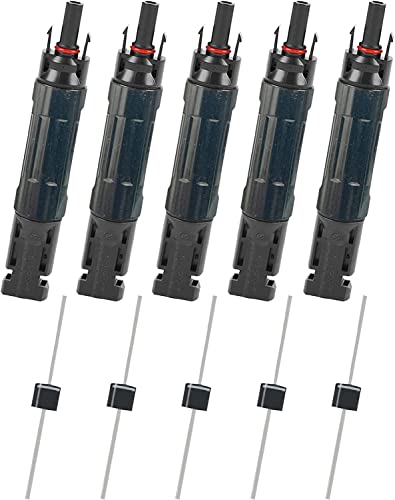
PPO INSULATION FLAME RETARDANT MATERIAL with excellent aging resistance and UV endurance, can resist severe weather such as heavy rain,snowstorm or heat for a long time; waterproof ring on connection is perfect to seal out water and dust to prevent corrosion.

Compatible with PV cables with different insulation diameters
Will Solar Shingles Increase Your Home’s Resale Value?
Owning your solar shingles can increase your home’s resale value, with premiums typically ranging from about 4% to 10%. This means that if you have a standard 4-kilowatt system valued at around $15,000, you could see an added home value of approximately $600 to $1,500 or more. The key is that owning the system provides a direct market benefit, often resulting in a stronger resale premium compared to leasing. To achieve the best return, ensure the electrical integration of your system follows safe wiring practices similar to those used for a manual transfer switch installation. Using a high-quality crimping tool for terminal connections ensures reliable and secure electrical joins that maintain system integrity.
To maximize this increase, keep your solar shingles in like-new condition, maintain records of installation and performance, and ensure the system remains well-maintained. Buyers are more likely to pay a premium for the utility savings and the convenience of an integrated roof system that reduces or eliminates roof replacement costs. However, the exact premium you’ll see depends on your local real estate market, electricity rates, and how much buyer demand there is for solar-equipped homes. While not guaranteed, owning solar shingles generally enhances your property’s resale appeal.