
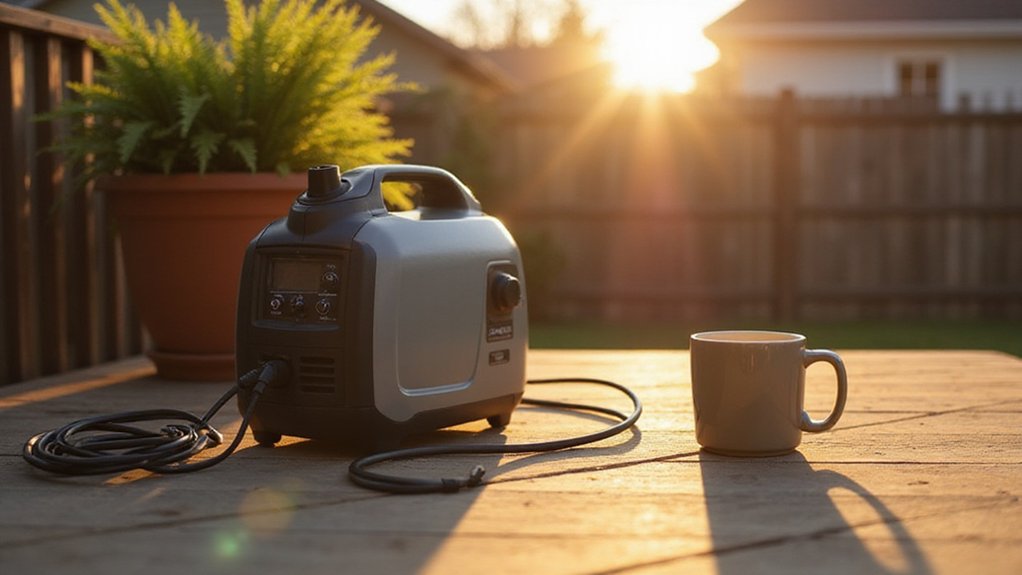

Thinking about whether to pick a power inverter generator or a traditional generator?
The key difference lies in how they handle power: inverter models produce cleaner, safer electricity for sensitive devices and save fuel by adjusting engine speed.
While conventional units offer raw power, running steadily at high RPM for heavy loads.
Here’s what you need to know to choose the right one for your needs.
Inverter vs. Conventional: The Core Difference in How They Work
An inverter generator regulates power electronically, which is its key advantage over conventional models. It first converts the alternator’s AC (alternating current) output into DC (direct current) through rectification. Then, a microprocessor-controlled inverter reconstructs a clean, stable AC sine wave at your chosen voltage and frequency. This two-step process allows the engine to run at variable speeds depending on the load, rather than maintaining a constant high RPM. As a result, you get consistent power quality regardless of engine speed, making it ideal for sensitive electronics and variable power demands. The core difference lies in mechanical versus electronic power conditioning, with the inverter method providing more precise and adaptable control over power output. This stable power delivery also helps extend the AGM battery lifespan by preventing the damaging voltage fluctuations that can shorten battery life. By consistently delivering clean power, inverter generators also avoid the high heat and overcharging that accelerate battery aging. For safe and code-compliant integration with your home’s electrical system, proper wiring order and torque specifications must be followed to prevent loose connections and fire hazards.

Delivers 4000 starting watts and 3200 running watts of clean power with THD under 3%, which can safely power delicate devices such as laptops, mobile phones and tablets.

Powerful Camping, RV, and Home Generator: Ideal for microwaves, refrigerators, hair dryers, small AC units, and more, this house generator features advanced inverter technology to supply power reliable enough for computers

Powerful & Stable Performance: Featuring 8000W peak & 6500W rated power, this portable generator uses a 327cc 4‑Stroke OHV engine. Its pure sine‑wave (≤2% THD) delivers clean, stable power for sensitive electronics like laptops, TVs, and refrigerators
Can a Conventional Generator Power TVs and Laptops Like an Inverter?
A conventional generator can power TVs and laptops, but it’s not as reliable or safe as an inverter generator. When dealing with battery backup systems, it is important to follow proper battery disconnect safety procedures. The main issue lies in power quality. Conventional units typically produce total harmonic distortion (THD) between 8 and 25 percent, which is much higher than the 3 to 5 percent produced by inverter generators. This high level of distortion creates “dirty” power that sensitive electronics may struggle with. To ensure safe operation, you should check your household breaker box for proper grounding and load balance before connecting sensitive devices. Proper charging practices, such as matching deep cycle battery capacity with an appropriate charger amperage, can also help maintain stable power delivery from backup systems.
Modern electronics like TVs and laptops are designed to run on a stable sine wave power supply. When fed with high-THD output from a conventional generator, you might see flickering, buzzing, or experience audio and video irregularities. Laptop chargers can filter some irregularities, but voltage fluctuations can still cause components to heat up or wear down over time. These issues can lead to reduced device lifespan or unexpected shutdowns.
In contrast, inverter generators produce cleaner power with a lower THD, making them safer and more compatible for sensitive electronics. This results in more stable operation, reduced noise, and less risk of internal damage, ensuring your devices stay protected during power outages or off-grid use.
How Much Fuel and Money Each Generator Type Saves You
Inverter generators save you about $1.40 to $2.50 per hour compared to conventional generators. This cost difference comes from their ability to adjust engine speed based on demand, unlike traditional models that run at full throttle regardless of load. At 25% load, an inverter generator consumes around 0.28 gallons of fuel per hour, while a standard generator uses about 0.70 gallons—resulting in approximately 60% savings. This efficiency also means inverter generators produce better power quality, consistent with the clean output of a pure sine wave inverter. This clean power is similar to the stable electricity produced by top hybrid inverters for solar that seamlessly manage battery and grid input. For users pairing their generator with battery storage, choosing a model with top battery picks with terminals ensures reliable connections and sustained performance.
Running a typical 5-hour daily load, you can save between 2 and 3.5 gallons of fuel each day, which translates to $7–$12.25 saved daily. Over a year, these savings accumulate to roughly $1,680 to $2,940. The key reason for this efficiency is the inverter’s variable engine speed, which decreases RPM when demand drops, eliminating unnecessary fuel consumption. Although inverter models tend to have a higher upfront cost, these savings can offset the initial purchase within about 1.5 to 2 years, especially if you frequently operate under partial load conditions.

Dual-fuel design runs on both gasoline (3600 surge watts, 2900 rated watts) and propane (3500 surge watts, 2600 rated watts)


HOME BACKUP POWER, ≤3% THD: The Westinghouse iGen12000DFc dual fuel inverter generator provides whole home backup power that's safe for sensitive electronics; It also has a 50A outlet; Gasoline: 12,000W peak and 9,000W running; Propane: 11,000W peak and 8,100W running
Which Generator Is Quieter and Easier to Move Around?
A 2,000-watt inverter is quieter and easier to move around than a conventional generator. Weighing between 40 and 55 pounds, it can be carried easily by one person, making it ideal for quick relocations or use in remote locations. In contrast, traditional generators typically weigh 70 to 95 pounds and often require wheel kits or two people to transport. The compact design of inverter units allows you to load them into any vehicle without difficulty, enhancing portability. Their quieter operation also makes them better suited for environments where noise is a concern, such as campsites or residential areas. While inverter generators excel in portability, compatibility with modern solar panels often requires MC4 connectors for efficient DC power transfer.

⚡ Clean Power. Safe Electronics. — This inverter generator delivers 1,350 running watts (1,750 peak) with ultra-low THD < 3% pure sine wave electricity. Unlike conventional gas generators, the AIVOLT 1350W provides stable, clean power that is 100% safe for laptops, phones, CPAP machines, and TVs — whether you're using it for home backup or as a camping generator outdoors.

2000W Portable Inverter Generator: Deliver clean inverter power for phones, laptops, lights, fans and sensitive electronics during camping, outdoor activities, emergencies and backup power needs.

【Extened Runtime】: This protable generator comes with 1.06-gallon fuel tank, allows for up to 17 hours of operation at 25% load, or 8.6 hours at 50% load, with parallel function and ECO mode, providing long-lasting power. perfect for RVs, camping, home backup emergency.
Is the Higher Price of an Inverter Generator Worth It?
The higher price of an inverter generator is often justified if you plan to run it more than 100 hours annually. Although you’ll pay 40% to 70% more upfront, you can save 20% to 40% on fuel consumption at partial load. Over a span of 2 to 3 years, these fuel savings offset a significant portion of the initial premium—around 30% to 50%. Maintenance costs are similar between inverter and conventional generators, so your focus should be on overall operating expenses. For frequent users with light to medium loads, the cleaner power output—generally under 3% total harmonic distortion—protects sensitive electronics from instability. If your use is limited to occasional emergencies, the extra investment rarely pays off. The higher price makes sense primarily when you expect high runtime and need reliable power quality.

224cc dual-fuel engine runs on both gasoline (4800 surge watts, 4000 rated watts) and propane (4320 surge watts, 4000 rated watts)

224cc dual-fuel engine runs on both gasoline (6800 surge watts, 5100 rated watts) and propane (6000 surge watts, 4500 rated watts)

4000 Peak Watts and 3300 Rated Watts at Less Than 3% THD – Telescoping Handle – Gas or Propane Powered – Recoil Start
Inverter vs. Conventional Generator: Which to Buy for Your Needs
Choosing between an inverter and a conventional generator depends on your specific load profile and operating conditions. If your primary need involves powering sensitive electronics, an inverter generator is the better choice due to its low total harmonic distortion (often under 3%), which ensures smooth power delivery compatible with devices like computers and medical equipment. Conventional generators, with their 10% to 25% total harmonic distortion, can cause voltage fluctuations that may stress or damage sensitive gear. In terms of noise levels, inverter models operate quietly at approximately 60 to 65 decibels at partial load, making them suitable for environments where noise is a concern. Conventional generators tend to produce louder sound levels, around 74 to 78 decibels, which may be disruptive in residential or quiet settings. If your priority is maximum wattage for motor-driven loads and you can tolerate higher noise levels, a conventional generator might be appropriate. Conversely, for quiet, clean power at light loads, an inverter generator provides a more refined solution. For those who also want to maintain battery backups, understanding torque and connection tips can ensure safe and stable wiring of a solar panel to a battery system. For a reliable solar connection, using the best crimping tools for MC4 connectors is essential to prevent voltage drops and system failure.

224cc engine generates up to 4800 surge watts and 4000 rated watts

Powerful Performance: This portable generator features 4500 Peak Watts & 3700 Rated Watts with 30A current support. Pure‑sine‑wave output (THD<3%) delivers clean, stable power to safely run refrigerators, digital devices and other sensitive appliances.

HOME BACKUP POWER, ≤3% THD: The Westinghouse iGen12000TFc tri fuel inverter generator provides whole home backup power that's safe for sensitive electronics; It also has a 50A outlet; Gasoline: 12,000W peak/9,000W running; Propane: 11,000W peak/8,100W running; Natural gas: 9,800W peak/7,200W running