

Ever wonder how to safely power your home with a generator without risking damage or danger? Transfer switches are the key—they connect your generator to your home’s electrical system securely.
There are manual and automatic options, each designed to keep your power flow safe and reliable. Keep reading to see how these switches work and find the right one for your needs.
What Is a Transfer Switch and Why Do You Need One?
A transfer switch is essential because it safely directs power from a generator to your home’s wiring while disconnecting from the utility grid. Without one, connecting a generator directly to your wiring can cause dangerous backfeed that might electrocute line workers trying to restore power. The switch isolates your home from the grid, preventing this hazard, and also protects your generator from electrical damage when utility power returns. For those selecting a generator system, top battery picks with terminals are often compared to ensure reliable startup performance. Following a safe battery disconnection sequence prevents sparks and protects the generator’s electrical system during maintenance. Understanding what a 400-watt inverter can power helps you gauge whether a transfer switch is needed for small backup appliances.
When choosing a transfer switch, consider the cost. Automatic switches are more expensive but offer the convenience of switching power sources automatically during an outage. Manual switches are more budget-friendly and require you to flip a switch yourself. Installation typically requires a licensed electrician to hardwire the unit into your electrical panel. This professional setup ensures proper load management and compliance with electrical codes, which is critical for safety.
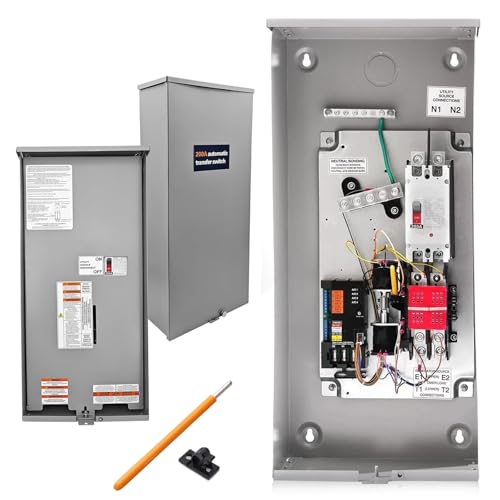
Seamless Power Transitions : This 200 Amp Automatic Transfer Switch is designed to seamlessly transfer the electrical load between a utility (primary) power source and a generator (backup) power source, it powers your entire household, including high-demand appliances, during outages.
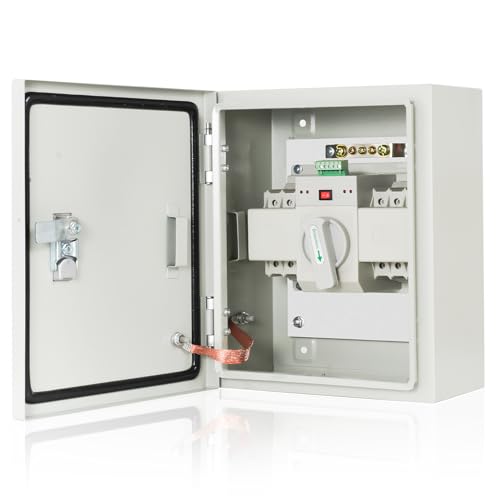
Versatile Application & Reliable Protection This 125A automatic transfer switch provides seamless dual power transfer for residential, commercial, and industrial applications. Designed as a reliable transfer switch for home generators, it ensures complete protection for your electrical equipment and systems during power outages.

【CONVERSION FUNCTION】: The automatic transfer switch seamlessly transitions between power sources, ensuring continuous power supply during power outages, thereby protecting your appliances and eliminating downtime
How an Automatic Transfer Switch Works
An automatic transfer switch (ATS) monitors your power sources continuously and switches seamlessly when needed. Its microprocessor-based controller keeps an eye on voltage and frequency, detecting not only total power outages but also issues like undervoltage or phase loss. When your primary utility power fails, the ATS sends a start signal to your generator, initiating the backup process. It then waits for power stabilization, which typically takes between 5 and 30 seconds, ensuring voltage and frequency are within acceptable limits. Only after this does the ATS disconnect the load from the failed source and connect it to the backup, using a break-before-make sequence that maintains circuit reliability. When utility power stabilizes again, the ATS waits for it to be steady before switching back and signals the generator to shut down. This automated process guarantees that your load is always served by one active power source without manual intervention. Many top-rated units also integrate a high-quality battery charger to maintain backup power readiness. The ATS is typically wired directly into your house’s breaker box to safely distribute backup power to selected circuits.
Versatile Application & Reliable Protection This 125A automatic transfer switch provides seamless dual power transfer for residential, commercial, and industrial applications. Designed as a reliable transfer switch for home generators, it ensures complete protection for your electrical equipment and systems during power outages.

Superior Quality: This 100 amp transfer switch is UL listed and its housing meets NEMA 3R standards, making it rust-proof, durable, and weatherproof. It can withstand harsh weather conditions and ensure uninterrupted functionality even in rain, hail, or high winds

【Compatibility】 :This 200 Amp Single Phase Generator Automatic Transfer Switch compatible with Generac RXSW200A3 Automatic Smart Transfer Switch,120/240-volt Compatible with 8-24 KW home standby generators.Designed for use with single-phase generators, this transfer switch seamlessly transfers power from utility to generator
How a Manual Transfer Switch Works
A manual transfer switch works by requiring you to physically switch the power source between utility and generator. You operate a lever or handle to disconnect one source before connecting the other. Its break-before-make design ensures electrical safety by preventing backfeed into utility lines, protecting utility workers and your system. You start the generator manually and then move the switch from utility to generator position, powering your chosen circuits through a direct, hard-wired connection. To manage the load properly and avoid generator overload, you must select which circuits to power. The switch also features a center-off position that isolates all loads from both sources, allowing you to work safely on your system. To restore utility power, you reverse the process, ensuring a controlled, hazard-free transition without automatic intervention.

Current rating 50 Amps,operating voltage 240 volts,need some basic knowledge on electrical circuits

This 100 amp generator transfer switch perfect to switch the power from the electric company to an auxiliary power (gas generator, solar). A simple movement of the transfer switch lever ensures seamless power management. With a maximum handling capacity of 100amps and a power capability of 24000W, it effortlessly powers your entire household, including high-demand appliances like dryers and stoves.

【UL-Listed Components, Built for 30A Backup Power】 The L5-30 receptacle and the internal circuit breaker are UL-listed components, selected for reliable performance in home backup power systems. The 10AWG silicone wiring and terminal blocks support continuous loads up to 30A at 125V. Every unit is pre-assembled and continuity-tested before shipping, so you can install it and start powering essential circuits the same day.
Automatic vs. Manual: Which Transfer Switch Do You Need?
Choosing between a manual and an automatic transfer switch depends on your priorities for control, cost, and convenience. A manual switch requires your presence to operate it, giving you direct control over switching power sources. Its hardware is simpler, with fewer electronic parts, which makes installation straightforward and less costly—typically in the low hundreds. However, safety relies on you to operate it correctly to prevent backfeeding, which can be dangerous. For instance, a manual switch uses an interlock mechanism to ensure only one power source is active at a time, preventing accidental electrical hazards.
An automatic transfer switch detects power outages through sensors and switches sources automatically, restoring power faster and without your intervention. This is especially useful for critical or unattended loads. The hardware is more complex, often requiring professional installation, and it comes at a higher cost. Safety features are integrated into its controlled sequence, providing reliable operation even when you’re not present. If your setup demands continuous, hands-off backup power for essential loads, an automatic transfer switch is the best choice. For basic backup needs with lower upfront costs and more control, a manual switch suffices. Understanding how fuse blocks protect circuits from overloads can help you integrate them alongside your transfer switch for complete electrical safety. If you ever attempt to revive a dead battery, proper sulfation removal techniques can restore some capacity, but only if the battery has not sustained physical damage.

🏡 100% Universal Compatibility with Most Generator on The Market: Our changeover switch works flawlessly with all generator types: gasoline, diesel, propane/LPG dual-fuel generators, lithium battery portable power stations, all-in-one solar generators, mini wind turbines & micro hydro generators. No extra adapter or modification needed, fit for home backup, camping, RV, workshop and off-grid living.

【Dual Power Automatic Tranfer Switch】: The automatic transfer switch is an online switching relay that facilitates the transition between the primary power source and the backup power source. In the event of a power outage from the primary source, the load power is seamlessly switched to the backup source. Conversely, when the primary power source is restored, the load power is switched back to the primary source.

Functions and Features: ATS transfer switches G2R is a PC-level infrequent switching switch, mainly used for automatic or manual conversion of two power supplies, and can test whether the common power supply or backup power supply is normal. It can switch power supply (can be city power grid and inverter power supply)in 0.05 seconds to build uninterruptible power supply. When the normal power is abnormal, the spare power works at once, which therefore ensures the continuirty, reliability,and safety of power supply. When the normal power supply is normal, it will automatically switch back from the backup power to the normal power supply
What Happens During a Typical Transfer Sequence?
During a typical transfer sequence, your switch undergoes a series of precise steps to ensure reliable power delivery. First, it performs continuous diagnostics on the primary utility source to verify stability. When a fault is detected, the switch activates your emergency procedures. In automatic systems, this detection prompts the switch to signal the backup generator to start. A stabilization delay then occurs, giving the backup time to reach acceptable voltage and frequency levels. Next, the switch performs a break-before-make operation: it opens the connection to the utility before closing onto the generator, preventing overlap between sources. When wiring the transfer switch, you must verify that all grounding and bonding connections meet code-safety requirements. Once the backup source stabilizes, power is restored to your loads from the generator. During the return to normal utility power, the switch reverses the process: it monitors the utility’s restoration, then opens the backup source, closes back onto the utility, and finally initiates the generator cooldown. Just as regular battery maintenance extends the lifespan of your backup power components, a transfer switch’s steady, repeated performance ensures reliability over many years. Understanding this sequence highlights why automatic changeover switches matter for reliable power management.