

Choosing the right inverter can feel confusing, especially if you’re unsure about pure sine wave versus modified sine wave options.
The key difference is how clean the electricity they produce is—pure sine wave inverters deliver a smooth, stable power supply, while modified sine wave models are rougher and better suited for simpler devices.
Keep reading to see which type fits your needs best.
Pure Sine Wave vs Modified: The Core Difference in Waveform Shape
A modified sine wave produces a stepped approximation of a true sine wave, resembling a staircase rather than a smooth curve. Its shape is created by holding the voltage at a positive level, then dropping it near zero, and finally shifting to a negative level, repeating this pattern continuously. This produces a waveform with flat tops and bottoms and sharp transitions instead of the smooth oscillation seen in pure sine waves. As a result, the waveform introduces significant distortion, generating high levels of harmonic content. The abrupt voltage changes create unwanted odd-order harmonics, which can interfere with sensitive electronics or cause increased heat in electrical components. For those seeking quality, performance, and value, a pure sine wave inverter is often the recommended choice. Since the modified waveform is essentially what’s called a pulse-width-modulated square wave, it is technically a quasi-sine wave rather than a true sinusoid, making it less ideal for applications requiring clean, reliable power. When selecting an inverter, pairing it with high-quality MC4 connectors can help ensure efficient, safe power transfer from your solar panels.
Pure Sine Wave vs Modified: Why the Waveform Quality Matters
Waveform quality significantly impacts the performance and longevity of your devices. Pure sine wave inverters produce a smooth, consistent waveform with less than 3% total harmonic distortion (THD), resulting in cleaner power that reduces heat in motors, transformers, and electronic components. This lower distortion supports cooler operation and extends the lifespan of connected devices. Modified sine wave inverters, however, typically generate power with 20% to 40% THD, creating noisier, more distorted power signals that can stress loads, cause audible hum, and increase heat.
The electrical noise from sharp wave transitions in modified sine inverters can lead to unstable behavior in switch-mode power supplies and less efficient operation for sensitive electronics. Additionally, the higher harmonic distortion makes motor starting torque less predictable and can cause increased wear on inductive loads. In systems with mixed or sensitive components, pure sine wave power ensures fewer operational surprises, smoother performance during motor startups, and consistent load handling. Ultimately, choosing a pure sine wave inverter supports more reliable, efficient, and quieter operation for your equipment.
Which Appliances Absolutely Need a Pure Sine Wave Inverter?
Appliances with motors, compressors, or any inductive loads absolutely require pure sine wave inverters. Devices like refrigerators, freezers, and air conditioners depend on compressors that start under heavy load, which needs stable AC power and consistent voltage. Without a pure sine wave, these components may struggle to start properly or could be damaged over time. This is also why negative battery cables are disconnected first, to prevent dangerous short circuits and sparks during installation or maintenance.
Washing machines and pumps also fall into this category because they draw 2–3 times their rated power at startup. The surge in power demands makes waveform quality critical to prevent malfunctions or damage.
Medical equipment such as CPAP machines and oxygen concentrators demand clean, stable power to ensure sensors and control electronics operate reliably. Any fluctuation or noise could lead to incorrect readings or device failure.
Electronics with active power factor correction (PFC) power supplies, including desktop computers, are sensitive to waveform quality. Running them on a modified sine wave can cause overheating or operational issues.
Additionally, microwaves, coffee makers, and appliances with digital controls or variable-speed motors require pure sine wave power. This ensures correct power factor, prevents erratic behavior, and maintains proper functioning of their digital or motor-driven components.

Provides 300 Watts continuous DC to AC power, featuring 2 AC outlets and 1 USB ports for multi-purpose charging.

【POWERFUL DC to AC CONVERTER】: This solar inverter delivers 2000W of continuous battery DC 12V to AC 110V 120V power and up to 4000W of peak surge power when the load is started. The 12V inverter has a conversion efficiency of greater than 93% during normal working and low no-load losses

BESTEK 300W Pure Sine Inverter (Patent Number US D818,853 S): Designed for your devices that require careful protection, provide 300W continuous DC to AC power and 700W of peak power featuring 2 AC outlets and 2 USB charging ports, great for Christmas gift, charging string lights, laptop, speakers, camera, nebulizer, game console, kindle, iPad and other
5 Devices That Fail on Modified Sine Wave (Pure Sine Wave Vs Modified)
Medical devices like CPAP machines can experience low-voltage errors and irregular operation when powered by a modified sine wave inverter. Many manufacturers explicitly warn against using non-pure sine wave power sources for these devices because the stepped waveform can cause malfunctions. Beyond medical equipment, AC motors in refrigerators and compressors tend to run hotter, become less efficient, and wear out faster due to harmonic distortion caused by modified sine waves. This creates serious reliability issues that can lead to early device failure. For long-lasting connections, applying a suitable protective grease to battery terminals can prevent corrosion and ensure reliable power transfer. Using a multimeter to verify voltage output can help confirm proper inverter operation and prevent damage to sensitive equipment. For homeowners considering solar panel installations, reviewing the best costs for solar panels can help determine budget-friendly system components.
Smart battery chargers may also struggle to reach full charge stages, which over time damages the batteries. Microprocessor-controlled appliances such as furnaces and sewing machines misinterpret the zero-crossing points of the stepped waveform, leading to erratic behavior. Additionally, audio and video equipment often pick up audible hum and noise interference from the stepped waveform, degrading sound and picture quality. To ensure safe operation and longevity of these devices, sticking with a pure sine wave inverter is essential.

【POWERFUL DC-AC】This renogy 1000 watt inverter 12V to 110V provides 1000W continuous DC to AC power, 2000W peak surge during load start-up, 12V to 120VAC pure sine wave with conversion efficiency >90%, reduces conversion loss

〖UPGRADE TO 17V WITH EFFICIENT QUICK CHARGING〗Bestek power inverter upgrade to 11-17V, suit for Tesla and other ner energy vehicle; 38W fast Type-C car inverter supporting PD 20W(Max) and QC 18W(Max) high output, can fast charge all prevailing phones simultaneously. The PD port, 6X faster than a 2.4A charger, can quickly charge iPhone, iPad, MacBook, etc.
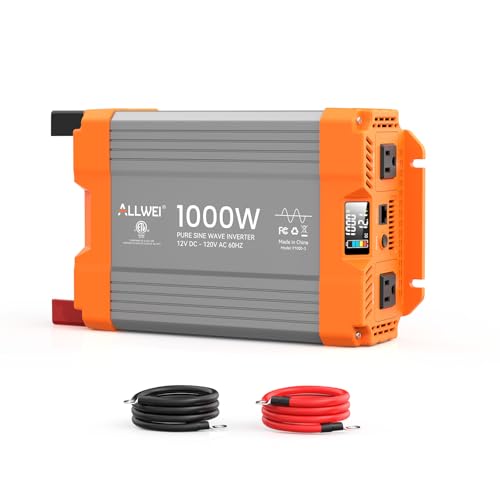
【Powerful DC-AC Converter - Effortless Start】: ALLWEI 1000 watt inverter delivers continuous DC 12V to 110V/120V AC power, 2000W peak surge handles smooth load start-ups effortlessly, is suitable for inductive and capacitive loads—no more startup power struggles. Pure sine wave with maximum conversion efficiency >91%, this power inverters for vehicles minimizes conversion loss while powering RVs, trucks, off grid electrical appliance.This inverter has got ETL UL458 certificate
Is a Modified Sine Wave Inverter Ever the Smart Buy?
A modified sine wave inverter can be a smart buy in specific circumstances, primarily when your budget is limited and your power needs are simple. For basic tasks like lighting, phone charging, or resistive heating, its lower upfront cost—typically between $80 and $150 for a 2,000-watt unit—can be attractive. These inverters are suitable for temporary setups or emergency kits but come with notable tradeoffs. Their high harmonic distortion, usually around 20 to 40 percent total harmonic distortion (THD), stresses the battery more and shortens system runtime. This inefficiency also impacts solar applications, where the 10 to 20 percent loss in motor efficiency can drain your bank account faster and reduce equipment lifespan. The build quality and compatibility issues are similar to those noted in DIY crimping tool projects where performance and longevity hinge on correct assembly and component selection. For a secure electrical connection, always follow proper grounding techniques to prevent safety hazards. Only opt for a modified sine wave inverter if you have verified each connected load and are willing to accept the possibility of replacement later. Otherwise, for better performance and longevity, a pure sine wave inverter is often the wiser investment.

Fully Security Protections: The modified sine wave power inverter applies multiple intelligent security protections to ensure the inverter is fully protected in the process of use so that the electrical appliances will operate stably and securely

【𝟐𝟎𝟎𝟎 𝐖𝐚𝐭𝐭 𝐈𝐧𝐯𝐞𝐫𝐭𝐞𝐫】--- This pure sine wave inverter can provide 2000W continuous clean DC to AC power (4000W surge) with >91% efficiency, which strongly and effectively reduces conversion loss and protecting sensitive electronics (Microwave Oven, Laptops, CPAPs, LEDs) from damage. Handles heavy startups (Window AC, Power Tools) effortlessly. For RV, Home, Solar, Emergencies.

2000W CONTINUOUS POWER – Converts 12V DC battery power to 110–120V AC, delivering 2000 watts of continuous output and up to 4000 watts of peak power for compatible appliances, tools and electronics.
Pure Sine Wave vs Modified: Efficiency Compared
Pure sine wave inverters generally achieve 90–95% efficiency, whereas modified sine wave inverters fall short at 70–85% in most mixed-load situations. This difference in efficiency significantly affects your battery’s lifespan because modified units convert more power into heat, causing deeper discharges that wear out batteries faster. For example, when running a 200W load, pure sine wave models reach about 93.35% efficiency, while modified sine wave models only hit around 81.50%. At very light loads, such as 10% capacity, modified sine wave inverters can drop below 50% efficiency, whereas pure sine models typically stay around 80–85%. This is similar to how series or parallel solar panel setups affect overall system efficiency and battery health. In terms of cost, the initial savings of a modified inverter tend to be offset by higher energy waste and the need for more frequent battery replacements. This means you’ll need more solar panels or larger battery banks to meet your power needs. For off-grid systems, investing in a pure sine wave inverter delivers longer runtime and better long-term value. Prioritizing efficiency helps preserve your batteries and reduces overall ownership costs. For example, pairing a pure sine wave inverter with a proper charging strategy can help avoid deep discharges that accelerate battery wear. Using proper cutting tools and techniques for cable tie removal ensures a clean finish that prevents sharp edges from damaging nearby wires or components.
Pure Sine Wave vs Modified: How Much More Does It Cost?
A pure sine wave inverter costs roughly 30% to 70% more than a modified sine wave unit. At lower wattages, this price gap narrows significantly—around $10 to $15 extra for a 300W inverter. However, for higher wattage units like 2,000W, the difference can reach approximately $200 to $300. For those seeking top options in power conversion, reputable brands often offer both inverter types with detailed customer reviews.
The main reason for this higher cost is the complex circuitry in pure sine wave inverters, which creates a smooth, clean alternating current similar to utility power. Modified sine wave inverters use simpler circuitry, making them more affordable but less precise. Customer reviews often justify the extra expense for pure sine wave models because they run electronics more quietly and are better suited for sensitive devices that may experience issues or noise with modified units. For those relying on a battery strap to secure their power source, pairing it with a pure sine wave inverter can further reduce electrical noise from vibration. When building your own system, reviewing a DIY breaker box cover design can help ensure proper protection and wiring for your inverter setup.
While the price gap has decreased over time, pure sine wave inverters remain the pricier choice, especially for larger and more power-demanding systems. If your setup includes sensitive electronics or you prioritize noise-free operation, investing in a pure sine wave inverter may be worth the additional cost.

【2000W CONTINUOUS - POWERFUL DC to AC CONVERTER】 Convert 12V DC battery power into clean 110V/120V AC household power. This 2000 watt pure sine wave inverter delivers 2000W continuous output and up to 4000W surge power, providing the extra starting capacity needed by refrigerators, microwaves, power tools and other motor-driven appliances.

【POWERFUL DC-AC】This 2000 watt inverter is perfect for solar systems. The power inverter 12V to 110V provides 2000 watt continuous DC to AC power, 4000 watt peak surge during load start-up, 12V to 120VAC pure sine wave with conversion efficiency >90%, reduces conversion loss.
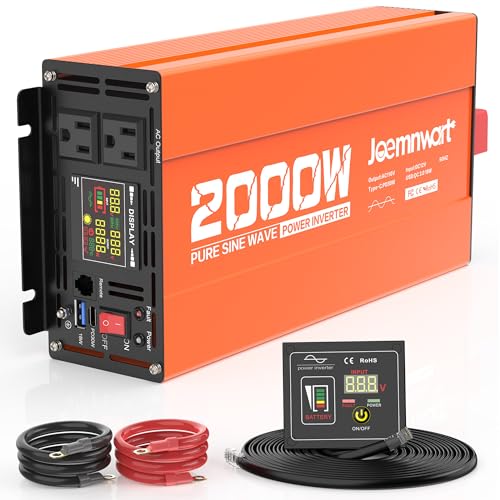
【Pure Sine Wave Power Inverter】Joemnwart 12V to 110V-120V inverter offers 2000W continuous power and 4000W peak power. With advanced pure sine wave technology, it provides high-quality AC power like mains electricity, boasting up to 90% conversion efficiency and no-load loss. This ensures stable, reliable electricity, safeguarding and prolonging the lifespan of your devices and appliances.
How Modified Power Affects Motors, Compressors, and Audio Gear
Pure sine wave inverters deliver clean power, which benefits motors, compressors, and audio gear. If you use a modified sine wave inverter, expect efficiency drops in motors and increased heat due to higher harmonic distortion. This not only shortens their lifespan but also causes audible buzzing from the winding vibration. Compressors may struggle with starting torque, risk overheating, and compromise battery life and overall power stability. For audio equipment, harmonic distortion introduces hum and distorts sound, with total harmonic distortion often exceeding 20%. This creates electromagnetic interference that sensitive analog components cannot filter out. Signs of a poor match include buzzing motors, hard-starting compressors, and noisy audio gear. Switching to a pure sine wave inverter eliminates these issues, making your equipment run more reliably, quieter, and cooler.
Pure Sine Wave vs Modified: Matching the Inverter to Your Loads
Matching your inverter to your loads requires choosing the right waveform type. Pure sine wave output is compatible with almost all devices, including sensitive electronics, resistive loads like heaters and incandescent bulbs, and inductive loads such as motors and compressors. Modified sine wave inverters are best suited for simple resistive loads and basic appliances, like lights and heating elements.
Sensitive electronics benefit from pure sine wave because it reduces harmonic distortion, preventing glitches and maintaining efficiency. Inductive loads, such as motors, need clean waveforms for proper torque; modified sine wave can cause starting difficulties, overheating, and increased noise, which can shorten inverter lifespan. Audio equipment also performs better on pure sine wave, avoiding humming and degraded sound quality. Choosing a pure sine wave inverter for mixed or complex loads helps protect your devices and extends overall system longevity by reducing undue stress on components. Using a wire stripper involves proper handling techniques to ensure safe and accurate stripping, similar to the care needed when setting up inverter connections. Understanding how a breaker box safeguards your home is equally important for ensuring overall electrical safety.

【𝟑𝟎𝟎𝟎 𝐖𝐚𝐭𝐭 𝐈𝐧𝐯𝐞𝐫𝐭𝐞𝐫】--- This pure sine wave inverter can provide 3000W continuous clean DC to AC power (6000W surge) with >91% efficiency, which strongly and effectively reduces conversion loss and protecting sensitive electronics (Microwave Oven, Laptops, CPAPs, LEDs) from damage. Handles heavy startups (Coffee Machine, Window AC, Power Tools) effortlessly. For RV, Home, Solar, Emergencies.
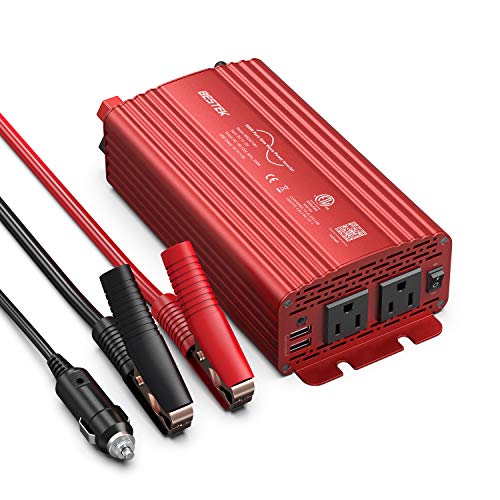
BESTEK 500W Pure Sine Wave Car Inverter:Its output waveform is same as the AC power waveform of mains power grid which delivers a smoothly-varying sine wave for sensitive electronics provided by the electric utility.Perfects for off-grid system,Lower THD,Less wear,Strong inductive Loads Capability.It has little interference with radios, communication and precision equipment.It's also recommended by most cordless tool manufacturer that a pure sine wave inverter is used to ensure long battery life

【POWERFUL DC-AC 】This power inverter provides 700W continuous DC to AC power, 1400W peak surge during load start-up, 12V to 120V AC pure sine wave with conversion efficiency >90%, reduces conversion loss
Pure Sine Wave vs Modified: The Final Decision Checklist
Start with device compatibility: identify all appliances you plan to power, including potential future additions. Favor pure sine wave if any load includes motors, compressors, pumps, medical devices, audio gear, or digital electronics. These devices are sensitive to power quality and may malfunction or get damaged with modified sine wave power. Modified sine wave is suitable only for clearly tolerant loads like basic lighting, phone chargers, and some resistive devices such as space heaters. Next, calculate the total continuous wattage plus 25 percent headroom to ensure your inverter can handle peak loads. Verify the surge requirements by comparing them to your largest starting event to prevent overloads. Check that your battery voltage and discharge capacity meet your needs, and match cable size and fuse ratings to the inverter specifications to maintain safety and efficiency. Pure sine wave inverters tend to operate without buzz, flicker, or interference, which is crucial for sensitive electronics and audio equipment. Modified sine wave inverters can cause performance issues such as noise, flickering lights, or reduced lifespan for delicate devices. Efficiency also matters—pure sine wave generally delivers better real-world performance, especially with mixed loads, reducing long-term battery drain and maintenance costs. Finally, consider inverter placement—ensure it has adequate ventilation and clearance to operate safely and prevent overheating. For the best overall system performance, pairing your inverter with an appropriately rated charge controller ensures optimal battery charging from your solar panels. If you remain uncertain about any specific load or device, choosing a pure sine wave inverter is the safest default option. Additionally, when installing any inverter for backup power, ensure your connections use appropriate torque specifications to prevent loose terminals and electrical hazards. A key point to remember is that solar panels themselves are renewable energy sources, generating electricity without depleting finite resources throughout their operational life.