
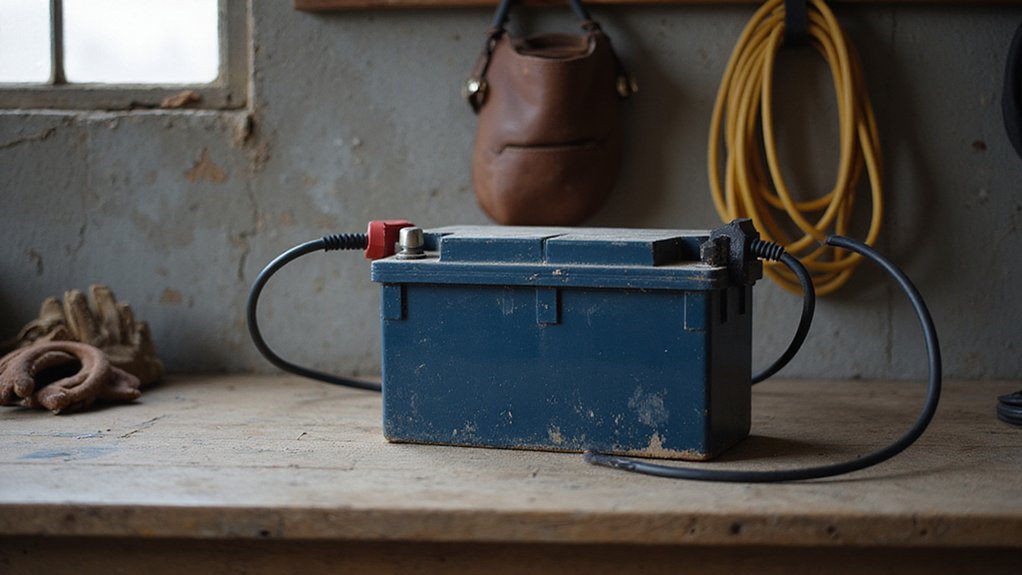

Knowing how to safely charge your deep cycle batteries is key to keeping them in good shape and avoiding hazards. The right steps ensure a safe, efficient process, whether you’re starting with a flooded lead-acid type or another chemistry.
By following proper procedures, you’ll be able to charge your batteries correctly and extend their lifespan.
Keep reading to learn the essential safety tips and the proper charging steps to get the best results.
How to Connect and Charge a Deep Cycle Battery Safely
Before connecting your charger, ensure you wear protective clothing, gloves, and safety goggles. Confirm the area is well-ventilated and away from any ignition sources to prevent hydrogen gas buildup and reduce fire risks. Use insulated tools to make connections on a stable surface, which minimizes the chance of short circuits. Match your charger to the specific chemistry of your battery—flooded, AGM, gel, or lithium—and select the correct charging profile accordingly. Set the charging current within 0.1 to 0.2 times the battery’s capacity (C-rate) for lead-acid types to optimize charging speed and battery health. If your charger or breaker box makes a buzzing sound, it may indicate a loose connection or overload that requires professional inspection. For reliable mobile charging, consider a power bank with wall outlets for emergencies when AC power is not directly available. For a comprehensive guide on choosing the right unit, review top battery picks with terminals for quality, performance, and value.
Attach the positive red clamp to the battery’s positive terminal first, followed by the negative black clamp to the negative terminal. Ensure both connections are tight and clean because corrosion or dirt can impede conductivity. Clean terminals with a wire brush if necessary. Never let the clamps touch each other during setup or disconnection, as this can cause sparks or a short circuit.
Plug the charger into AC power only after securing the battery-side leads. During the initial bulk phase of charging, monitor the temperature and airflow around the battery to prevent overheating. When it’s time to disconnect, unplug the charger before removing the clamps—first the negative, then the positive. Store the leads in a dry, safe place to prevent damage or corrosion. For disposal, prioritize recycling batteries over discarding them to ensure proper environmental management.

🔋【3-in-1 Battery Charger, Desulfator, Maintainer】The 12V 24V battery charger is designed to charge and maintain 12 volts or 24 volts batteries, it can works as 12Amp quick battery charger. Compatible with all 12.6V Lithium-ion batteries,12V and 24V lead-acid automotive,marine, deep-cycle batteries: flooded,gel,AGM,maintenance-free,WET,CAL,EFB batteries in Car,motorcycle,lawn mower,ATV,truck,tractor,SUV,boat marine, etc.🎁Nice holiday gifts for Christmas day,New year,etc.

PREVENT BATTERY FAILURE: Ensure reliable starts after storage with this 4-in-1 device that charges, maintains, tests, and restores batteries for cars, motorcycles, ATVs, trucks, SUVs, and boats.

Efficient, Energy-Saving, and Fast Charging: The TowerTop 12v battery charger offers 4 adjustable current settings (2A/10A/25A/AUTO) to meet your diverse needs. With a max charging current of 25A, you can fully charge a 100Ah battery in under 3.5 hours. Achieving an 85% charging efficiency (industry average 75%), this battery chargers is more efficient, increasing charging speed by 1640% compared to 2A car battery charger. Not only is it energy-efficient, but it also saves you a lot of wait time
How to Inspect Your Deep Cycle Battery Before Charging
Before charging, thoroughly inspect your deep cycle battery’s physical condition. Look for cracks, swelling, or leaks on the case—never attempt to charge a damaged battery, as it poses safety risks and reduces capacity. Check the terminals and cables for corrosion; clean any buildup with a wire brush to ensure a good connection and low resistance. For flooded batteries, remove the vent caps and ensure the electrolyte covers the plates in each cell. Only add distilled water if the plates are exposed, but avoid overfilling since electrolyte expands during charging. Confirm that the vent caps are tightly sealed and that the area is well-ventilated to prevent gas buildup. Always perform these inspections with the charger power turned off. A quick voltage or specific gravity test can provide a baseline, but visual inspection is your first and most critical step. When disconnecting the battery for service, always remove the negative cable first to prevent accidental short circuits and sparks. Consider pairing your battery system with high-efficiency solar panels to optimize the charging process. For optimal electrical contacts, ensure the terminals themselves are made of high-quality copper to minimize resistance and improve performance.

Fleet and Vehicle Maintenance

Quantity: comes with 10 pieces battery anti-corrosion washers(5 red & 5 green) and 2pcs Battery Terminal Cleaning Brush.

All-In-One - The ultimate battery terminal cleaning kit provides all the tools to clean and protect your battery from battery corrosion.
Why Choosing the Right Charger Matters for Deep Cycle Batteries
Choosing the correct charger is essential for optimal deep cycle battery performance and longevity. Matching the charger profile precisely to your battery chemistry—whether flooded, AGM, gel, or LiFePO4—is crucial. Each type requires a specific charging voltage and profile; using an incompatible charger can lead to poor charge quality and faster battery degradation. For example, once your battery is fully charged, you should check the reading on your solar power meter to verify the voltage and current output from your charging source match the battery’s requirements. Home battery backup users should ensure their charger can handle high capacity demands to maintain system reliability during outages. When selecting panels for charging, look for models featuring MC4 connectors to ensure a secure and efficient connection.
A lithium battery, for example, demands a lithium-specific charging profile before connection. Multi-chemistry chargers only perform correctly if you select the appropriate mode for your battery type. The charger’s voltage output must match your battery’s rated voltage, and its amperage should be suitable for the battery’s capacity—typically, a charger’s output current should be around 10-20% of the battery’s amp-hour rating. Applying too high a voltage can damage the system, while excessive amperage can stress internal components.
Using the right charger also reduces fire risks associated with overcharging. Proper matching minimizes electrolyte loss and internal corrosion, significantly extending your battery’s lifespan—often between 3 and 7 years. Ensuring compatibility between your charger and battery not only preserves performance but also maintains safety and overall system reliability.
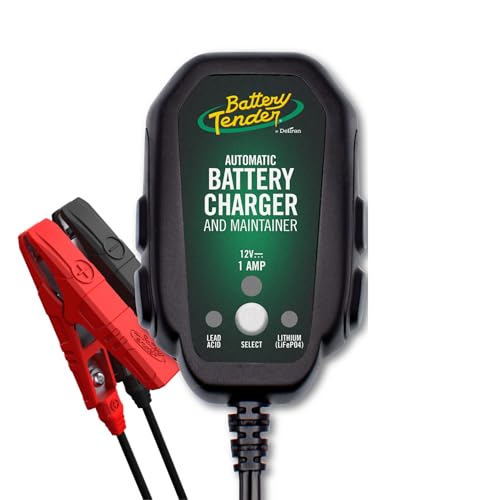
Stay Charged: 12V Battery Charger, 800mA Selectable Lead Acid/Lithium Battery Charger It will keep your battery fully charged so that it is ready to go when you are

Stay Charged: Battery Tender battery chargers and maintainers provide a full charge to your powersport vehicle’s battery before switching to float mode to maintain proper voltage levels for safe, long-term storage

Compact & Robust - Compact size for easy storage. Enhanced plastic case with top grade fire-resistant feature. Perfect for charging and maintaining all 12-volt lead-acid, flooded or sealed maintenance free batteries (AGM and gel cell). Up to 8.5FT cables with SAE quick release connection options: 7.5amp fuse protected Ring Terminals Harness and Fully insulated enhanced 50amp Alligator Clamp Harness. Works with all devices with standard SAE connectors.
What Voltage to Set for Each Charging Stage (Bulk, Absorption, Float)
Set the bulk, absorption, and float voltages based on your battery’s chemistry to ensure proper charging. For a 12V flooded lead-acid battery, target a bulk voltage around 14.4–14.8V to quickly raise the voltage while providing current. The absorption stage then maintains a constant voltage within specific ranges: 14.4–14.8V for flooded, 14.4–14.7V for AGM, and 14.1–14.4V for gel batteries. During this stage, the current gradually tapers as the battery reaches full charge. A charge controller can automate these stages by regulating the voltage and current from the solar panels. However, unlike lead-acid chemistries, a LiFePO4 battery requires a lower absorption voltage of 14.2–14.6V and does not need a float stage to prevent overcharging. If you are using a heat source without a gun, safe operating steps ensure the tubing shrinks evenly without damaging the insulation.
The float voltage is lower, designed to keep the battery topped up without gassing or overcharging. For flooded types, set it at 13.2–13.5V; for AGM batteries, 13.2–13.8V; and for gel cells, 13.1–13.3V. Accurate calibration of these voltages is essential because it affects the health and longevity of your batteries. Ensuring the bulk and absorption stages are set per cell at 2.35–2.45V, and the float at 2.17–2.23V, helps maintain optimal performance. Transition from absorption to float should only occur once the current drops significantly, indicating the battery is fully charged. Keep in mind that charging LiFePO4 cells to their full voltage of 3.65V per cell is critical, but holding them at that voltage for extended periods can cause damage.
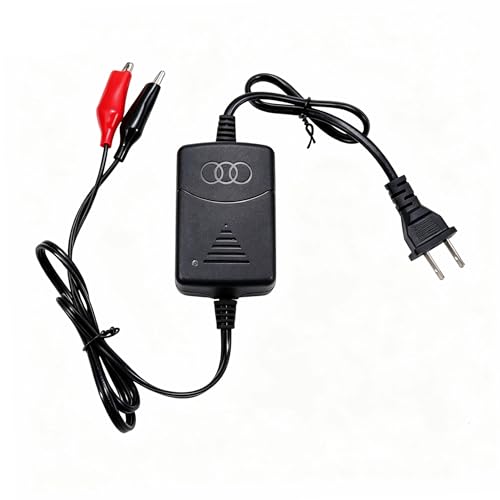
LED indicators, Red = charging, Green = Battery full. If the battery have not been used for a long time, the charger will shows green. It's normal, it needs 5-6 hours to active your battery, then the light will trun red, and charge normally.

LiFePO4 LEAD-ACID SMART BATTERY CHARGER - 12V 15-Amp and 24V 8-Amp 9-stage quick battery charger, significantly faster than standard 10-Amp or 8-Amp chargers. Perfect for charging or repairing all 12V and 24V LiFePO4 and lead-acid batteries, including AGM, GEL, SLA, and Flooded types. Ideal for cars, trucks, SUVs, motorcycles, lawn mowers, boats, and marine applications. Note:(This is a battery charger not battery jump starter).

【Short Circuit Protection】:This charger adopts the best integrated circuit solution without worrying about overcharging. It has multiple protection functions, and its protection system can prevent short circuits, overcurrent, overheating, high voltage spikes, and low voltage drops to achieve maximum safety.
How Temperature Affects Voltage Settings and Safe Charging Range
Temperature significantly influences your voltage settings and safe charging range. Since 25°C (77°F) acts as the standard reference point for lead-acid battery charging, you must adjust your voltage based on temperature deviations from this baseline. Use temperature compensation with a coefficient of about –3 mV per cell per °C. In higher temperatures, reduce the charging voltage to prevent overcharging and excessive gassing; for a 12V system, this typically means lowering the voltage by approximately 24 mV for each degree Celsius above 25°C. Conversely, in cold conditions, increase the voltage to counteract slower charge acceptance and avoid sulfation. The safe charging temperature range varies: flooded batteries generally tolerate 0°C to 50°C, while AGM types handle from –20°C up to 50°C. For optimal performance and longevity, aim to charge within 10°C to 30°C. Always ensure your charger has automatic sensing features to continuously adjust voltage in response to temperature changes. This will help keep your charging within the manufacturer’s recommended limits, preventing damage and ensuring safety. Proper voltage regulation is similar to selecting the right heat shrink tubing for a given wire gauge, as both require precise environmental adjustments for safe and effective operation. Choosing between positive and negative battery disconnect switches involves similar consideration of environmental and system conditions to ensure safe circuit isolation. Using a digital multimeter to verify voltage settings before charging allows for precise adjustments similar to those reviewed in professional tool comparisons.
What to Watch for During Deep Cycle Battery Charging
During deep cycle battery charging, several signs indicate the process is proceeding correctly or flag potential issues. Keep an eye on voltage and current behavior across the bulk, absorption, and finishing stages. A steady increase in voltage coupled with a tapering current suggests proper charging; however, if voltage stalls or current remains high for too long, it may indicate overcharging or sulfation. Swelling, leaks, or electrolyte loss are clear signs of overcharge, which can harm the battery’s health and safety. Inspect the terminals regularly; corrosion often accompanies gassing and can impair connections. Listen for hissing or bubbling sounds—strong gassing sounds and a rotten-egg odor signal excessive internal gas production, which is unsafe. Slow acceptance of current might reflect rising internal resistance or sulfation, while voltage climbing too rapidly warns of possible overvoltage. Confirm that the charging process completes within the expected time; ongoing charging without completion can suggest internal damage or malfunction. A hot breaker box can also indicate electrical faults that may affect charger performance and safety. After charging, measure the rested voltage; a lower-than-expected reading indicates capacity loss and aging. Always ensure vent paths are clear for gases to escape safely, and remain alert to any fault signals from your charger.

[25A Suitable For LiFePO4 Lead-Acid Battery Charger] 12V 25Amp, 24V 15Amp battery charger, 5 Level adjustable current 2A/8A/20A/25A/AUTO can meet your different needs. Additionally, Charge or repair all 12V and 24V lead-acid automotive, Lifepo4, marine, and deep-cycle batteries, including AGM, GEL, SLA, Flooded in cars, trucks, SUVs, motorcycles, lawnmowers, boats, marine, etc.
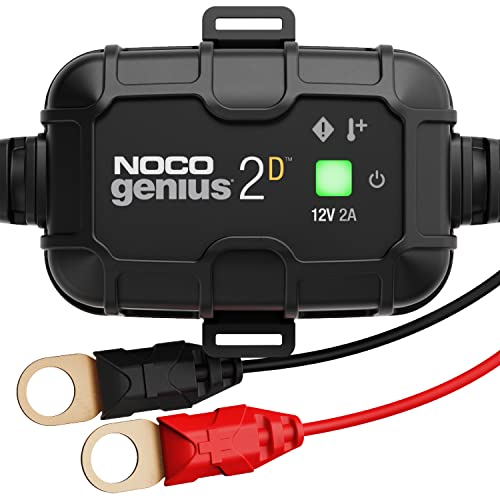
MEET THE GENIUS2D — The all-new direct-mount onboard battery charger for an under-the-hood battery charging system and year-round battery maintenance.
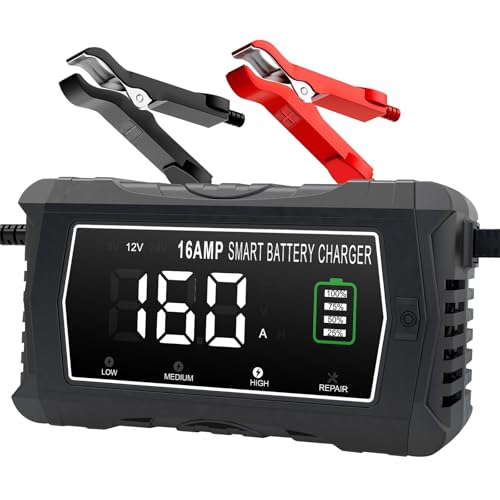
【Lithium LiFePO4 LEAD-ACID SMART BATTERY CHARGER】6V 5-Amp ,12V 16-Amp and 24V 10-Amp 10-stage Fully-Automatic Smart battery charger, charging speed is much faster than 10-Amp or 8-Amp automatic chargers. Charge or repair all 12-volt and 24-volt Lithium LiFePO4 or lead-acid automotive, marine and deep-cycle batteries including AGM, GEL, SLA, Flooded in cars, trucks, SUV, motorcycles, lawnmowers, boat marine, etc.
How to Unplug Without Killing Your Battery
To unplug safely without damaging your battery, follow this sequence: first, turn off the charger and unplug it from the AC outlet. This action reduces the risk of sparks near the battery, which is especially important to avoid igniting hydrogen gas emitted during charging. Treat wire loom materials as a key part of your battery’s wiring layout for safe, organized connections. You can verify correct breaker function by testing the AC outlet with a multimeter set to measure voltage.
Next, verify that the battery’s charge cycle has ended before proceeding. Always remove the negative (black) clamp first, then the positive (red) clamp. Removing the negative terminal first helps prevent short circuits if your tools contact metal parts during disconnection. Keep your hands and work area dry to minimize electrical hazards. Never let the clamp ends touch each other or any metal surface; this can cause sparks or short circuits.
Treat the battery area as a strict no-spark zone—this is crucial for safety. After unplugging, check the terminals for looseness or corrosion, which can affect battery performance and safety. Following this precise sequence each time protects your battery’s terminals and extends its lifespan. Manual disconnection after full charge also helps prevent overcharging damage, making it a vital step in proper battery maintenance. If you are pairing your battery with a solar setup, selecting high-efficiency solar panels ensures your charging system operates effectively for powering loads like an air conditioner.
The One Extra Step Only Flooded Deep Cycle Batteries Need
To perform the equalization step safely, start by checking your electrolyte levels to ensure the plates are fully covered. Use only distilled water to top off any low levels. Once this is done, set your charger to equalization mode. During this process, you’ll notice the voltage on a 12V battery rise to around 16V. Run the charger for 2 to 4 hours, or until the specific gravity of the electrolyte stops increasing. Never attempt this with sealed AGM or gel batteries, as they cannot vent gases safely. When choosing your solar panels to charge these batteries, consider monocrystalline panels for their high efficiency and longevity.
Simple Habits That Double Your Deep Cycle Battery’s Lifespan
The most impactful habit to extend your deep cycle battery’s lifespan is to recharge it immediately after each use. Allowing the battery to sit in a discharged state speeds up sulfation, which permanently reduces its usable capacity. You should avoid deep discharges below a 50% state of charge, as this decreases plate stress and significantly prolongs the number of cycles the battery can endure. Using a smart charger that offers bulk, absorption, and float stages helps deliver a chemistry-matched profile, which minimizes heat buildup and internal stress, ensuring safer and more efficient charging. Keep the terminals clean and connections tight to prevent voltage drops and resistance buildup. When storing the battery, keep it fully charged in a cool, dry location and disconnect any parasitic loads to prevent silent drains. Adopting these systematic habits can double your deep cycle battery’s lifespan.
When to Stop Charging and Call a Professional
Stop charging immediately when your charger automatically switches to float or maintenance mode, unless the device is specifically designed for safe long-term maintenance charging. Cease charging if the battery temperature exceeds 110°F (43.3°C), as overheating signals internal failure or overcharge issues. Also, halt charging if you notice violent gassing, electrolyte spewing, or swelling of the battery—these signs indicate severe damage that requires professional assessment. If cracks, leaks, or deformation of the battery casing are visible, stop and remove the battery from service.
Do not attempt to charge a frozen battery, as thawing will not make it safe and can cause further damage. You should call a professional if the battery repeatedly fails to reach full charge, heats up rapidly despite reduced charging rates, or shows visible physical damage. Always have a professional evaluate your charging setup and equipment to prevent fire hazards. If the battery is damaged or unsafe, prioritize proper recycling through certified facilities. Never dispose of damaged batteries in regular waste, as handling hazardous materials improperly harms both your system and the environment.