
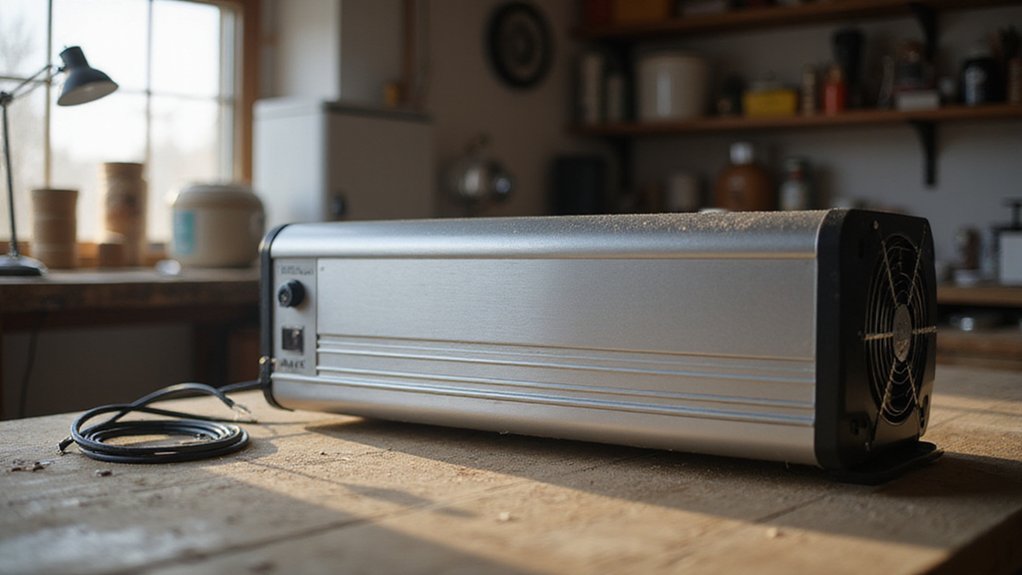

Wondering what a 2000-watt inverter can actually power? It’s a solid size for running common household appliances and small tools at the same time, but there are limits.
By understanding the wattage needs of your devices and factoring in efficiency and safety margins, you’ll be able to plan a reliable, stable power setup.
Keep reading for the full list of what this inverter can handle.
What Can a 2000 Watt Inverter Really Handle?
A 2000-watt inverter can handle continuous loads up to 2000W, but real-world usable power is typically 30%–60% of that rating to account for losses and safety margins. Motor-driven devices, such as refrigerators or power tools, often require 2–3 times their running wattage during startup. A 2000W inverter usually provides a surge capacity around 4000W briefly to handle these spikes, but sustained overloads will trip the protection circuit.
On a 12V system, drawing 2000W from the inverter translates to roughly 167 amps from the battery before accounting for efficiency losses. After factoring in efficiency, expect to draw about 220 amps from the battery to deliver 2000W AC power. To avoid overloads or protection trips, ensure your portable batteries are properly rated for peak current demands and equipped with sufficiently thick cables. When connecting battery cables, always remember that negative battery cables come off first to prevent dangerous short circuits.
Compatibility with solar panels requires panels capable of recharging the battery bank between uses. If you plan to run continuous loads, keep them below approximately 1600W for consistent and reliable operation. Higher loads may work briefly, but over time, insufficient recharge or overheating could become issues.
Which Kitchen Appliances Work With a 2000 Watt Inverter?
A 2000-watt inverter can power many common kitchen appliances, but your choices depend on each device’s running wattage and startup surge. For cooking appliances, a microwave drawing 1,500W or a toaster oven using 1,200W can operate alone without issues. However, running both at the same time exceeds the inverter’s capacity. Small kitchen gadgets like blenders and slow cookers typically draw under 800W, making them easy to run simultaneously. Electric kettles over 1,200W surpass the inverter’s limit, so opt for low-wattage camping models if needed. Coffee makers around 1,000W can work well, but feature-rich units with stronger heating elements may push beyond the limit. Toasters over 1,200W, especially four-slice models, are not suitable. Air fryers generally operate below roughly 1,800W, so they can run with no other active loads. For comparison, balcony solar panels typically produce far less wattage and cannot directly power these high-draw appliances. Portable induction cooktops require careful power management because their wattage varies and can spike during heating cycles. Selecting a model with high-quality lugs and terminals ensures reliable electrical connections and minimizes power loss under load. Short duty cycles help reduce battery strain and prevent overloads. For safety, a high-wattage inverter like a 2000W model usually has built-in overload protection that shuts it down if the total draw exceeds its limit.

【𝐏𝐫𝐨𝐟𝐞𝐬𝐬𝐢𝐨𝐧𝐚𝐥 𝟐𝟎𝟎𝟎𝐖 𝐈𝐧𝐯𝐞𝐫𝐭𝐞𝐫】Vansdon inverter efficiently converts 12V DC to 110/120V AC, delivering 2000W continuous / 4000W surge power. Advanced pure sine wave technology produces grid-identical AC power with >91% high efficiency, minimizing energy waste and no-load loss. Run RV essentials like LED lights (10W) and vent fan (30W) for over 15% longer on the same 100Ah battery compared to standard models. Safely powers sensitive electronics—laptops, CPAP machines, audio systems—with zero risk of damage.

【POWERFUL DC to AC CONVERTER】: This solar inverter delivers 2000W of continuous battery DC 12V to AC 110V 120V power and up to 4000W of peak surge power when the load is started. The 12V inverter has a conversion efficiency of greater than 93% during normal working and low no-load losses

【𝐄𝐚𝐬𝐲 𝐭𝐨 𝐈𝐧𝐬𝐭𝐚𝐥𝐥 𝐚𝐧𝐝 𝐔𝐬𝐞 𝐎𝐟𝐟-𝐆𝐫𝐢𝐝 𝐋𝐢𝐟𝐞 𝐏𝐨𝐰𝐞𝐫 𝐒𝐨𝐥𝐮𝐭𝐢𝐨𝐧】: This 2000W inverter 12v to 110v converts 12V DC power into 110V/120V AC, so you can run everyday devices anywhere. It provides 2000W continuous and 4000W peak power, ideal for for short-term offline living. Simply connect to a 12V battery for instant outlet power. Low standby current (0.6A ±0.3A) is perfectly safe for use. Perfect for Basic RVs, car travel, and backup use.
Can a 2000W Inverter Run a Refrigerator or Freezer?
A 2000W inverter can run a refrigerator or freezer, but it depends on the appliance’s startup surge and the inverter’s surge capacity. Most refrigerators draw between 100 and 250 watts during regular operation, but their compressors can surge to 600–1,500 watts at startup. Freezers have similar patterns, often needing 400–1,200 watts during startup. To safely power these appliances, your inverter’s peak rating—often around 4000W for a 2000W continuous inverter—must comfortably exceed the startup surge. Using a pure sine wave inverter is recommended because it provides clean power that allows the compressor motor to start reliably. Energy-efficient, newer models with Energy Star ratings tend to have lower startup surges, making them easier to run on an inverter. Remember, always check your appliance’s specific startup wattage and compare it to your inverter’s surge capacity to ensure compatibility. Proper wiring and connections, such as securing wire ferrules on stranded cable ends, prevent poor contact that can cause voltage drop and overheating under heavy loads. MC4 connectors are commonly used to link solar panels to an inverter system, ensuring secure and efficient power transfer. Proper power management avoids overloads and ensures smooth operation. A properly sized inverter acts like a circuit breaker in your system by protecting against dangerous overloads during high-draw events.
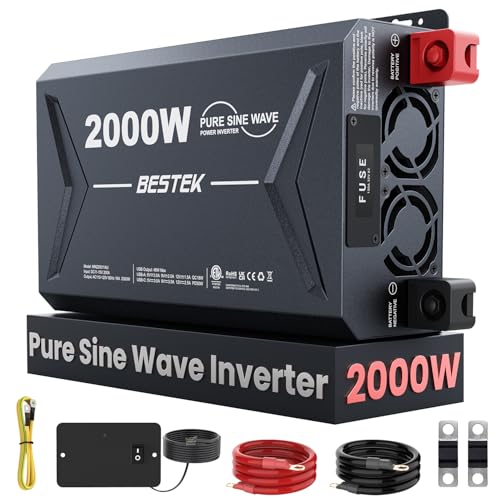
BESTEK 2000W Pure Sine Wave Inverter:2000W continuous power, peak 4000W, output waveform is pure sine wave, close to mains power, better compatibility, suitable for laptops, drones, camera batteries, microwave ovens, refrigerators, coffee machines, CPAP machines, fans, motor equipment, etc.

【POWERFUL DC-AC】This 2000 watt inverter is perfect for solar systems. The power inverter 12V to 110V provides 2000 watt continuous DC to AC power, 4000 watt peak surge during load start-up, 12V to 120VAC pure sine wave with conversion efficiency >90%, reduces conversion loss.

【Upgraded 2000W Pure Sine Wave Inverter】: 2000W pure sine wave inverter converts 12V DC to 110V/120V AC with a peak power of 4000W. Advanced pure sine wave technology achieves extremely low no-load losses, delivering conversion efficiency exceeding 91% during normal operation. Ensures smooth appliance operation, eliminates abnormal current noise, and
What Power Tools Can a 2000 Watt Inverter Run?
A 2000-watt inverter can run most major power tools with some limitations. Continuous loads should stay at or below 2,000 watts, while startup surges must remain within the inverter’s peak capacity, often around 2,400 to 4,200 watts. For example, a 7 1/4-inch circular saw with a peak surge below 2,400 watts can run, but exceeding that might trip your inverter. A 10-inch miter saw consuming around 1,800 watts typically works, but it’s wise to leave margin for startup surges. Drills, jigsaws, and routers under 1,500 watts are generally reliable choices. Belt sanders with a running wattage of about 1,200 can operate smoothly, but their surge demands of 2,400 watts may cause issues. Avoid running motor-heavy tools like grinders simultaneously, especially if their combined startup surges exceed the inverter’s capacity. Air compressors are not suitable because their startup surges often surpass 3,000 watts. Low-power devices such as wireless routers and outdoor lighting draw minimal power, allowing you to run them alongside power tools without concern. For reliable outdoor power, look for models that offer strong surge capacity to handle tool startups without tripping. If you experience a tripped inverter, check your apartment’s breaker box to quickly reset power. For extended operation, a battery backup system can provide sustained power without relying on a noisy generator.
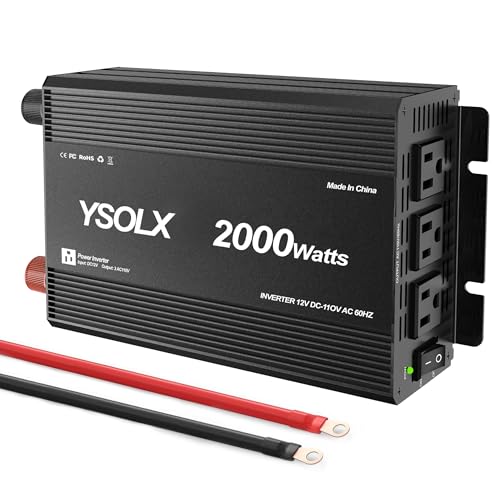
【2000W High Power Output】This 12V to 110V power inverter delivers a continuous 2000W of power, efficiently converting DC 12V battery power to 110V AC household electricity. It serves as an ideal 2000-watt inverter for powering tools, appliances, and electronics in your car, truck, or RV, ensuring reliable performance wherever you go

【POWERFUL DC to AC CONVERTER】: This solar inverter delivers 1000W of continuous battery DC 12V to AC 110V 120V power and up to 2000W of peak surge power when the load is started. The 12V inverter has a conversion efficiency of greater than 90% during normal working and low no-load losses
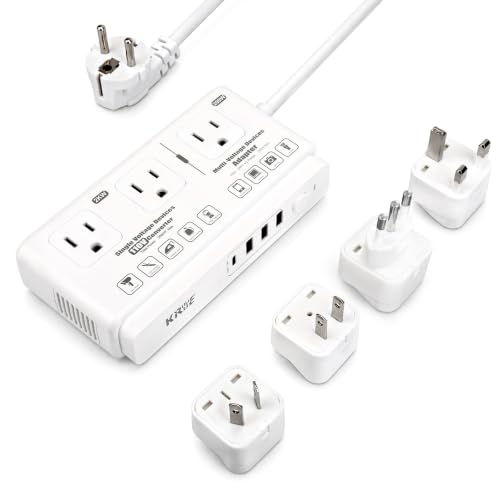
Global Compatibility: Designed for the global traveler, our 220 v to 110 v electrical converter adapter combo ensures your electronic devices are powered up in over 156 countries. Featuring 5 plugs (type A, E/F, G, I, L), it's your perfect travel companion across Europe, the USA, Asia, Africa, Australia, Ireland, Japan, Thailand, Philippines, South Korea, Peru, France, Argentina, Greece, and Vietnam.
Which Electronics, Fans, and Lights Can You Run All Day?
You can run several low-wattage electronics, fans, and lights all day on a 2000-watt inverter, as long as the total power consumption stays below a few hundred watts. For example, a laptop (60W), a smartphone charger (10W), and a WiFi router (around 15W) together consume approximately 85W, well within the inverter’s capacity. Adding a ceiling fan (50W) or an 80W box fan along with multiple LED bulbs (10W each) keeps the total load comfortably below 200W. An arrangement of a laptop, a portable fan, and two LED bulbs uses around 130W, which preserves battery life by reducing drain. Proper inverter placement is essential for ventilation, preventing overheating during prolonged use. Fans generally stay under 100W each, and LED lights are the most efficient, with bulbs typically consuming between 5W and 15W. For reliable backup power, a power bank with wall outlet can also serve as a convenient alternative for charging smaller electronics. For the battery that powers the inverter, a top battery tray helps ensure a secure fit and stable connection.

Excellent Performance: The high power of 2000W enables it to complete the conversion of direct current to high-frequency alternating current. The built-in pure copper transformer and microcomputer numerical control chip ensure its long-term stable operation. In addition, it utilizes ultrasonic inverter technology to effectively stun fish within 6.56-16.4ft, providing you with a successful fishing experience.

Pure Sine Wave Output : Smooth and perfect pure sine wave output, just the same as home power/city power, Provide max 2000 watt continuous power and 4000 watt peak power at 60Hz frequency, power your 110v 120v ac appliance with a 24v power battery bank (battery voltage 20v to 30v is acceptable)

1000w Pure Sine Wave Inverter: Power inverters for vehicles 12v to 110v deliver clean and stable Ac 110v ±10v power for sensitive electronics. The pure sine wave output protects appliances such as laptops, and refrigerators, ensuring smoother, safer operation compared with modified sine wave inverters
How to Calculate Your Total Load and Avoid Tripping the Inverter
Calculate your total load by listing all appliances you plan to operate simultaneously. Find each device’s watt rating on its label or manual—if only amps and volts are given, convert to watts using the formula Watts = Amps × Volts. Add up all the running wattages to determine your continuous load. Ensure this sum does not exceed your inverter’s continuous rating, typically around 2000W for standard models.
Next, add a safety margin of 20 percent to account for startup surges caused by motors, compressors, or other high-inrush devices. This prevents the inverter from tripping during initial startup. Remember to factor in battery efficiency losses, which increase the current draw from your battery bank and can lead to voltage drops. Adjust your DC input calculations accordingly to maintain stable operation.
Additionally, consider the power factor of your devices. Low power factor appliances draw more apparent power, measured in volt-amperes (VA), than their wattage indicates. If your devices have a low power factor, they may overload the inverter even if the watt total appears safe. Ensuring your battery bank can supply enough DC current at your system’s voltage for both continuous and surge loads is essential. Without sufficient current, you risk voltage sag and potential system failure. For the best results, pair your inverter with top battery picks that offer high-quality terminals to ensure stable current flow and reduce connection resistance.

Compatible with De-Walt 20V Batteries: This Azocek inverter is specially designed Compatible with De-Walt 18V/20V batteries (e.g., DCB206, DCB205, DCB204). Powered directly by the battery, provides portable power for outdoor activities or emergencies anytime, anywhere (Battery not included)

220W Power Inverter: Converts DC 20V to AC 110V-120V, allowing you to use the battery as a portable power source for emergency power, outdoor activities, or home backup

Portable AC Power Anywhere: Converts compatible battery power into 110V AC output up to 220W, making it ideal for small appliances, fans, lights, chargers and emergency backup during camping, outdoor work and travel. Battery Not Included