
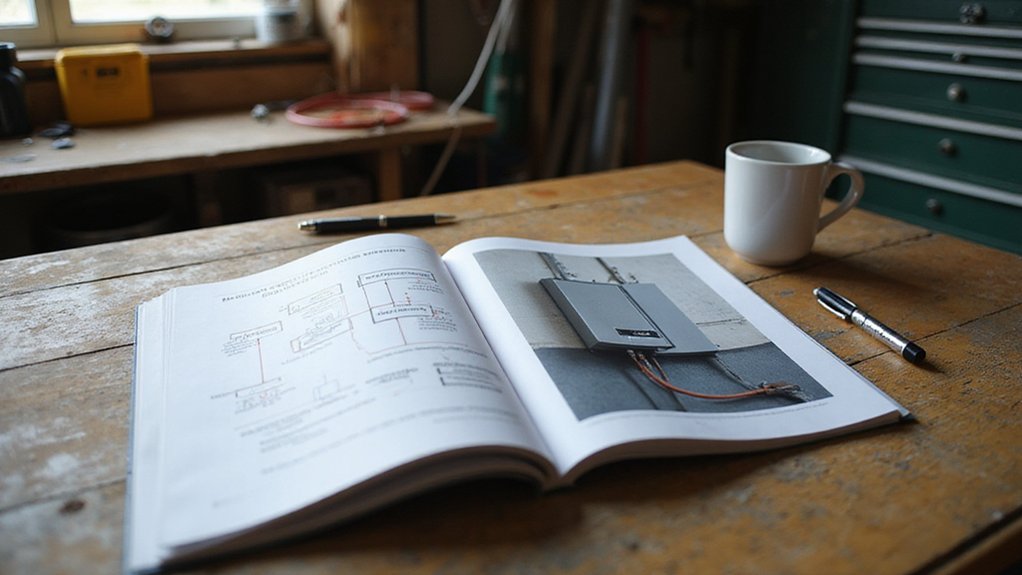

Ever wonder how your home automatically switches to backup power during an outage? An automatic transfer switch (ATS) keeps a close eye on your utility power and switches to your generator when needed.
It ensures a seamless transfer, preventing dangerous backfeeds and keeping your home powered smoothly. Here’s how this quiet marvel works behind the scenes.
What Does an Automatic Transfer Switch Do?
An automatic transfer switch (ATS) automatically shifts your electrical load from the primary utility source to a backup generator during a power outage. It acts as a self-controlling device that detects the loss of utility power and then signals the generator to start. Once the generator reaches a stable power level, the ATS seamlessly switches the load to this backup source, ensuring continuous power without manual intervention. When utility power is restored and stabilized, the ATS switches the load back to the main utility line. For a reliable installation, the ATS should be paired with quality, performance, and value top battery picks to ensure consistent startup power.
This switching process is crucial for safety and reliability. It prevents both the utility grid and the generator from feeding power into each other, which could cause backfeeding—a dangerous situation for utility workers and equipment. The ATS’s automatic operation minimizes downtime for critical systems such as lights, motors, and computers, making your facility more resilient during outages. This ensures that charge controllers manage battery charging effectively to prevent overcharging and system damage. Just as an ATS separates grid and generator power for safety, a GFI breaker serves a similar protective role by instantly cutting power when it detects a ground fault to prevent electric shock.

【CONVERSION FUNCTION】: The automatic transfer switch seamlessly transitions between power sources, ensuring continuous power supply during power outages, thereby protecting your appliances and eliminating downtime

Superior Quality: This 100 amp transfer switch is UL listed and its housing meets NEMA 3R standards, making it rust-proof, durable, and weatherproof. It can withstand harsh weather conditions and ensure uninterrupted functionality even in rain, hail, or high winds
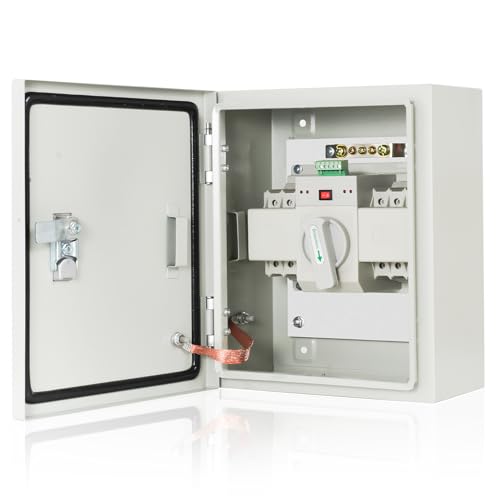
Versatile Application & Reliable Protection This 125A automatic transfer switch provides seamless dual power transfer for residential, commercial, and industrial applications. Designed as a reliable transfer switch for home generators, it ensures complete protection for your electrical equipment and systems during power outages.
How an ATS Monitors Your Utility Power
An ATS monitors your utility power continuously, checking for any failures instantaneously. Its controller keeps a constant eye on utility voltage, frequency, and phase balance—doing so 24 hours a day, seven days a week, even when your generator is running. This microprocessor-based system samples real-time utility metrics like true RMS voltage and line frequency, comparing them against preset thresholds. It tracks overvoltage, undervoltage, underfrequency, and overfrequency conditions all at once. For three-phase systems, it also monitors phase imbalance and phase rotation. If a single phase drops out, the system detects it immediately, not just during total outages. The controller constantly compares these live readings to user-defined set points to determine if the utility source is still reliable. This ongoing sensing provides you with precise information on power quality, going beyond mere voltage presence to include stability and responsiveness. For reliable backup power, the system can be paired with a 24V battery with charger to maintain readiness. The system also provides real-time voltage monitoring via five LED LCD screens that display voltage readings for each connected power source. This is similar to how a solar charge controller regulates and monitors energy from photovoltaic panels to ensure stable battery charging. For accurate measurement of these critical power metrics, the ATS relies on true RMS technology to capture the true heating value of complex waveforms.
The Transfer Sequence: From Outage to Generator Power
Once the ATS detects an outage, usually when voltage drops below 80–85 percent of the normal level, it begins the transfer sequence. It sends a start command to your generator after a short delay, allowing the generator time to power up. The generator then accelerates and stabilizes at its operating voltage of around 240–246 VAC and frequency of 60–62 Hz, preventing power from switching prematurely on weak or unstable utility sources. For homes with solar storage, the ATS can also prioritize switching to a solar-powered battery to maintain seamless backup power during an outage.
Next, the ATS physically switches your load from the utility to your generator, isolating your circuits completely from the utility grid. This prevents any backfeed issues and guarantees a clean transfer. This isolation is similar to why negative battery cables come off first, as both procedures prioritize safety by preventing unintended current paths. Although this creates a brief power interruption, it ensures your system is powered solely by the generator until the utility supply stabilizes again. Once utility power returns and reaches stable levels, the system automatically reverts to utility power, turning off the generator once the transfer is complete.
After the transfer back to utility power, the generator enters a cool-down period. This phase lasts until the engine temperature drops sufficiently, helping to prevent thermal shock and reduce wear. Only then does the generator shut down automatically, ensuring it remains in good condition and ready for the next outage.
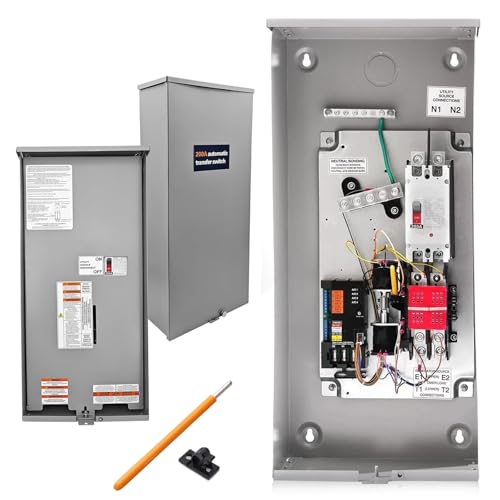
Seamless Power Transitions : This 200 Amp Automatic Transfer Switch is designed to seamlessly transfer the electrical load between a utility (primary) power source and a generator (backup) power source, it powers your entire household, including high-demand appliances, during outages.

【Compatibility】 :This 200 Amp Single Phase Generator Automatic Transfer Switch compatible with Generac RXSW200A3 Automatic Smart Transfer Switch,120/240-volt Compatible with 8-24 KW home standby generators.Designed for use with single-phase generators, this transfer switch seamlessly transfers power from utility to generator

How an Open-Transition Switch Prevents Backfeed
An open-transition switch prevents backfeed by using a break-before-make sequence, physically disconnecting from your utility source before connecting to your generator. This creates a brief, intentional interruption in the circuit, leaving an open gap that makes simultaneous connection impossible. As a result, backfeeding is halted at the source because your generator’s power cannot flow backward into utility lines. The utility side is fully isolated before the generator is connected.
This design allows you to perform generator maintenance safely, knowing that no accidental reverse energization can occur. Since power synchronization is not necessary, the open-transition switch ensures your generator and the grid are never electrically connected at the same time. By physically enforcing separation, the switch blocks any continuous path between sources during transfer, protecting utility workers and equipment from potential backfeed risks.

【Dual Power Automatic Tranfer Switch】: The automatic transfer switch is an online switching relay that facilitates the transition between the primary power source and the backup power source. In the event of a power outage from the primary source, the load power is seamlessly switched to the backup source. Conversely, when the primary power source is restored, the load power is switched back to the primary source.

AUTOMATIC WHOLE-HOME BACKUP ACTIVATES THE MOMENT UTILITY POWER FAILS: senses an outage, starts your compatible Generac generator, and transfers your entire panel automatically, unlike a manual interlock kit requiring hands-on action every time

✔ 【Easy to install】Automatic transfer switch, an easy to mount 15Amp inline transfer relay provides switching between AC INPUT 2 (Utility or Shore Power) and AC INPUT 1 (Inverter or Generator) AC source. When AC INPUT 2 is powered, the load power will be switched to AC INPUT 2. When AC INPUT 2 is powered off, the load power will be switched to AC INPUT 1.
When Your ATS Retransfers to Utility Power
When your ATS retransfers to utility power, it does so only after utility conditions are stable. Typically, the retransfer process waits between 5 to 30 minutes—this delay ensures the utility voltage and frequency are within acceptable thresholds before switching back. Once stable conditions are confirmed, the ATS performs a break-before-make transfer, opening the generator connection before closing the utility connection. This sequence prevents backfeed and avoids momentary paralleling of power sources, which could damage equipment. A similar safety-first approach is used in solar systems, where microinverters and optimizers both require stable grid conditions to operate effectively.
The ATS verifies utility stability by checking parameters such as phase integrity, ensuring the power quality is sufficient for safe transfer. It will not switch back during voltage flickers or brief fluctuations that do not meet the criteria. After completing the transfer, the system releases the load prioritization from the generator, allowing the utility power to carry the entire load normally. The generator then runs briefly unloaded, ready to shut down when the transfer completes.
For maintenance purposes, you can program delay settings into your ATS. This allows retransfer to occur at scheduled times, minimizing disruptions during planned inspections. The system’s logic guarantees power only switches to utility when conditions are truly suitable. This careful approach reduces stress on your equipment and supports a seamless, reliable power transition.
The Cooldown Period: Why Your Generator Needs It
A cooldown period of about five minutes is essential to protect your generator. During this time, the generator runs unloaded, allowing oil and coolant to carry heat away from internal components. Without this step, excessive heat remains trapped inside the engine, increasing the risk of thermal shock to pistons and bearings. This process is particularly important for turbocharged diesel units, where the turbo stays extremely hot after load removal. Proper generator maintenance includes allowing this brief idle cycle, which helps improve heat dissipation and reduces wear and carbon buildup. Regular cooldown cycles also directly support long-term cost savings by minimizing the frequency of major repairs, a key benefit often highlighted when comparing the overall value of solar and backup power systems. Keep in mind, cooldown is about lowering internal heat, not ambient temperature, so it typically lasts three to five minutes in diesel models. Taking this step regularly extends your system’s reliability and prevents costly damage. For similar protection against heat-related damage in electrical systems, cutting heat shrink tubing lengthwise is never recommended as it compromises the insulation and mechanical integrity. Just as with generators, simple habits such as avoiding full discharges and extreme temperatures can significantly prolong a portable power station’s lifespan.