
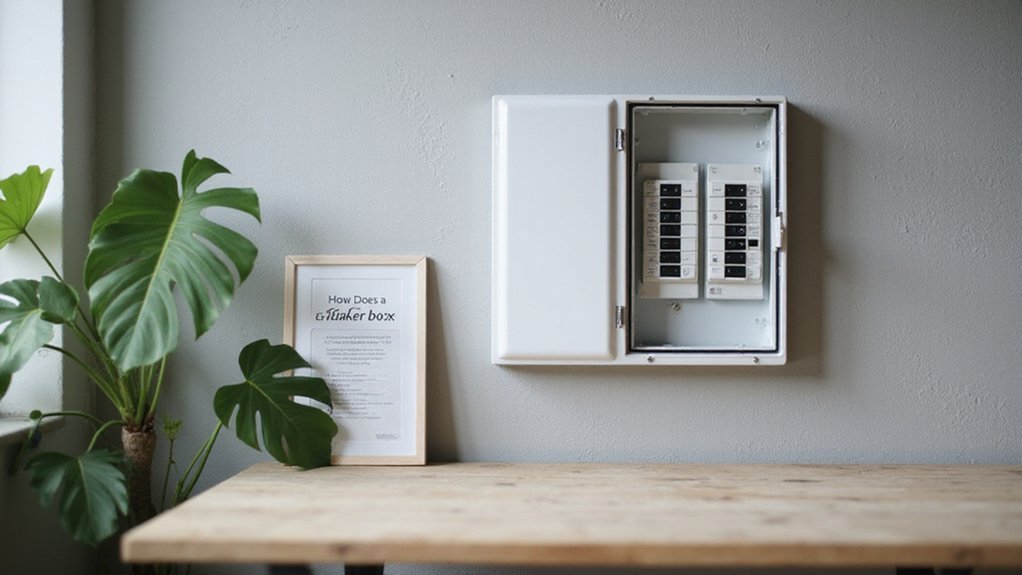

If you’ve ever wondered how your home’s electrical system keeps everything safe and running smoothly, you’re not alone. That small box on the wall, called a breaker box, is actually your home’s safety hub, controlling and protecting your power supply.
In simple terms, it manages how electricity flows and keeps you safe from overloads or shocks.
Keep reading to learn how this vital system works behind the scenes.
What Is a Breaker Box and Why Does Your Home Need One?
A breaker box is essential because it serves as your home’s main safety hub for electricity. It is a metal panel housing circuit breakers that divide incoming power into separate circuits for lights, outlets, and appliances. Located in places like the garage, basement, or utility room, it ensures each circuit is protected from overload. When too much current flows through a circuit, the breaker automatically shuts off power to prevent overheating, electrical fires, and shocks. Without a breaker box, your home faces risks of property damage and ruined appliances. Modern breaker boxes are different from older fuse systems; they often feature sleek designs or wireless connectivity for smart home integration. Despite these upgrades, their core role remains the same: providing a single, reliable point to disconnect power and safeguard your electrical circuits. The technology inside relies on electromagnetic mechanisms to detect overloads and trip the breaker instantly. For additional protection, choose top battery picks that feature high-quality terminals for stable connections during power outages. When working on any electrical system, always disconnect the negative battery cable first to prevent dangerous short circuits.
How Your Breaker Box Gets Power From the Utility Line
Your breaker box receives power through two hot conductors and one neutral wire coming from the utility. These wires first connect at the service lugs inside the box, which remain energized even if the main breaker is off. The neutral wire lands on the neutral bus bar, while a grounding conductor connects to the grounding bus. From there, the power is distributed via internal bus bars that feed the branch circuits. The breaker box itself does not generate electricity; it simply safely distributes, splits, and protects the utility supply flowing into your home. Unlike a solar generator, which stores energy from sunlight in a battery, a breaker box only manages incoming grid power.
The Main Breaker: Your Breaker Box’s Master Power Switch
The main breaker is typically the largest switch in your panel and functions as both a master disconnect and a safety device. Flipping it off cuts power to all branch circuits, allowing you to work safely on your electrical system. It is designed to trip if current exceeds the panel’s capacity, protecting the wiring, bus bars, and overall system from overloads. Proper labeling of the main breaker’s position ensures you can locate it quickly. Even when the breaker is off, some internal components remain energized, so always verify that circuit insulation is intact before touching anything inside the box. This breaker plays a crucial role in preventing overheating, melting wires, and fires, so always handle it with respect and caution during electrical work. For safe installation, ensure all grounding wires are connected with proper torque to prevent loose connections. For solar installations, many systems use MC4 connectors to ensure secure and weatherproof connections between panels and the breaker box. For larger setups, RS485 cables are commonly used to enable reliable long-distance communication between the inverter and monitoring equipment.

Versatile Application: Our circuit breaker labels are specially designed to fit seamlessly on your circuit breaker switches. They adhere securely to any surface, indoor or outdoor, and are engineered to withstand diverse conditions while maintaining their durability and effectiveness

【Compatible Models】Generator Interlock Kit Compatible with Square D QO or Homeline 150 or 200 amp panels.

⭐️Compatibility: This interlock kit for Square D vertical 150 or 200 amp breaker panels, the spacing between main and the closest generator breaker is 3 1/4 to 4''.
Individual Breakers: What Each Switch Controls in Your Home
Individual circuit breakers control specific branch circuits throughout your home. They protect dedicated zones such as kitchen outlets, bathroom lights, or the HVAC system. When a breaker trips, its handle moves between ON and OFF positions, and you can reset it by pushing fully OFF before returning it to ON after resolving the fault. Turning one off isolates that circuit, limiting the impact of faults to one area and making maintenance easier. When considering backup power, many homeowners now pair breakers with top solar generators for reliable power backup to keep essential circuits running during outages. For regular use, keeping your breaker box on is the standard recommendation to ensure all circuits remain active. Proper wiring of connected devices, following code-safe practice, prevents overloading and ensures safety.
It’s essential to match each breaker’s circuit capacity—measured in amps—to the wiring and load it supports. Using a breaker with an incorrect rating can create a fire hazard. Always verify that the breaker is compatible with your panel brand. Different brands and types may not fit properly or provide the right protection. Your panel’s directory identifies each breaker’s purpose, but older labels can be unclear or inaccurate. Single-pole breakers typically control lights and outlets, while double-pole breakers handle larger loads like dryers or ranges.

Single pole, 20 Amp, 120V type QP Circuit Breaker

EASY - Leviton's revolutionary design allows the entire Load Center to be wired at rough-in without any circuit breakers present.

POWER PROTECTION - This thermal magnetic circuit breaker provides protection for residential and commercial electrical systems. ABB's 20A single-pole breaker protects again electrical faults to enhance safety.
Bus Bars: How Electricity Travels Inside Your Breaker Box
Bus bars are the main metal pathways inside your breaker box, responsible for distributing incoming power to all circuits. These thick conductors, usually made of copper or aluminum, receive electricity directly from the service conductors. There are typically two hot bus bars that supply split-phase power: single-pole breakers clip onto one for 120 volts, while double-pole breakers connect to both for 240 volts. The design of these bus bars helps keep the layout compact and organized, reducing the need for extra wiring. Copper is favored for its superior conductivity, making it more efficient, but aluminum offers a more affordable alternative. The hot bus bars carry live current, while neutral bus bars return current to the source. A separate ground bus bar provides a safe path for fault currents during short circuits, helping to keep your system safe and reliable. Proper busbar sizing based on thermal properties prevents overheating, which could damage insulation and hardware. When selecting materials, buyers should weigh conductivity against cost to match their specific electrical load requirements. Before any work begins, shutting off the main breaker is a critical safety step that isolates the bus bars from the incoming power to prevent fatal shocks. Proper use of a wire stripper ensures clean conductor preparation for secure connections to these bus bars.
How Breaker Box Breakers Stop Overloads and Short Circuits
A breaker knows when to cut power using two separate sensing mechanisms designed for different threats. For overloads, a thermal trip element inside the breaker employs a bimetallic strip. This strip heats up gradually from sustained excess current, bending slowly to release the trip latch. This inverse-time response allows normal startup surges to pass safely while protecting against prolonged overheating. For short circuits, a magnetic trip mechanism reacts instantly to a sudden, massive current spike. The magnetic field generated by the high current yanks an armature, unlatching the breaker within milliseconds to prevent dangerous arcing. This dual-protection system—thermal for gradual overheating and magnetic for rapid faults—is built into common breaker types, ensuring your wiring stays safe from both slow damage and catastrophic failures. Just as with breakers, proper tightening of metal cable ties prevents loose connections that can cause overheating and arcing faults. Similarly, a top power bank with wall outlet ensures reliable charging without the risk of loose connections or unsafe power surges. Understanding how solar panels work explains a similar reliance on protective components to prevent electrical hazards in renewable energy systems.
How to Reset a Tripped Breaker in 4 Simple Steps
If a breaker trips, you can often restore power quickly by following four simple steps. First, turn off or unplug all devices on the affected circuit. This reduces the load on the breaker and helps it reset properly. Second, find the tripped breaker in your panel by using breaker labeling to identify the correct circuit. The switch will usually be in the middle or off position and may feel springy to the touch. Third, switch the breaker fully to the OFF position, then firmly return it to ON. You should hear a click when it re-engages. Fourth, check if power has been restored by testing outlets or turning on lights. Reconnect devices one at a time to perform circuit testing. If the breaker trips again immediately, stop what you’re doing—don’t force it. Keep the panel dry, stand to the side, and use one hand when working near the breaker. If it refuses to stay on, it’s safest to call a professional electrician. Avoiding repeated tripping is key, since frequent overcurrent events can degrade internal components and shorten the overall service life of your electrical system, much like deep discharge cycles wear down a battery. To extend the durability of your system, always adhere to proper voltage limits when charging any connected devices. A rigid solar panel, by contrast, uses a more durable frame and construction that better withstands repeated electrical stress over its lifespan.

ACCURATE CIRCUIT BREAKER IDENTIFICATION: Quickly locate the correct breaker with precision using the transmitter and receiver of the circuit breaker finder, ensuring efficient electrical troubleshooting

All-in-One Circuit Diagnosis: The KT302P Circuit Breaker Finder is designed for fast, intuitive troubleshooting. It easily locates breakers, checks outlet wiring, and tests GFCI protection—all in one compact tool. Combines a Circuit Breaker Finder, Outlet Tester, and GFCI Tester for fast, reliable troubleshooting in residential or commercial settings

High Quality: Made of UL-Rated 94V0 thermoplastic body, Tin-plated copper alloy terminals. Provides superior conductivity and corrosion resistance.
Why Breakers Trip Repeatedly (And When to Worry)
Repeated circuit breaker tripping usually indicates an underlying electrical issue that needs attention. The most common cause is circuit overload, which occurs when too many high-wattage appliances share a single branch circuit. To troubleshoot, unplug some devices and redistribute the load. If the breaker still trips, it could point to a short circuit or ground fault caused by damaged wiring, which requires immediate diagnosis and repair by a professional. Loose connections or corroded terminals can also cause intermittent trips that gradually worsen over time. Be alert if the breaker trips instantly upon reset, trips with no devices attached, or if you notice burning odors or heat near the breaker panel. These signs suggest serious wiring problems or breaker malfunctions and should not be ignored. Continually resetting the breaker without fixing the root cause can escalate the risk of electrical fires or damage, so calling an electrician is the safest course of action. A similar concept applies to strained connections where cable glands improperly seal wiring entry points, allowing moisture to cause corrosion that mimics breaker trip symptoms.

Product Name: Compact, Single Pole, Push-to-Reset Thermal Circuit Breakers
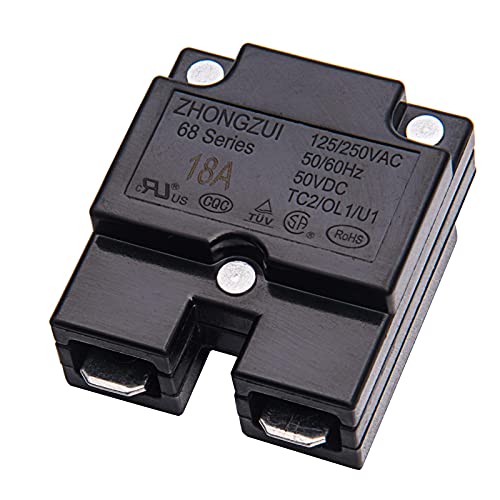
18A Current overload protection with automatic reset .for children ride-on replacement parts.

Product name: Push-button Thermal Circuit Breakers
Grounding: Your Breaker Box’s Backup Plan for Faulty Current
Grounding provides a reliable backup route for stray current when a fault causes repeated trips. It creates a low-resistance path for electrical faults to return directly to your breaker panel, rather than traveling through the earth. This controlled path allows a massive surge of current, exceeding the breaker’s rated capacity, which causes the breaker to trip instantly. This rapid response — known as ground-fault protection — limits dangerous touch voltages on exposed metals and reduces the risk of shocks. In your main panel, the neutral and grounding conductors are bonded at a single point, ensuring all metal parts are at the same electrical potential. This setup stabilizes your system and prevents unexpected voltage rises. During normal operation, grounding conductors carry minimal or no current. However, in the event of a fault, grounding is essential for clearing the problem within a fraction of a second.
4 Signs You Need an Electrician for Your Breaker Box
Repeated breaker trips under normal load are a clear sign you need an electrician to inspect your breaker box. If your circuit breaker keeps shutting off repeatedly, it indicates that your electrical system is overloaded, the breaker itself might be failing, or there could be damaged wiring in the circuit. Ignoring this issue can lead to more serious problems like overheating or electrical fires, so it’s important to have a professional evaluate the entire setup. Addressing these trips early can prevent major hazards and ensure your home’s electrical system remains safe and reliable.

AUTHENTIC OEM COMPONENT — This kit is built around two (2) factory-new, unused, and authentic Original Equipment Manufacturer (OEM) Square D QO115 circuit breakers. The QO series is Square D's premium, professional-grade line of circuit protection. These components are sourced to deliver genuine Square D technology, known for its benchmark reliability and precise performance. Ideal for new construction, electrical system upgrades, or as direct replacement parts for existing Square D QO electrical systems, ensuring a perfect fit and function.

AUTHENTIC OEM COMPONENT — This kit is built around one (1) factory-new, unused, and authentic Original Equipment Manufacturer (OEM) Square D HOM130 circuit breaker. The Homeline series is Square D's industry-standard line for residential circuit protection, engineered for reliability and precise performance. Ideal for new construction or as direct replacement parts for existing systems.
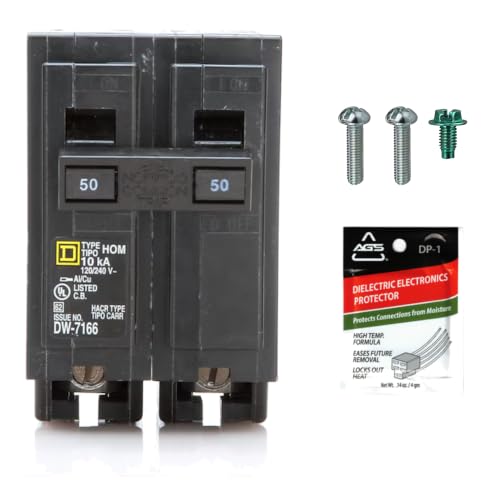
GENUINE OEM BREAKER — This offer includes one (1) authentic HOM250 50-Amp double-pole circuit breaker from Square D's trusted Homeline series. The robust thermal-magnetic mechanism is engineered for reliable dual-action protection, responding to both sustained low-level overcurrents and instantaneous high-current short-circuit events. This component is a factory-new, unused Original Equipment Manufacturer (OEM) part, ensuring full compatibility and performance for high-power 240V branch circuits.