

You’ve decided to cut the cord and build an off-grid home. Smart move. But your whole setup hinges on one thing: the solar panels you choose. Get it wrong, and you’re left in the dark. Get it right, and you’ll have reliable power for years. So which models do seasoned off-grid homeowners actually trust? Let’s walk through the seven they swear by.
| ECO-WORTHY 200 Watt 12V Complete Solar Panel Starter Kit for RV Off Grid | 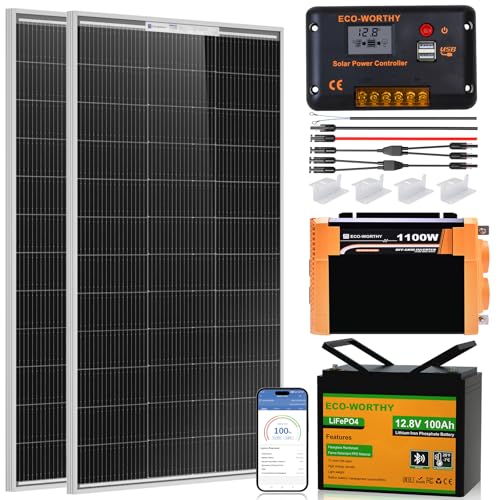 | Best Starter Kit | Total Power Output: 200W solar, 1100W inverter | Battery Capacity: 1.28kWh (12.8V 100Ah lithium) | Charge Controller Type: 30A PWM | VIEW LATEST PRICE | Read Our Analysis |
| ECO WORTHY 10000W Off-Grid Solar Panel Kit |  | Maximum Power Output | Total Power Output: 2950W solar, 10kW inverter | Battery Capacity: 16.1kWh (48V 314Ah LiFePO4) | Charge Controller Type: Dual MPPT (built into inverter) | VIEW LATEST PRICE | Read Our Analysis |
| SUNGOLDPOWER 500W Solar Panel 10-Pack (5000W Total) |  | High Efficiency Panels | Total Power Output: 5000W solar (10 x 500W panels) | Battery Capacity: No battery included | Charge Controller Type: Not included | VIEW LATEST PRICE | Read Our Analysis |
| Bifacial 100W Monocrystalline Solar Panel 12V |  | Compact & Versatile | Total Power Output: 100W solar panel only | Battery Capacity: No battery included | Charge Controller Type: Not included | VIEW LATEST PRICE | Read Our Analysis |
| ECO-Worthy 7.168KWH 800W Solar Panel Kit for RV Off Grid Complete System |  | Best for Heavy RVs | Total Power Output: 780W solar, 3000W inverter | Battery Capacity: 7.168kWh (2 x 12.8V 280Ah lithium) | Charge Controller Type: 60A MPPT with Bluetooth | VIEW LATEST PRICE | Read Our Analysis |
| ECO-Worthy 1.6KWH Complete Solar Panel Kit 400W 12V for RV Off Grid |  | Best Budget System | Total Power Output: 400W solar, 2000W inverter | Battery Capacity: 1.6kWh (2 x 12V 100Ah lithium) | Charge Controller Type: 40A MPPT with Bluetooth | VIEW LATEST PRICE | Read Our Analysis |
| Jackery Solar Generator 1000 v2 and 200W Solar Panel,1070Wh,1500W AC |  | Best Portable Power | Total Power Output: 200W solar, 1500W inverter | Battery Capacity: 1.07kWh (LiFePO4) | Charge Controller Type: Built-in MPPT (in generator) | VIEW LATEST PRICE | Read Our Analysis |
More Details on Our Top Picks
ECO-WORTHY 200 Watt 12V Complete Solar Panel Starter Kit for RV Off Grid
Starting for off grid living, the ECO-WORTHY 200 Watt 12V Complete Solar Panel Starter Kit is an ideal entry point for RV owners or first time users. You’ll generate 800Wh daily, paired with a 12.8V 100Ah lithium battery for 1.28KWh storage. That 1100W inverter powers your essentials, while the 30A PWM charge controller keeps everything safe. Installation takes four simple steps: connect panels, attach battery, link controller to inverter, then set the load. At 11.5 pounds and durable aluminum glass build, it’s travel ready. Plus, you get round the clock technical support. Affordable, reliable, and complete.
- Total Power Output:200W solar, 1100W inverter
- Battery Capacity:1.28kWh (12.8V 100Ah lithium)
- Charge Controller Type:30A PWM
- Solar Panel Type:Monocrystalline (two 100W panels)
- System Voltage:12V DC
- Inverter Type:1100W pure sine wave (separate)
- Additional Feature:Four-step quick installation
- Additional Feature:1.28KWh storage capacity
- Additional Feature:24/7 customer service support
ECO WORTHY 10000W Off-Grid Solar Panel Kit
Looking for a complete, high capacity system that gives you maximum power output without piecing it together yourself? This ECO WORTHY 10000W kit delivers. You get five 590W monocrystalline panels generating up to 11.8 kWh daily, plus a 48V 314Ah lithium LiFePO₄ battery with 16.1 kWh capacity scalable to 241 kWh. And the 10kW inverter handles your whole home, with dual MPPT controllers and 20,000W peak output. You’ll monitor everything via Wi-Fi, Bluetooth, or PC. Professional installation is a must, but you won’t need to shop for components separately.
- Total Power Output:2950W solar, 10kW inverter
- Battery Capacity:16.1kWh (48V 314Ah LiFePO4)
- Charge Controller Type:Dual MPPT (built into inverter)
- Solar Panel Type:Monocrystalline (five 590W panels)
- System Voltage:48V DC / 120V/240V AC split-phase
- Inverter Type:10kW all-in-one pure sine wave with dual MPPT
- Additional Feature:Scalable up to 15 battery units
- Additional Feature:11.8 kWh daily generation
- Additional Feature:Bluetooth/Wi-Fi/PC monitoring
SUNGOLDPOWER 500W Solar Panel 10-Pack (5000W Total)
If you’re powering a serious off-grid setup, this 10-pack is your best bet for high efficiency panels. Each 500W monocrystalline panel uses Mono PERC Half-Cut Technology, hitting 21.05% module efficiency for superior output. They’re waterproof with an IP68 rating and durable, weighing 54 pounds each at 82.4 by 44.6 inches.
Here’s why they stand out:
- Half-cell design boosts shade tolerance.
- Grade A cells and UL 61730 certification ensure reliability.
- Works for off-grid, on-grid, RVs, tiny houses, or marine use.
You get a 12-year workmanship warranty plus a 25-year linear performance guarantee. That’s long term savings you can assure.
- Total Power Output:5000W solar (10 x 500W panels)
- Battery Capacity:No battery included
- Charge Controller Type:Not included
- Solar Panel Type:Monocrystalline PERC half-cell (10 pack)
- System Voltage:Not specified (panels only)
- Inverter Type:Not included
- Additional Feature:21.05% module efficiency
- Additional Feature:Half-Cut Technology design
- Additional Feature:25-year linear performance warranty
Bifacial 100W Monocrystalline Solar Panel 12V
For off-grid setups where space is at a premium, this panel is a top pick. You get double-sided power generation technology, so it captures both direct sunlight and reflected rays, boosting efficiency by about 40%. Plus, its 10 busbar design cuts microcracks by 10% and handles shadows better, giving you consistent output even on cloudy days. It’s rugged too: IP68 junction box, IP67 connectors, and a durable aluminum frame resist hail and snow. It measures roughly 45.67 by 17.71 inches. A 5-year warranty backs it up, and pre-drilled holes make mounting straightforward on your RV, camper, or rooftop.
- Total Power Output:100W solar panel only
- Battery Capacity:No battery included
- Charge Controller Type:Not included
- Solar Panel Type:Bifacial monocrystalline (single 100W)
- System Voltage:12V
- Inverter Type:Not included
- Additional Feature:40% efficiency increase potential
- Additional Feature:10BB microcrack reduction
- Additional Feature:IP68 junction box rating
ECO-Worthy 7.168KWH 800W Solar Panel Kit for RV Off Grid Complete System
This kit is a powerhouse for heavy RVs. You get four 195W bifacial panels, a 3000W inverter charger, and two 12.8V 280Ah lithium batteries, storing 7.168 kWh. That’s enough to run your fridge, AC, microwave, and more. It’s surprisingly easy to set up, too. Just follow the four step process:
- Connect batteries in parallel for 12V.
- Link panels in series with Y branches.
- Hook batteries to the controller and inverter.
- Attach panels to the controller.
You’ll generate about 3.2 kWh daily with four hours of sun. And the built-in UPS seamlessly switches between solar and grid power, so you never lose a beat. That’s reliable, off grid freedom right there.
- Total Power Output:780W solar, 3000W inverter
- Battery Capacity:7.168kWh (2 x 12.8V 280Ah lithium)
- Charge Controller Type:60A MPPT with Bluetooth
- Solar Panel Type:Bifacial monocrystalline (four 195W)
- System Voltage:12V DC
- Inverter Type:3000W inverter charger (pure sine wave)
- Additional Feature:UPS power function
- Additional Feature:Powers 99% of RV appliances
- Additional Feature:25.2% high-efficiency cells
ECO-Worthy 1.6KWH Complete Solar Panel Kit 400W 12V for RV Off Grid
You’re looking for a full off-grid solar setup that won’t break the bank. The ECO-Worthy 1.6KWH kit delivers serious value with four 100W bifacial panels, each boasting 23% conversion efficiency. That dual-sided tech captures light from both sides, boosting yield by up to 40% with the optional tracker.
Inside the box, you get:
- A 40A MPPT charge controller with 99% tracking efficiency.
- A 2000W pure sine wave inverter for TVs, fridges, or small ACs.
- Two 12V 100Ah lithium batteries, each with a BMS for over 3000 deep cycles.
Bluetooth 5.0 lets you monitor everything from your phone. Durable aluminum and tempered glass construction handles heat up to 85°C. It’s a compact, complete system for your RV or cabin, no fluff.
- Total Power Output:400W solar, 2000W inverter
- Battery Capacity:1.6kWh (2 x 12V 100Ah lithium)
- Charge Controller Type:40A MPPT with Bluetooth
- Solar Panel Type:Bifacial monocrystalline (four 100W)
- System Voltage:12V DC
- Inverter Type:2000W pure sine wave (separate)
- Additional Feature:Dual-axis solar tracker
- Additional Feature:Bluetooth Module 5.0 monitoring
- Additional Feature:Over 3000 deep cycles
Jackery Solar Generator 1000 v2 and 200W Solar Panel,1070Wh,1500W AC
The Jackery Solar Generator 1000 v2 with the 200W panel brings portable power that travels anywhere your off-grid life takes you. At 23.8 lbs with a foldable handle, you’ll carry it effortlessly on camping trips or road emergencies. Its 1,070Wh capacity and 1,500W continuous output (3,000W surge) easily run an AC unit or fridge.
You can charge it fast. Use emergency mode via the app for a 1.7-hour full charge, or activate the 1-hour option. Alternatively, the 200W panel gets you to 80% in six hours. The LiFePO4 battery lasts over 4,000 cycles, giving you a solid decade of reliable power. It ships with a 5-year warranty and 30-day returns.
- Total Power Output:200W solar, 1500W inverter
- Battery Capacity:1.07kWh (LiFePO4)
- Charge Controller Type:Built-in MPPT (in generator)
- Solar Panel Type:Monocrystalline (one 200W panel)
- System Voltage:120V AC output / 12V DC ports
- Inverter Type:1500W pure sine wave (built-in)
- Additional Feature:1.7-hour emergency fast charge
- Additional Feature:4,000 charge cycles lifespan
- Additional Feature:Foldable handle design
Factors to Consider When Choosing Solar Panels for Off-Grid Living
When you’re choosing solar panels for off-grid living, you’ll need to match your power output needs with your daily energy consumption. Your system voltage compatibility and battery storage capacity must work together seamlessly, or you’ll face frustrating inefficiencies. Don’t overlook installation complexity and component durability, as these factors determine whether your setup survives the elements for years to come.
Power Output Needs
Two key factors determine how many solar panels you’ll actually need for off-grid living: your daily energy consumption and your location’s peak sunlight hours. First, calculate your total wattage by listing every appliance you’ll run. A typical off-grid home might need 3,000 to 7,000 watt-hours daily. Then, factor in your area’s sunlight: Phoenix gets about six peak hours, Seattle just three.
Here’s the trick: oversize your system by 20-25%. This buffer covers cloudy days, inefficiencies, and that extra coffee maker you’ll inevitably add. For example, if you need 5,000 watt-hours daily with five peak sun hours, you’ll want around 1,200 watts of panels minimum. That’s four 300-watt panels. Don’t cut it close. Undersized means dark nights and dead batteries. Go bigger than you think, and you’ll sleep better knowing your power’s always there when you need it.
System Voltage Compatibility
Before you pick your panels, check your system voltage—your solar array and battery bank need to match. If you choose panels with a higher voltage than your system can handle, you risk overcharging your batteries and damaging sensitive equipment. That’s a costly mistake you don’t want to make.
Typical off grid setups use 12V, 24V, or 48V panels, so pick the one that fits your configuration. Matching voltages means you can wire everything safely, cutting down on electrical faults and boosting overall efficiency.
But don’t stop there. Confirm your inverter and charge controller are also rated for the same voltage. When every component aligns, your system runs stable and smooth. It’s a simple step that saves you headaches later
Battery Storage Capacity
Once you’ve sorted out your system voltage, it’s time to tackle battery storage capacity—the key to keeping your lights on after the sun goes down. This number, measured in kilowatt-hours (kWh) or amp-hours (Ah), tells you exactly how much power you can bank for cloudy days or nighttime. You’ll need enough to cover your daily energy consumption, plus a buffer for those stretches without solar input. A bigger capacity boosts reliability but expect higher upfront costs and more physical space. To size it right, calculate your daily usage, then multiply by the number of backup days you want. Don’t cut corners here. Undersizing leaves you scrambling for a generator. Oversizing wastes money.
Installation Complexity
Installation complexity is one of the first factors you’ll want to weigh when picking solar panels for off-grid living. It’s not one size fits all. Some panels are practically plug-and-play, with pre-drilled holes and integrated mounting systems that slash your setup time. Others demand a more intricate wiring and configuration dance. Your choice of inverter and charge controller compatibility directly influences how many steps you’ll face. For simpler systems, you get clear, step-by-step instructions, making DIY a real option even if you’re a novice. But larger, complex setups? You’ll likely need professional installation to guarantee safety, code compliance, and peak performance. So, honestly assess your skill level and the system’s demands before you commit. A mismatched approach can turn a weekend project into a month-long headache.
Component Durability
Why does component durability matter so much for off-grid living? Because when you’re miles from the nearest repair shop, your panels need to laugh in the face of hail, rain, and snow. Look for weather-resistant features like waterproof ratings of IP65 or IP68; these guarantee your system withstands harsh conditions without failing. You’ll want tempered glass paired with strong aluminum frames that resist impacts and corrosion, boosting longevity. Monocrystalline panels typically offer superior durability and efficiency over time, thanks to their refined silicon structure. Advanced coatings protect against UV damage and micro-cracks, too. Don’t forget rugged frames and sealed junction boxes. Regular maintenance keeps everything humming, but starting with tough components means you’ll rely less on fixes.
Warranty Coverage Terms
You’ve got your panels picked for toughness, but what happens if something goes wrong down the line? Warranty coverage is your safety net, protecting you against manufacturing defects and performance issues for 12 to 25 years. Some warranties cover just materials, while others include power output guarantees. A longer warranty period signals the manufacturer’s confidence in durability. But don’t stop there. Review exclusions like weather damage, improper installation, or physical impact. Verify if repair or replacement is included, and understand the claim process. This prevents unexpected out-of-pocket costs. So before you commit, check those terms carefully. A solid warranty means peace of mind for your off grid setup, not just a piece of paper.
Portability vs. Fixed
When you’re weighing portability against fixed installation for your off-grid solar setup, the decision really comes down to how you plan to live. Portable panels, often under 60 pounds, are your ticket to flexibility. Foldable or trailer mounted, they let you chase the sun, dodge shade, or pack up when you move. But you’ll trade some durability for that freedom.
Fixed panels, on the other hand, are a long term commitment. Professionally mounted on your roof or ground supports, they offer stable, maintenance free power with higher efficiency. No lugging gear around, just consistent energy, year after year.
Consider your lifestyle: do you relocate often or settle in one spot? Portability gives you adaptability, but fixed systems deliver lasting performance. Choose what fits your rhythm, not what’s trendy.
Efficiency in Shade
What happens when your perfect off-grid spot sits under a forest canopy or near a mountain that casts afternoon shadows? You don’t have to scrap your dream. Choose panels with half-cut cell technology and multi-busbar designs. These maintain efficiency even when part of a panel is shaded, so you keep generating power.
Bifacial panels are another smart move. They capture reflected and diffuse sunlight, boosting your output in tricky light conditions. You also want panels with high module efficiency and low shading intolerance for consistent energy. And don’t forget durability. Shading can cause micro-cracks, so pick crack-resistant designs to avoid losing efficiency over time.
Proper placement matters too. Mount panels where they catch morning and midday sun, avoiding deep shadows from trees or structures. Combine that with shading-tolerant technology, and you considerably cut power loss. Your off-grid dreams stay on track, even with a few shadows in the mix.